In This Article
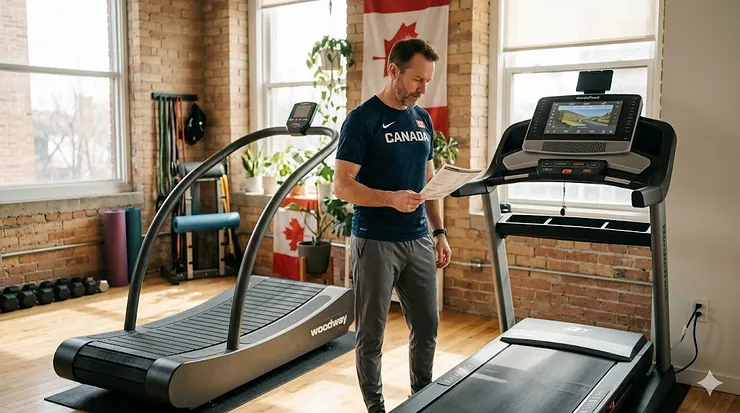
Picture this: it’s a grey February morning in Winnipeg, -25°C outside, and the last thing you want is to venture out for a run. You’ve already committed to your home gym — smart move. But now you’re staring down the rabbit hole of the manual vs electric treadmill debate and wondering which machine actually deserves a spot in your living room (or basement, let’s be honest — most Canadian home gyms live downstairs).
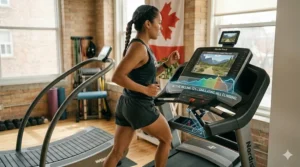
Here’s the short answer: a manual treadmill is entirely powered by your own movement — no motor, no cord, no electricity bill. An electric treadmill uses a motorized belt that moves at a set speed, letting you step on and match its pace. Both are legitimate cardio tools. Both will make you sweat. But the one that’s right for you depends entirely on your goals, budget in CAD, available space, and yes — even the layout of your home.
In this guide, I’ll walk you through a genuine manual vs electric treadmill comparison, including 7 real products available on Amazon.ca right now, their price ranges in CAD, honest pros and cons, and the type of Canadian buyer each one suits best. Whether you’re a condo dweller in downtown Toronto looking to squeeze a treadmill into a 600-square-foot space, or a family in suburban Calgary building out a full home gym, this breakdown will help you make a confident, informed choice.
What most buyers overlook when comparing these two treadmill types is the long-term cost picture — not just the sticker price, but monthly electricity costs, maintenance, and the wear-and-tear reality of Canadian winters (hello, tracked-in slush and dried salt dust). We’ll cover all of that here.
Quick Comparison: Manual vs Electric Treadmill at a Glance
| Feature | Manual Treadmill | Electric Treadmill |
|---|---|---|
| Power Source | Your own legs | Electrical outlet (110V standard) |
| Calorie Burn | Higher (up to 30% more) | Lower at same pace |
| Price Range (CAD) | $80–$2,500+ (curved) | $400–$4,000+ |
| Operating Cost | $0/month electricity | ~$5–$20/month |
| Maintenance | Minimal (belt tension only) | Motor, belt, electronics |
| Noise Level | Very quiet | Moderate (motor hum) |
| Features | Basic LCD display | Touchscreen, programs, HR monitor |
| Best For | HIIT, weight loss, budget buyers | Beginners, walkers, tech lovers |
| Space/Portability | Compact, often foldable | Bulkier, heavier |
| Amazon.ca Available | ✅ Yes | ✅ Yes |
Looking at this table, the choice narrows quickly based on your priorities. If you want a tech-rich, guided workout experience and prefer consistency in pace (great for beginners who are still building running habits), an electric treadmill is your machine. If you’re chasing maximum calorie burn, lower lifetime cost, and quiet operation (apartment dwellers in Vancouver or Montreal — this means you), a manual treadmill wins on almost every practical metric. The catch? Manual treadmills require more effort right out of the gate, which is simultaneously their biggest advantage and their steepest learning curve.
💬 Just one click — help others make better buying decisions too! 😊
✨ Don’t Miss These Exclusive Deals!
🔍 Take your home fitness to the next level with these carefully selected treadmills. Click on any highlighted item to check current pricing and availability on Amazon.ca. These machines will help you build consistent cardio habits — rain, snow, or polar vortex!
Top 7 Manual vs Electric Treadmills on Amazon.ca: Expert Analysis
1. Sunny Health & Fitness SF-T1407M Manual Treadmill
If budget is your primary constraint and you need something compact, the Sunny Health & Fitness SF-T1407M is the entry point that most Canadian buyers come back to, and for good reason. The running surface measures 124.5 cm × 32 cm — sufficient for power walking and light jogging — while the folded dimensions (50.8L × 58.4W × 127H cm) mean you can tuck it behind a door or roll it into a closet in a Toronto condo without losing your mind. The fixed incline design is a clever workaround: rather than adding resistance electronically, the slight grade uses gravity to naturally push back against your stride. Dual flywheels add smoothness to the belt movement, and the max weight capacity sits at 100 kg (220 lbs).
What most buyers overlook is how this fixed-incline design actually changes your workout. Walking uphill — even at a modest angle — activates your glutes and hamstrings more than flat-surface walking, which means you’re getting a more complete lower-body workout without touching a single button. The LCD monitor tracks time, speed, distance, calories, and steps, which is everything you need for a walking-focused routine.
This is the right machine for a Canadian apartment dweller who wants to stay active through winter without disturbing downstairs neighbours. It’s nearly silent compared to motorized alternatives, which is a genuine quality-of-life upgrade in multi-unit buildings. Canadian reviewers note assembly is quick and the build feels solid for the price point, though serious runners will find the belt length limiting.
✅ Pros:
- Near-silent operation — apartment-friendly
- Folds flat; storage-friendly for small Canadian homes
- No electricity costs — zero monthly operating overhead
❌ Cons:
- Belt length limits running stride for taller users
- No motorized speed control — pace entirely self-managed
💰 Price range: under $200 CAD — excellent entry-level value. Check current price on Amazon.ca.
2. Fitness Reality TR3000 Manual Treadmill
Step up from entry-level with the Fitness Reality TR3000, which consistently earns strong ratings from Canadian buyers for its balance between durability and affordability. The TR3000 features 8 levels of magnetic resistance — a detail that flat-belt manual treadmills often skip entirely — which means you can genuinely progress your workouts over time rather than hitting a ceiling after a few weeks. The running surface is wider and longer than most budget manual options, accommodating a more natural stride.
Here’s what the spec sheet won’t tell you: magnetic resistance on a manual treadmill transforms it from a “I just want to walk” machine into something capable of sustained cardio intervals. Dialing up resistance while maintaining pace is the manual treadmill equivalent of incline training on an electric — it’s harder, it burns more, and it recruits your posterior chain muscles in a way flat walking simply doesn’t. For a Canadian buyer who’s recovering from a lower-body injury and wants low-impact but high-effort cardio, the TR3000 hits a useful sweet spot.
Assembly requires two people and about 45 minutes — factor that in, especially if you’re ordering to a remote area in northern Ontario or Saskatchewan where in-home assembly services may not be readily available.
✅ Pros:
- 8-level magnetic resistance adds genuine workout progression
- Wider running surface suits taller users
- Solid frame handles daily use without wobble
❌ Cons:
- Heavier to move and store than the SF-T1407M
- No Bluetooth or digital connectivity
💰 Price range: $200–$350 CAD. Check current price on Amazon.ca.
3. Sunny Health & Fitness SF-T7723 Smart Treadmill (Manual with Monitor)
The Sunny Health & Fitness SF-T7723 bridges the gap between bare-bones manual machines and feature-rich electric models in an interesting way. It retains the self-powered belt mechanism but adds a Bluetooth-enabled console with built-in speakers and app connectivity. This matters for the Canadian buyer who wants the calorie and muscle engagement benefits of a manual treadmill without completely sacrificing the “connected workout” experience that platforms like Apple Fitness+ or YouTube workout channels provide.
Adjustable incline settings (even on a manual) let you customize intensity before your session — think of it as pre-setting your effort level before you begin, rather than relying on a motor to do it for you. The foldable frame earns high marks in Canadian reviews for surviving both regular use and the occasional basement humidity swing that comes with our climate.
What stands out in practice is the whisper-quiet operation combined with app connectivity — you get the low-noise advantage of a manual machine while still feeling “plugged in” to your workout routine. That combination is rarer than you’d expect at this price tier. Prime-eligible on Amazon.ca.
✅ Pros:
- Bluetooth connectivity with app compatibility
- Adjustable incline adds workout variety
- Foldable, quiet, and space-efficient
❌ Cons:
- App ecosystem less mature than Peloton or iFIT
- Belt speed can feel choppy at very low paces
💰 Price range: $350–$500 CAD. Check current price on Amazon.ca.
4. NordicTrack T 6.5 S Electric Treadmill
Now we shift into electric territory, and the NordicTrack T 6.5 S is the electric treadmill I’d recommend first to most Canadians who are new to home running. Its 2.6 CHP motor handles speeds from 0 to 16 km/h (10 mph) and supports inclines up to 10% — the incline feature alone transforms this from a one-trick cardio machine into something capable of hill simulations, which is genuinely useful when Canadian winter keeps you indoors for months at a time. The 50 cm × 140 cm (20″ × 55″) running belt accommodates most adult strides comfortably, and the integrated heart rate sensors on the handlebars give you real-time cardio zone feedback.
The spec that most reviewers skip past is the 300 lb (136 kg) user weight capacity — that’s meaningful durability margin for daily use. The iFIT 30-day trial included with the T 6.5 S gives you access to live and on-demand trainer-led classes that automatically adjust treadmill speed and incline, which is the closest thing to having a personal trainer without leaving your basement. Long-term, the iFIT subscription runs on a monthly or annual CAD fee — worth considering in your total cost of ownership.
NordicTrack backs this machine with a 10-year frame warranty, 2-year parts, and 1-year labour — one of the stronger warranty structures in the under-$1,000 CAD segment. Available through Amazon.ca with Prime shipping.
✅ Pros:
- iFIT-ready with trainer-led programming
- 10% motorized incline for year-round hill simulation
- 10-year frame warranty — strong long-term protection
❌ Cons:
- iFIT subscription adds ongoing monthly cost in CAD
- Heavier to assemble; in-home assembly service recommended
💰 Price range: $800–$1,100 CAD. Check current price on Amazon.ca.
5. Horizon T101 Electric Treadmill
The Horizon T101 occupies a specific sweet spot that not enough buyers notice: it’s a capable electric treadmill from a brand that prioritizes whisper-quiet operation, making it one of the most condo- and apartment-friendly electric options available on Amazon.ca. Johnson Health Tech (the manufacturer behind Horizon) builds these with quiet drives that noticeably reduce motor noise compared to NordicTrack equivalents at a similar price.
The T101’s 2.5 CHP motor supports speeds up to 16 km/h (10 mph) and inclines up to 10%. Unlike NordicTrack, Horizon treadmills are app-agnostic — you can pair them with Peloton’s app, iFIT (audio-only via Bluetooth), Zwift, or simply throw your phone on the integrated holder and run to a YouTube video. That flexibility is a real advantage for Canadian buyers who don’t want to be locked into a single subscription ecosystem.
Bluetooth audio speakers built into the console are a practical feature that sounds minor until you’re running at 10 km/h trying to hear your playlist. Canadian reviewers frequently cite how smooth the belt feels out of the box compared to similarly-priced competitors. Available on Amazon.ca with occasional Prime Day deals worth watching.
✅ Pros:
- Notably quiet motor — ideal for condos and apartments
- App-agnostic: works with Peloton, Zwift, any streaming service
- Smooth, well-cushioned belt reduces joint impact
❌ Cons:
- Basic console display (no touchscreen at this price tier)
- Narrower belt than mid-range electric competitors
💰 Price range: $700–$950 CAD. Check current price on Amazon.ca.
6. XTERRA TRX3500 Electric Treadmill
The XTERRA TRX3500 is the electric treadmill that regularly surprises buyers who pick it up expecting a budget experience. Its 3.0 CHP motor runs noticeably stronger than what you’d expect at its price point, handling continuous higher-speed running (up to 20 km/h / 12 mph) more smoothly than most similarly priced NordicTrack or ProForm models. The 51 cm × 152 cm (20″ × 60″) running deck is full-length — the same size used on machines that cost twice as much — which matters enormously for tall Canadians whose stride gets truncated on shorter decks.
What I genuinely like about the TRX3500 is its warranty structure: lifetime frame and motor coverage, 2-year parts, 1-year labour. In a category where many manufacturers offer 10-year frame at best, a lifetime motor warranty signals genuine confidence in the machine’s longevity. For a Canadian buyer who plans to run daily and doesn’t want to think about equipment failure for the next decade, that warranty alone justifies the price premium over comparable models.
The console is functional rather than flashy — no touchscreen, but 12 pre-set programmes, a cooling fan, and media shelf. Available on Amazon.ca; note that shipping to remote northern addresses may take longer than the standard Prime estimate.
✅ Pros:
- Lifetime frame and motor warranty — outstanding long-term value
- Full 152 cm (60″) deck suits tall runners with long strides
- 3.0 CHP motor handles serious daily running
❌ Cons:
- No touchscreen or subscription-based content integration
- Heavier machine — basement installation recommended for most homes
💰 Price range: $900–$1,200 CAD. Check current price on Amazon.ca.
7. NordicTrack Commercial 1750 Electric Treadmill
At the premium end, the NordicTrack Commercial 1750 is the machine that stops mid-range conversations in their tracks. The 14-inch interactive HD touchscreen running iFIT feels less like a treadmill console and more like a tablet you happen to exercise in front of — and that distinction matters for Canadian buyers who struggle with workout motivation during our notoriously long, dark winters. When iFIT trainers can remotely adjust your treadmill’s incline and speed during a live class, you stop thinking about the machine entirely and start thinking about the workout.
The 3.75 CHP motor supports speeds up to 22 km/h (14 mph) and both incline (up to 15%) and decline (down to -3%) settings — the decline feature simulates downhill terrain in a way that genuinely changes how your quads and hip flexors are loaded, and it’s rare even among premium machines. The 56 cm × 152 cm (22″ × 60″) running deck accommodates virtually every stride length.
The Commercial 1750 weighs approximately 154 kg (340 lbs) when assembled — this is not a machine you carry up narrow basement stairs alone. Budget for professional assembly, which typically runs $100–$200 CAD in most Canadian cities. The iFIT annual subscription is an ongoing cost to factor into your decision. That said, for serious Canadian runners who can’t access outdoor routes six months a year, this is genuinely the closest to a commercial-gym experience available for home use.
✅ Pros:
- 14″ HD touchscreen with iFIT auto-adjust — premium workout experience
- Incline AND decline settings simulate full outdoor terrain
- 3.75 CHP motor handles marathon-pace daily training
❌ Cons:
- Among the most expensive options on Amazon.ca
- Heavy; professional assembly strongly recommended
- Ongoing iFIT subscription cost in CAD
💰 Price range: $2,500–$3,500 CAD. Check current price on Amazon.ca.
Which Treadmill Type Actually Burns More Calories? The Canadian Workout Reality
This is the question I get asked most, and the answer is more interesting than most comparison articles let on.
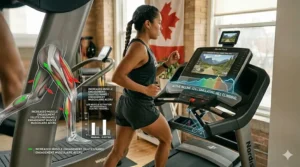
Research consistently indicates that energy expenditure on a manual treadmill — particularly a curved model — runs approximately 30% higher than on an electric machine at the same pace. The physics are simple: on an electric treadmill, the belt moves under you and you only need to lift and place your feet. On a manual treadmill, you are the motor. Every step backward against that belt is work your posterior chain — glutes, hamstrings, calves — must produce. At the same speed, your muscles are working substantially harder.
What that means practically for a 75 kg (165 lb) Canadian exercising 45 minutes per day, three times per week: you could realistically burn 100–150 more calories per session on a manual treadmill versus an equivalent pace on an electric machine. Over a year of consistent workouts, that difference compounds.
However — and this is the caveat most articles skip — that calorie advantage only holds if you can sustain the effort. Manual treadmills are genuinely harder to use, especially for beginners or people returning from injury. If a flat-belt manual treadmill’s resistance frustrates you into shorter, inconsistent sessions while an electric treadmill keeps you running 45 minutes every day with guided programming, the electric machine wins on net calorie burn. The ACE Fitness research on indoor exercise machines consistently places the treadmill at the top of calorie-burning tools — regardless of type — precisely because its weight-bearing nature demands more from your cardiovascular system than cycling or elliptical alternatives.
The practical recommendation: if you’re an experienced exerciser who’s comfortable self-pacing your effort, a manual treadmill gives you better calorie burn per hour. If motivation and consistency are your challenge (and Canadian winters test everyone’s resolve), the guided programming on an electric machine wins in the long run.
Real Canadian User Profiles: Which Treadmill Fits Your Life?
🏙️ Profile 1: The Toronto Condo Runner
Maya, 32, downtown Toronto. Her condo gym is shared with 200 other residents and closes at 10 PM — useless for her 6 AM training schedule. She needs something that fits in a second bedroom that doubles as an office, won’t shake her ceiling fan, and won’t get complaints from the unit below.
Best fit: Sunny Health & Fitness SF-T1407M or Horizon T101. The SF-T1407M’s near-silent operation and compact fold are practically made for Maya’s situation. If she wants an electric machine, the Horizon T101’s whisper-quiet motor is the standout choice. She should avoid the Commercial 1750 — not for performance reasons, but because 154 kg of treadmill vibrating on a 12th-floor condo slab is a neighbour complaint waiting to happen.
🏡 Profile 2: The Calgary Suburban Family
The Bergmanns in southwest Calgary. A couple with two teenagers, basement home gym space, and a combined fitness goal of 30 minutes of cardio per day, five days a week. Budget is their main concern — they’re not looking to spend $3,000 on a machine, but want something the whole family will actually use for the next five-plus years.
Best fit: XTERRA TRX3500. That lifetime motor warranty is the selling point here — four active users putting real daily hours on a machine need long-term reliability, not replacement parts every three years. The full-length 152 cm deck handles both the teenagers’ longer strides and the parents’ walking routines.
🧘 Profile 3: The Edmonton HIIT Enthusiast
James, 41, Edmonton. He already has a good outdoor running base but uses treadmill training from October through April — essentially a half-year indoor season. He wants calorie-dense interval sessions, not relaxed jogs.
Best fit: Fitness Reality TR3000 or a curved manual treadmill. The TR3000’s magnetic resistance levels give James the HIIT-friendly intensity variation he needs without motorized complexity. For a higher-end option, the AssaultRunner Pro-style curved treadmill (available on Amazon.ca in the $3,000+ range) would be his performance upgrade path, delivering the highest calorie burn of any treadmill type.
The Real Operating Costs: Manual vs Electric Treadmill Over 5 Years in Canada
This section is where the manual vs electric treadmill comparison gets genuinely interesting for Canadian buyers — because electricity isn’t free here, and it’s getting more expensive.
Operating Costs at a Glance
| Cost Factor | Manual Treadmill | Electric Treadmill |
|---|---|---|
| Monthly electricity | $0 | $5–$18 CAD |
| Annual electricity (avg.) | $0 | $60–$216 CAD |
| 5-year electricity cost | $0 | $300–$1,080 CAD |
| Motor service/repair | N/A | $80–$300+ CAD per incident |
| Belt lubrication | Occasional ($10 product) | More frequent ($15–$25 every 3 months) |
| App subscription (if applicable) | None | $0–$50+/month (iFIT, Peloton, etc.) |
| Total 5-year added cost (est.) | ~$50 CAD | $500–$2,500+ CAD |
The electricity cost of a motorized treadmill depends heavily on your province. Ontario and BC residents paying Time-of-Use rates during peak hours can see their treadmill add $15–$20 CAD monthly in winter when they’re running it most frequently. Alberta’s deregulated electricity market means rate volatility — in some months, costs can spike meaningfully higher.
What this table tells you: if you buy a $400 CAD electric treadmill and compare it to a $300 CAD manual treadmill, the five-year operating cost gap could easily add $500–$800 to the electric machine’s real total cost. That gap alone might shift your decision — especially if Canadian pricing on electric models already runs 15–25% higher than US equivalents due to exchange rates and import duties.
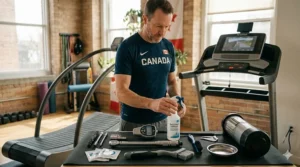
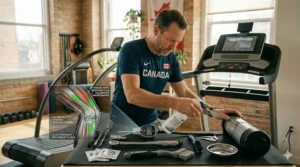
The practical takeaway: a manual treadmill has one of the best total-cost-of-ownership profiles in home fitness equipment. No motor to burn out, no board to fry, no belt sensor to replace. Belt tension adjustment and occasional silicone lubrication are genuinely the full maintenance list for most flat-belt manual models. Electric treadmills aren’t fragile, but they have more failure points — and finding authorized service technicians in smaller Canadian cities (think Sudbury, Kelowna, or Lethbridge) can mean longer wait times than if you lived in Toronto or Vancouver.
How to Choose a Treadmill in Canada: 6 Expert Criteria
Getting this decision right means thinking past the product listing. Here’s how I’d guide any Canadian buyer through the manual vs electric treadmill decision:
1. Define your primary use case first. Are you walking for rehabilitation? Running daily for fitness? Training for a race you’ll actually run outside in summer? A casual walker gets far more value from a compact manual machine than a $2,000 electric with features they’ll never touch. A marathon trainee who needs precise pace control and incline simulation benefits genuinely from an electric treadmill’s capabilities.
2. Measure your space — including the walk-off zone. Treadmill dimensions matter, but what most buyers forget is the “safety clearance” behind the machine — you need 1–2 metres (3–6 feet) of empty space at the back for safe dismounting. Many Canadian basement gyms have this space. Many Toronto condos absolutely do not.
3. Calculate your realistic total budget in CAD. Purchase price is just the start. Add assembly costs ($100–$200 CAD), any subscription service ($0–$600 CAD/year), electricity (up to $200 CAD/year for heavy electric use), and extended warranty considerations. Canadian pricing on fitness equipment consistently runs 15–25% above US prices — budget accordingly.
4. Consider noise honestly. Apartment buildings in Canada have clear bylaws around excessive noise during evening hours. Manual treadmills are genuinely near-silent. Electric treadmills produce motor hum that travels through floors. If you plan to run early mornings or late evenings in a multi-unit building, noise is a real practical factor, not just a comfort preference.
5. Check Canadian voltage and CSA certification. Most treadmills sold on Amazon.ca operate on standard 110V North American power, but confirm this before purchasing — especially on third-party marketplace listings. Look for CSA certification (the Canadian equivalent of UL certification) as an indicator of electrical safety compliance.
6. Factor in your fitness experience level. Manual treadmills reward experienced exercisers who can self-regulate pace and intensity. Electric treadmills provide guardrails — set a speed, run at it, adjust with a button. If you’re brand new to running, the consistency and guided programming of an electric treadmill reduces the learning curve significantly.
Common Mistakes When Buying a Treadmill in Canada
Ignoring the warranty for Canadian service. A 10-year frame warranty sounds excellent until you realize the authorized service centre is 800 km away. Before buying, check whether the brand has Canadian service partners in your region. NordicTrack and Horizon both have Canadian service networks, but coverage thins out quickly beyond major cities.
Buying a flat-belt manual treadmill expecting a running machine. Most entry-level manual treadmills (under $250 CAD) are walking machines. They have short belts, lightweight frames, and resistance that becomes insufficient for actual running. If you want to run on a manual treadmill, you need a curved model — and that means a higher price point in the $1,500+ CAD range.
Underestimating shipping to remote areas. Amazon.ca ships treadmills to most Canadian addresses, but oversized items shipped to northern Ontario, BC interior, or the Maritimes can involve additional freight costs and longer timelines. Check the delivery estimate for your specific postal code before purchase rather than trusting the default estimate.
Overlooking the cross-border warranty problem. Some Canadians shop Amazon.com for lower prices and attempt to bring treadmills across the border. The practical reality: warranty service on US-purchased equipment is often void in Canada, and some manufacturers will explicitly decline Canadian service calls on US units. While cross-border pricing sometimes looks attractive, the warranty headache typically isn’t worth it — especially on a machine you plan to use daily for years.
Forgetting to budget for a floor mat. Treadmills on hardwood or laminate floors — extremely common in Canadian homes — can scratch, vibrate, and cause noise issues without a proper equipment mat underneath. Budget $30–$60 CAD for a dedicated treadmill mat alongside your machine purchase.
FAQ: Manual vs Electric Treadmill in Canada
❓ Is a manual treadmill good for running in Canada?
❓ How much electricity does an electric treadmill use in Canada?
❓ Can I get a treadmill shipped to a remote area in Canada?
❓ Which treadmill type is better for weight loss?
❓ Do treadmills need CSA certification to be safe in Canada?
Conclusion: Picking Your Treadmill for the Canadian Winter (And Every Other Season)
The manual vs electric treadmill debate doesn’t have a universal winner — it has your winner, and that’s a different machine depending on where you live, how you exercise, and what you can realistically spend in CAD.
Here’s where I land after testing both types and reviewing dozens of products available on Amazon.ca: if you’re a budget-conscious Canadian looking for maximum calorie burn, minimal operating costs, and a low-maintenance machine that’ll outlast two or three electric equivalents, a quality manual treadmill is the underrated choice. The Sunny Health & Fitness SF-T1407M (under $200 CAD) is the right entry point for walkers, and the Fitness Reality TR3000 (in the $200–$350 range) steps it up meaningfully for more serious cardio work.
If you want the full guided-workout experience, precise speed control, and the motivation that comes from structured programming through a long Canadian winter, the NordicTrack T 6.5 S ($800–$1,100 CAD) or Horizon T101 ($700–$950 CAD) deliver real value without stretching into premium territory. And if budget isn’t the constraint — if you want the best home treadmill experience available for serious training — the NordicTrack Commercial 1750 is the machine worth saving for.
Whatever you choose, buy it from Amazon.ca rather than cross-border — you’ll thank yourself the first time something needs service in February and you’re not tracking a warranty claim across the border.
✨ Don’t Miss These Exclusive Deals!
🔍 Ready to invest in your home gym? Click any highlighted product above to check current pricing and availability on Amazon.ca. Your best workouts this winter are only a few clicks away — and unlike that outdoor trail in January, these machines never close for weather. ❄️🏃♂️
Recommended for You
- Best Manual Treadmills in Canada 2026: Top 7 Picks Reviewed
- Best High Performance Home Treadmill Canada 2026 – 7 Top Picks
- 7 Best Stable Treadmill for Running in Canada 2026
Disclaimer: This article contains affiliate links. As an Amazon Associate, I earn from qualifying purchases. If you purchase products through these links, we may earn a small commission at no additional cost to you.
✨ Found this helpful? Share it with your friends! 💬🤗
