In This Article
Here’s a fun fact that should annoy every Canadian who’s ever paid a winter hydro bill: the treadmill in your basement is, electrically speaking, kind of a glutton. A typical motorized model pulls anywhere from 600 to 900 watts just to keep the belt spinning — before you’ve burned a single calorie. A self-powered treadmill flips that math on its head. There’s no motor, no cord, and no outlet required. You are the engine. Plant your foot, the belt moves; stop, and it stops with you, like a dance partner who actually listens.
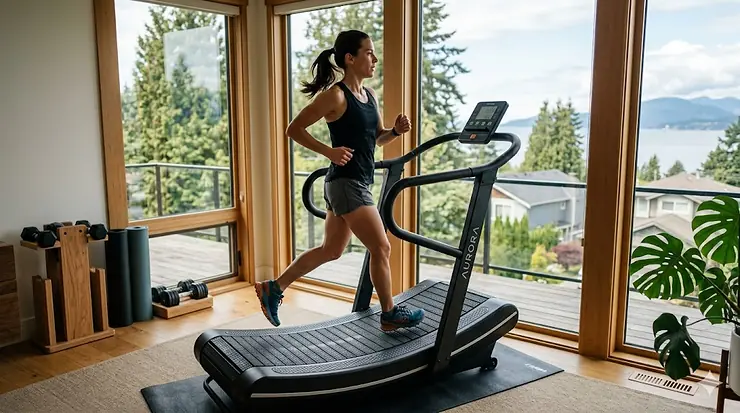
That’s the whole pitch, really. A self-powered treadmill (also called a manual or non-motorized treadmill) uses your own footstrike to drive the belt instead of an electric motor, giving you instant, user-controlled speed with zero electricity draw. No ramp-up lag, no preset pace chasing you down — you set the rhythm, and the machine simply gets out of the way.
It’s a timely conversation, too. Government data shows current Canadian guidelines call for at least 150 minutes of moderate-to-vigorous activity per week, yet activity levels vary widely across age groups and have slipped in recent years. A treadmill that lives in your basement or condo office — one that never needs an outlet, never complains about extension cords, and never breaks down because there’s no motor to burn out — removes about half the excuses people give for skipping a workout in February.
I’ve spent the past few weeks digging through actual Amazon.ca listings, manufacturer spec sheets, and more Reddit and RedFlagDeals threads than I’d like to admit, all to figure out which self-powered treadmills are genuinely worth a Canadian buyer’s money in 2026 — and which ones are just motorized walking pads wearing a “manual” costume. (More on that scam in a minute. It’s more common than you’d think.)
Quick Comparison: Self-Powered Treadmills at a Glance
| Treadmill | Type | Price Range (CAD) | Best For | Amazon.ca |
|---|---|---|---|---|
| Sunny Health & Fitness SF-T1407M | Flat, non-motorized | $150–$220 | Apartment walkers, beginners | ✅ Yes |
| Stamina InMotion Manual Treadmill | Flat, dual flywheel | $180–$260 | Light jogging, small spaces | ✅ Yes |
| Stamina InMotion T900 | Flat, 2-position incline | $220–$320 | Interval walkers | ✅ Likely (check listing) |
| Sunny Health & Fitness Premium Manual | Flat, magnetic resistance | $400–$600 | Heavier users, resistance training | ✅ Likely (check listing) |
| Sunny Health & Fitness SF-X7100 | Curved, commercial-grade | $700–$1,100 | Serious home runners | ✅ Yes |
| Tru Grit Grit Runner | Curved, 6 resistance levels | $1,800–$2,600 | HIIT, sled-push training | ⚠️ Limited — check specialty retailers |
| AssaultRunner Pro | Curved, commercial-grade | $3,900–$4,900 | Athletes, serious home gyms | ❌ Not on Amazon.ca — Canadian fitness retailers |
A glance at that table tells you most of what you need to know: this category splits cleanly into flat budget walkers under $300 CAD, mid-range curved runners in the four-figure range, and a small handful of commercial-grade machines that cost more than a used Civic. The jump from flat to curved isn’t just cosmetic — curved decks let your stride drive the belt through a natural arc rather than a straight pull, which is why the premium models below cost three to ten times more than the entry-level ones. Worth noting for Canadian shoppers specifically: the two cheapest options ship and sell directly through Amazon.ca, while the priciest, most serious machines are sold almost exclusively through Canadian specialty fitness retailers rather than Amazon at all — a pattern we’ll unpack as we go.
💬 Just one click — help others make better buying decisions too! 😊
✨ Don’t Miss These Exclusive Deals!
🔍 Take your home cardio setup to the next level with these carefully selected self-powered treadmills. Click on any highlighted product below to check current pricing and availability on Amazon.ca. These machines will help you build a sweat-soaked, motor-free habit your knees (and your hydro bill) will thank you for!
The 7 Best Self-Powered Treadmills for Canada: Expert Analysis
1. Sunny Health & Fitness SF-T1407M Manual Walking Treadmill
This is the entry point into the category, and it’s an honest one. The SF-T1407M is a flat, fully non-motorized deck with a textured, non-slip surface, a basic LCD console showing time, distance, speed and calories, and a fold-flat frame for storage. There’s no motor to draw current and nothing to plug in — you’re the only moving part that matters.
What the spec sheet won’t tell you: that “non-electric” label is the whole point for condo dwellers. No outlet means you can park it in front of a window, fold it under a bed, or wheel it onto a balcony for a summer sweat session. The catch is that it’s built for walking and light jogging, not sprinting — there’s no momentum carrying the belt, so every step is genuinely you doing the work.
Pros: No assembly headaches, whisper-quiet for shared walls, genuinely electricity-free.
Cons: Belt can feel stiff at first, not built for running speeds.
Around $150–$220 CAD, depending on current promotions — check current price on Amazon.ca.
2. Stamina InMotion Manual Treadmill
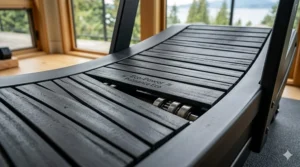
The InMotion has been a budget mainstay for over a decade, and the current version, confirmed available through Amazon.ca, still does the basics well. Dual weighted flywheels keep the belt’s rotation smoother than the single-roller competition, which matters more than it sounds — a wobbly belt at this price point is the single biggest source of one-star reviews in the category.
This is one of the few sub-$300 manual treadmills that holds up for actual light jogging rather than pure walking, thanks to that flywheel setup smoothing out the stride. Canadian buyers should budget extra time for assembly compared to the Sunny model — reviewers note the bolt pattern is a little fiddly the first time through.
Pros: Smoother belt feel, two incline positions (8° and 10°), companion app for guided workouts.
Cons: 250 lb weight capacity is on the low side, console accuracy is rough.
Around $180–$260 CAD.
3. Stamina InMotion T900 Manual Treadmill
Think of the T900 as the InMotion’s slightly more serious sibling. Same dual-flywheel philosophy, same two incline settings, but a sturdier frame and a more refined console tied to the müüv coaching app. For Canadians who want guided interval programming without paying curved-treadmill prices, this hits a sweet spot.
The real-world value here isn’t the incline switch itself — it’s that switching between 8° and 10° lets you simulate Ontario’s gentlest hills without ever stepping outside in March slush. If your winter walking routine usually dies the moment the sidewalks turn to ice rinks, this is the machine that quietly keeps it alive.
Pros: Built-in app coaching, dual flywheels smooth the ride, foldable with transport wheels.
Cons: Same low-ish weight capacity as most flat manual models; not a true running machine.
Around $220–$320 CAD. Availability rotates between Amazon.com and Amazon.ca listings, so confirm the .ca page before assuming Prime eligibility.
4. Sunny Health & Fitness Premium Manual Treadmill
This is Sunny’s heavier-duty flat model, built around adjustable magnetic resistance — up to eight levels — instead of relying purely on user momentum. That resistance dial is the feature that actually separates “fitness equipment” from “glorified walking belt”: it lets a 200-lb user and a 130-lb user both get a real workout on the same machine, just at different settings.
What most buyers overlook is that magnetic resistance also makes the belt feel more consistent stride to stride, which matters a lot if you’re rehabbing a knee or just hate that lurchy first-step feeling cheaper manual treadmills have.
Pros: Adjustable resistance for a real range of fitness levels, commercial-grade frame, handlebar stability.
Cons: Heavier and bulkier — not a fold-and-forget unit; pricier than the basic flat models.
Around $400–$600 CAD.
5. Sunny Health & Fitness SF-X7100 Premium Curve Manual Treadmill
Here’s where the category gets genuinely interesting — and where it’s confirmed sitting on Amazon.ca under its own listing. The SF-X7100 brings the curved-deck design down from “athlete’s basement” pricing into “serious hobbyist” territory. The curve isn’t decorative: it changes how your foot loads the belt through the stride, encouraging a more upright, midfoot-strike running form instead of the heel-stomp that flat belts tend to invite.
This is the model I’d point a Canadian runner toward if they’re tired of motorized treadmills capping their sprint speed. There’s no top-end limiter here — the belt goes exactly as fast as your legs can push it, which is either thrilling or terrifying depending on how honest you are with yourself about your 400m pace.
Pros: Natural stride mechanics from the curved deck, commercial-grade build, no speed ceiling. Cons: Takes real cardiovascular effort even at “easy” pace — a rough surprise for treadmill newcomers; bulkier footprint than flat models.
Around $700–$1,100 CAD.
6. Tru Grit Grit Runner
The Grit Runner is a curved, cordless manual treadmill aimed squarely at CrossFit-style training: six resistance levels ranging from light cardio to a sled-push simulation, with a battery-powered LCD tracking time, distance, calories, speed, and even output in watts. It’s built with a commercial-grade steel and aluminum frame and is positioned as a market leader among self-powered curved treadmills for home gym use.
Canadian availability is the catch — this one isn’t reliably stocked on Amazon.ca, so most Canadian buyers end up ordering direct from the manufacturer or through a specialty fitness retailer, which means budgeting for cross-border shipping, customs handling, and a longer delivery window than Prime users are used to. Worth it if you want sled-push training without an actual sled taking up your garage.
Pros: Six resistance levels for genuinely varied training, watt tracking for data nerds, durable frame.
Cons: Inconsistent Amazon.ca stock; heavier shipping costs to Canada; premium price for a niche use case.
Around $1,800–$2,600 CAD landed.
7. AssaultRunner Pro
The AssaultRunner is the machine you’ve probably seen in a CrossFit gym and assumed was electric, because nobody believes a human can push a belt that smoothly. It’s marketed as a fully athlete-powered curved treadmill, with users controlling their own stride, speed, and output rather than chasing a motor. It’s also engineered with one of the smaller footprints among home treadmills, complete with transport wheels and a console display, and requires no electrical plug-in at all.
This one isn’t sold on Amazon.ca at all — it’s distributed through Canadian fitness retailers like Northern Fitness and The Treadmill Factory, both of which claim to ship from Canadian warehouses with Canadian-based carrier partnerships, which actually works in your favour: local warranty support and no surprise customs invoice at your door, something the Amazon-only brands on this list can’t promise.
Pros: Genuinely commercial-grade durability, Canadian warehouse/warranty support through specialty retailers, no realistic speed ceiling.
Cons: Premium price point; you won’t find Prime shipping or Amazon return policies here.
Around $3,900–$4,900 CAD through Canadian fitness retailers.
How to Choose a Self-Powered Treadmill in Canada
Before you scroll back up and just buy whichever one has the nicest photo, run through this checklist. It’ll save you a return shipment.
- Decide flat or curved first. Flat decks are cheaper and friendlier for walking; curved decks reward running form but demand more effort from minute one.
- Match weight capacity to the actual user, not the marketing number. Most budget flat models cap out around 220–250 lbs — read the fine print, not just the headline spec.
- Check the incline mechanism. Manual-flip inclines (like the Stamina models’ 8°/10° settings) are fine for variety; magnetic resistance dials (Sunny’s Premium line) give finer control.
- Confirm it’s actually non-motorized. Plenty of Amazon listings tagged “manual treadmill” are motorized walking pads with a manually-adjusted incline bar — the motor still runs the belt. If the listing mentions horsepower (HP) anywhere, it has a motor.
- Think about your floor space, not just the box dimensions. Curved treadmills are wider than they look in photos; measure your basement corner before you order.
- Factor in Canadian shipping reality. Budget models ship Prime-fast from Amazon.ca; premium curved machines often ship freight from a Canadian warehouse and take longer — plan around that if you’re buying as a holiday gift.
- Price the warranty situation, not just the sticker price. As you’ll see below, this is where Canadian buyers get genuinely burned if they don’t check first.
Real-World Scenarios: Matching the Machine to Your Canadian Life
The downtown Toronto condo dweller. Limited square footage, thin walls, no garage to hide anything bulky. The Sunny Health & Fitness SF-T1407M is the obvious answer here — it folds flat, makes almost no noise the neighbours below would notice, and needs zero outlet access, so it can live wherever there’s floor space, even a closet corner.
The Ottawa parent training for a spring 5K. Needs more than a stroll, less than a $4,000 commitment. The Stamina InMotion T900 splits that difference nicely: enough incline range to simulate hill repeats indoors during the months when sidewalks are glare ice, with app-guided intervals to keep motivation from cratering in February.
The suburban Calgary home-gym builder. Already has a garage setup, wants something that won’t flinch under serious sprint and sled-push work. This is exactly the buyer the Tru Grit Grit Runner or AssaultRunner Pro is built for — yes, the price tag stings, but a Calgary winter makes outdoor sprint training a four-month-a-year activity at best, and a curved commercial-grade runner closes that gap completely.
Living With a Self-Powered Treadmill Through a Canadian Winter
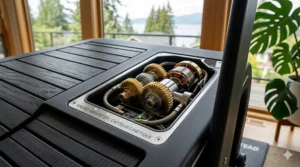
Setup is the easy part — most flat models are out of the box and walking in under fifteen minutes. The part nobody mentions is maintenance, and the good news is there’s almost none. No motor means no drive belt to lubricate, no brushes to replace, nothing to overheat. The only real upkeep is occasionally applying treadmill-specific silicone lubricant under the running belt every few months to keep it gliding rather than dragging — a five-minute job.
Winter-specific tips that actually matter for Canadian basements: if your treadmill lives in an unheated garage or porch, bring the LCD console module inside overnight once temperatures drop below freezing — cheap LCDs can get sluggish or crack in deep cold. If you’re storing a folded unit near a basement window, keep it a few feet back from any spot where winter condensation collects; rust on the frame bolts is the most common complaint in long-term reviews, and it’s entirely preventable. And if salt-tracked boots are a regular feature of your household, a cheap rubber mat under the treadmill saves the belt’s underside from chewing through grit that walked in off the driveway.
Self-Powered vs. Motorized: Unplugged Treadmill Comparison and the Real Human-Powered Treadmill Benefits
The honest answer to “which is better” is: it depends what you’re optimizing for. But the human-powered treadmill benefits are real and measurable, not just marketing fluff. Peer-reviewed research comparing running on a curved, non-motorized treadmill against a traditional motorized one found measurable differences in energy expenditure for equivalent running distances, and separate research on self-propelled treadmills recorded meaningfully higher oxygen consumption during walking compared to a motorized treadmill at matched speeds — in plain English, your body works harder per stride when it’s also responsible for moving the belt.
| Factor | Self-Powered | Motorized |
|---|---|---|
| Electricity cost | $0 | Ongoing draw, even idle |
| Speed control | Instant, user-controlled, no cap | Set-and-follow, often capped |
| Maintenance | Near zero (no motor) | Belt lubrication + motor wear over years |
| Calorie burn (same effort) | Generally higher per the research above | Baseline |
| Upfront cost | Wide range, budget-friendly entry point | Often cheaper at entry, pricier for true commercial-grade |
| Best for | Running form work, HIIT, off-grid use | Steady-state cardio, walking desk setups, treadmill-while-working |
The takeaway from that table: if your goal is pure calorie-torching efficiency or training that mimics outdoor running, self-powered wins on the numbers. If your goal is walking at a fixed, gentle pace for hours while you’re on a work call, a motorized walking pad with auto-incline is honestly the better tool — there’s no shame in admitting energy-efficient design sometimes just means “let the motor do it.”
Common Mistakes Canadian Buyers Make
Buying a self-powered treadmill sounds simple, but a few patterns show up again and again in Canadian buyer reviews and forum threads:
- Assuming “manual” always means motor-free. As mentioned above, plenty of listings labeled “manual treadmill” on Amazon are actually motorized walking pads with a manually adjusted incline. Always check the spec sheet for an HP rating — if there is one, there’s a motor.
- Ignoring the Canadian warranty gap. There’s a recurring complaint in Canadian buyer forums that Sunny Health & Fitness products purchased through Amazon.ca or Costco haven’t always come with the same warranty coverage Canadians expect, with some buyers unsure whether any warranty applies locally at all. Confirm warranty terms before you buy, not after something squeaks.
- Underestimating the learning curve on curved decks. First-timers on curved treadmills often expect them to feel like a flat belt with a bend in it. They don’t — your stride mechanics change, and the first few sessions can be genuinely humbling.
- Buying based on box dimensions alone. Curved treadmills in particular look more compact in product photos than they are once they’re unboxed and in your basement corner.
- Forgetting cross-border shipping math. For premium machines not listed on Amazon.ca, factor in freight, possible duties, and longer delivery windows before comparing the sticker price to a US site.
Long-Term Cost & Maintenance in Canada
This is where self-powered treadmills genuinely earn their keep. A motorized treadmill’s biggest hidden cost isn’t the electricity — it’s the motor and drive belt replacement that eventually shows up around year five to seven of regular use, often running $150–$400 CAD in parts and labour. Self-powered models simply don’t have that bill waiting for them, because there’s no motor to wear out in the first place.
Run the numbers over a decade: a $200 CAD flat manual treadmill with the occasional $10 bottle of belt lubricant costs you maybe $250 CAD total over ten years of use. A motorized treadmill bought for the same $200 CAD entry price will likely need a motor or belt repair — or outright replacement — at least once in that window, on top of the electricity it draws every single session. The math tilts hard toward self-powered once you stop comparing sticker prices and start comparing total cost of ownership.
Canadian Regulations & Safety Standards
Home fitness equipment sold in Canada isn’t subject to the same kind of mandatory third-party certification regime as, say, electrical appliances — there’s no motor here, after all, which sidesteps most Canadian Electrical Code requirements that apply to powered gym equipment. That said, look for CSA-marked accessories (power adapters for console displays, where applicable) and check that bilingual product labelling is present, which is a legal requirement for goods sold in Canada regardless of where the manufacturer is based. Health Canada’s own physical activity guidance notes that activity recommendations apply broadly to adults without a diagnosed condition, and suggests consulting a health professional if you’re unsure what’s appropriate for you — worth a quick check-in with your doctor before jumping onto a curved treadmill if you have any pre-existing joint or balance concerns.
Frequently Asked Questions
❓ What is a self-powered treadmill?
❓ Are self-powered treadmills good for running, or just walking?
❓ Can I use a self-powered treadmill in an unheated Canadian garage?
❓ What's the best self-powered running machine for marathon training?
❓ Does Amazon.ca ship self-powered treadmills free, and are all models available there?
Conclusion
If there’s one thing this whole category proves, it’s that “no motor” doesn’t mean “no options.” Whether you’re a condo dweller who just wants to walk while watching Netflix, or a Calgary HIIT enthusiast who wants to sled-push without an actual sled, there’s a self-powered treadmill built for exactly that — and increasingly, it’s just a few clicks away on Amazon.ca.
Start at the bottom of the price ladder if you’re testing the waters; the Sunny SF-T1407M or Stamina InMotion will tell you fast whether manual treadmills suit your training style before you commit real money. If you already know you want running-grade performance, the SF-X7100 is the best value jump into curved decks, with the Grit Runner and AssaultRunner Pro waiting at the top for anyone ready to treat their home gym like a serious training facility.
Either way, you’ll never again need to find an outlet for your cardio — and your hydro bill, for what it’s worth, won’t even notice you worked out.
✨ Ready to Ditch the Power Cord?
🔍 Browse the full self-powered treadmill lineup and lock in your pick before Canadian stock fluctuates. Click through to check current pricing and availability on Amazon.ca — your motor-free, sweat-soaked future is one click away!
Recommended for You
- Best Non Electric Treadmill Canada 2026: 7 Top Picks Reviewed
- 7 Best Flat Manual Treadmill Picks for Canada in 2026 (Honest Review)
- 7 Best Curved Manual Treadmills in Canada (2026): Honest Picks
Disclaimer: This article contains affiliate links. As an Amazon Associate, I earn from qualifying purchases. If you purchase products through these links, we may earn a small commission at no additional cost to you.
✨ Found this helpful? Share it with your friends! 💬🤗
