In This Article
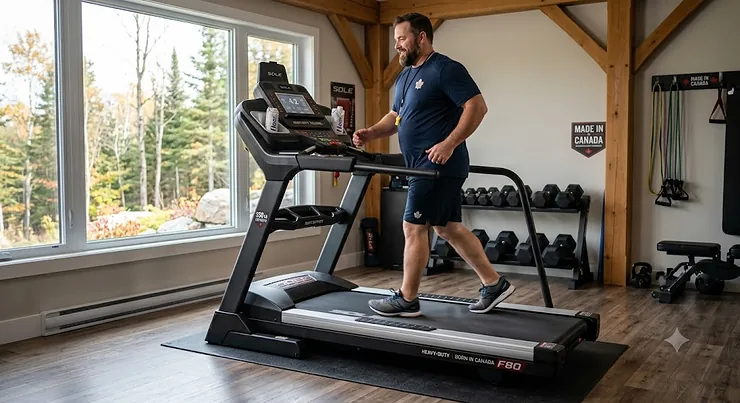
If you’ve ever stepped onto a standard treadmill and felt it wobble, heard the motor strain, or noticed the running belt bunching under your feet, you already know the frustration. The truth is, most consumer treadmills are quietly engineered for a 150 lb (68 kg) runner — and for anyone significantly above that, those machines aren’t just uncomfortable; they’re genuinely unsafe. That’s exactly why finding the right heavy duty treadmill for large person matters so much.
I’ve spent weeks researching the Canadian market — digging into Amazon.ca listings, comparing specs, reading through hundreds of buyer reviews (with a special eye on Canadian feedback), and stress-testing what these machines actually deliver beyond their glossy spec sheets. The result is this guide: seven real, Canadian-available options that can genuinely handle high weight capacity training day after day.
What separates a true heavy duty treadmill for large person from marketing fluff? According to the Canadian Society for Exercise Physiology (CSEP), adults are encouraged to accumulate 150–300 minutes of moderate-to-vigorous aerobic activity per week — and for larger individuals, having equipment that matches their body safely is fundamental to sticking to that goal. A reinforced frame, a powerful continuous-duty motor rated at 3.0 CHP or higher, an extra-wide running belt of at least 51 cm (20 inches), and a verified weight capacity of 160 kg (350 lbs) or more aren’t “premium upgrades” — they’re baseline requirements.
All prices referenced in this article are in CAD, and all products listed are available on Amazon.ca or through major Canadian fitness retailers. Let’s get into it.
Quick Comparison: 7 Best High Weight Capacity Treadmills for Canada
| Model | Weight Capacity | Motor | Belt Size | Price Range (CAD) | Best For |
|---|---|---|---|---|---|
| Sole TT8 | 181 kg (400 lbs) | 4.0 CHP | 56 × 152 cm | $3,200–$3,800 | Serious runners, semi-commercial use |
| NordicTrack Commercial 1750 | 181 kg (400 lbs) | 3.75 CHP | 56 × 152 cm | $2,400–$2,900 | Smart training + folding storage |
| NordicTrack X16i | 181 kg (400 lbs) | 4.25 CHP | 56 × 152 cm | $3,800–$4,500 | Incline training, premium users |
| Bowflex Treadmill 22 | 181 kg (400 lbs) | 4.0 CHP | 56 × 152 cm | $2,800–$3,400 | Subscription fitness enthusiasts |
| Horizon 7.8 AT | 170 kg (375 lbs) | 4.0 HP | 56 × 152 cm | $2,000–$2,500 | Mid-budget heavy runners |
| XTERRA Fitness TRX4500 | 159 kg (350 lbs) | 3.25 CHP | 56 × 147 cm | $1,500–$1,900 | Budget-conscious larger users |
| Landice L8 Cardio Trainer | 227 kg (500 lbs) | 4.0 HP | 56 × 152 cm | $5,000–$6,200 | Bariatric users, maximum durability |
The table above makes one thing immediately clear: the difference between budget and premium isn’t just about features — it’s about engineering margins. The Sole TT8 and NordicTrack X16i both hit the 400 lb mark with commercial-grade frames, meaning they’re engineered with a safety buffer well above their stated limit. If you’re at or near that ceiling, that margin matters far more than which touchscreen you prefer. Budget buyers should note that the XTERRA TRX4500’s lower capacity still serves users up to 159 kg (350 lbs) reliably — but for anyone heavier, stepping up to the Sole or NordicTrack tier is a sound investment in both safety and longevity.
💬 Just one click — help others make better buying decisions too! 😊
✨ Don’t Miss These Exclusive Deals!
🔍 Take your home fitness to the next level with these carefully selected heavy duty treadmills. Click on any highlighted item to check current pricing and availability on Amazon.ca. These machines are built to give larger Canadians a safe, comfortable, and effective workout — season after season.
Top 7 Heavy Duty Treadmills for Large Person: Expert Analysis
1. Sole TT8 Treadmill — Best Overall for Heavy Runners in Canada
The Sole TT8 is the gold standard for anyone serious about long-term, high-weight cardio training at home — and it earns that title honestly. Before Sole entered the consumer market, they manufactured semi-commercial gym equipment for hotels and fitness centres, and that DNA runs straight through the TT8.
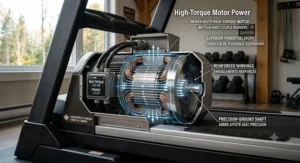
The 4.0 CHP continuous-duty motor handles up to 181 kg (400 lbs) of user weight without the “grunt and slow” you’ll notice on underpowered machines. What the spec sheet won’t tell you is that the three-inch crowned rollers distribute belt load far more evenly than the standard 1.5-inch rollers found on budget machines, dramatically reducing wear — crucial if you’re running daily. The 56 × 152 cm (22″ × 60″) running deck gives taller Canadians enough stride room without feeling cramped, and the Custom Flex Adjustable Cushioning lets you dial joint absorption up or down depending on whether you’re walking for recovery or pushing a tempo run.
In my assessment, the TT8 is the best pick for Canadians who weigh 145–180 kg (320–400 lbs) and plan to use their treadmill five or more times per week. It’s not a machine you’ll need to replace in two years. Canadian buyers also benefit from Sole’s light commercial warranty, which includes lifetime coverage on the frame and motor — a meaningful advantage when you factor in the cost of repairs or replacements in Canada.
Canadian reviewers consistently highlight the machine’s stability and the absence of the frame flex that plagues lighter-built models. One Quebec-based buyer noted it “feels like a gym treadmill, not a home version.”
✅ Semi-commercial motor and rollers
✅ Lifetime frame and motor warranty
✅ Custom Flex cushioning for joint protection
❌ Non-folding — requires dedicated floor space
❌ Heavy at approximately 150 kg (330 lbs) — delivery and setup need planning
Price range: around $3,200–$3,800 CAD — premium, but built to outlast three budget treadmills.
2. NordicTrack Commercial 1750 Treadmill — Best Foldable Heavy Duty Option
If you live in a Toronto condo, a Vancouver apartment, or any Canadian home where space is a premium, the NordicTrack Commercial 1750 solves a problem most heavy-duty treadmills don’t even try to address: it folds. And it folds cleanly, with a hydraulic SpaceSaver design that lets the deck flip up without needing a second person or a back injury.
The 3.75 CHP motor supports up to 181 kg (400 lbs), and the 56 × 152 cm running deck matches the Sole TT8’s footprint. The real differentiator here is iFIT — NordicTrack’s interactive training platform, where certified trainers can remotely control incline and speed on your actual treadmill during on-demand classes. This isn’t a gimmick; for larger individuals who benefit from guided, low-impact progression, having a trainer adjust your pace intelligently is genuinely useful. The 16″ pivoting HD touchscreen also means you can rotate the display for off-treadmill workouts.
The Commercial 1750 suits Canadians who want the structure of studio fitness classes without the gym membership — and for larger users who feel self-conscious at public gyms (a very real barrier cited in Canadian fitness research), this machine’s living-room privacy factor is a legitimate benefit.
Canadian reviewers praise the cushioning, with the FlexSelect deck absorbing impact noticeably better than cheaper alternatives. A few note that delivery to rural or northern addresses can take 10–14 business days, so plan accordingly.
✅ Foldable SpaceSaver design — condo and basement-friendly
✅ iFIT integration with automatic speed/incline control
✅ 400 lb capacity with solid, reinforced steel frame
❌ Requires ongoing iFIT subscription for full functionality
❌ Motor rated slightly lower than the TT8 for very heavy daily use
Price range: $2,400–$2,900 CAD — strong value for the feature set.
3. NordicTrack X16i Incline Trainer — Best for Incline Training at High Weight
The NordicTrack X16i isn’t a treadmill in the conventional sense — it’s an incline trainer, which means it goes steeper than almost anything else in its class: up to a 40% incline and -6% decline. For larger users, this matters enormously. Walking at a 15–20% incline burns more calories than running on a flat surface while placing far less impact on your knees and ankles. For anyone rebuilding fitness after injury, or for Canadians who spend long winters indoors and need maximum caloric burn without maximum joint stress, this machine is a game-changer.
The 4.25 CHP motor is the most powerful on this list and handles the 181 kg (400 lb) weight capacity without breaking a sweat at steep inclines. The 56 × 152 cm deck and cantilevered frame design flex slightly underfoot to maximise comfort — our research found testers calling it “the most stable treadmill” they’d used. The 16″ or 24″ HD touchscreen (depending on your configuration) streams iFIT content, Netflix, and Prime Video.
What most Canadian buyers overlook is the ceiling height requirement: at maximum incline with a taller user, you’ll want at least 2.5 metres (8 feet) of clearance. Lower-ceiling basements common in Canadian homes built before 1990 may be a problem — measure before you order.
✅ 40% incline range — unmatched for low-impact caloric burn
✅ Most powerful motor on this list
✅ Cantilevered frame for superior stability
❌ Very large footprint — NordicTrack recommends 2.1 m clearance on each side
❌ Premium price point; requires iFIT for full use
Price range: $3,800–$4,500 CAD — a serious investment for serious users.
4. Bowflex Treadmill 22 — Best for Fitness Content & Smart Training
The Bowflex Treadmill 22 is the treadmill equivalent of buying a home theatre system instead of just a TV — more feature-rich, more immersive, and admittedly more expensive than the basics. The triangulated upright design (unique to Bowflex) reinforces the console’s stability and creates a visually striking machine that actually looks good in a home gym setup.
At 181 kg (400 lbs) capacity and a 4.0 CHP motor, the hardware credentials match the Sole TT8, but where Bowflex wins is in the JRNY app ecosystem. JRNY provides AI-personalised workouts that adapt as your fitness improves, which is a meaningful advantage for larger individuals who are rebuilding baseline conditioning — the app doesn’t start you at an intermediate runner’s pace and expect you to keep up. The 56 × 152 cm deck and 22″ HD touchscreen round out an impressive package.
For Canadians who thrive with structure and accountability, the Bowflex + JRNY combination delivers a personal-trainer-style experience within the privacy of home — something worth real money if it keeps you consistent through the long Canadian winter months from November through March.
✅ JRNY adaptive AI training — adjusts to your fitness level
✅ Triangulated uprights for extra console stability
✅ 400 lb capacity with a 4.0 CHP motor
❌ JRNY subscription required beyond the free trial
❌ Larger footprint than the foldable 1750
Price range: $2,800–$3,400 CAD — justified if you’ll actually use the smart features.
5. Horizon 7.8 AT Treadmill — Best Mid-Budget Heavy Runner Treadmill
Not everyone in Canada needs to spend $3,000+ to get a quality heavy-duty treadmill — and the Horizon 7.8 AT makes that case convincingly. With a 170 kg (375 lbs) weight capacity, a 4.0 HP motor, and a lifetime warranty on both the frame and motor, it punches well above its price bracket.
What I find genuinely impressive about the 7.8 AT is its three-zone cushioning: softer in the front landing zone for impact absorption, firmer at the rear push-off zone for a stable stride. Most treadmills don’t bother with this kind of nuance, and for heavier runners whose joints are under increased load, this design detail genuinely reduces long-term wear on knees and hips. The QuickDial controls let you scroll through speed and incline settings intuitively, without fumbling with a touchscreen during a hard session.
The 7.8 AT suits Canadians in the 115–165 kg (250–365 lbs) range who want a machine that’s built to last without the premium price tags of the Sole or NordicTrack tier. Horizon is owned by Johnson Health Tech, a major commercial equipment manufacturer, so the engineering quality behind this consumer model is stronger than the modest price implies.
✅ Lifetime frame and motor warranty — rare at this price
✅ Three-zone cushioning for heavy-runner joint protection
✅ Foldable for space efficiency
❌ 375 lb capacity falls short for users above 170 kg
❌ Smaller display vs. NordicTrack/Bowflex competitors
Price range: $2,000–$2,500 CAD — excellent value for what you get.
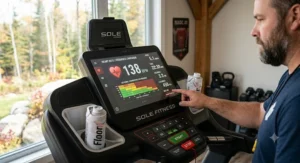
6. XTERRA Fitness TRX4500 Treadmill — Best Budget Option Available on Amazon.ca
The XTERRA TRX4500 occupies an important market space: it’s the best option for Canadians who need a reinforced treadmill but can’t justify a $2,500+ investment right now. With a 159 kg (350 lbs) weight capacity, a 3.25 CHP motor, and a 56 × 147 cm (22″ × 58″) running deck, it covers the fundamentals without the premium price.
XTERRA is well-represented on Amazon.ca and ships across Canada, including Prime-eligible delivery in most provinces. The steel frame is more rigid than most machines in its price tier, and the 15% incline range gives you enough gradient variety to make workouts challenging. The display is functional rather than flashy — a simple LED panel with basic metrics — which is fine if you prefer to listen to podcasts rather than stream classes.
The honest assessment: if you’re currently 130–155 kg (290–340 lbs) and working towards a fitness goal, the TRX4500 is a solid starting machine. But if you’re consistently at or near 159 kg, I’d encourage stretching the budget to the Horizon 7.8 AT — the extra weight margin and superior warranty are worth the difference when the alternative is replacing the machine in 18 months.
✅ Widely available on Amazon.ca with Prime shipping
✅ Most affordable 350+ lb capacity option
✅ Solid steel reinforced frame
❌ 350 lb limit is the lowest on this list
❌ Basic display — no smart features or streaming
Price range: $1,500–$1,900 CAD — best entry-level heavy-duty option in Canada.
7. Landice L8 Cardio Trainer — Best for Bariatric Users (500 lb Capacity)
The Landice L8 exists in a category most treadmills don’t even attempt: true bariatric fitness equipment. With a 227 kg (500 lbs) weight capacity, a full 2.5 cm (1″) thick reversible running deck, and welded (not bolted) frame construction, this machine is engineered for users who are simply too heavy for everything else on this list.
That 1″ deck thickness matters more than almost any other spec for heavier users. At 200+ kg (440+ lbs) in motion, the ground reaction force transmitted through a treadmill deck can be three times your body weight — that’s potentially 600 kg of dynamic load. A 1″ MDF deck with welded frame attachments distributes that load safely. Cheaper decks flex and crack under repeated stress. The L8 doesn’t.
For Canadian buyers in this weight range, I also want to address the practical reality: delivery and setup require professional installation. The machine weighs approximately 180 kg (400 lbs) itself, and attempting to carry it through a standard Canadian doorway (typically 81 cm / 32 inches wide) requires careful measurement. Contact Landice’s Canadian distributor before ordering to discuss white-glove delivery options. At this price point, they’re absolutely available.
✅ 500 lb weight capacity — highest on this list
✅ 1″ welded deck — maximum structural integrity
✅ Commercial-grade longevity; light commercial warranty available
❌ Premium price point — not accessible for most budgets
❌ Requires professional delivery and installation in Canada
Price range: $5,000–$6,200 CAD — the definitive bariatric treadmill investment.
How to Get the Most Out of Your Heavy Duty Treadmill: A Canadian Setup Guide
Buying the right machine is only half the equation. What most Canadian buyers do in the first 30 days directly determines whether their treadmill becomes a daily habit or an expensive drying rack.
Before your first session: Check your floor surface. A heavy-duty treadmill sitting on hardwood or tile without a proper mat will scratch floors and transmit vibration to the room below — a real issue in condos or multi-storey homes. A quality rubber treadmill mat (roughly 6 mm thick) absorbs noise, protects flooring, and stabilises the machine’s feet on any surface. Budget $80–$150 CAD for one — it’s not optional for apartment dwellers.
During Canadian winter months (November–March): If your treadmill lives in a garage or unheated basement, be aware that temperatures below -5°C can affect belt lubrication. Most heavy-duty treadmill decks use silicone lubricant that becomes viscous in the cold, increasing motor strain on startup. Either move the machine to a heated space or run a brief five-minute warm-up walk at low speed before your main session. Never cold-start at full speed in sub-zero conditions — it prematurely wears the drive motor.
Lubrication schedule: Most commercial-grade treadmill belts need silicone lubricant every 500–800 km. Mark a calendar and don’t skip it. A $15 CAD tube of treadmill silicone spray from Amazon.ca is the cheapest maintenance investment you’ll make, and neglecting it on a $3,000 machine is the most common cause of avoidable motor damage.
Pacing your progress: Obesity Canada’s clinical practice guidelines recommend that aerobic physical activity for adults living with overweight or obesity should start at low intensity and build over weeks, not days. Begin with 20-minute walks at 4–5 km/h on a flat surface. Add five minutes per week and introduce a gentle 2–3% incline after your second week. Rushing progression is the leading cause of abandonment and injury in new treadmill users at any weight.
Real Canadian User Profiles: Which Treadmill Fits Your Life?
Sometimes the best way to cut through the specs is to see yourself in a scenario. Here are three distinct Canadian user profiles and the treadmill I’d match them to.
Profile 1 — The Toronto Condo Dweller (167 kg / 370 lbs, apartment gym goals) Marco lives in a 700 sq ft condo in the Junction neighbourhood. He works from home and wants an indoor cardio solution that doesn’t annoy downstairs neighbours or eat his living room. He needs a foldable machine with strong noise dampening and a 370+ lb capacity. → NordicTrack Commercial 1750: folds flat against the wall, iFIT cushioning absorbs impact quietly, and the 400 lb capacity gives him real headroom. The hydraulic folding mechanism means he can fold and unfold it solo without waking anyone up. He’d invest in the rubber mat as well.
Profile 2 — The Calgary Suburbs Retiree (150 kg / 330 lbs, rebuilding fitness after knee surgery) Donna is 62, lives in a detached home in Airdrie, and has a half-finished basement she wants to convert to a basic home gym. She walks daily but running is off the table for at least a year post-surgery. She values long-term durability and low joint impact over smart features. → Sole TT8: the Custom Flex cushioning can be dialled to maximum softness, the commercial warranty is reassuring for a long-term investment, and the non-folding design means it’s always set up and ready — no excuse to skip a morning walk.
Profile 3 — The Winnipeg First-Time Fitness User (120 kg / 265 lbs, budget-conscious) Kevin is just starting his fitness journey, weighs 120 kg, and wants something that will support him as he builds from walking to light jogging. He’s on a tighter budget and wants Amazon.ca Prime delivery. → XTERRA TRX4500: right at his weight range with meaningful headroom, available on Amazon.ca with Prime, and priced to not break the bank while he establishes his routine. If he sticks with it and approaches 150 kg, he upgrades to the Horizon or Sole tier — but this is the right starting machine.
How to Choose a Heavy Duty Treadmill for Large Person in Canada: 6 Key Criteria
Choosing the right plus size treadmill involves more than picking the highest weight limit you can find. Here’s how to approach it methodically.
1. Match weight capacity to your real-world number — then add 20%. If you weigh 160 kg, don’t buy a machine rated for 163 kg. Physics doesn’t honour technicalities: the ground reaction force while running is 2–3× your body weight, meaning a 160 kg runner generates up to 480 kg of dynamic load per stride. A machine rated for 181 kg (400 lbs) gives you genuine safety margin.
2. Motor rating: CHP over HP. Continuous Horsepower (CHP) reflects what a motor sustains under load, not its peak performance in ideal lab conditions. For users above 130 kg (285 lbs), look for a minimum of 3.0 CHP. Below that number and the motor will heat up, reduce speed, and eventually fail under consistent heavy use.
3. Belt width: 51 cm (20″) minimum, 56 cm (22″) preferred. Wider users have a naturally wider gait. A narrow belt doesn’t just feel cramped — it forces an unnatural stride pattern that increases injury risk. Every machine on this list meets or exceeds the 56 cm standard.
4. Frame construction: welded vs. bolted. Bolted frames flex slightly under load. For users above 160 kg (350 lbs), a welded steel frame is meaningfully more durable. This is why the Landice L8 is the right choice for true bariatric users — welded construction is non-negotiable at the 200+ kg level.
5. Deck thickness: closer to 2.5 cm (1″) is better. Deck thickness directly correlates with impact absorption and longevity under heavy use. The Landice L8’s full 2.5 cm reversible deck is the benchmark; most solid machines in the $2,500–$3,500 CAD range use a 1.9–2.2 cm deck, which is adequate for the 180 kg range.
6. Warranty coverage in Canada. Cross-border warranty claims can be a headache. NordicTrack, Sole, Bowflex, Horizon, and XTERRA all have established Canadian service networks. Before purchasing, verify that your machine’s warranty is honoured in your province — particularly in Quebec, where consumer protection regulations under the Consumer Protection Act (Loi sur la protection du consommateur) offer additional buyer rights beyond standard manufacturer warranties.
Treadmill Weight Capacity vs. User Weight: The Real Math
One of the most misunderstood concepts in the heavy duty treadmill market is weight capacity itself. I want to give you the real picture.
Research cited by fitness biomechanics experts notes that the ground reaction force (GRF) produced during running is two to three times a person’s body weight — meaning a 91 kg (200 lb) runner generates 182–272 kg of dynamic force per stride on the belt. For a 160 kg (350 lb) runner, that’s 320–480 kg of force, repeatedly, thousands of times per session.
This is why the stated weight capacity of a treadmill represents its static load rating — how much weight it can bear standing still — not its dynamic running rating. Quality manufacturers engineer in a safety margin of 20–30% above the stated capacity. Budget manufacturers do not always follow this practice.
The practical implication: if you’re a heavier person who runs rather than walks, size up your weight capacity choice by at least one tier compared to what you’d need for walking alone. A 140 kg (310 lb) person who intends to jog should consider a 180 kg (400 lb) rated machine at minimum, not a 160 kg (350 lb) one.
Bariatric Fitness Equipment vs. Standard Treadmills: Is the Investment Worth It?
| Feature | Standard Treadmill ($800–$1,500 CAD) | Heavy Duty / Bariatric Treadmill ($2,000–$6,000 CAD) |
|---|---|---|
| Weight capacity | 113–136 kg (250–300 lbs) | 159–227 kg (350–500 lbs) |
| Motor (CHP) | 1.5–2.5 CHP | 3.0–4.25 CHP |
| Belt width | 43–48 cm (17–19″) | 51–56 cm (20–22″) |
| Frame construction | Bolted steel | Welded or reinforced steel |
| Deck thickness | 1.2–1.7 cm | 1.9–2.5 cm |
| Warranty (motor) | 5–10 years | Lifetime (premium tier) |
| Expected lifespan at heavy use | 2–4 years | 8–15+ years |
The cost-per-year analysis here is genuinely important for Canadian buyers making a budgeting decision. A $1,200 CAD standard treadmill used heavily by a 150 kg person may last two years before motor failure or frame fatigue — that’s $600/year. A $3,500 CAD Sole TT8 with a lifetime motor warranty used for 12+ years works out to under $300/year, with zero motor replacement costs. The long-term value of bariatric fitness equipment is a far better proposition than the sticker price suggests.
The Obesity Canada clinical guidelines also emphasise the role of consistent, safe aerobic activity in long-term weight management — and consistent activity requires equipment that won’t break down and derail your routine. In that context, a heavy duty treadmill for large person isn’t a luxury. It’s an infrastructure investment in your health.
Common Mistakes When Buying a Plus Size Treadmill in Canada
🚫 Buying by price alone. The cheapest machine with a “400 lb” label may be using peak motor ratings, not continuous-duty ratings, and may have bolted rather than welded frames. In Canada, consumer protection standards for fitness equipment labelling aren’t as stringent as some buyers expect — always verify CHP (not just HP) and look for independent reviewer confirmation.
🚫 Ignoring Canadian winter storage. If your treadmill lives in an unheated garage, the cold affects belt elasticity, lubricant viscosity, and electronics. Buy a treadmill cover and ensure you’re using cold-weather-appropriate silicone lubricant. Brands like Sole and NordicTrack specify operating temperature ranges — check these before placing your machine in a cold basement.
🚫 Underestimating delivery logistics. A 150 kg treadmill being delivered to a second-floor apartment in an older Montreal walk-up is a very different proposition from delivery to a suburban Toronto bungalow. Most Amazon.ca deliveries are curbside only for heavy items — budget for professional white-glove delivery if your setup requires it ($150–$300 CAD typically).
🚫 Skipping the floor mat. A $100 CAD rubber mat prevents hundreds of dollars in flooring damage and reduces noise transmission in multi-unit dwellings. Without it, the vibration from a heavy-duty treadmill on hardwood will be your downstairs neighbour’s new alarm clock.
🚫 Assuming US warranty coverage applies in Canada. Several well-known treadmill brands sell in both countries but maintain separate warranty and service networks. Always confirm Canadian warranty coverage at the point of purchase — particularly for brands operating primarily in the US market.
Features That Actually Matter (And Those That Don’t)
Features that genuinely matter for heavier users:
- CHP motor rating (continuous) — non-negotiable; peak HP means nothing for daily heavy use
- Roller diameter — 7.5 cm (3 inches) or larger significantly reduces belt wear at high loads
- Deck cushioning system — not all cushioning is equal; adjustable systems let you customise joint impact
- Handrail stability — extended, sturdy handrails are a genuine safety feature for larger users at higher inclines
Features that are nice but secondary:
- Touchscreen size — does not affect machine performance in any way
- Speed range above 16 km/h (10 mph) — few heavy users run at sprint speeds; this is a marketing spec more than a practical one
- Built-in speakers — earphones exist and cost $30 CAD
- Compatibility with fitness apps — useful, but meaningless if the motor fails in year two
Features that are often marketing noise:
- “3.5 HP motor” without specifying CHP vs. peak — always clarify
- “Advanced cushioning” — specific to no particular technology; ask for deck thickness instead
- Calorie counter accuracy — treadmill calorie estimates are notoriously inaccurate for all users, but especially for heavier individuals whose metabolic rate differs from the machine’s default calculations
FAQ
❓ What weight capacity do I need in a heavy duty treadmill for large person?
❓ Are heavy duty treadmills with 400 lbs capacity available on Amazon.ca in Canada?
❓ What is bariatric fitness equipment and do I need it?
❓ Can I use a heavy duty treadmill in a cold Canadian basement or garage?
❓ What warranty should I expect when buying a plus size treadmill in Canada?
Conclusion
Choosing the right heavy duty treadmill for large person in Canada isn’t about finding the biggest price tag or the flashiest touchscreen. It’s about matching engineering to your actual body, your actual Canadian climate, and your actual fitness goals.
For most buyers in the 145–180 kg (320–400 lbs) range, the Sole TT8 represents the best all-round investment: semi-commercial durability, lifetime warranty, and a running experience that actually feels stable underfoot. If space is your constraint, the NordicTrack Commercial 1750 delivers comparable capacity with the folding convenience that makes daily use realistic in a Canadian home. Budget-conscious shoppers starting their fitness journey should look seriously at the XTERRA TRX4500 as a capable, Amazon.ca-available starting point.
Whatever you choose, the most important thing is this: consistency beats perfection. The best treadmill is the one you’ll actually use three or four times a week, through the dark January mornings and the summer heat alike. Research your machine, buy for your real weight not your aspirational weight, and invest in a quality rubber mat for your floors. Your joints — and your downstairs neighbour — will thank you.
✨ Don’t Miss These Exclusive Deals!
🔍 Ready to invest in your fitness? Click any highlighted product to check current pricing and availability on Amazon.ca. These heavy duty treadmills for large person are built to support your goals safely, quietly, and for years to come — right here in Canada. 🇨🇦
Recommended for You
- 7 Best Non-Folding Treadmills Canada 2026
- Best Ultra Compact Treadmill in Canada 2026: 7 Top Picks
- Best Quiet Treadmill for Apartment in Canada 2026 (Top 7 Picks)
Disclaimer: This article contains affiliate links. As an Amazon Associate, I earn from qualifying purchases. If you purchase products through these links, we may earn a small commission at no additional cost to you. All prices are approximate CAD ranges at the time of research and are subject to change. Always verify current pricing and availability on Amazon.ca.
✨ Found this helpful? Share it with your friends! 💬🤗
