
In This Article
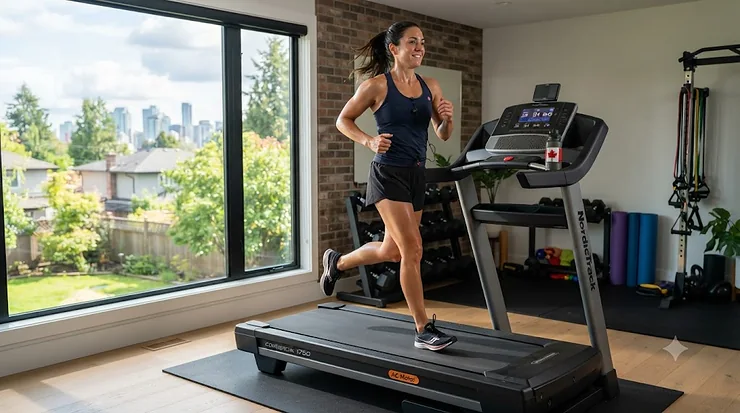
Somewhere between the treadmill you had in university — the one that squealed like a dying seagull every time you hit 8 km/h — and the machine at your local gym that just… works, forever, without complaint, sits a piece of engineering most shoppers never think to ask about: the motor. Specifically, whether it runs on AC or DC power. An AC motor treadmill is a treadmill powered by an alternating-current, continuous-duty motor — the same fundamental motor technology used in commercial gym equipment — built to run at a steady torque for hours without overheating, rather than relying on the brushed DC motors found in most budget home units. If you’ve ever wondered why your neighbourhood fitness club’s treadmills survive a decade of daily abuse while a $600 big-box treadmill dies in eighteen months, the motor is most of the answer.
This guide exists because “just buy whatever’s on sale” is genuinely bad advice for anyone planning to log serious kilometres. We dug into real specifications, continuous horsepower ratings, and aggregated owner feedback across seven actual AC motor treadmills — from light-commercial home units to full gym-floor workhorses — so you can figure out which duty class actually matches how you’ll use the thing. Whether you’re comparing an AC vs DC motor treadmill for the first time, hunting for the best AC motor treadmill for home gym use, or specifically shopping for a heavy-duty treadmill motor that can survive a household of runners, you’ll find the honest comparisons below. According to Canada’s 24-Hour Movement Guidelines, consistent moderate-to-vigorous activity is one of the biggest levers for long-term health — and a treadmill that doesn’t break down is the difference between a habit and a garage ornament.
Quick Comparison Table
Before we get into the weeds, here’s the 30-second version. All prices are approximate ranges in Canadian dollars and will shift with promotions, so always check the current listing before buying.
| Treadmill | Motor | Top Speed | Best For | Price Range (CAD) |
|---|---|---|---|---|
| Matrix T75 | 3.0 CHP continuous-duty AC | 12 mph (19.3 km/h) | All-around home gym upgrade | C$5,500–C$6,900 |
| LifeSpan TR6000i | 3.5 HP AC | 13.5 mph (21.7 km/h) | Light-commercial home use | C$4,000–C$4,700 |
| Inflight Fitness M6 | 3.5 HP AC | 12 mph (19.3 km/h) | Portable multi-room setups | C$4,800–C$5,600 |
| Star Trac 4 Series | 5.0 HP AC | 12 mph (19.3 km/h) | Budget entry into true commercial power | C$5,000–C$5,900 |
| LifeSpan TR7000iM | 5.0 HP commercial AC | 12 mph (19.3 km/h) | Heavy daily runners | C$6,700–C$7,900 |
| Life Fitness 95T Discover SE (certified pre-owned) | Commercial AC | 12 mph (19.3 km/h) | Best value on proven commercial hardware | C$5,300–C$6,000 |
| Woodway 4Front | Continuous-duty AC/servo | 15–18 mph (24–29 km/h) | Serious athletes, premium buyers | C$18,500 and up |
Look at that spread for a second — there’s roughly a C$14,000 gap between the cheapest and most expensive machine on this list, and yet every single one is built around the same core idea: a motor that doesn’t quit. What separates them is duty cycle, deck size, and how many hours per week they’re engineered to absorb. A single-person household running four times a week has very different needs than a family of five sharing one machine, and the price tags below track that difference almost perfectly. Budget shoppers should note the Star Trac 4 Series punches well above its price class specifically because it inherited its motor architecture from full commercial units, while the Woodway 4Front justifies its premium through a slat-belt deck design that essentially eliminates conventional belt wear altogether.
💬 Just one click — help others make better buying decisions too!😊
Top 7 AC Motor Treadmills: Expert Analysis
1. Matrix T75 — commercial-grade motor in a home-friendly footprint
The standout here is straightforward: Matrix took its gym-floor engineering and shrunk the price tag without touching the motor. The Matrix T75 runs on a 3.0 continuous-horsepower AC motor, which sits well above the 2.0–2.5 CHP DC motors crowding the same price bracket at big-box retailers. In practice, that continuous rating means the motor delivers its full power output indefinitely, not just in short bursts — a meaningful distinction if you’re doing back-to-back interval sessions rather than one gentle walk a day.
Where this really shows up is noise and heat. Reviewers and independent testers consistently note the T75 runs remarkably quiet for its power class, with recorded sound levels hovering in the mid-50-decibel range during use — about as loud as a running dishwasher, not a leaf blower. That matters more than most buyers expect: a noisy treadmill gets used less, full stop. Based on the spec comparison against similarly priced DC models, the T75 is the better pick for anyone planning early-morning or late-night sessions in a shared home. What most buyers overlook about this model is that its modular console options let you start with a basic display and upgrade later, which softens the upfront cost without locking you into stripped-down hardware.
Pros:
- ✅ Continuous-duty AC motor built for daily, high-mileage use
- ✅ Notably quiet operation for its horsepower class
- ✅ Modular console upgrade path protects your investment
Cons:
- ❌ Pricier than comparable DC-motor home treadmills
- ❌ Larger footprint requires real floor-space planning
Expect to pay somewhere in the C$5,500–C$6,900 range depending on console choice, and given the commercial motor pedigree, that price buys genuine longevity rather than just brand recognition.
2. LifeSpan TR6000i — best light-commercial AC motor treadmill for home gym
If “light commercial” sounds like marketing fluff, the spec sheet argues otherwise. The LifeSpan TR6000i packs a 3.5 HP AC motor into a frame designed for hotel gyms and on-site fitness centres — environments where a treadmill might see six or seven different users a day, every day, for years. That duty cycle translates directly to home use: a household of runners training for a spring race puts comparable wear on a machine as a boutique hotel gym floor.
The 22-inch by 60-inch running surface is generous enough for taller runners without feeling like overkill in a spare bedroom, and the 13.5 mph top speed leaves real headroom for sprint intervals rather than topping out the moment things get interesting. Here’s what the spec sheet won’t tell you, but the duty-cycle math does: a 3.5 HP AC motor running at typical home-use loads operates well within its capacity envelope, which is exactly why commercial-grade motors tend to outlast their DC counterparts by years rather than months. This is the pick for buyers who want gym-floor reliability without gym-floor pricing.
Pros:
- ✅ 3.5 HP AC motor built for high-traffic commercial settings
- ✅ Roomy 22″ x 60″ deck fits taller runners comfortably
- ✅ 13.5 mph top speed leaves room for serious interval work
Cons:
- ❌ Console technology is basic compared to connected-fitness rivals
- ❌ Assembly is more involved than typical residential units
At around C$4,000–C$4,700, this is genuinely one of the stronger value plays on this list for anyone serious about the best AC motor treadmill for home gym mileage.
3. Inflight Fitness M6 — most portable AC motor treadmill on this list
Not every home gym is a dedicated room — plenty of Canadians are working a treadmill in and out of a condo living room or a basement corner shared with laundry. The Inflight Fitness M6 solves that with front-mounted dual wheels that make relocating a 3.5 HP AC-motor treadmill an actual one-person job, not a two-person wrestling match.
Don’t mistake portability for a lightweight build, though. The M6 runs full commercial componentry on a light-commercial frame, including a zinc-dipped anti-corrosion coating that matters more than it sounds — humidity and sweat corrosion are quietly responsible for a lot of premature treadmill failures, especially in basement installations near laundry rooms or unfinished concrete. Based on the spec comparison, the 60-inch by 20-inch thermoplastic polyurethane belt is a step up in durability over the standard PVC belts found on cheaper machines, translating to fewer belt replacements over the life of the machine. Aggregated commercial-buyer feedback on Inflight’s AC-motor line points to strong reliability in shared or rotating-use environments, though independent consumer review volume for this brand is smaller than the bigger-name competitors, so treat that as directionally useful rather than exhaustive.
Pros:
- ✅ Genuinely portable despite full commercial internals
- ✅ Anti-corrosion coating suited to basement/humid installs
- ✅ Durable TPU belt reduces long-term replacement costs
Cons:
- ❌ Smaller aftermarket accessory and review ecosystem
- ❌ Console feature set trails connected-fitness competitors
Price sits around C$4,800–C$5,600 — a reasonable premium for genuine portability without sacrificing motor class.
4. Star Trac 4 Series — best budget entry into commercial AC power
Star Trac built its reputation on the gym floor, and the Star Trac 4 Series is the brand’s answer to smaller facilities and ambitious home buyers who want that pedigree without the flagship price. It’s built around a 5.0 HP AC motor — yes, the same horsepower class found in full club-grade machines — paired with a simpler console than Star Trac’s premium lines.
That trade-off is the whole story here. What most buyers overlook about this model is that the motor and frame do the heavy lifting for durability, while the console is where the cost savings actually come from. If you don’t need a giant touchscreen and Netflix integration, that’s a smart place to cut. Reviewers consistently note the 4 Series feels noticeably more solid underfoot than home-market treadmills at a similar price, which tracks with its heavier commercial-grade steel frame. On paper, this means you’re essentially buying a scaled-down gym machine rather than a scaled-up home machine — a meaningfully different design philosophy.
Pros:
- ✅ 5.0 HP AC motor matches full commercial horsepower class
- ✅ Heavier-gauge frame reduces deck flex and shake
- ✅ Strong value relative to true commercial-grade competitors
Cons:
- ❌ Console and entertainment features are basic
- ❌ Limited incline range compared to premium models
Typical pricing lands around C$5,000–C$5,900, occasionally lower during promotional periods — always confirm the current price before buying since flash sales on commercial dealer sites move fast.
5. LifeSpan TR7000iM — heavy-duty treadmill motor for serious daily runners
This is the machine for people who don’t just use a treadmill, they live on it — marathon training, shift workers logging kilometres at odd hours, or households where three different people are putting in workouts every single day. The LifeSpan TR7000iM is built around a 5.0 HP commercial AC motor engineered specifically to deliver strong torque at low speeds for heavy walkers, then smooth, sustained power as speed climbs toward the 12 mph ceiling.
The 22-inch by 62-inch deck and four impact-absorbing shocks are worth calling out specifically, because deck cushioning quality is one of those specs that never shows up in a spec-sheet skim but massively affects joint comfort over thousands of kilometres. Based on the spec comparison, this is genuinely one of the most durable treadmill motors available outside a full commercial gym-floor purchase, and the -3% to 12% incline/decline range supports serious hill training simulation that flat-only home units simply can’t replicate. What the spec sheet won’t tell you, but reviewers note, is that the optional medical handlebars make this a sensible pick for households managing an injury rehab alongside regular training — a dual-purpose use case most competitors don’t design for.
Pros:
- ✅ 5.0 HP commercial AC motor rated for heavy daily mileage
- ✅ Full incline/decline range (-3% to 12%) for hill training
- ✅ Optional medical handlebars support rehab-focused training
Cons:
- ❌ Among the pricier options outside true club-grade machines
- ❌ Requires a dedicated 115V non-GFI circuit for proper operation
Expect C$6,700–C$7,900, which positions it as the serious step-up between light-commercial and full club-grade hardware.
6. Life Fitness 95T Discover SE — best value on proven commercial hardware
Not everyone needs a brand-new machine, and honestly, the certified pre-owned commercial treadmill market is one of the more underrated corners of this whole category. The Life Fitness 95T Discover SE is a genuine club-grade AC motor treadmill, originally priced well into five figures new, now available certified and reconditioned at a fraction of that.
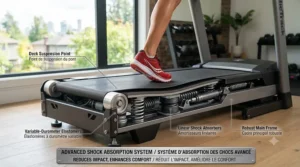
Here’s the honest analysis: commercial treadmills like this one are engineered to run 18 to 24 hours a day on a gym floor and routinely log well over 100,000 kilometres of belt mileage before major service is needed. A residential household — even a heavy-use one — puts a small fraction of that load on the machine annually, meaning a properly reconditioned unit still has an enormous service life ahead of it. Based on the spec comparison against new home-market machines at the same price point, you’re simply getting a heavier frame, a stronger motor, and a deeper cushioning system than anything designed from the ground up for residential sale at this price. The trade-off is buyer diligence — verify the seller’s reconditioning process, serial number, and warranty terms before purchasing, since the used commercial market varies wildly in quality between dealers.
Pros:
- ✅ Full commercial AC motor at a fraction of original retail cost
- ✅ Frame and deck engineered for far heavier duty cycles than home use
- ✅ Interactive Discover SE console still competitive with newer units
Cons:
- ❌ Condition and service history vary significantly by seller
- ❌ Warranty coverage is typically shorter than on new machines
Certified units generally run C$5,300–C$6,000 — genuinely one of the best value propositions on this entire list if you buy from a reputable reconditioner.
7. Woodway 4Front — premium pick for serious athletes and long-term buyers
At the top of the pyramid sits the Woodway 4Front, and it earns its price through a fundamentally different design philosophy rather than just a bigger motor. Instead of a conventional rubber conveyor belt, Woodway uses a patented slat-belt running surface made of individual shock-absorbing slats — a design that’s been independently shown to reduce impact shock and is rated by the manufacturer for roughly 150,000 kilometres of use before needing replacement, about ten times the lifespan of a standard treadmill belt.
The continuous-duty AC/servo motor is engineered to match that longevity, and Woodway’s own figures claim the design requires roughly half the electricity of a conventional treadmill to operate, thanks to dramatically reduced friction in the belt system. On paper, this means lower long-term operating costs partially offset the steep entry price over a long enough ownership horizon. What most buyers overlook about this model is the top-end speed range — up to 18 mph (29 km/h) on the highest console tier — genuinely serving competitive runners and training facilities, not just casual walkers. This is not an impulse buy; it’s closer to a capital purchase for someone who has already decided treadmill running is a permanent part of their life.
Pros:
- ✅ Slat-belt design rated for roughly 150,000 km before replacement
- ✅ Continuous-duty motor engineered for elite, high-volume training
- ✅ Roughly 50% lower electricity draw than conventional belt treadmills
Cons:
- ❌ Premium pricing puts it out of reach for most home budgets
- ❌ Freight shipping and professional assembly add real logistics cost
Pricing starts around C$18,500 and climbs with console tier — this one is genuinely commercial-grade equipment finding its way into serious home gyms, not a home unit dressed up in commercial branding.
AC vs DC Motor Treadmill: What’s Actually Different
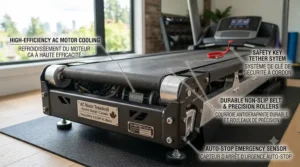
The AC vs DC motor treadmill question isn’t marketing noise — it’s the single biggest predictor of how long your machine survives. DC motors use internal carbon brushes that physically wear down under sustained load, generating friction and heat as they go. AC motors, by contrast, use electromagnetic fields to generate torque, which means no brushes to wear out and dramatically less heat buildup during extended use. Industry-wide, AC motors are increasingly built with self-lubricating bearings and copper-wound rotors engineered for 24/7 operation, while DC motors remain the more common choice for lighter home use where budget and quiet operation matter more than raw duty cycle.
| Factor | AC Motor | DC Motor |
|---|---|---|
| Typical CHP range | 3.0–5.0+ | 1.5–4.0 |
| Best For | Daily/heavy use, multi-user households | Occasional walkers, light joggers |
| Heat buildup under load | Low | Moderate to high |
| Typical lifespan | 8–15+ years with maintenance | 3–8 years |
| Noise profile | Generally quieter under sustained load | Can be quieter at low speeds, louder under strain |
The practical read on this table: if you’re walking twenty minutes a few times a week, a well-built DC motor is genuinely fine and will save you real money. But the moment you’re talking about daily running, interval training, or more than one household member sharing the machine, that DC motor is doing more work per session than it was designed for — and the failure mode isn’t usually dramatic, it’s gradual. Motors run hotter, belts slip more, and within a couple of years you’re shopping for a replacement anyway. A quick primer on the underlying technology is worth a look if you want the engineering detail behind how an induction motor — the basic architecture behind most AC treadmill motors — converts electrical energy into mechanical energy using electromagnetic induction rather than physical brush contact, covered in more depth on Wikipedia’s induction motor entry.
Understanding Continuous Horsepower Rating
Here’s a spec that gets thrown around constantly and understood rarely: continuous horsepower rating, usually abbreviated CHP. It’s not the same as peak horsepower, and manufacturers absolutely lean on that confusion in marketing copy. Peak HP is the burst output a motor can hit for a few seconds under ideal conditions — impressive on a spec sheet, mostly irrelevant to how you’ll actually use the treadmill. CHP is what the motor sustains indefinitely without overheating or degrading, and it’s the number that actually predicts whether your treadmill survives a 45-minute tempo run.
A useful rule of thumb: a 200-lb runner doing regular interval training needs at least 3.0 CHP to avoid straining the motor; multi-user households or daily runners over that weight benefit from 4.0–5.0 CHP territory. What most buyers overlook is that a treadmill advertised with an impressive-sounding peak horsepower number but a modest CHP rating will feel fine in a showroom test walk and struggle six months into real use. When you’re comparing spec sheets, always look specifically for the word “continuous” next to the horsepower figure — if a listing only quotes peak HP, that’s often a sign the continuous rating isn’t flattering enough to advertise.
Treadmill Motor Lifespan: What to Realistically Expect
Treadmill motor lifespan depends on three things: motor type, load relative to CHP rating, and maintenance discipline — and honestly, that third one matters more than most buyers assume. A well-maintained AC motor in the 3.5–5.0 CHP range, used within its intended duty cycle, commonly reaches 8 to 15 years of reliable service, sometimes longer on true commercial units like the ones certified reconditioners resell. DC motors in comparable home units tend to land in the 3 to 8 year range, with brush wear as the most common failure point.
What actually shortens motor life in practice isn’t dramatic — it’s small, chronic overloading. Running a treadmill rated for a 250-lb user well above that threshold regularly, skipping belt lubrication, or letting dust accumulate around the motor housing all quietly compound. Based on the spec comparison and aggregated owner reports across AC and DC models alike, the single biggest lifespan predictor isn’t brand reputation, it’s whether the buyer matched CHP rating to actual expected use before purchasing — which is exactly why the “how to choose” framework further down this guide leads with load calculation rather than brand shopping.
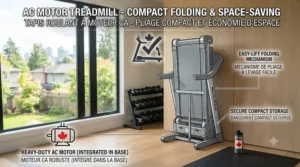
Commercial AC Motor Treadmill vs Home Models: Is Commercial Overkill?
This is the question that actually determines your budget, so it deserves an honest answer rather than a sales pitch. A commercial AC motor treadmill is engineered for 18-to-24-hour daily operation across dozens of different users — a duty cycle that simply doesn’t exist in a residential setting, even a busy one. So is buying commercial-grade equipment for a home gym overkill?
Sometimes, yes. A single person walking four times a week for 30 minutes doesn’t need club-floor engineering; a solid light-commercial AC unit like the LifeSpan TR6000i covers that use case with room to spare. But the calculation shifts fast the moment you add household members, daily running mileage, or a heavier user profile. Two or three people logging five sessions a week each starts to approximate the multi-user load a commercial machine is actually built for, and that’s where certified pre-owned commercial units — like the Life Fitness 95T Discover SE — start looking less like overkill and more like the financially smarter buy, since you’re paying less for more durable engineering than a comparably priced new home unit offers.
How to Choose the Best AC Motor Treadmill for Home Gym Use
Cutting through spec-sheet noise, here’s the actual decision framework, in order of importance:
- Calculate your realistic weekly load. Multiply expected users by weekly sessions by average session length — a rough proxy for how hard you’ll be pushing the motor.
- Match CHP to that load, not to your budget first. Light use (1 person, 3x/week): 2.5–3.0 CHP AC is plenty. Heavy use (multiple users or daily running): target 3.5–5.0 CHP.
- Check the continuous-duty rating specifically, not just peak horsepower — the difference matters more than any other spec on this list.
- Confirm deck size against your height and stride. Taller runners need at least 60 inches of deck length to avoid a cramped, unnatural gait.
- Weigh new versus certified pre-owned. A reconditioned commercial unit often beats a new home-market machine at the same price on pure durability.
- Verify your electrical setup. Higher-CHP AC motors sometimes require a dedicated circuit — check this before delivery day, not after.
- Read the warranty fine print on the motor specifically, since frame and motor warranties are often listed separately and vary widely in length.
Common Mistakes When Buying an AC Motor Treadmill
The single most common mistake is buying on peak horsepower numbers alone, which — as covered above — tells you almost nothing about real-world durability. A close second: underestimating deck length for taller household members, which leads to an uncomfortable, choppy stride regardless of how strong the motor is underneath it. Reviewers consistently flag a third mistake — skipping the maintenance schedule entirely in the first year, assuming a commercial-grade motor means zero upkeep. It doesn’t; it means dramatically reduced upkeep, not none. Finally, plenty of buyers overlook electrical requirements until delivery day, only to discover a higher-CHP AC unit needs a dedicated circuit their spare room doesn’t have — a fixable problem, but a frustrating and avoidable one if you check the spec sheet first.
Heavy-Duty Treadmill Motor: When You Actually Need One
Not every household needs a heavy-duty treadmill motor, and buying more machine than you’ll use is its own kind of waste. But there are clear signals that push you toward the 4.5+ CHP tier: consistent daily running rather than occasional walking, a user weight profile over roughly 250 lbs, more than two regular users sharing one machine, or marathon and half-marathon training blocks that demand sustained tempo work rather than short casual sessions. If two or more of those apply to your household, the LifeSpan TR7000iM or a certified commercial unit like the Life Fitness 95T Discover SE stop being aspirational purchases and start being the financially sensible ones — because a lighter motor pushed consistently past its comfort zone tends to fail well before its expected lifespan, turning a “budget” purchase into two purchases within a few years.
Setting Up and Maintaining Your AC Motor Treadmill
Getting the first 30 days right sets the tone for the machine’s entire lifespan, and AC motor treadmills specifically reward a bit of upfront discipline. On delivery, confirm the machine is on a level surface — even a slight lean stresses the motor mount and accelerates belt drift over time. Run the first few sessions at moderate speed rather than immediately maxing out the incline and top speed; motors, like muscles, benefit from a break-in period. Within the first week, locate the belt tension bolts and confirm the belt tracks centred — a five-minute check that prevents the single most common early-life issue on any treadmill, motor type notwithstanding.
From there, the maintenance rhythm is refreshingly light for AC units compared to their DC counterparts. Vacuum around and under the motor housing monthly to prevent dust accumulation, which is a genuine heat-retention risk over time. Wipe the frame and console with a non-acidic cleaner regularly, since sweat is quietly corrosive to exposed metal and electronics. Check belt tension and centring roughly every 30 days, and re-tighten any hardware that’s loosened from vibration — a five-minute task that prevents the kind of slow structural wear that eventually shows up as an expensive repair. One optimization trick most owners never discover: lightly lubricating the belt on the manufacturer’s recommended schedule, rather than waiting for audible friction, keeps the motor working at its rated load instead of compensating for avoidable belt drag.
Real-World Scenarios: Who Actually Needs This?
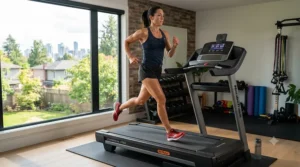
The marathon-training commuter: Sarah runs six days a week, roughly 60 kilometres total, often before sunrise in a Calgary winter when outdoor conditions make that schedule risky. Her use case practically demands a heavy-duty AC motor — something in the LifeSpan TR7000iM class — because the sustained weekly load would strain a lighter DC unit within a season.
The pattern behind all three of these profiles isn’t new — CBC News reported on the surge in Canadian home gym demand as far back as the pandemic’s early winters, and that shift toward training at home has simply kept compounding since.
The multi-generational household: The Okafor family has three regular users spanning three fitness levels and two different body-weight ranges sharing one machine in their Mississauga basement. Here, a mid-tier AC unit like the Matrix T75 or LifeSpan TR6000i makes more sense than either the cheapest or most expensive option — the combined load justifies a genuine AC motor, but the varied intensity levels don’t require full commercial horsepower.
The budget-conscious rehab walker: James is recovering from knee surgery and needs low-impact, low-speed walking sessions with occasional physiotherapist-guided incline work. A certified pre-owned commercial unit like the Life Fitness 95T Discover SE actually suits him well here — commercial cushioning systems tend to be gentler on joints than budget decks, and the certified pre-owned price point keeps the purchase reasonable for a temporary but intensive rehab period.
✨ Not sure which scenario fits you? Compare specs above and pick the machine matched to your actual weekly mileage, not your aspirational one.
Problem → Solution: Fixing Common AC Motor Treadmill Issues
Problem: The belt slips under load despite a strong motor. This is almost always a tension or centring issue, not a motor problem — recheck belt tension bolts before assuming anything more serious is wrong.
Problem: The motor runs noticeably hotter than it used to. Dust accumulation around the housing is the most common culprit; a monthly vacuum routine usually resolves it, and if heat persists after cleaning, it’s worth having the bearings inspected.
Problem: Console error codes appear intermittently. On AC units, this is frequently an electrical supply issue rather than a true motor fault — confirm you’re on the manufacturer-specified circuit, particularly for higher-CHP models that sometimes require dedicated wiring.
Problem: The deck feels harder underfoot than when new. Cushioning elastomers compress and harden gradually with mileage; most commercial-grade decks are designed for field-replaceable cushioning modules, so check whether your model supports that before assuming the whole deck needs replacing.
Problem: Unexpected shutdowns during longer sessions. This can indicate the motor is being pushed past its continuous-duty rating for your use case — worth revisiting the CHP-to-load calculation from the buying framework above rather than treating it purely as a hardware defect.
Long-Term Cost & Maintenance: The True Cost of Ownership
The sticker price is only part of the equation, and this is where AC motor treadmills quietly close the gap with cheaper DC alternatives over time. A DC-motor treadmill in the C$1,500–C$2,500 range often needs a motor replacement or full unit swap within 4–6 years of regular use — a cost that, amortized, erases much of the initial savings. An AC motor unit at C$4,500–C$6,500 that lasts 10–15 years spreads its cost over roughly triple the ownership window.
| Cost Factor | DC Motor Treadmill | AC Motor Treadmill |
|---|---|---|
| Typical upfront cost | C$1,500–C$3,000 | C$4,000–C$8,000+ |
| Expected motor lifespan | 3–8 years | 8–15+ years |
| Annual maintenance cost (approx.) | C$50–C$150 | C$30–C$100 |
| Cost per year of ownership (rough) | C$300–C$600+ | C$350–C$550 |
Worth keeping in mind: Statistics Canada’s most recent physical activity data shows activity levels holding stable among most adults but declining among younger Canadians, which is exactly the kind of long-term trend that makes a durable, decade-spanning treadmill purchase more defensible than a short-term one. Looking at the numbers above, the total cost per year of ownership actually converges more than the upfront price tags suggest — the AC motor treadmill’s higher purchase price is substantially offset by fewer replacements and lower annual maintenance draw. Households planning to keep a machine for a decade or more should weight the AC option more heavily than the sticker price alone would suggest, while someone genuinely uncertain they’ll stick with a home routine might reasonably start with a lighter DC unit and upgrade later.
🔍 Ready to stop guessing and start comparing real listings? Check current pricing on the models above before making your call.
Safety, Certification & Canadian Electrical Considerations
Higher-CHP AC motor treadmills draw meaningfully more current than entry-level DC units, and that has real electrical implications in a Canadian home. Several of the models above specifically require a dedicated, non-GFI circuit — confirm this against your home’s panel capacity before delivery, particularly in older houses or condos where circuit availability can be limited. Look for equipment carrying recognized safety certification marks on the electrical components, since third-party certification confirms the unit has been independently tested against Canadian and North American electrical safety standards rather than relying solely on manufacturer claims.
Beyond electrical setup, general safety practice matters more than most buyers expect: always use the safety clip, keep the area behind the treadmill clear for at least a metre, and resist the temptation to mount a heavy-duty unit directly against a shared wall in a condo, since sustained vibration from daily heavy use can be a genuine source of noise complaints over time. None of this is about being overly cautious — it’s about making sure the equipment upgrade you’re investing in doesn’t create an entirely separate headache six months later.
FAQ
❓ What's the difference between an AC motor treadmill and a DC motor treadmill?
❓ Is a higher continuous horsepower rating always better?
❓ How long does an AC motor treadmill typically last?
❓ Are commercial AC motor treadmills worth buying for home use?
❓ Do AC motor treadmills need special electrical outlets?
Conclusion
If there’s one thing worth carrying away from all this spec-sheet digging, it’s that the motor is the treadmill — everything else is trim. A flashy touchscreen console sitting on top of an undersized DC motor is still, fundamentally, a machine that’s going to struggle the moment your training gets serious. The seven AC motor treadmills covered here span a genuinely wide range, from the light-commercial value of the LifeSpan TR6000i to the premium, decade-plus engineering of the Woodway 4Front, and the right one for you depends less on brand prestige and more on honest math: how many people, how many sessions, how much weight, how many years you actually plan to keep the thing.
Buy for the household you actually have, not the one you’re hoping to become. If that’s a single moderate walker, a light-commercial AC unit is plenty. If it’s a multi-runner family training through Canadian winters, lean toward the 4.0+ CHP tier or a certified commercial unit — the math genuinely works in your favour over a decade of use. Whichever direction you land, prioritize the continuous-duty rating over every other spec on the page, confirm your electrical setup before delivery day, and build the five-minute monthly maintenance habit early. It’s the cheapest insurance policy this category of purchase has to offer.
✨ Found the right AC motor treadmill for your home gym? Share this guide with anyone else stuck comparing spec sheets! 💬🤗
✨ Don’t Miss These Exclusive Deals!
🔍 Take your home gym setup to the next level with these carefully selected AC motor treadmills. Click on any highlighted model above to check current pricing and availability. A durable, well-matched motor is what turns a New Year’s resolution into a genuine long-term habit!
Recommended for You
- Best Electric Treadmill 2026: 7 Top Picks Ranked for Canadians
- Treadmill For Walking Vs Running: 7 Real Picks for 2026
- 7 Best Treadmill Brands in 2026: Which Ones Are Worth It?
Disclaimer: This article contains affiliate links. As an Amazon Associate, I earn from qualifying purchases. If you purchase products through these links, we may earn a small commission at no additional cost to you.
✨ Found this helpful? Share it with your friends! 💬🤗
