In This Article
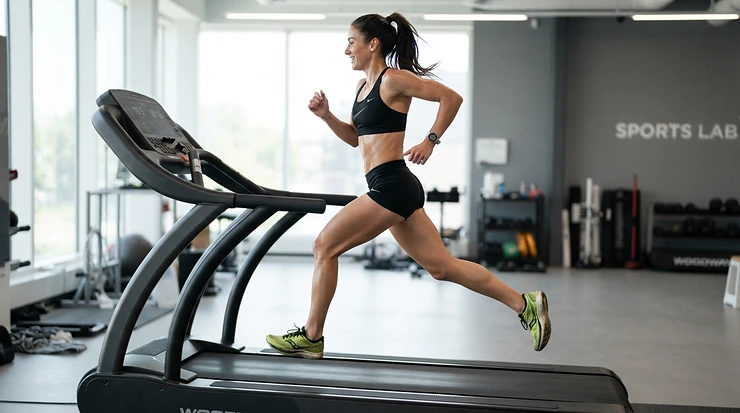
A treadmill for intermediate runners is a mid-range running treadmill built for people who already run three to five times a week and need more than walking-pad basics: a 3.0 CHP-plus motor, a belt of roughly 152 cm (60 in), motorized incline to 15%, and cushioning that survives real mileage.

You know the moment. The budget folding treadmill that was perfect for your first 5K now feels like a shoebox on rollers. Your stride shortens because the belt runs out. The motor hums like it is filing a complaint. By the time a Canadian February hands you four hours of daylight and a windchill you can feel in your fillings, the machine in the spare room stops being a luxury. It becomes your training partner.
That is the gap this guide fills. Beginners can get away with almost anything. Elite athletes can justify C$6,000-plus commercial machines. Intermediate runners sit in the middle, and the middle is where most shopping mistakes happen. Buy too little and you replace it in 18 months. Buy too much and you pay for a 24-inch touchscreen you never watch.
The Public Health Agency of Canada recommends at least 2.5 hours of moderate-to-vigorous activity each week. Most intermediate runners clear that bar easily, and that is exactly why durability matters more than gadgets.
One note on method. Everything below is built from published specs, independent reviews and aggregated owner feedback, not from invented lab hours. Where sources disagree, I flag it.
Quick Comparison: Mid-Range Running Treadmill Picks at a Glance
Here is the whole field on one screen before we go deep. Prices are estimated ranges in Canadian dollars at the time of research and swing with promotions, so check current prices before you buy.
| Model | Motor | Belt (L × W) | Incline | Price Range (CAD, est.) | Best For |
|---|---|---|---|---|---|
| Horizon 7.4 AT | 3.5 CHP | 152 × 56 cm (60 × 22 in) | 0–15% | C$2,000–C$2,800 | Interval-focused runners who skip touchscreens |
| Sole F80 | 3.25–3.5 HP* | 152 cm (60 in) long | 0–15% | C$2,200–C$2,800 | Tall or heavier runners wanting no subscription |
| BowFlex T9 | 3.5 HP (stated) | 152 × 56 cm (60 × 22 in) | 0–15% | Low-to-mid C$2,000s | App-connected runners using Apple Watch or Zwift |
| NordicTrack Commercial 1750 | 3.5–4.25 CHP* | 152 × 56 cm (60 × 22 in) | −3% to 12% | Mid-C$2,000s | Guided iFIT runs with decline training |
| ProForm Carbon Pro 2000 | 3.0 CHP | 152 × 51 cm (60 × 20 in) | 0–12% | C$1,500–C$2,300 | Smaller spaces and easier moving |
| Sole F63 | 3.0 HP | 152 × 51 cm (60 × 20 in) | 0–15% | C$1,300–C$1,900 | Value-minded runners avoiding subscriptions |
| BowFlex T6 | 3.0 HP | 152 × 51 cm (60 × 20 in) | 0–15% | C$1,000–C$1,600 | A budget treadmill upgrade for runners |
*Motor ratings and deck widths vary by source and model year. Verify them on the current listing.
Looking at the table, the Horizon 7.4 AT and BowFlex T9 deliver the most motor and deck for the money, while the BowFlex T6 is the cheapest way to get a proper 152 cm belt and 15% incline. The NordicTrack Commercial 1750 is the only one with decline, which matters if you are training for a hilly race. Note that the ProForm Carbon Pro 2000 gives up some incline range and motor headroom in exchange for a lighter, more compact build.
💬 Just one click — help others make better buying decisions too!😊
Top 7 Treadmill for Intermediate Runners: Expert Analysis
1. Horizon 7.4 AT — power and quick response without the screen tax
The Horizon 7.4 AT is the machine for runners who want a gym-style deck and a motor that reacts instantly, minus a monitor and a subscription.
Its 3.5 CHP motor sits comfortably above the 3.0 CHP floor reviewers recommend for high-volume running. The 152 × 56 cm belt means even a long-striding runner will not feel the back roller creeping closer at 19 km/h (12 mph). The 3-zone cushioning works like a running shoe, with softer elastomers under the heel strike and firmer ones at push-off.
Based on the spec comparison, this suits interval-heavy training and runners who bring their own app. It has no built-in touchscreen and is not compatible with iFIT, so the console stays simple.
Reviewers consistently praise its stability and quick speed changes. Common complaints are its weight (north of 140 kg / 310 lb by several accounts), its large footprint, and one tester noting a slight lag during rapid interval changes.
Pros:
- ✅ Roomy 22-inch-wide belt and 3.5 CHP motor
- ✅ Lifetime frame and motor warranty
- ✅ No mandatory subscription
Cons:
- ❌ No touchscreen or onboard streaming
- ❌ Very heavy and hard to relocate
Expect roughly C$2,000–C$2,800, with frequent promotions. For a mid-range running treadmill that prioritizes mechanics over screens, it is excellent value.
2. Sole F80 — durable, subscription-free and kind to tall runners
The Sole F80 has built its reputation on durability and a warranty that is hard to beat, which is why runners over 183 cm keep recommending it.
Spec sheets disagree on the motor: some list 3.5 HP, while Sole’s newest comparison page lists 3.25 HP with a 51 cm wide belt. Verify the exact model year on the listing. Either way, you get a 152 cm belt, 0–15% incline, 12 mph top speed and a 159 kg (350 lb) user capacity. That capacity matters because a motor with headroom runs cooler and lasts longer.
The honest trade-off is the incline motor. One lab-style review described its adjustments as underpowered, so expect slower hill transitions than on the Horizon 7.4 AT.
Reviewers note sturdy construction and quiet operation. On the downside, the console is tech-light compared with screens costing similar money.
Pros:
- ✅ Lifetime frame and motor coverage
- ✅ Cushion Flex Whisper Deck is gentle on joints
- ✅ No subscription required
Cons:
- ❌ Incline changes feel sluggish
- ❌ Fewer smart features than rivals
Plan on roughly C$2,200–C$2,800. If durability is your top priority, this is the safest long-term bet on the list.
3. BowFlex T9 — app-connected and quiet for its class
The BowFlex T9 is the pick for runners who want Apple Watch pairing, JRNY, Peloton or Zwift compatibility, and a deck that does not sound like a freight train.
The stated 3.5 HP motor, 22 × 60 inch belt and FlexZone XL cushioning put it near the Horizon 7.4 AT on paper. One reviewer compared it with machines costing more, calling it quiet and fast. BowFlex does not publish detailed motor ratings, and the “3.5” appears on the maker’s own page with a caveat that it is a test-setting figure. Treat it as a ballpark.
Ten onboard programs, including Hill Climb, Sprint 8 and a beginner 5K, mean you can start training the day it arrives. The catch: full JRNY features need a paid membership after the trial.
Reviewers highlight the cushioned deck being easier on knees, and the console avoids button overload.
Pros:
- ✅ Quiet drive with quick speed response
- ✅ Ten built-in programs plus app support
- ✅ Lifetime motor and frame warranty
Cons:
- ❌ Motor ratings not fully disclosed
- ❌ JRNY membership needed for full tech
Expect low-to-mid C$2,000s. It is a smart-feeling treadmill for intermediate runners who want tech without a giant screen.
4. NordicTrack Commercial 1750 — guided runs with real decline
The NordicTrack Commercial 1750 is the only machine here that tilts downhill, which makes it the closest thing to rehearsing a rolling race course indoors.
Its incline range runs from −3% to 12%, paired with a 22 × 60 inch belt and a 16-inch pivoting touchscreen. With an iFIT membership, the treadmill can automatically follow a trainer’s incline and speed changes. Motor ratings are inconsistent across sources, listed anywhere from 3.5 to 4.25 CHP, so rely on the warranty rather than the number: lifetime motor, 10-year frame, 2-year parts and electronics, 1-year labour.
Garage Gym Reviews named it their top overall running treadmill, and testers described it as sturdy. The recurring caveat is subscription dependence: one 2026 roundup quoted iFIT Pro around US$39 a month, and without membership the onboard programming is limited.
Pros:
- ✅ Decline and incline for hill rehearsal
- ✅ Strong frame and motor warranty
- ✅ Large touchscreen with auto-adjusting workouts
Cons:
- ❌ Ongoing iFIT cost for full features
- ❌ Max incline lower than the 15% rivals
Plan for the mid-C$2,000s. Verdict: best for runners who love coached sessions and will actually keep the membership.
5. ProForm Carbon Pro 2000 — compact, steady and easier to move
The ProForm Carbon Pro 2000 is for runners who need a real treadmill in a not-so-real amount of space.
It has a 3.0 CHP motor, a 152 × 51 cm belt and 0–12% incline with a 10-inch HD touchscreen. In-box weight is listed at roughly 249 lb (113 kg), noticeably lighter than the Horizon 7.4 AT. That means you can actually tilt it up and roll it out of the way, which is a genuine daily-life advantage in a condo.
On paper, 3.0 CHP is exactly the floor for serious mileage. Do not expect headroom for heavy hill sprints. Incline stops at 12%, and one reviewer noted it does not support decline training.
Reviewers describe it as solid and steady, with no shaking at higher speeds. Some mention screen glare, and the full iFIT experience requires a subscription. Motor and parts coverage is shorter than lifetime-motor rivals, so confirm current terms.
Pros:
- ✅ Stable feel at speed
- ✅ Lighter and easier to relocate
- ✅ 10-inch HD touchscreen with iFIT
Cons:
- ❌ 3.0 CHP leaves little headroom
- ❌ iFIT subscription needed for full use
Estimated at C$1,500–C$2,300. Good value if space is your biggest constraint.
6. Sole F63 — the value pick with a very long belt for the money
The Sole F63 is proof that a modest console and a serious belt can coexist at a friendly price.
A 3.0 HP motor, 152 cm belt, 15 incline levels up to 15%, and a 12 mph top speed give it a spec sheet that looks a tier above its cost. The 6.5-inch LCD shows the basics, and Bluetooth plus a tablet holder let you bring your own workouts through the free Sole+ app. User capacity is 325 lb (147 kg).
Based on the specs, it is ideal for runners who value belt length and incline over screens. One independent tester called it a strong budget running treadmill.
Owners consistently praise quiet operation and ease of use. A few retailer reviews report control-board or error-code failures after repairs, so read the warranty fine print and register the machine promptly.
Pros:
- ✅ Lifetime frame and motor warranty
- ✅ Full 152 cm belt at a modest price
- ✅ No subscription required
Cons:
- ❌ Basic display and limited programming
- ❌ Isolated control-board complaints
Look for roughly C$1,300–C$1,900. It is the smartest treadmill upgrade for runners leaving a walking pad.
7. BowFlex T6 — the budget-friendly step up
The BowFlex T6 is a sensible first stop when you want to leave the walking-pad world without spending a tier higher.
You get a 3.0 HP drive motor, 20 × 60 inch belt, 0–15% incline, QuickDial controls and a FlexZone deck, plus 325 lb (147 kg) capacity. It supports JRNY, Peloton and Zwift from your own device. A reviewer pointed out that it exceeds typical incline ranges for its price class.
The analysis is simple: that 15% ceiling and 152 cm belt cover most intermediate training. The limits are a 12 mph cap, no built-in screen and a motor that one reviewer cautioned may not suit prolonged sprinting.
Reviewers like the value and cushioning. A minority of owner reviews on the maker’s site mention motor problems, which is a reminder to buy with the warranty in mind.
Pros:
- ✅ 15% incline at an entry price
- ✅ Folds for storage
- ✅ Works with JRNY, Peloton and Zwift
Cons:
- ❌ No built-in screen
- ❌ Less headroom for hard sprint work
Often priced around C$1,000–C$1,600. A solid value verdict for the mileage-minded.
How to Choose a Treadmill for Intermediate Runners
You do not need a degree in mechanical engineering. You need seven checks.
- Match motor to mileage. Aim for at least 3.0 CHP if you run four or more times a week. Lower numbers can work, but they run hotter under repeated load.
- Verify belt length. A 152 cm (60 in) belt is the practical target for runners; shorter belts make you shorten your stride.
- Check belt width. A 51 cm (20 in) minimum keeps you from thinking about lane discipline mid-interval.
- Read the warranty, not the brochure. Lifetime on frame and motor is the gold standard; confirm what counts as labour and parts.
- Confirm weight capacity. At least 125 kg (275 lb) is the industry floor, and extra headroom helps motor life.
- Decide on programming. Do you want a subscription, an app you bring yourself, or onboard presets only?
- Measure your space and your stairs. A 150-kilogram machine is a delivery problem long before it is a workout problem.
Mistakes cluster in the same places: chasing peak horsepower labels, ignoring subscription costs, and forgetting that a treadmill has to fit through your basement door.
Motor Durability: What CHP Ratings and Warranties Really Tell You
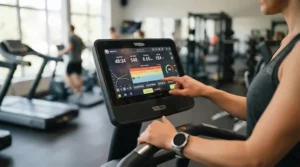
Motor durability is the single biggest predictor of whether your treadmill is still running in year six. The number to read is continuous horsepower (CHP), which is what a motor can sustain through a workout. Peak horsepower is a brief burst and tells you very little.
Garage Gym Reviews’ buying benchmark treats 2.5 CHP as the minimum for running and 3.0 CHP as the recommendation for high-volume use. For deeper background on how motorized treadmills differ from manual designs, Wikipedia’s treadmill overview is a helpful primer.
| Model | Motor Rating | Warranty Highlights | Max User Weight |
|---|---|---|---|
| Horizon 7.4 AT | 3.5 CHP | Lifetime frame and motor; 5-yr parts; 2-yr labour | 159 kg (350 lb) |
| Sole F80 | 3.25–3.5 HP | Lifetime frame and motor; 3-yr deck, parts, wear items | 159 kg (350 lb) |
| BowFlex T9 | 3.5 HP (stated) | Lifetime frame and motor; 3-yr mechanical parts | Check listing |
| NordicTrack Commercial 1750 | 3.5–4.25 CHP | Lifetime motor; 10-yr frame; 2-yr parts | Check listing |
| ProForm Carbon Pro 2000 | 3.0 CHP | 10-yr frame; shorter motor and parts coverage | Check listing |
| Sole F63 | 3.0 HP | Lifetime frame and motor; 2-yr parts, deck, wear items | 147 kg (325 lb) |
| BowFlex T6 | 3.0 HP | Lifetime frame and motor (maker); one reviewer lists 15-yr frame | 147 kg (325 lb) |
Take this table as a map of risk. The Horizon 7.4 AT pairs the strongest motor with the longest parts coverage, while the NordicTrack Commercial 1750 trades a lifetime frame promise for a 10-year one. If you run heavy or often, favour the machines with the most motor headroom, like the Horizon 7.4 AT or Sole F80, because a motor running at 70% load lives longer than one pinned at 95%.
Belt Length and Width: Sizing the Deck to Your Stride
Belt length is the spec that quietly decides whether a treadmill feels like a runner’s tool or a walking machine in disguise. As speed increases, your stride lengthens and your feet land farther apart. A deck that is too short forces you to shorten your stride, which changes your mechanics.
Practical guidance from reviewers lands in the same place: at least 140 cm (55 in) as a bare minimum, 147–152 cm (58–60 in) for most runners, and 152 cm as the floor if you are taller than about 183 cm (6 ft).
All seven machines here deliver that 152 cm belt length, which is why they appear in a guide for intermediate runners. Width is where they split. The 56 cm (22 in) belts on the Horizon 7.4 AT, BowFlex T9 and NordicTrack Commercial 1750 give you a more forgiving lane, especially during tired final intervals. The 51 cm (20 in) belts on the Sole F63, BowFlex T6 and ProForm Carbon Pro 2000 are perfectly workable if you run centred, but you will feel the edges when form slips.
Training Program Presets: Using Them Like a Coach
Training program presets are the most underused feature on mid-range machines. Treat them like a coaching shortcut, not a gimmick.
A simple four-week approach:
- Week one — baseline. Use manual mode or a distance preset to establish an easy pace. Set the incline to 1% to better approximate outdoor effort, a long-cited rule of thumb.
- Week two — add structure. Swap one weekly run for an interval preset. Programs such as the BowFlex T9‘s Sprint 8 and Hill Sprint alternate hard efforts with recovery so you do not have to watch the clock.
- Week three — hills. Use a hill preset or a manual incline ladder. On the Sole F80 or Horizon 7.4 AT, remember incline changes take a moment, so build in transition time.
- Week four — long run. Return to a steady distance preset and cut back the intensity elsewhere.
If your machine lacks onboard programs, such as the Horizon 7.4 AT or BowFlex T6, you can use a connected app. The NordicTrack Commercial 1750 and ProForm Carbon Pro 2000 go further with iFIT, which can automatically adjust speed and incline to match a trainer.
Common first-month mistakes: starting every session at maximum difficulty, skipping the warm-up and trusting calorie counters as gospel.
Treadmill for Regular Training: Long-Term Cost and Maintenance
A treadmill for regular training is less a purchase than a five-year relationship. The sticker price is only the opening bid.
Consider a runner doing four sessions a week for five years: roughly 1,040 sessions. Spread a C$2,200 machine across that and you land near C$2 per run before maintenance. Compare that with a gym membership and the maths gets interesting.
| Option | Typical Outlay | Five-Year View | Hidden Costs |
|---|---|---|---|
| Mid-range treadmill, no subscription | C$2,000–C$2,800 | Roughly C$2 per run at 4 runs/week | Belt lubrication, floor mat, repairs outside warranty |
| Mid-range treadmill plus subscription | Treadmill plus monthly fee | Subscription can rival the purchase price | Fees continue if you want full features |
| Gym membership | Monthly fee (varies by city) | Often similar to or above a treadmill | Commute, peak-hour crowding |
The key insight: a subscription can quietly double your five-year cost. If iFIT Pro really runs around US$39 a month, that is on the order of C$3,000 over five years, comparable to the machine itself. For budget-minded buyers, subscription-free picks like the Sole F80, Sole F63 and Horizon 7.4 AT are cheaper in the long run, while the NordicTrack Commercial 1750 only earns its price if you use the coaching.
Maintenance is simple but non-negotiable. Follow the manual’s lubrication schedule, vacuum under the motor hood, check belt tension and keep the machine on a mat. Neglect is the number-one killer of otherwise healthy motors.
Treadmill Upgrade for Runners: When It Is Time to Move On
A treadmill upgrade for runners makes sense when your current machine starts changing your running rather than supporting it. Watch for these signs:
- Your stride shortens because the belt feels tight.
- The motor hesitates when you change speed.
- The frame wobbles at pace.
- Noise grows enough to bother neighbours.
Budget folding treadmills are the usual culprits. One review of a popular budget folder noted a 40-inch deck and an 8 mph top speed, and called it more of a walking pad than a running machine. That is a fine product for walking and a poor one for tempo runs.
The sweet spot for an upgrade is a mid-range running treadmill with 3.0 CHP or more, a 152 cm belt and a long warranty. If you are moving from a basic model, the Sole F63 and BowFlex T6 are the gentlest jumps. If you are moving from a decent machine and want more, the Horizon 7.4 AT and Sole F80 deliver real upgrades in motor headroom and stability.
Real-World Scenarios: Which Treadmill Fits Which Runner
These are hypothetical profiles built from the specs, not real testimonials.
Profile 1: Tall half-marathon trainee (budget up to C$2,800). Imagine a 188 cm runner in Winnipeg doing four runs a week, 45–60 minutes each, in a heated basement. Belt length and motor headroom dominate. The Sole F80 or Horizon 7.4 AT fits, with the Sole F80 favoured if he wants zero subscriptions.
Profile 2: Condo runner with limited space (budget under C$2,000). A 163 cm runner in a Toronto condo runs three times a week. The ProForm Carbon Pro 2000 wins on lighter weight and compact footprint, while the Sole F63 is the budget alternative if storage is less of an issue.
Profile 3: Hill-focused trail runner (budget around C$2,500). A runner in Calgary training for rolling trail races needs decline and structured workouts. The NordicTrack Commercial 1750 is built for exactly that, with its −3% to 12% range and coached content. The BowFlex T9 is the alternative if 15% incline and app flexibility matter more.
For each, verify delivery logistics and warranty terms before ordering.
✨ Ready to Upgrade Your Training?
🔍 Take your running to the next level with these carefully selected treadmills. Click on any highlighted product name to check current pricing and availability on Amazon.ca, then pick the one that matches your stride and your space. 🏃♂️
Treadmill vs Gym Membership vs Outdoor Running
Each option has genuine strengths, and the best runners often mix them.
| Factor | Home Treadmill | Gym Treadmill | Outdoor Running |
|---|---|---|---|
| Weather-proof | Yes | Yes | No (Canadian winters bite) |
| Cost over time | Upfront, then low | Ongoing | Free |
| Joint impact | Lower with cushioned deck | Lower | Higher on pavement |
| Pace control | Precise | Precise | Variable |
| Terrain realism | Limited (incline only) | Limited | Highest |
| Best For | Horizon 7.4 AT or Sole F80 buyers training year-round | Runners who like crowds and variety | Race-specific outdoor prep |
The takeaway: a treadmill wins on convenience, consistency and joint-friendly surfaces, while outdoor running wins on terrain realism and cost. Experts note that the moving belt assists leg turnover and removes wind resistance, so treadmill-only training can feel different outdoors. If you are racing outside, keep at least some outdoor runs in the plan. For daily consistency in a Canadian winter, a mid-range treadmill is hard to beat.
Features That Actually Matter (And Those That Don’t)
Matters:
- Motor headroom. It affects both feel and lifespan.
- Belt length. It protects your stride.
- Cushioning. It reduces repetitive impact over hundreds of runs.
- Warranty. It signals manufacturer confidence.
- Incline range. 12% is workable; 15% is generous.
Matters less:
- Screen size. A giant display adds cost, and you may prefer your own tablet.
- Built-in speakers. Your headphones do the job better.
- Calorie counters. They are estimates, not truth.
- Maximum speed over 12 mph. Few intermediate runners need it.
If you are weighing the NordicTrack Commercial 1750 against the Horizon 7.4 AT, the real question is whether you will use the coaching content. If not, the money is better spent on mechanics.
Safety, Canadian Standards and Winter Setup
Safe use starts before the first run. Look for a recognized certification mark, such as cUL or CSA, on the electrical rating label. Many manufacturers recommend a dedicated household circuit, so check the manual before plugging in. Always attach the safety key clip, keep clear space behind the belt, and place the machine on a proper mat to protect the floor and reduce vibration.
If your treadmill lives in a garage, consult the manual for its operating temperature range. Cold can stiffen lubricants and condensation can affect electronics, so a heated space is safer.
For training balance, the Canadian 24-Hour Movement Guidelines encourage a mix of aerobic activity, muscle-strengthening and adequate sleep. A treadmill covers the cardio; add strength work twice a week and respect recovery.
If you have health concerns, check with a health professional before ramping up mileage.

FAQ
❓ How long does a treadmill motor last under regular running?
❓ Is a 51 cm wide belt enough for a treadmill for intermediate runners?
❓ Do I need an iFIT or JRNY subscription to use these treadmills?
❓ Can a mid-range running treadmill handle marathon training?
❓ Can I use a treadmill in an unheated garage during winter?
Conclusion
Choosing a treadmill for intermediate runners comes down to mechanics first and screens second. A 3.0 CHP-plus motor, a 152 cm belt and a long warranty protect your training for years. Everything else is personality.
If you want the strongest mechanical package without a subscription, the Horizon 7.4 AT and Sole F80 lead the pack. If you want app-connected polish, the BowFlex T9 fits. If you crave coached hills with decline, the NordicTrack Commercial 1750 is the specialist. When space or budget is tight, the ProForm Carbon Pro 2000, Sole F63 and BowFlex T6 each offer a real step up from a walking pad.
Whatever you choose, check current prices and availability on Amazon.ca, confirm the warranty terms, and match the belt to your stride. Then lace up. The February darkness will not run those miles for you.
Recommended for You
- Incline Treadmill For Runners: 7 Proven Picks For Canada (2026)
- Best Running Treadmill: 7 Standout Picks For Canada (2026)
- Treadmill For Post-Surgery Rehab: 7 Safest Picks In 2026
Disclaimer: This article contains affiliate links. As an Amazon Associate, I earn from qualifying purchases. If you purchase products through these links, we may earn a small commission at no additional cost to you.
✨ Found this helpful? Share it with your friends! 💬🤗
