In This Article
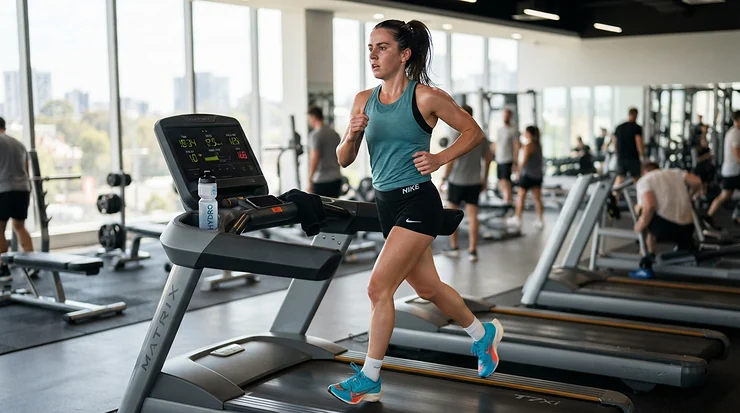
A treadmill for half marathon training is a motorized running machine chosen to hold race-relevant paces, survive weekly long runs, and add enough incline to mimic hills. In practice, that means a deck near 152 cm (60 in), a continuous-duty motor around 3.0 CHP, and controls you can trust at 4:30 per km. 🏃♂️
Canadian training blocks don’t pause for weather. A half marathon is 21.0975 km, and the 12 weeks that prepare you for one often run straight through icy sidewalks, early darkness and the odd –25 °C morning. A treadmill turns those weeks from a gamble into a schedule. Pace is locked in. Incline is a button. The long run happens at 6 a.m. in your basement while the wind chill does whatever it likes outside.
But not every machine earns the job. A walking-pad-style budget model feels fine at 6 km/h and falls apart at 12. This guide compares seven real treadmills across budget, mid-range and premium tiers, then goes beyond the spec sheet. You’ll get half marathon treadmill workouts, treadmill pace training half marathon rules, interval pacing programs, mid-distance endurance strategy and a proper race-day simulation. If you specifically want a treadmill for 21K training, the setup section has you covered.
One honesty note: I haven’t run on any of these machines. Everything below comes from published specs, independent reviewer findings and aggregated owner feedback, framed as analysis rather than personal testing. Prices are approximate CAD ranges at the time of research, so check current price and availability on amazon.ca before you commit.
Best Treadmills for Half Marathon Training at a Glance
Short on time? Here’s the lineup, sorted by what each machine does best.
| Treadmill | Standout | Price Tier | Best For |
|---|---|---|---|
| Sole F63 | 60-inch deck, 15 incline levels, lifetime frame and motor warranty | Mid-range | Best overall value |
| Horizon T101 | Simple, quiet, compact fold | Budget | First-timers on easy paces |
| ProForm Carbon TLX | 60-inch deck at a low price, iFIT-enabled | Budget to mid | Long strides on a budget |
| Horizon 7.4 AT | 22-inch deck, strong motor, no subscription | Upper mid | Interval-heavy plans |
| BowFlex T9 | 15% incline, Zwift/Peloton/JRNY connectivity | Upper mid | App-driven runners |
| NordicTrack Commercial 1750 | Incline plus decline, iFIT auto-adjust | Premium | Hill-course rehearsal |
| Sole F85 | 4.0 HP motor, built for volume | Premium | High-mileage households |
The Sole F63 is the safest default: it gives you a long deck and meaningful incline without paying for a touchscreen you may never use. The Horizon T101 earns a spot because budget matters, but its shorter belt and lighter motor suit easy-pace runners, not speed work. If intervals dominate your plan, step up to the Horizon 7.4 AT or Sole F85. Stock and sellers on amazon.ca shift quickly, so confirm the exact model before ordering.
💬 Just one click — help others make better buying decisions too!😊
Top 7 Treadmills for Half Marathon Training: Expert Analysis
Each pick below is judged on what matters for 21.1 km of preparation: top speed, deck length, motor headroom, incline and durability. Review sentiment is aggregated from independent reviewers and retailer pages. Where the evidence is thin, I say so.
1. Horizon T101 — budget starter for easy-pace runners
The Horizon T101 is the entry ticket, and it knows it. Its 2.5 CHP motor, 140 × 51 cm (55 × 20 in) deck and 16 km/h (10 mph) top speed cover every easy and long-run pace a 2:00-to-2:30 finisher needs. A 2:00 half sits at only about 10.5 km/h. The 0–10% incline handles hill simulation, but the shorter belt leaves taller runners little margin when stride length grows at tempo effort.
Based on the spec comparison, this is a sensible home base for first-timers running three or four easy sessions a week, not for athletes stacking repeats. Independent reviewers note the motor isn’t meant for heavy running, and Bluetooth only pipes audio to the speakers rather than syncing workout data. Owner reviews on Canadian and U.S. retail pages are split. Many praise quiet operation and easy assembly, while a vocal minority report durability problems and expensive console repairs.
Pros:
- ✅ Quiet, simple and easy to set up
- ✅ Hydraulic fold saves floor space
- ✅ Lifetime frame and motor warranty
Cons:
- ❌ 55-inch deck cramps longer strides
- ❌ 2.5 CHP motor limits hard running
Expect roughly C$700–C$900 (check current price), which is fair value if you stay inside its limits. Note that the older T101-05 version was part of a 2022 Health Canada recall (see the safety section).
2. ProForm Carbon TLX — long 60-inch deck on a budget
The ProForm Carbon TLX punches above its price with a belt most budget machines can’t match. A 3.0 CHP motor, 152 × 51 cm (60 × 20 in) deck, 19 km/h (12 mph) top speed and 0–12% incline mean you can run 4:15/km repeats and still have room to stride. The long belt is the real prize, because stride length stretches as you speed up and a short deck punishes that.
On paper, it’s the strongest spec-per-dollar play for runners targeting 1:45 to 2:15. It’s iFIT-enabled, but there’s no onboard touchscreen, so you stream workouts from your own phone or tablet. One reviewer notes that without an iFIT membership you’re essentially in manual mode, which makes the home-built interval programs later in this guide especially useful.
Independent testers score it well (Garage Gym Reviews gives it 4.2/5) and praise the durable motor, though they disagree on cushioning. The review base on the Canadian retail page I found was too thin to draw conclusions.
Pros:
- ✅ 3.0 CHP motor handles regular running
- ✅ 60-inch belt suits long strides
- ✅ Folds for small spaces
Cons:
- ❌ Only one year of parts and labour coverage
- ❌ No touchscreen; iFIT needs your own device
Around C$1,300–C$1,700 is my estimate (check current price). That’s strong value for a 60-inch deck.
3. Sole F63 — best all-round value, lifetime frame and motor
If one machine had to be the default treadmill for half marathon training, it would be the Sole F63. It pairs a 3.0 CHP motor with a 152 × 51 cm deck, a 0.8–19 km/h (0.5–12 mph) speed range and 15 incline levels up to 15%. That granularity lets you sit at a 1% base for easy miles, then jump to steep hill repeats without hunting through menus.
The control layout is stripped back, with quick keys for speed and incline and a tablet holder for the free SOLE+ app. For runners who want pace and incline rather than a Netflix console, the missing touchscreen is a feature, not a bug. The cushioned deck is also part of the appeal for knee-conscious runners.
Reviewers consistently rate it highly (Garage Gym Reviews scores it 4.3/5), and ACTIVE’s reviewers found the cushioning kind to joints. The recurring complaint is weight, around 224 lb (102 kg), which matters when you fold or move it.
Pros:
- ✅ 60-inch deck and 15 incline levels
- ✅ Lifetime frame and motor warranty
- ✅ Cushioned deck is kind to joints
Cons:
- ❌ Heavy to move and fold
- ❌ No touchscreen
Canadian specialty listings I found sat near C$2,000, while U.S. pricing hovers around US$1,000–1,300. Budget roughly C$1,400–C$2,000 and compare sellers; it’s good value at the lower end.
4. Horizon 7.4 AT — interval workhorse with a 56 cm wide deck
The Horizon 7.4 AT is built for runners who want gym feel at home. It has a 3.5 CHP motor, a 152 × 56 cm (60 × 22 in) deck, 0–15% incline and a 159 kg (350 lb) capacity. OutdoorGearLab confirmed the deck dimensions and measured noise at about 61 dB, which is respectable for apartment living.
Its quick-response motor and QuickDial controls make it a natural home for interval pacing programs, since you can change speed fast mid-rep. It uses FTMS Bluetooth to talk to compatible apps, but it is not iFIT-compatible. That’s good if you prefer Zwift-style or third-party content, less so if iFIT is your goal.
Reviewers rate it among the best in its class on exercise quality, calling it stable and responsive. The common critiques are size and heft (around 144 kg / 318 lb in one review) and no built-in touchscreen.
Pros:
- ✅ Wide 22-inch deck gives stride room
- ✅ Quiet, stable at speed
- ✅ FTMS app connectivity, no subscription
Cons:
- ❌ Heavy and bulky
- ❌ No built-in touchscreen
I couldn’t confirm a current Canadian listing, so treat the low-to-mid C$2,000s as a ballpark and check current price. It’s fair value for interval-heavy plans.
5. BowFlex T9 — app-connected with a 15% incline
The BowFlex T9 brings a 3.5 CHP motor (listings vary between HP and CHP wording), a 22 × 60 inch running path, 0–15% incline and Quick Response dials. A Canadian retailer lists a 350 lb (159 kg) user limit, lifetime frame and motor coverage, three years on mechanical parts and one year on labour.
The smart angle is openness. It works with JRNY, Peloton and Zwift, so you aren’t locked into one ecosystem. The catch is that full onscreen programming leans on a JRNY membership after the free trial. If your plan is pace-based rather than class-based, that’s mostly irrelevant.
One independent reviewer said it feels like it should cost more, praising its build and quiet operation. However, the independent review base is thinner than for the Sole or Horizon machines, and much of the glowing owner feedback appears on the brand’s own site. Weigh it accordingly.
Pros:
- ✅ Strong build with a 22-inch deck
- ✅ 15% incline for serious hill work
- ✅ Works with Zwift, Peloton and JRNY
Cons:
- ❌ Full onscreen programming needs JRNY
- ❌ Heavy at about 282 lb (128 kg)
Expect the low C$2,000s at Canadian specialty retailers at the time of research. It’s good value for app-driven runners.
6. NordicTrack Commercial 1750 — the only pick with decline training
The NordicTrack Commercial 1750 is the one machine here that goes downhill, with a −3% to 12% incline range, a 22 × 60 inch deck and 19 km/h top speed. Spec sources disagree on the motor, listing 3.5 to 4.25 CHP across model years, so confirm the version you’re buying.
Decline matters for half marathon prep because downhill loading trains your quads for the eccentric punishment of a rolling course, something flat-only machines can’t do. iFIT then auto-adjusts speed and incline to follow trainer-led routes. One 2026 source lists iFIT at US$39/month, so verify current pricing.
Reviewers rate it highly (Garage Gym Reviews gives it 4.4/5) and say it runs similar to the road. The main complaint is its large footprint. One tester measured noise at about 70 dB at 6 mph (9.7 km/h) and 78 dB at 12 mph with the fans on.
Pros:
- ✅ Incline and decline range
- ✅ Wide 22-inch deck
- ✅ iFIT auto-adjusts speed and incline
Cons:
- ❌ Large footprint
- ❌ iFIT subscription for the full experience
Roughly C$2,300–C$2,900 is my estimate, and promotions are common (check current price). It’s expensive, but the decline capability is genuinely rare.
7. Sole F85 — heavy-duty, high mileage, no required subscription
The Sole F85 is the overbuilt option. It has a 4.0 HP motor, a 22 × 60 inch deck, 0–15% incline (Sole also cites decline levels) and a touchscreen with built-in apps that, per Sole’s own comparison material, need no subscription. Weight capacity is listed at 375–400 lb depending on the source.
It’s more machine than a casual four-runs-a-week runner needs. But if you’re logging 50-plus km weekly, sharing the treadmill in a household, or running heavier, the extra motor headroom pays off in longevity. Treat the brand’s own durability claims with some salt, though independent reviewers also call it durable.
Several reviewers report the cushioning is firmer than comparable machines, along with difficult assembly and a big footprint even folded. Firm isn’t automatically bad: stiffer platforms tend to return more energy, which many runners prefer.
Pros:
- ✅ 4.0 HP motor with real headroom
- ✅ No subscription required for built-in apps
- ✅ High weight capacity
Cons:
- ❌ Difficult assembly
- ❌ Large footprint even when folded
Estimate the upper C$2,000s to mid-C$3,000s (check current price). It’s worth it only if you need the headroom.
Top 7 Specs, Prices and Scores Side by Side
| Treadmill | Motor | Deck | Speed / Incline | Price (CAD, approx.) | Reviewer Score | Best For |
|---|---|---|---|---|---|---|
| Horizon T101 | 2.5 CHP | 140 × 51 cm | 16 km/h / 0–10% | C$700–C$900 | GGR 3.8/5 | Easy-pace beginners |
| ProForm Carbon TLX | 3.0 CHP | 152 × 51 cm | 19 km/h / 0–12% | C$1,300–C$1,700 (est.) | GGR 4.2/5 | Budget long-stride runners |
| Sole F63 | 3.0 CHP | 152 × 51 cm | 19 km/h / 0–15% | C$1,400–C$2,000 | GGR 4.3/5 | Best overall value |
| Horizon 7.4 AT | 3.5 CHP | 152 × 56 cm | 19 km/h / 0–15% | Low-to-mid C$2,000s (est.) | GGR 4.3/5 | Interval workouts |
| BowFlex T9 | 3.5 CHP | 152 × 56 cm | 19 km/h / 0–15% | Low C$2,000s | Limited data | App-driven training |
| NordicTrack Commercial 1750 | 3.5–4.25 CHP | 152 × 56 cm | 19 km/h / −3% to 12% | C$2,300–C$2,900 (est.) | GGR 4.4/5 | Hilly course prep |
| Sole F85 | 4.0 HP | 152 × 56 cm | ~19 km/h / 0–15% | C$2,900–C$3,500 (est.) | Reviewer-praised | Heavy-duty volume |
Read the table as a trade-off curve. Between the Horizon T101 and Sole F63, you buy deck length, motor headroom and more incline levels, which is the biggest leap per dollar. Between the Sole F63 and Horizon 7.4 AT, you buy width and interval responsiveness. Past that, the NordicTrack Commercial 1750 and Sole F85 are specialist purchases. Treat “est.” prices as ballparks and check current price before deciding.
✨ Don’t Miss These Exclusive Deals!
🔍 Take your half marathon prep to the next level with these carefully selected machines. Click on any highlighted item to check current pricing and availability on amazon.ca. The right treadmill will help you build authentic race-day fitness you can carry to
the start line!
How to Choose a Treadmill for Half Marathon Training
Choosing a treadmill for half marathon training comes down to six steps, in this order:
- Start with goal pace. A 2:00 half needs about 10.5 km/h, a 1:45 needs about 12.1 km/h and a 1:30 needs about 14.1 km/h. Make sure the top speed leaves headroom for intervals.
- Prioritize deck length. Aim for 152 cm (60 in). Strides lengthen at speed, and a short belt pushes you toward the console.
- Check continuous horsepower. One reviewer notes that high-volume runners should look for around 3.0 CHP, and that “HP” and “CHP” aren’t interchangeable ratings.
- Confirm the incline range. 0–12% covers most hill work. Decline is a bonus, not a requirement.
- Judge the cushioning. You want firm-but-forgiving. Spongy decks reduce energy return, while overly hard ones punish joints.
- Check warranty and delivery. Many Canadian specialty retailers deliver curbside only, and these machines weigh 100–145 kg, so plan the route to your room.
What doesn’t matter much? Big touchscreens, streaming apps and trendy console styling. If a feature doesn’t change your pace, incline or recovery, it’s decoration. Spend those dollars on deck and motor instead.
Half Marathon Treadmill Workouts: A Four-Run Weekly Blueprint
Four runs a week is a sweet spot for most half marathoners, and these half marathon treadmill workouts fit that rhythm. Set the incline to 1% unless noted.
- Easy run (Monday): 5–8 km at conversational pace. This is where the Horizon T101 is perfectly adequate.
- Tempo (Wednesday): 15-minute warm-up, then 2 × 15 minutes at half marathon pace with a 3-minute jog between, then cool down.
- Intervals (Friday): 5 × 1 km at about 0.5–1 km/h faster than half marathon pace, with 400 m jog recoveries.
- Long run (Sunday): Build from 8 km to 18–19 km across the block, finishing the last 3 km at goal pace.
Add an incline day every second week. Run 6 × 3 minutes at a steady effort while moving the grade between 2% and 5%, with 2 minutes easy between reps. It builds hill strength and breaks up the monotony.
A simple 12-week shape works. Weeks 1–4 build base, weeks 5–9 add the tempo and incline work, week 10 peaks the long run, and weeks 11–12 taper. Every element of half marathon training, from easy miles to tempos and long runs, works indoors. The treadmill’s real superpower is repeatability: the same session at the same speed, week after week, so progress is obvious.
Treadmill Pace Training Half Marathon: Dial In Speed and Incline
Treadmill pace training half marathon style starts with one fact: a treadmill holds the pace for you. That’s liberating and dangerous, because you can’t “go by feel” when the belt is the boss.
Here’s how the incline question stands. A landmark 1996 study by Jones and Doust found that a 1% grade best matched the energy cost of outdoor running between roughly 2.9 and 5 m/s. A 2019 meta-analysis found oxygen use equal even at 0% at a wide range of paces. The practical answer is that 1% is a sensible default, a cheap insurance policy against the missing air resistance. Many coaches suggest 1–1.5% for easy and long runs and 2–2.5% for hard repeats.
Speed accuracy matters too. Owners of some budget models report that the displayed speed doesn’t match actual belt speed. A quick check is to mark the belt with tape, count how often it passes a fixed point in one minute, and compare that with the displayed speed and belt length.
| Goal Time | Pace per km | Treadmill Speed | Best For |
|---|---|---|---|
| 1:30 | 4:16 | 14.1 km/h (8.7 mph) | Sole F85 or NordicTrack Commercial 1750 |
| 1:45 | 4:59 | 12.1 km/h (7.5 mph) | Horizon 7.4 AT or BowFlex T9 |
| 2:00 | 5:41 | 10.5 km/h (6.6 mph) | ProForm Carbon TLX or Sole F63 |
| 2:15 | 6:24 | 9.4 km/h (5.8 mph) | Horizon T101 or Sole F63 |
| 2:30 | 7:07 | 8.4 km/h (5.2 mph) | Horizon T101 |
Notice the pattern. Slower goal times are well within the Horizon T101‘s 16 km/h ceiling, but tempo and interval sessions need speed above goal pace. If you’re chasing 1:45 or faster, the extra 3 km/h of headroom on the 19 km/h machines isn’t vanity, it’s the margin that keeps your repeats from being limited by the machine.
Interval Pacing Programs: Let the Console Do the Math
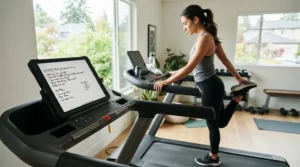
Interval pacing programs take decision-making out of hard sessions. On a machine without onboard workouts, like the ProForm Carbon TLX without iFIT, you build your own. Write the sequence on tape or a sticky note stuck to the console: speeds in km/h, durations in minutes. Preset quick keys on the Sole F63 or Horizon 7.4 AT help you jump between pace and recovery without fumbling.
Three structures cover most of what a half marathoner needs.
- Steady ladders: 5 × 1 km, moving up 0.2 km/h each rep to teach pacing discipline.
- Pyramids: 1-2-3-2-1 minutes at progressively harder efforts with equal recoveries, which tests nerve and form.
- Incline-pace blends: Hold pace constant and raise the grade by 1% every two minutes for six minutes, then drop and recover.
App-driven machines like the BowFlex T9 and NordicTrack Commercial 1750 can run these automatically through JRNY or iFIT. That’s convenient if you enjoy guided sessions, but not essential if you’re disciplined about writing your own. Either way, the key is the same: make the hard parts specific and the easy parts genuinely easy.
Mid-Distance Endurance: Building the Aerobic Engine Indoors
Mid-distance endurance is the sweet spot between a 10K and a full marathon, and it’s what a half marathon actually demands. You need aerobic capacity, but also the durability to hold a steady effort for 90 to 150 minutes. The treadmill is oddly good at this, because it removes traffic lights, hills you can’t control and wind.
The trick is staying sane. Split your mind by dividing the long run into thirds: warm-up, steady middle, then a faster finish. Use incline changes of 0.5% every 20 minutes to vary muscle load. Position a fan so air hits your torso, because overheating is the silent killer of indoor long runs. Sip fluids every 20 minutes, and treat your mid-run snacks like race fuel.
Machine choice shows up here, too. For 2-hour sessions, the Sole F63‘s cushioned deck and the Horizon 7.4 AT‘s stable, quiet run suit steady work. If you’re heavier or running 60+ km weekly, the Sole F85‘s motor headroom reduces stress on the machine.
Race-Day Simulation: Your Treadmill Dress Rehearsal
Race-day simulation turns a vague training plan into a rehearsal. Two to three weeks before the event, schedule a dress run. Wear your race kit and shoes, eat your planned breakfast at the same time as race morning, and rehearse your fuel plan.
Run 16–18 km with the last 5 km at goal pace. If your course is flat, keep the incline at 1%. If it rolls, build a profile of grade changes, using the NordicTrack Commercial 1750‘s decline if you have it. Start gently for the first 2 km, because the number-one race-day mistake is going out too fast.
Remember the official distance is 21.0975 km, as World Athletics states, so don’t round down. Treadmill odometers can drift, so calibrate before you trust them. Finally, don’t skip outdoor running entirely. At least one outdoor run in race-like conditions teaches you how wind, camber and cold affect effort in ways a belt can’t.
Treadmill for 21K Training: Setup, Maintenance and First-30-Day Mistakes
A treadmill for 21K training lives or dies on setup. Put it on a level floor with a mat underneath, leave clear space behind the belt (check the manual for the manufacturer’s minimum), and use a circuit the manual approves. Many makers recommend a dedicated circuit. Position a fan, a water bottle and a towel within reach.
Maintenance basics: wipe the belt after runs, vacuum around the motor cover, and lubricate or check belt alignment on the schedule in your manual. Those few minutes avoid the headaches that make people abandon treadmills.
First-30-day mistakes:
- Running every session flat at the same pace.
- Never calibrating speed, then trusting the console blindly.
- Skipping outdoor runs altogether.
- Ignoring recall notices and serial numbers.
- Buying too small a deck. A XTERRA TR150 (127 × 41 cm deck, 2.25 HP) or a Sunny Health & Fitness SF-T7515 (about 126 × 42 cm, 12.9 km/h top speed) can work for walking but is a poor match for sustained half marathon work.
Treadmill vs Outdoor Running for Half Marathon Prep
| Factor | Treadmill | Outdoor | Best For |
|---|---|---|---|
| Pace control | Exact, locked in | Variable | Treadmill: tempo and interval precision |
| Weather | Immune | Exposed | Treadmill: Canadian winters |
| Terrain | Programmable grade | Natural hills, camber | Outdoor: race-course specificity |
| Impact | Cushioned deck | Pavement | Treadmill: joint-conscious runners |
| Cost | Upfront purchase | Shoes only | Outdoor: tight budgets |
Treadmills win on control, safety and consistency. Outdoor running wins on specificity, cost and the strength your stabilizing muscles gain from uneven ground. The smart split is treadmill for pace work and winter days, outdoors for at least one weekly run when conditions allow.
Treadmill for Half Marathon Training: Real-World Scenarios by Runner Type
The condo first-timer. Targeting 2:15–2:30 in a Winnipeg apartment, three to four easy runs a week, budget under C$900. The Horizon T101 fits, but check the recall notice first. If you can stretch, the ProForm Carbon TLX gives you a longer deck and room to grow.
The time-chaser. Calgary runner aiming for 1:45, with two interval sessions weekly. The Horizon 7.4 AT or BowFlex T9 supplies the width and responsiveness for repeats, and either handles up to 19 km/h.
The hill-course racer. Vancouver-area runner prepping for a rolling course. The NordicTrack Commercial 1750‘s decline lets you rehearse the downhills that wreck legs late in a race.
The high-mileage household. Two runners sharing one machine, or one heavier runner logging 60+ km weekly. The Sole F85 earns its price through motor headroom and capacity.
For context, the Canadian 24-Hour Movement Guidelines recommend at least 150 minutes of moderate-to-vigorous activity weekly for adults. A half marathon plan blows past that quickly, so your treadmill needs to handle volume, not just occasional use. Always pair running with the muscle-strengthening work the guidelines also recommend.
Long-Term Cost & Maintenance
Think in cost per run, not sticker price. If you run four times weekly, that’s about 208 runs a year, or roughly 1,040 over five years. A C$1,600 machine like the Sole F63 works out to about C$1.50 per run before maintenance. Compare that with your current gym membership and the commute.
Subscriptions change the math. One 2026 source lists iFIT at US$39/month, which is about US$468 a year. That’s why the Horizon 7.4 AT (no subscription needed) and Sole F85 (built-in apps without a required membership, per Sole) look better over five years than their sticker prices suggest. The NordicTrack Commercial 1750 and ProForm Carbon TLX reward you most if you actually use iFIT.
Warranties matter as much as horsepower. Lifetime frame and motor coverage is common on the Sole and Horizon machines, but parts and labour are usually one to three years. The ProForm Carbon TLX‘s coverage is shorter on parts and labour, so factor repairs into your risk. Budget a small yearly sum for lubricant, cleaning and the occasional belt service.
Treadmill Safety, Recalls and Canadian Compliance Guide
Treadmills are machines with moving belts, so check safety before you buy. Health Canada publishes alerts through its Recalls and Safety Alerts portal, and it’s worth a quick search for any model you’re considering.
A relevant example: in October 2022, Health Canada issued a Canada-wide recall of Horizon Fitness T101-05 folding treadmills that could unexpectedly change speed. The recall covered about 6,986 units sold in Canada between August 2018 and October 2022, with serial numbers starting TM734 or TM486. The fix was a software update. Newer versions, such as the T101-07 sold at Canadian retailers, are different models, but always verify what you’re buying.
Other recalls have included Peloton Tread treadmills in Canada in 2021 and certain Matrix treadmills for fire hazards in 2022. Practical safety rules:
- Clip the safety key to your clothing every run.
- Keep children and pets clear of the belt.
- Look for certification marks on the nameplate and confirm them in the manual.
- Register your treadmill so you receive notices.
FAQ
❓ How much should I spend on a treadmill for half marathon training?
❓ Do I need an iFIT or JRNY subscription for half marathon treadmill workouts?
❓ Is a treadmill for half marathon training too loud for an apartment?
❓ How soon before race day should I stop treadmill-only runs?
❓ Do I need a mat under a treadmill for half marathon training?
Conclusion
A treadmill for half marathon training won’t run the race for you, but it makes consistent preparation almost embarrassingly easy. Pace is exact, weather is irrelevant, and incline turns a flat basement into a rolling course.
If you want one clear answer, start with the Sole F63 for its balance of deck length, incline range and warranty. Choose the Horizon T101 only if budget is the bottleneck and your paces are easy. Step up to the ProForm Carbon TLX for a long deck on a tighter budget. Pick the Horizon 7.4 AT or BowFlex T9 when intervals and app connectivity matter most. Reserve the NordicTrack Commercial 1750 for decline and iFIT, and the Sole F85 for heavy volume.
Whatever you buy, remember the plan behind it. Use half marathon treadmill workouts that vary pace and incline, apply sensible treadmill pace training half marathon rules, rehearse race day with a proper simulation, and run outdoors whenever you can. The machine is the tool, but the structure is what gets you to the finish line.
Recommended for You
- Treadmill For Marathon Training: 7 Top Picks In Canada 2026
- Treadmill For Serious Runners Vs Commercial Gym Treadmill: 7 Top 2026
- Treadmill For Intermediate Runners: 7 Proven Picks In Canada 2026
Disclaimer: This article contains affiliate links. As an Amazon Associate, I earn from qualifying purchases. If you purchase products through these links, we may earn a small commission at no additional cost to you.
✨ Found this helpful? Share it with your friends! 💬🤗
