In This Article
A treadmill for serious runners vs commercial gym treadmill comes down to duty cycle. Commercial machines are engineered to run for hours every day under dozens of different users. A home treadmill for serious runners is built for one household’s heavy mileage, usually with lighter-duty drive parts, tiered warranties and more consumer features per dollar.
Treadmills didn’t start as fitness gear. Their ancestors ground grain and, in Victorian prisons, punished people, which explains why some of us still dread Monday intervals. The modern home version only arrived after Kenneth Cooper’s 1968 book Aerobics gave engineer William Staub a reason to build one. These days the question isn’t whether you can run indoors. It’s whether the machine can survive you.
That’s where the confusion starts. Brands stamp “commercial” on everything from a budget folder to a club-floor monster, and the word means very little without numbers behind it. A genuine commercial-grade treadmill is defined by its continuous duty motor, its running deck durability and the commercial warranty terms standing behind both. A gym-quality treadmill for home sits in the gap between those worlds. It borrows commercial bones and quietly trims the duty rating.
Below you’ll find seven real machines, plus the specs, the arithmetic and the Canadian considerations that separate engineering from marketing. Availability and pricing on Amazon.ca shift often, so treat every price range here as a snapshot and check the current listing before you buy.
Quick Comparison: 7 Treadmills at a Glance
Think of this table as the cheat sheet you’d scribble on a napkin at a running store. Specs come from manufacturer and retailer listings, and several models changed specs between model years, so the asterisks matter.
| Model | Motor | Deck (cm / in) | Top speed | Warranty headline | Price range (CAD) | Best For |
|---|---|---|---|---|---|---|
| 3G Cardio Elite Runner X | 4.0 HP | 56 × 157 / 22 × 62 | 19 km/h (12 mph) class | Lifetime frame and motor, 10-year parts | C$3,000-C$4,000 | Tall, high-mileage runners |
| Sole TT8 | 4.0 HP | 56 × 152 / 22 × 60 | 19 km/h (12 mph) | Lifetime frame and motor* | C$3,500-C$4,500 | Hill and decline training |
| NordicTrack Commercial 2450 | 3.6-4.25 CHP* | 51-56 × 152* | 19-22 km/h (12-14 mph)* | Lifetime motor, 10-year frame | C$3,500-C$4,500 | Speed work and sprint repeats |
| Sole F85 | 4.0 HP | 56 × 152 / 22 × 60 | 19 km/h (12 mph) | Lifetime frame and motor* | C$2,800-C$3,500 | Folding with no subscription |
| Horizon 7.8 AT | 4.0 CHP | 56 × 152 / 22 × 60 | 19 km/h (12 mph) | Lifetime frame and motor, 5-year parts | C$2,500-C$3,300 | HIIT and third-party apps |
| NordicTrack Commercial 1750 | 3.5-3.6 CHP* | 56 × 152 / 22 × 60* | 19 km/h (12 mph) | Lifetime motor, 10-year frame | C$2,300-C$3,500 | Guided, coach-led training |
| Horizon 7.0 AT | 3.0 CHP | 51 × 152 / 20 × 60 | See current listing | Lifetime frame and motor, 3-year parts | C$1,500-C$2,200 | Budget-minded serious runners |
*Varies by model year or retailer listing; verify before purchase.
Look at the pattern. The Sole TT8, Sole F85 and Horizon 7.8 AT all converge on a 4.0 HP-class motor and a 56 × 152 cm deck, so the real separators are warranty depth, folding and software. If you want terrain variety, the Sole TT8 justifies its premium. If you’d rather spend on the warranty than the touchscreen, the Horizon 7.8 AT is the quieter value play. Budget buyers should note that the Horizon 7.0 AT gives up motor power and deck width to reach its lower price point.
💬 Just one click — help others make better buying decisions too!😊
Top 7 Treadmills for Serious Runners: Expert Analysis
These are ranked loosely from most commercial-like to most affordable. Specs come from manufacturer and retailer listings. Review sentiment is aggregated from published reviews, not personal testing, and where a model’s review pool was too thin to judge, the entry says so.
1. 3G Cardio Elite Runner X — longest running deck in this lineup
Most treadmills sell you a motor. The 3G Cardio Elite Runner X sells you elbow room. Its 56 × 157 cm (22 × 62 in) deck is two inches longer than the usual 60-inch standard, which matters when a long-striding runner is covering serious ground per footfall. The 4.0 HP motor is positioned as continuous-duty class, the Ortho Flex suspension softens footstrike, and the 181 kg (400 lb) capacity hints at a frame that won’t flex through hard intervals.
Based on the spec comparison, this is the closest thing to a gym-quality treadmill for home that the group offers for 30+ km weeks. It’s also overkill if you mostly walk or need to fold it away between sessions. Published roundups consistently credit the company’s customer service and the lack of any subscription. Independent owner-review volume on Amazon.ca looked thin, so check the live listing’s ratings yourself.
Pros:
- ✅ 157 cm deck suits tall, long-striding runners
- ✅ Lifetime frame and motor, 10-year parts coverage
- ✅ No subscription required
Cons:
- ❌ Pricey versus folding rivals
- ❌ Fixed frame eats permanent floor space
Expect roughly C$3,000-C$4,000 (check current price). Worth it if you’ll log daily miles for a decade.

2. Sole TT8 — dual-motor hill and decline specialist
Hills are where treadmills reveal their character, and the Sole TT8 is built around them. Separate motors handle the belt and the incline/decline system, producing a -6% to 15% range that few home machines match. The 56 × 152 cm deck rides a two-ply belt over 3-inch rollers. That is larger than the 2.5-inch rollers listed on the clinic-grade Landice L7 Club Pro Sports.
What the spec sheet won’t tell you is why decline matters. Running downhill loads the quads eccentrically, the same braking stress that wrecks legs on hilly race courses, so a runner preparing for one can rehearse it indoors. Sole also lists a light-commercial warranty alongside the home one, which makes this the most credible pick for shared or small-studio use. Reviewers describe it as a heavy-duty residential machine in a gym mould, with size and price as the main complaints.
Pros:
- ✅ Dual motors enable -6% decline and 15% incline
- ✅ Two-ply belt and 3-inch rollers
- ✅ Light-commercial warranty option
Cons:
- ❌ Non-folding design needs a permanent spot
- ❌ Top speed near 19 km/h limits sprinters
Plan on roughly C$3,500-C$4,500 (prices may vary). The premium is justified if hills are in your race calendar.
3. NordicTrack Commercial 2450 — fastest top speed, if you verify the version
Speed is this machine’s party trick. Newer versions list a 22 km/h (14 mph) ceiling, which works out to roughly a 2:44/km pace, plus a 56 × 152 cm deck and a -3% to 12% incline range. Spec details differ by generation, though. Reviews describe a 4.25 CHP motor on the latest version versus 3.6 CHP earlier, and at least one Canadian retailer listing shows a 19 km/h cap and a narrower belt. Verify the exact listing.
The motor carries a lifetime warranty with a 10-year frame, 2-year parts and 1-year labour. Most runners will never need more than 19 km/h, so the extra headroom only pays off for sprint repeats. Reviewers praise the cushioned deck and speed range. Complaints centre on its weight (about 151 kg, 332 lb assembled) and on features that need an iFIT subscription. A few retailer reviewers report frame issues, and forum posters grumble about service.
Pros:
- ✅ Highest top speed here on newer versions
- ✅ Decline-to-incline range adds terrain variety
- ✅ Lifetime motor warranty
Cons:
- ❌ Full experience depends on iFIT subscription
- ❌ Very heavy and hard to relocate
Budget roughly C$3,500-C$4,500 plus recurring subscription costs. It’s worth it only if you will use the speed.
4. Sole F85 — folding workhorse without a subscription
Folding usually means compromising the frame, and the Sole F85 is the counter-example reviewers keep pointing to. It pairs a 4.0 HP motor with a 56 × 152 cm deck, 2.75-inch rollers and a 2.5 cm (1 in) Cushion Flex Whisper Deck, folded by a gas-assisted mechanism. The capacity is 170 kg (375 lb).
Here is a nugget for the commercial-versus-home debate. Its rollers are bigger than those listed on the Landice L7 Club Pro Sports, a clinic-grade machine, which shows that roller size alone doesn’t define “commercial”. The free Sole+ app keeps running costs lower than subscription-led rivals. Canadian owners should know that one forum poster reported third-party apps can’t control incline on Sole’s Canadian units and that Sole’s lubricant was hard to find locally. Retail reviewers say it feels sturdy and commercial-like. Complaints include a clicking noise on one early unit, a weak fan and a two-person carry up stairs.
Pros:
- ✅ Folds despite heavy-duty construction
- ✅ Free app, no subscription
- ✅ Lifetime frame and motor coverage
Cons:
- ❌ About 145 kg (319 lb), a two-person move
- ❌ Parts and labour windows shorter than Horizon’s
Expect roughly C$2,800-C$3,500 (check current price). It’s a strong value for serious runners who need a fold.
5. Horizon 7.8 AT — interval specialist with the deepest parts coverage
Speed changes can make or break an interval session, and the Horizon 7.8 AT attacks that with its RapidSync drive and QuickDial roller controls. Listings show a 4.0 CHP motor, a 56 × 152 cm deck of 20 mm (0.8 in) with three-zone cushioning, up to 15% incline and a 170 kg (375 lb) capacity. Bluetooth FTMS pairs with outside apps, and it isn’t tied to iFIT.
On paper the warranty is the headline: lifetime frame and motor, with 5-year parts and 2-year labour, the deepest parts and labour coverage in this group. That matters because motors rarely fail while belts, boards and consoles do. A caution for Zwift fans is that a forum thread notes Zwift doesn’t offer automatic incline on any treadmill, so you’d need a workaround. Reviewers praise the responsive motor and warranty, while forum shoppers mention mixed reliability and service experiences.
Pros:
- ✅ 5-year parts and 2-year labour coverage
- ✅ QuickDial speed and incline changes
- ✅ Works with many third-party apps
Cons:
- ❌ Basic console next to touchscreen rivals
- ❌ About 150 kg (330 lb), large even when folded
Roughly C$2,500-C$3,300 (prices may vary). Solid value for HIIT-focused runners.
6. NordicTrack Commercial 1750 — the guided-training crowd-pleaser
If you like being told what to do on a treadmill, the NordicTrack Commercial 1750 is the poster child. Specs vary by retailer. Most listings show a 3.5-3.6 CHP motor (one Canadian retailer lists a higher figure), a deck near 56 × 152 cm on current units, 12 mph speed and a -3% to 15% range. It has 38 built-in programs and dual fans, and iFIT can auto-match a trainer’s speed and incline.
Reviewers frequently name it the best overall home treadmill. Garage-gym reviewers point out it has a weaker motor, lower weight capacity (136 kg, 300 lb) and shorter warranty than the Sole F85. The warranty is a lifetime motor, 10-year frame, 2-year parts and 1-year labour. The analysis is simple: guided software is brilliant for runners who hate planning and redundant for those following a coach’s plan.
Pros:
- ✅ Trainer-controlled speed and incline
- ✅ Incline and decline options
- ✅ Lifetime motor and 10-year frame
Cons:
- ❌ Full experience needs a subscription
- ❌ Lower weight capacity than rivals
Expect roughly C$2,300-C$3,500, since sale pricing fluctuates. Great value for runners who want guidance.
7. Horizon 7.0 AT — the entry ticket to serious-mileage territory
Not everyone needs a C$4,000 machine, and the Horizon 7.0 AT is for runners who know it. It lists a 3.0 CHP motor, a 51 × 152 cm deck 18 mm (0.7 in) thick with three-zone cushioning, and a drive system pitched as running cooler at lower RPM. The warranty is lifetime frame and motor, 3-year parts and 1-year labour.
My read of the specs is that 3.0 CHP is the floor several buying guides cite for “genuine” home treadmills. That makes this a sensible fit for a runner doing about 30-50 km weekly rather than a 100 km marathon block. Honest caveat: I couldn’t verify a large pool of independent owner reviews, so this assessment is spec-based. Treat reliability claims with caution until you read current Amazon.ca reviews.
Pros:
- ✅ Lowest cost in this group
- ✅ Lifetime frame and motor coverage
- ✅ Full-length 152 cm deck
Cons:
- ❌ Thinner 18 mm deck than rivals
- ❌ Narrower deck and shorter parts warranty
Roughly C$1,500-C$2,200 (check current price). Good value if your mileage is moderate.
How to Choose a Treadmill for Serious Runners vs Commercial Gym Treadmill
Volume is the whole game. Canadian guidelines set a floor of 150 minutes of moderate-to-vigorous activity weekly, according to CBC’s coverage of the CSEP guidelines, and committed runners blow past it. That’s exactly why durability specs matter more for you than for the average buyer.
- Match the motor to your mileage. For 40+ km weeks, look for 3.5+ CHP and make sure it’s a continuous rating, not a peak number.
- Measure your stride. A 152 cm deck is the practical minimum, and tall runners should prefer 157 cm.
- Check deck thickness and belt construction. Thicker decks and multi-ply belts resist wear and heat better.
- Read the warranty beyond the headline. Lifetime frame and motor sound great, but parts and labour windows are where the money goes.
- Count the running costs. Subscription-led machines can cost more over a decade than the treadmill itself.
- Plan the logistics. Machines weigh 130-150 kg, so check stairs, door widths and floor strength before ordering.

Commercial-Grade Treadmill: What the Label Really Means
A commercial-grade treadmill carries no legal definition, which is why it’s such a juicy marketing word. Real commercial units tend to share a profile. One clinic-grade example, the Landice L7 Club Pro Sports sold through a Canadian supplier, lists a 4-HP continuous-duty motor, a four-ply belt, 14-pound steel rollers, a 1-inch reversible deck and a 5-year parts and 1-year labour commercial warranty. SportsArt’s T645L goes further, listing a 4.0 HP AC-servo motor, a 175 kg frame and a requirement for a dedicated 15A circuit.
Compare that with home models. Entry-level home decks run roughly 15-18 mm, mid-range 18-20 mm and high-quality home and commercial decks around 25 mm, according to one manufacturer’s guide. Several treadmills here, such as the Sole F85 with its 2.5 cm deck, now sit near commercial thickness. A commercial-grade treadmill is therefore best judged by evidence, not adjectives: motor type, deck thickness, belt plies, roller size and warranty tier. When a listing won’t state them, assume the label is decoration.
Continuous Duty Motor: Why CHP Beats Peak HP
A continuous duty motor is the single most misrepresented spec in treadmill marketing. Peak horsepower measures a short burst. Continuous horsepower (CHP) reflects what the motor sustains. A commercial supplier listing for one machine shows the gap neatly: 3 HP continuous versus a 7 HP “peak”.
Here’s the maths nobody prints. A standard 15 A / 120 V household circuit supplies about 1,800 W, or roughly 2.4 HP of electrical input before losses. That’s why NordicTrack states that CHP is a laboratory dynamometer figure and not what the motor delivers in ordinary home use, and why Horizon says home electrical systems limit operating horsepower. So treat CHP as a quality proxy rather than a literal output. A higher-CHP motor usually runs cooler and strains less at the same real load, which is the point. One practical test cited by a treadmill reviewer is how smoothly the machine pulls you from a dead stop. Commercial suppliers also favour AC drive systems for sustained duty, but published specs for these seven rarely state drive type, so ask before you buy.
Running Deck Durability: Belt, Deck and Rollers
Running deck durability is where home and commercial machines diverge most quietly. A thicker, multi-layer waxed belt on a commercial treadmill may need relubrication rarely, while some home models call for it roughly every 240 km (150 miles) or three months, according to one manufacturer’s guidance. Always follow your manual, because some belts differ.
One equipment vendor says a quality commercial belt lasts 15,000-25,000 miles (about 24,000-40,000 km). Treat that as a vendor claim. The rough arithmetic is still instructive. A runner covering 50 km weekly logs about 2,600 km a year, so even the low end implies a long belt life, if the deck stays clean and lubricated. The same vendor warns that neglect can halve a belt’s life. Wikipedia’s treadmill entry also notes decks sit on damping elements, which is the cushioning you feel and the part that ages.
For runners, the checklist is simple: deck thickness, belt plies (the Sole TT8 and Sole F85 list two-ply), roller diameter and honest wear-item coverage. Cushioning keeps your joints happy, but lubrication keeps the belt alive.
Commercial Warranty Terms: What Home “Lifetime” Really Covers
Commercial warranty terms tell you how a maker expects the machine to be used. SportsArt’s T645L lists a full-commercial tier with no usage cap and a light-commercial tier limited to six hours a day. The lighter tier gets longer parts coverage (5 years versus 3), which shows how tightly warranties are tied to hours of use.
Home warranties follow similar logic. They typically assume household use, so using a home machine in a business can void the cover, and the Sole TT8‘s light-commercial option is the rare exception here. Here is how the seven compare on home terms:
| Model | Frame | Motor | Parts | Labour |
|---|---|---|---|---|
| 3G Cardio Elite Runner X | Lifetime | Lifetime | 10 years | 2 years |
| Sole TT8 | Lifetime | Lifetime | 3-5 years* | 1-2 years* |
| NordicTrack Commercial 2450 | 10 years | Lifetime | 2 years | 1 year |
| Sole F85 | Lifetime | Lifetime | 3 years* | 1 year* |
| Horizon 7.8 AT | Lifetime | Lifetime | 5 years | 2 years |
| NordicTrack Commercial 1750 | 10 years | Lifetime | 2 years | 1 year |
| Horizon 7.0 AT | Lifetime | Lifetime | 3 years | 1 year |
*Sole’s published terms have changed between years; verify against the current listing.
Lifetime frame and motor coverage is cheap for makers to give, since frames and motors rarely fail. The expensive failures are belts, boards, consoles and labour, so the Elite Runner X (10 years) and Horizon 7.8 AT (5 years) stand out for runners who value long-term parts cover.
Gym-Quality Treadmill for Home: Can You Really Get One?
Mostly yes, with one honest asterisk. A gym-quality treadmill for home can match commercial stride room, cushioning and motor class, but duty cycle is the gap. A busy club treadmill can run eight or more hours daily, which is roughly 2,900 hours a year. A runner using one for an hour a day logs about 365. Simple arithmetic says the club machine ages around eight times faster, which is why a home model with commercial-ish parts can last longer than its warranty implies. Wikipedia puts typical treadmill lifespans at about 7-12 years.
Here’s how the options stack up:
| Option | Upfront cost | Duty rating | Typical warranty | Best For |
|---|---|---|---|---|
| Home commercial-grade pick | C$2,300-C$4,500 | Household heavy use | Lifetime frame/motor, short parts | Sole F85, Horizon 7.8 AT |
| Gym membership | None (recurring fee) | Full commercial | N/A | Occasional runners |
| Light-duty big-box treadmill | Under C$1,500 | Light household | Short, limited | Walkers, beginners |
| Used commercial treadmill | Varies widely | Full commercial (worn) | Often limited | DIY-minded buyers |
The decision is mostly about frequency. If you run five or more times weekly, a home machine such as the Elite Runner X pays back in convenience and winter-proofing. If you run twice a week, a membership is the better maths. A used commercial unit can be a bargain, but warranty cover and servicing are the gamble.
Heavy-Duty Treadmill for Serious Runners: Who Actually Needs One
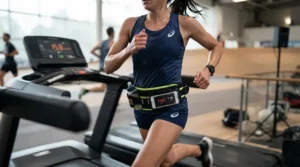
A heavy-duty treadmill for serious runners isn’t just for the fastest people. Frame mass and weight capacity matter most for heavier runners and for anyone doing violent intervals. A common rule of thumb is to choose a capacity comfortably above body weight, and some buyers aim for about 1.5 times. The Sole F85 (170 kg), Horizon 7.8 AT (170 kg) and Elite Runner X (181 kg) give the most headroom, while the NordicTrack Commercial 1750 tops out at 136 kg.
Three groups benefit most: heavier runners, high-mileage marathoners and multi-runner households. If you’re a lighter runner doing 25 km a week, a heavy-duty treadmill for serious runners is mostly insurance. Spend the difference on a rubber mat, a proper circuit and a maintenance routine instead. If you fit one of the three groups, the heavier frame buys stability at speed, and that’s precisely what commercial gym treadmills offer.
Long-Term Cost & Maintenance
A treadmill’s price tag is its down payment. A machine in the C$3,000-C$4,000 range over 10 years works out to roughly C$300-C$400 a year before extras. Then comes running cost, and that’s where the picture shifts.
| Model | Price range | Warranty depth | Subscription? | Value verdict |
|---|---|---|---|---|
| 3G Cardio Elite Runner X | C$3,000-C$4,000 | Deepest parts cover | No | Best long-haul value |
| Sole F85 | C$2,800-C$3,500 | Strong frame/motor | Free app | Best value overall |
| Horizon 7.8 AT | C$2,500-C$3,300 | Best parts and labour | No | Best for HIIT |
| NordicTrack Commercial 1750 | C$2,300-C$3,500 | Strong frame/motor | iFIT recurring | Good if you use guidance |
| Horizon 7.0 AT | C$1,500-C$2,200 | Good | No | Best budget |
The iFIT subscription was listed at about US$39 a month in the sources checked (verify current Canadian pricing). Over 10 years that’s roughly US$4,700, more than the treadmill itself. Subscription-free machines can therefore be cheaper overall even at a higher sticker price. Add belt lubrication supplies, an annual vacuum of the motor housing and eventual belt replacement, and you have a realistic ownership budget.
Setup and Maintenance Guide: Your First 30 Days
Most treadmill grief is self-inflicted. A good first month prevents it.
- Choose the spot carefully. Level floor, rubber mat underneath, and clearance behind the deck as per your manual. Heavy machines are hard to nudge later.
- Get help assembling. Reviewers note some units need two people, and the Sole F85 deck section was tough for two to carry upstairs.
- Power it properly. Plug directly into a wall outlet rather than an extension cord, and ask an electrician about a dedicated circuit if breakers trip. Commercial units often require a dedicated 15A circuit.
- Lubricate by the manual. Some models need regular silicone lubricant and others use maintenance-free belts, so follow your model’s guidance.
- Listen early. A new clicking or rubbing noise is easiest to fix inside the warranty window, so report it right away.
- Build a rhythm. Wipe the deck weekly, check belt alignment monthly, vacuum around the motor housing quarterly.
The common mistake in month one is running hard before the machine has been checked. Do a few easy sessions, confirm belt tracking, then unleash those intervals.
Real-World Scenarios: Three Canadian Runners, Three Picks
These are hypothetical profiles to show the reasoning, not real customers.
The Calgary marathoner. Eighty kilometres a week, 6’3″, training through −25°C January mornings. The long deck and parts coverage on the Elite Runner X fit, and the budget runs C$3,000-C$4,000. Frequency is high, so the premium pays back.
The Vancouver trail runner. Wet autumns, a hilly race in the calendar and a shared household. Decline matters, which points to the Sole TT8, and the light-commercial option helps with multiple users. The budget is C$3,500-C$4,500.
The Toronto condo runner. Thirty-five kilometres weekly, limited space and no appetite for subscriptions. Folding matters, so the Sole F85 fits, while the Horizon 7.0 AT is the cheaper alternative if the budget stays around C$1,500-C$2,200.
If your goal is simply health, CSEP’s adult guidelines set a 150-minute weekly baseline. Serious runners go far beyond it, which is exactly why durability, warranty and maintenance deserve more of your attention than touchscreen size.
Safety and Canadian Considerations
Treadmills are safe when you respect them. Wikipedia notes that children reaching into a moving belt can suffer severe friction burns, so remove the safety key when the machine isn’t in use. In Canada, look for a recognized certification mark such as CSA or cUL on the electrical components and the power supply. The same applies if you buy through Amazon.ca, where listings vary by seller.
Delivery is the other Canadian reality. These machines weigh 130-150 kg, so confirm how the carrier delivers (curbside versus in-home), and arrange a helper before the box arrives. Check the return policy for oversized items.
Finally, injury prevention matters more than any spec. Provincial guidance, such as this Newfoundland and Labrador government infographic, recommends muscle-strengthening activity at least twice weekly alongside aerobic work. Runners who skip strength work are the ones who sideline themselves, and no warranty covers that.
FAQ
❓ Is a commercial-grade treadmill worth buying for home use?
❓ How much does a gym-quality treadmill for home cost in Canada?
❓ Do I need a dedicated circuit for a heavy-duty treadmill?
❓ Can I use a home treadmill in a small studio or business?
❓ Do I need a subscription to use a serious running treadmill?
Conclusion
So, treadmill for serious runners vs commercial gym treadmill: who wins? The commercial machine wins on raw duty rating, and the home machine wins on convenience, cost per run and the ability to train in a blizzard without pants-related negotiations with the weather. For most Canadian runners, the sweet spot is a home model that borrows commercial specs and keeps the warranty honest.
If you want one pick per priority, the Elite Runner X suits tall, high-mileage runners, the Sole TT8 suits hill and decline training, the Sole F85 suits folding without subscriptions, and the Horizon 7.8 AT suits intervals and long parts coverage. Fast runners should check the NordicTrack Commercial 2450, guided-training fans the NordicTrack Commercial 1750, and budget buyers the Horizon 7.0 AT.
Whatever you choose, read the motor rating, deck thickness, parts and labour terms and running costs before you read the touchscreen specs. Check Amazon.ca for current availability and pricing, since both change often.
✨ Ready to Run Through Winter?
🏃♂️ Pick the machine that matches your mileage, check the current price and warranty terms on Amazon.ca, and turn dark January mornings into your best training block yet!
Recommended for You
- Treadmill For Intermediate Runners: 7 Proven Picks In Canada 2026
- Incline Treadmill For Runners: 7 Proven Picks For Canada (2026)
- Best Running Treadmill: 7 Standout Picks For Canada (2026)
Disclaimer: This article contains affiliate links. As an Amazon Associate, I earn from qualifying purchases. If you purchase products through these links, we may earn a small commission at no additional cost to you.
✨ Found this helpful? Share it with your friends! 💬🤗
