In This Article
The treadmill began its career in the early 1800s as a prison punishment device. Two centuries later, we pay thousands of dollars for the privilege of running on one. Progress! Here’s what the checkout page won’t tell you, though: shopping for a treadmill for speed training is a completely different exercise from shopping for walking meetings or easy Sunday jogs.
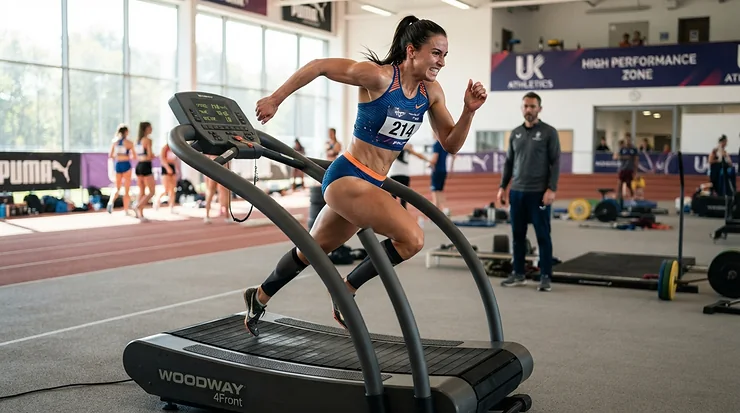
Speed work is rough on equipment. The motor has to hold a fast belt under a sudden load, the deck has to survive hard push-offs, the controls have to change pace in seconds, and the safety stop has to work every single time. Most home machines top out at 12 mph (19 km/h). Only a handful go further, so your shortlist is shorter than the marketing suggests.
This guide is built on published manufacturer specs, independent review sites and aggregated owner feedback, not on claims of hands-on testing. Where sources disagree (and on motor ratings, they often do), you’ll see the disagreement spelled out rather than papered over.
Canadian winters add their own logic. When it’s -28°C and the sidewalks are glass, an indoor sprint session isn’t a luxury. It’s the plan. Speeds below appear in km/h first, with mph in brackets because that’s how treadmills label them. Prices are indicative C$ ranges converted from published retail pricing. Availability and model years on amazon.ca change often, so confirm the listing before you commit.
Quick Comparison: Which Treadmill for Speed Training Fits You?
| Product | Top Speed | Listed Motor | Deck (cm / in) | Best For |
|---|---|---|---|---|
| NordicTrack Commercial 2450 | 22 km/h (14 mph) | 4.25 CHP | 56 × 152 / 22 × 60 | Fastest home speed ceiling |
| SOLE F85 | 19 km/h (12 mph) | 3.5 to 4.0 HP* | 56 × 152 / 22 × 60 | Heavier runners, no subscription |
| Horizon 7.8 AT | 19 km/h (12 mph) | 4.0 CHP* | 56 × 152 / 22 × 60 | Quick interval speed changes |
| NordicTrack Commercial 1750 | 19 km/h (12 mph) | 3.5 to 4.25 CHP* | 56 × 152 / 22 × 60 | Guided classes, decline training |
| ProForm Pro 9000 | 19 km/h (12 mph) | 3.6 CHP* | Varies by model year | Class-driven runners |
| SOLE TT8 | 19 km/h (12 mph) | 4.0 HP | 56 × 152 / 22 × 60 | Dual-motor incline and decline |
| SOLE F80 | 19 km/h (12 mph) | 3.25 HP | 51 × 152 / 20 × 60 | Best value for tighter budgets |
*Sources disagree by model year; verify the listing.
Look at that speed column and one thing jumps out: only the NordicTrack Commercial 2450 clears 12 mph. Everything else is separated by deck width, motor reputation, warranty and software, not raw speed. If a genuine high top speed treadmill is your priority, the field narrows fast. If a dependable 12 mph machine is enough, you have real choices and real savings.
💬 Just one click — help others make better buying decisions too!😊
Top 7 Treadmills for Speed Training: Expert Analysis
Each pick below translates specs into what they mean mid-interval, then adds aggregated review sentiment. Where a review pool is small or manufacturer-hosted, I say so.
1. NordicTrack Commercial 2450 — the only 14 mph pick here
Fourteen miles per hour is where the NordicTrack Commercial 2450 leaves the pack behind. Its published range is 0 to 22 km/h (14 mph), which NordicTrack translates to a 4:17-per-mile pace, roughly 2:40 per kilometre. For sprint intervals, that headroom matters. A fast club runner works comfortably below the ceiling instead of pinning against it.
The listed 4.25 CHP motor is the strongest in this roundup, though earlier versions of the model were listed at 3.6 CHP, so check the year. The 56 × 152 cm deck is generous, the incline runs from -3% to 12%, and the motor carries a lifetime warranty. At roughly 150 kg (332 lb), it stays planted when you push off hard. NordicTrack itself notes that CHP is a lab measurement, not what the motor does in a living room.
Based on the specs, this suits runners who want the highest home speed ceiling and plan to use the iFIT workouts. Those require a paid membership, an ongoing cost. Garage Gym Reviews scored it 4.4 out of 5. Reviewers praise the cushioned deck and the decline option, while noting the size and price.
Pros:
- ✅ Highest speed ceiling in this roundup
- ✅ Wide deck with -3% decline capability
- ✅ Lifetime motor warranty
Cons:
- ❌ Premium price and heavy footprint
- ❌ Best features sit behind iFIT membership
Indicative range: C$3,300 to C$4,000, so check current price. It’s the clear value verdict if 14 mph matters to you, and an expensive overshoot if it doesn’t.
2. SOLE F85 — commercial feel with no monthly fee
The SOLE F85 earns its place by delivering a sturdy 12 mph (19 km/h) platform that you own outright, with no subscription required to run it. A 15.6-inch touchscreen streams your apps, so you pay for the machine and nothing else.
Its 56 × 152 cm deck gives sprinters room to land long strides. Weight capacity is 375 lb (about 170 kg), and the lifetime frame and motor warranty signals confidence. The four quick-speed keys (3, 6, 9 and 12 mph) let you jump between recovery and effort without fumbling a dial, which is more useful than it sounds at the end of a hard rep.
One caution. SOLE’s 2026 listing shows a 3.5 HP motor, while earlier reviews cite 4.0 HP. The honest takeaway is to read the specific listing you’re buying, not a review of a prior year. What the spec sheet won’t state is how quickly the belt changes speed, a gap even one reviewer’s readers flagged.
ReviewFinder’s aggregation of expert reviews describes consistent praise for durability and motor feel. The trade-off is a large, heavy frame, about 145 kg (319 lb).
Pros:
- ✅ No subscription needed to run workouts
- ✅ Very high weight capacity and stable frame
- ✅ One-touch speed keys speed up intervals
Cons:
- ❌ Capped at 12 mph (19 km/h)
- ❌ Heavy and bulky even when folded
Indicative range: C$2,800 to C$3,400. Strong value for heavier runners who want a quiet, no-fuss sprint training treadmill.
3. Horizon 7.8 AT — roller dials built for fast interval changes
Interval work lives or dies on how quickly you can change pace, and the Horizon 7.8 AT is built around that idea. Its QuickDial roller controls and “Rapid Sync” motor are designed for rapid speed adjustments, and the integrated Sprint 8 HIIT program turns that into a ready-made routine.
Horizon doesn’t publish the motor size. Reviewers’ research points to 4.0 CHP. The deck is 56 × 152 cm, incline runs 0 to 15%, and the frame and motor carry lifetime warranties. At about 150 kg (330 lb) it’s stable at full speed, though it ships in a heavy box.
On paper, the dial-based control is the real differentiator. One review excerpt Horizon highlights describes the climb from a 6 mph recovery jog to a 10 mph effort as quicker than on most competing machines. Another tester, writing for BarBend, noted roughly 20 seconds to reach top speeds. In other words, even a responsive motor needs a runway.
Owners also report that the roller dials are sensitive to accidental bumps. Treat that as a setup lesson: keep your arms swinging clear.
Pros:
- ✅ Roller dials make pace changes quick
- ✅ Built-in Sprint 8 interval program
- ✅ Lifetime frame and motor warranty
Cons:
- ❌ No decline setting
- ❌ Dials can be bumped accidentally
Indicative range: C$2,500 to C$3,200. A strong choice for anyone whose main goal is repeated intervals.
4. NordicTrack Commercial 1750 — popular all-rounder with decline training
The NordicTrack Commercial 1750 is the machine many Canadians think of first, and for good reason. It runs from 0 to 12 mph (19 km/h), with incline and decline from -3% to 12%, a RunFlex cushioned deck and a 16-inch pivoting touchscreen.
Here’s where the spec sheet gets murky. Reported motor ratings range from 3.5 to 4.25 CHP depending on the source and model year. Older units have been sold through Amazon, so confirm which version is in the listing. One independent test measured 70 dB at 6 mph and 78 dB at 12 mph with fans on, which matters if you live in a condo with thin walls.
Analytically, the 1750 works best when you actually use the iFIT classes. Reviewers describe the best features as locked behind that membership, which turns the sticker price into a running cost. Without it, you still have a competent 12 mph machine, but you’re paying for software you don’t use.
Pros:
- ✅ Decline and incline range up to 12%
- ✅ Cushioned deck eases repeated impacts
- ✅ Lifetime motor warranty
Cons:
- ❌ Motor specs vary between model years
- ❌ Loud at 12 mph in one independent test
Indicative range: C$2,200 to C$3,400, depending on model year and seller. Solid value if you buy the right version.
5. ProForm Pro 9000 — steady at speed, noisy about it
The ProForm Pro 9000 posts the same 22 km/h (12 mph) top speed as most rivals and the familiar -3% to 12% incline range. Most sources list a 3.6 CHP Mach Z motor, though a few cite 4.25 CHP. Treat that gap as a reason to read the listing carefully.
At about 119 kg (263 lb), it’s lighter than the others here, and a reviewer at Live Science praised how stable it felt at top speed with no judder. The same review measured 76.5 dB, louder than a larger NordicTrack in the same test, and flagged noise during incline transitions.
Reviewers consistently note the cushioning and the quality of the iFIT classes, which makes this a good fit for runners who want coached sessions rather than self-directed intervals. If you prefer structure and distraction, it works. If you want to dial pace manually, it’s less intuitive than the Horizon 7.8 AT.
Pros:
- ✅ Stable feel at full speed
- ✅ Lighter frame, easier to move
- ✅ Strong class content with iFIT
Cons:
- ❌ Loud at top speed in testing
- ❌ Motor listing varies by source
Indicative range: C$2,300 to C$3,200. Good value for class-driven runners, so long as the neighbours are forgiving.
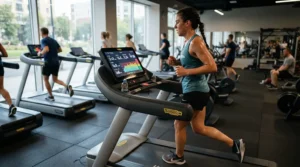
6. SOLE TT8 — dual-motor incline and decline
The SOLE TT8 is the odd one out. It uses two motors for incline and decline, offering -6 to 15 levels, which helps you rehearse downhill running as well as flat sprints. A 4.0 HP drive motor, 56 × 152 cm deck, 15.6-inch screen and 2-ply belt round out the package.
Its quick-speed keys (2, 3, 4, 5, 7, 9 and 12 mph) are a handy shortcut for ladder-style intervals. Top speed is 12 mph (19 km/h), the same as the cheaper SOLE F80, so you’re paying for terrain flexibility, not speed.
The review picture is more cautious than the marketing. SOLE’s own product page shows a 3.6 out of 5 average from 32 reviews. That’s a small pool on a manufacturer-run site, so treat it as a yellow flag, not a verdict. Do your own checking of recent buyer comments before purchasing.
Pros:
- ✅ Dual motors for incline and decline
- ✅ Seven quick-speed keys for intervals
- ✅ Lifetime frame and motor warranty
Cons:
- ❌ Mixed rating from a small review sample
- ❌ Top speed no higher than cheaper models
Indicative range: C$3,000 to C$3,900. Worth it only if decline training is a real priority.
7. SOLE F80 — budget-friendly 12 mph
The SOLE F80 is the most affordable route to a legitimate 12 mph (19 km/h) sprint training treadmill. A brushless 3.25 HP motor, 350 lb (159 kg) capacity, 15 incline levels and a 10.1-inch touchscreen cover the basics, with the same quick-speed keys as the SOLE F85.
The compromise is the narrower 51 × 152 cm deck. For runners with a short, quick stride, that’s fine. If you overstride when tired, you’ll notice the margin for error is smaller. SOLE claims the brushless design runs quieter and lasts much longer than older motors, which is a manufacturer claim to weigh accordingly.
One SOLE-hosted review praises the F80 for lasting 15 years. That’s a nice anecdote, but treat it as marketing, not a durability study.
Pros:
- ✅ Lowest entry price in this roundup
- ✅ Quiet brushless motor design
- ✅ Lifetime frame and motor warranty
Cons:
- ❌ Narrower deck than the premium picks
- ❌ Smaller motor than competing models
Indicative range: C$2,200 to C$2,800. A smart buy for tighter budgets and runners with compact strides.
What Is a Treadmill for Speed Training?
A treadmill for speed training is a running machine built to hold fast, repeatable belt speeds, typically 12 mph (19 km/h) or more, while accelerating and slowing predictably under interval loads. It pairs a strong continuous-duty motor with a wide, cushioned belt and reliable safety stops.
That description rules out a lot of what’s on shelves. Walking pads stop around 6 km/h. Budget home machines often cap near 10 mph. The difference shows up when you ask a motor to deliver full power every minute for 20 minutes, not just once.
What separates a true sprint training treadmill from an ordinary runner’s machine, in practice, comes down to four traits: a high top speed mph rating, a motor with headroom, responsive controls and trustworthy braking. Everything else, from screens to streaming, is decoration.
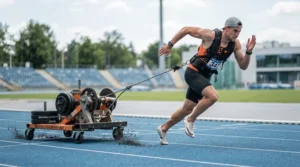
Treadmill Max Speed Comparison: What 12, 14 and 15.5 mph Really Buy You
A proper treadmill max speed comparison should start with what the number means for your legs. Here it is in plain units.
| Top Speed | km/h | Pace per km | 100 m on the belt | Best For |
|---|---|---|---|---|
| 10 mph | 16.1 | 3:44 | 22.4 s | Entry models and steady runners |
| 12 mph | 19.3 | 3:07 | 18.6 s | SOLE F85, SOLE F80, Horizon 7.8 AT, NordicTrack Commercial 1750, ProForm Pro 9000, SOLE TT8 |
| 14 mph | 22.5 | 2:40 | 16.0 s | NordicTrack Commercial 2450 |
| 15.5 mph | 24.9 | 2:24 | 14.4 s | Rogue STEPR Tread XL |
The Rogue STEPR Tread XL is the performance-class outlier: a 4 HP servo motor, 15.5 mph (25 km/h) ceiling and 63 × 25 inch deck. It’s sold through Rogue, so confirm Canadian availability before you plan around it.
Read the table with caution. These are belt speeds, not track times, and sprinting on a belt isn’t the same as sprinting on a track. Still, it shows why 12 mph is plenty for most runners. Hitting a belt speed of 19 km/h means holding a 3:07 pace per kilometre, which is genuinely quick. Going to 14 mph only matters if your best efforts already live near the ceiling. Garage Gym Reviews notes that most budget machines stop at 8 to 10 mph, home machines at 12, and a few high-end units at 14 to 15.
Top Speed MPH Rating: How to Read the Number on the Spec Sheet
The top speed mph rating is a ceiling, not a recommendation. One review summary puts it bluntly: top speed is a capability, not a target. Most motorized home treadmills sit between 8 and 12 mph, while performance and commercial machines reach 12 to 15.
Three practical checks make the number useful. First, confirm the unit. Some listings show km/h, so a “22” might not be a stunt. Second, check the minimum as well as the maximum, since 0.5 mph starts are common and matter for recovery walks. Third, don’t infer top speed from motor size alone. Use the manufacturer’s official range as the answer, as one speed guide advises.
Small differences in the top speed mph rating rarely matter. The Peloton Tread lists 12.5 mph against the usual 12, a gap of under 1 km/h, which no sprinter will feel. A jump from 12 to 14 does matter, and only if you’d use it.
Motor Power for Sprinting: What CHP Does (and Doesn’t) Tell You
Motor power for sprinting is about repeating hard efforts without the machine labouring. CHP, or continuous horsepower, is the headline metric. It’s measured on a dynamometer in a lab. NordicTrack’s own fine print says the rating doesn’t reflect operating horsepower in ordinary household use, and Horizon adds that real output is limited by home electrical systems.
So what should you actually look for? NordicTrack suggests a 3.0 CHP motor as a minimum for runners, and independent guides put higher-end machines at 3.5 CHP or more. Treat those as starting points. Warranty length is a smarter proxy than the horsepower figure itself. Lifetime motor warranties on the NordicTrack Commercial 2450, SOLE F85 and Horizon 7.8 AT reflect manufacturer confidence, even if they can’t tell you how the belt responds under load.
Motor power for sprinting also means response, and that’s the number no one publishes. Reviewers have complained that some treadmills lag when you ask for more speed, and one tester described still running 10 seconds after pressing “slower.” When comparing models, read reviews for words like “responsive” and “lag,” not just horsepower.
Rapid Deceleration Safety: How to Stop a Fast Belt Without Getting Hurt
Rapid deceleration safety deserves more attention than it gets, because the faster the belt, the more it matters. A Massachusetts disability-services safety guideline lists the main hazards: friction burns from contact with the belt, and head or back injuries from falls or from being propelled off when speed changes too quickly. U.S. figures cited in one article counted about 24,400 treadmill-related emergency room visits in 2014.
The safety key is the one non-negotiable. It stops all moving parts when pulled, so clip it on every time. A manufacturer safety notice also lists the reasons a belt can stop unexpectedly: power failures, overloads, a towel pulled onto the belt, or an accidental emergency-stop activation. Plan for that by keeping the area behind the belt clear.
Canada has its own record. Health Canada has recalled treadmills for faults ranging from unexpected speed changes to fire hazards. A 2022 recall covered Horizon Fitness T101-05 folding treadmills, a different model from the Horizon 7.8 AT, after reports of units changing speed unexpectedly. Check Health Canada’s recalls and safety alerts database before buying any treadmill, new or used.
Practically: ramp speed down in steps, don’t hammer the stop button at full pace, and step onto the side rails before the belt stops. Safety specs, including how fast a belt slows, are rarely published, so look for reviewers who test it.
Sprint Training Treadmill vs Curved Manual Treadmill
A sprint training treadmill with a motor isn’t your only option. Curved manual treadmills like the Assault AirRunner have no motor and no speed cap. Your effort sets the pace.
| Feature | Motorized (e.g., NordicTrack Commercial 2450) | Curved Manual (e.g., Assault AirRunner) | Outdoor Sprint |
|---|---|---|---|
| Top speed | Capped at 12 to 15.5 mph | Limited only by you | Limited only by you |
| Acceleration feel | Belt follows set speed | Instant, effort-driven | Natural |
| Safety key | Yes | No, per one review | Not applicable |
| Winter use | Excellent | Excellent | Poor in Canadian winters |
| Best For | SOLE F85, Horizon 7.8 AT | Experienced athletes | Anyone with good weather |
The curved models respond the instant your feet do, which many sprinters prefer. The trade-off is safety: one review notes that falling is more dangerous on a manual treadmill because there’s no safety key, and the Assault AirRunner is sold brand-direct at a price that exceeds most picks here. A motorized machine gives you repeatable speeds, a safety key and structured programs. For most Canadians, the motorized route is the safer starting point. Experienced athletes who want raw, self-driven acceleration may prefer the curved option.
How to Choose a High Top Speed Treadmill: 7 Steps
- Set your real ceiling. If your intervals peak at 16 km/h, a 12 mph machine already gives you comfortable headroom.
- Check the official range. Use the manufacturer’s stated speed, not a retailer’s summary.
- Prioritize the motor with headroom. Look for 3.5 CHP or more, plus a lifetime motor warranty.
- Match the deck to your stride. A 56 cm width forgives long strides better than 51 cm.
- Weigh response, not just power. Read reviews for how quickly speed changes.
- Confirm the safety stack. A magnetic safety key, an emergency stop and clearance behind the belt are the basics.
- Count the total cost. Subscriptions, delivery, assembly and warranty terms all change what “affordable” means.
If you want a high top speed treadmill that leaves room to grow, the NordicTrack Commercial 2450 is the only one in this group that gives you real headroom. If your efforts stay under 12 mph, almost anything in this guide will work.
Features That Actually Matter (And Those That Don’t)
What matters: deck width, motor warranty, quick-speed keys, a reliable safety key, and a frame that doesn’t shake at 19 km/h. These are the things that decide whether the treadmill for speed training still feels solid after two years.
What doesn’t: screen size beyond readability, built-in Netflix, and fancy cooling fans. A 15.6-inch screen on the SOLE F85 is pleasant, but it doesn’t make you faster. The same goes for the 16-inch display on the NordicTrack Commercial 1750. If the money could go toward a better motor or a wider deck, move it there.
Decline is a useful but secondary feature. It lets you rehearse downhill running on the NordicTrack Commercial 2450 or SOLE TT8, but there’s no evidence in this research that it increases sprint speed, so treat it as variety, not magic.
✨ Ready to Find Your Match?
🔍 Take your treadmill for speed training to the next level with these carefully chosen machines. Click any highlighted product to check current pricing and availability. They’ll help you build real speed, whatever the winter looks like! 🏃♂️
Sprint Training Treadmill Workouts: A Practical 4-Week Plan
Buying the machine is the easy part. Here’s a conservative four-week structure, adjustable to your fitness. If you have any health concerns, check with a doctor first.
The Canadian Society for Exercise Physiology describes high-intensity interval training as intervals at roughly 80 to 100% of peak heart rate, while sprint interval training is all-out effort. That definition shapes the plan.
- Week 1: Warm up for 10 minutes. Do 6 × 20 seconds hard (about 8 out of 10 effort), with 100 seconds of walking between.
- Week 2: Same format, 8 reps. Practise ramping pace up over five seconds, not instantly.
- Week 3: 6 × 30 seconds at 8 to 9 out of 10, with 2 minutes of recovery.
- Week 4: 8 × 30 seconds, then cool down for 10 minutes.
Cap your effort at about 9 out of 10, as one expert suggests, since pushing harder raises injury risk. Always clip the safety key, step to the side rails to stop, and keep two sessions per week separated by a rest day. Use a quick-speed key such as the 12 mph button on the SOLE F80 to jump straight to effort pace, and use the Horizon 7.8 AT‘s dials for fine-tuning between reps.
Real-World Scenarios: Three Runners, Three Machines
The winter-bound 5K runner. She lives in Calgary, runs outdoors until December, and wants indoor intervals through March. A budget around C$3,000 and a thirst for structure points toward the Horizon 7.8 AT or SOLE F85. Both reach 12 mph, which is plenty for 5K intervals.
The field-sport athlete. He plays rugby, wants acceleration work, and tops out near 20 km/h in his hardest efforts. The NordicTrack Commercial 2450 gives him headroom, while a curved manual treadmill might suit him if safety habits are strong.
The condo dweller. She has shared walls and a tight budget. The SOLE F80 is quieter in SOLE’s claims, and independent noise data on the ProForm Pro 9000 and NordicTrack Commercial 1750 suggest top-speed noise is a real concern worth weighing.
Each profile shows the same truth: the best sprint training treadmill is the one that matches the speeds you’ll really use.
Long-Term Cost & Maintenance
Sticker price is only the opening bid. Subscriptions are the big swing factor: SOLE’s own comparison chart pegs NordicTrack’s iFIT Pro at roughly US$400 a year, while SOLE machines run without one. Verify current terms yourself, because those figures come from a competitor’s marketing.
Warranty terms differ too. Several machines here carry lifetime motor warranties, but deck, parts and labour coverage vary from one to ten years. Over a decade, a machine with longer coverage and no software fees can cost meaningfully less than a cheaper one with both.
Maintenance is simple but non-negotiable: lubricate the belt per the manual, check belt tension, vacuum under the deck, and inspect the safety key monthly. Heavy sprint use accelerates wear, so budget for it. A treadmill that’s cheap to buy and expensive to maintain isn’t a bargain.
FAQ
❓ Is 12 mph fast enough for sprint workouts on a treadmill?
❓ Can I buy a treadmill that goes faster than 15 mph?
❓ Do I need a subscription to use a high top speed treadmill?
❓ How much does a high top speed treadmill weigh?
❓ Is a treadmill for speed training worth it compared with running outdoors?
Conclusion
Choosing a treadmill for speed training comes down to a few honest questions. How fast do you really run? How much motor do you need? And will you actually trust the safety features at full tilt?
If you want maximum headroom, the NordicTrack Commercial 2450 is the only pick in this group at 14 mph. If you want a dependable 12 mph machine with no monthly fee, the SOLE F85 is a sturdy choice, and the Horizon 7.8 AT is the one to beat for rapid interval changes. For tighter budgets, the SOLE F80 delivers real 12 mph capability. The NordicTrack Commercial 1750, ProForm Pro 9000 and SOLE TT8 each suit specific needs, from classes to dual-motor decline training.
Remember the larger picture, too. The federal government’s physical activity guidance points adults to at least 150 minutes of moderate to vigorous activity per week. A good treadmill makes it easier to hit that number when the weather won’t cooperate.
Recommended for You
- Treadmill For Long-Distance Running: 7 Best Picks In Canada 2026
- Treadmill For Half Marathon Training: 7 Essential Picks (2026)
- Treadmill For Marathon Training: 7 Top Picks In Canada 2026
Disclaimer: This article contains affiliate links. As an Amazon Associate, I earn from qualifying purchases. If you purchase products through these links, we may earn a small commission at no additional cost to you.
✨ Found this helpful? Share it with your friends! 💬🤗
