In This Article
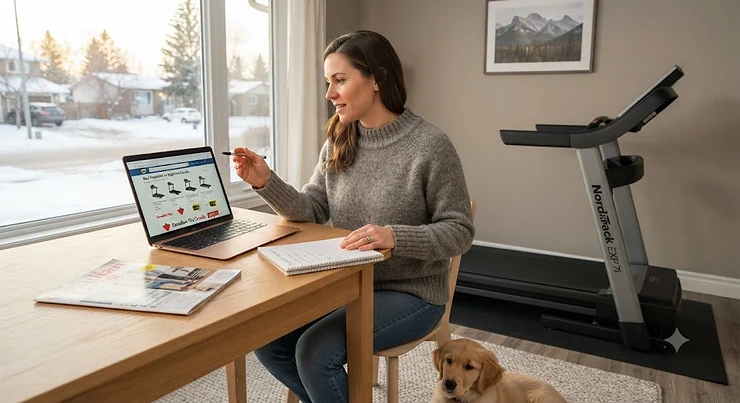
Here’s a confession nobody puts in a treadmill ad: most first treadmills die a slow, dusty death as a very expensive coat rack. Not because the machine was bad, but because the person buying it didn’t know what to actually look for, panicked at the sheer number of options, and grabbed whatever had the flashiest screen. If you’re shopping for a treadmill for first-time buyers, you’re in a different boat — you’re reading before you buy, which already puts you ahead of most people standing in a big-box aisle squinting at spec sheets written in a language nobody speaks fluently.
This guide skips the marketing fluff and gets into what actually matters: motor horsepower ratings that hold up over years of daily walks, deck sizes that won’t make you feel like you’re jogging on a placemat, and the unglamorous stuff — assembly difficulty, return policy fine print — that decides whether your first treadmill becomes a habit or a regret. We’ll walk through seven real machines sold on amazon.ca, from wallet-friendly options to a couple of “worth the stretch” upgrades, and we’ll be honest about where each one shines and where it doesn’t. Given that most adults in Canada currently fall short of the 150 minutes of weekly moderate-to-vigorous activity recommended in the national movement guidelines, a treadmill that actually gets used is worth more than one with the longest features list.
What is a treadmill for first-time buyers, in plain terms? It’s a motorized or manual walking/running machine sized and priced for someone building a habit rather than training for a marathon — typically a 2.0-3.0 CHP motor, a foldable frame, and a focus on simplicity over bells and whistles.
Quick Comparison Table
| Product | Motor | Deck Size | Best For |
|---|---|---|---|
| XTERRA TR200 | 2.5 CHP | 48″ x 16″ | Absolute beginners on a tight budget |
| Merach Treadmill | 2.25 CHP | 43″ x 16″ | Small apartments, walking only |
| UREVO 2-in-1 | 2.25 CHP | 43″ x 15″ | Under-desk walking, condo living |
| Horizon Fitness T101 Connect | 2.5 CHP | 55″ x 20″ | First-timers who might jog occasionally |
| Sunny Health & Fitness Smart Wi-Fi Treadmill | 2.5 CHP | 53″ x 20″ | Buyers who want auto-incline without a big spend |
| NordicTrack T Series 10 | 2.6 CHP | 55″ x 20″ | Guided workouts and screen-based motivation |
| Sole F63 | 3.0 CHP | 60″ x 20″ | First-timers who want room to grow into running |
Looking at the lineup, the gap between the cheapest and priciest option here isn’t really about “good vs. bad” — it’s about how much deck real estate and long-term durability you’re willing to pay for on day one. If you’re purely a walker, the XTERRA TR200 or Merach Treadmill will do the job without complaint. If there’s any chance you’ll want to jog six months from now, stretching toward the Horizon Fitness T101 Connect or Sole F63 saves you from buying twice.
💬 Just one click — help others make better buying decisions too! 😊
Top 7 Treadmills for First-Time Buyers: Expert Analysis
1. XTERRA TR200 — lowest price of entry for total beginners
The XTERRA TR200 earns its spot here by nailing the one thing a first machine needs to do: get out of your way. Its 2.5 CHP motor won’t win any races, but it’s plenty for walking and light jogging, which covers the vast majority of what a beginner actually does in the first six months anyway. The 48″ x 16″ belt is on the narrower side — fine for walking with a natural gait, a bit tight if you tend to drift or swing your arms wide while jogging. A basic LED console handles speed and time tracking without trying to be a tablet.
Based on the spec comparison, this is a machine built for people who want to start moving, not people chasing performance metrics. First-time buyers, walkers, and anyone testing the waters before committing more money fit this profile well. Reviewers consistently note that assembly takes under an hour with the included tools, and the folding hinge holds up better than expected at this price point — a common worry with budget folding frames. A recurring theme in aggregated user feedback is that the TR200 handles daily walking sessions reliably but starts to feel underpowered if you push into faster jogging paces for extended periods.
Pros:
- ✅ Among the most affordable ways to start a walking habit
- ✅ Compact folded footprint suits small apartments
- ✅ Straightforward console with no learning curve
Cons:
- ❌ 16-inch belt width feels narrow for taller users
- ❌ Not built for sustained running sessions
Expect this one to sit in the under-C$500 range — check current price, as availability shifts. For a first machine meant purely to build a walking habit, the value here is hard to beat.
2. Merach Treadmill — bare-bones reliability for tight budgets
The Merach Treadmill made this list because it’s one of the cheapest machines that still holds up structurally under real use — no belt hesitation, no frame flex, which is more than can be said for some sub-$300 alternatives. Its 2.25 CHP motor and 43″ x 16″ deck are modest, but the frame doesn’t feel like it’s cutting corners where it counts: the folding mechanism, the motor housing, the weight capacity.
What most buyers overlook about ultra-budget treadmills is that the real risk isn’t the motor — it’s the console and belt tracking wearing out early. On that front, the Merach Treadmill does better than its price tag suggests, according to aggregated Amazon.ca review sentiment, which frequently mentions “no belt slipping” and “quieter than expected” as recurring positives. The trade-off is a bare-bones LED display with no Bluetooth or app connectivity, so if you’re someone who wants to stream a show or track heart rate mid-walk, you’ll be improvising with your own phone stand.
Pros:
- ✅ One of the lowest prices that still passed durability checks
- ✅ Compact design folds flat for storage
- ✅ Quiet motor suits apartment or shared-wall living
Cons:
- ❌ No Bluetooth or app connectivity
- ❌ Narrow deck limits comfort for larger strides
Pricing typically lands under C$450 — always check current price and availability, since budget models fluctuate more than premium ones. If your only goal is daily steps without frills, this is a genuinely honest value pick.
3. UREVO 2-in-1 Folding Treadmill — best for condos and under-desk walking
The UREVO 2-in-1 solves a problem the other machines on this list don’t even try to: space. Its low-profile frame removes the handlebar assembly entirely (or folds it away), letting it slide under a standing desk or into a closet when not in use. The 2.25 CHP motor is tuned for walking speeds, not running, which fits the use case perfectly — this is a treadmill for accumulating steps during work calls, not for interval training.
Here’s what to weigh: the compact form factor means a shorter, narrower deck (43″ x 15″), so this isn’t the machine for anyone hoping to eventually jog. Reviewers consistently point out the remote control and companion app as genuinely useful additions rather than gimmicks, since you can adjust speed without breaking your typing rhythm. A commonly cited drawback in aggregated feedback is the handlebar attachment feeling less sturdy than a traditional treadmill’s, which matters if you need it for balance rather than as an occasional accessory.
Pros:
- ✅ Slides under desks and beds for storage
- ✅ Remote control adjusts speed hands-free
- ✅ Ideal for walking during video calls or reading
Cons:
- ❌ Not designed for jogging or running
- ❌ Handlebar feels less stable than full-size units
Look for this one in the C$450-C$550 range at the time of research. For condo dwellers or remote workers, the space savings alone can justify the trade-offs in deck size.
4. Horizon Fitness T101 Connect — the sweet spot for most first-time buyers
If there’s one machine on this list that seems engineered specifically for the phrase “treadmill for first-time buyers,” it’s the Horizon Fitness T101 Connect. The 55″ x 20″ deck is genuinely spacious for the price bracket, avoiding the cramped feeling that plagues cheaper models, and the 2.5 CHP motor handles both walking and light jogging without strain. Quick-access dials on the handlebars let you bump speed and stop without hunting for console buttons — small detail, big difference during an actual workout.
What the spec sheet won’t tell you, but reviewers note, is how well-built this feels relative to its price: a sturdy frame, a strong three-speed fan, and Bluetooth speaker connectivity that lets you stream your own workouts or shows without needing a subscription. On paper this means fewer ongoing costs than screen-equipped competitors. The honest downside is the complete lack of incline — zero levels — which limits variety if you eventually want hill simulation, and cushioning is minimal compared to mid-range machines built around joint protection.
Pros:
- ✅ Long 55-inch deck comfortably fits walking and jogging
- ✅ Bluetooth speakers stream without a subscription
- ✅ Quick-access speed dials feel intuitive from day one
Cons:
- ❌ No incline options at all
- ❌ Minimal shock absorption for extended running
Typically priced in the C$500-C$600 range, making it one of the more complete packages under that ceiling — check current price for the latest availability on amazon.ca.
5. Sunny Health & Fitness Smart Wi-Fi Treadmill — auto-incline without the premium price
The Sunny Health & Fitness Smart Wi-Fi Treadmill punches above its price class by including 15 levels of auto-incline, a feature usually reserved for machines costing hundreds more. Powered by a 2.5 CHP brushless motor, it reaches speeds up to 10 mph on a 53″ x 20″ deck — enough room and speed range to grow with you as your fitness improves rather than boxing you into “walking only” territory.
A brushless motor uses electronic commutation instead of mechanical brushes, which in practice means quieter operation and less maintenance over the machine’s lifespan — a detail that matters more once you’re two years in and the motor is still running smoothly. Based on the spec comparison, this model targets first-time buyers who suspect they’ll want more variety than a flat walk once the habit sticks. The one-click fold mechanism is genuinely fast to use daily, which matters because a treadmill you have to wrestle to store is a treadmill that stops getting folded — and eventually stops getting used. Aggregated review sentiment frequently praises the SunnyFit app’s free trainer-led content as a nice bonus rather than a paywall.
Pros:
- ✅ 15 auto-incline levels rare at this price point
- ✅ Brushless motor runs quieter with less upkeep
- ✅ Fast one-click fold encourages consistent daily use
Cons:
- ❌ 300 lb capacity is lower than some premium rivals
- ❌ App features lean on ongoing Bluetooth connection
Expect a price range around C$600-C$750, occasionally dipping lower during promotions — always verify current pricing before purchase. For buyers who want incline variety without jumping to a C$1,000+ machine, this is the strongest value case on the list.
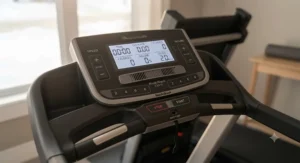
6. NordicTrack T Series 10 — the only budget-adjacent screen worth the subscription
The NordicTrack T Series 10 stands out as the sole machine here with a built-in touchscreen that genuinely justifies its ongoing iFIT membership cost, rather than feeling like a tacked-on gimmick. During guided workouts, the treadmill automatically adjusts incline and speed to match the trainer’s cues on-screen — you’re not fumbling with buttons mid-interval, the machine just does it.
Here’s the honest trade-off: that convenience comes bundled with a subscription that adds an ongoing cost most other machines on this list don’t have, so factor that into your total cost of ownership rather than just the sticker price. What most buyers overlook is that without an active membership, the touchscreen still functions but loses most of its guided-training value, effectively becoming a very expensive clock. Reviewers consistently highlight the automatic trainer-controlled adjustments as the standout feature for people who find self-motivation during cardio difficult — having someone (even a screen) dictate pace removes a common failure point for beginners.
Pros:
- ✅ Touchscreen with trainer-led automatic incline and speed
- ✅ Removes guesswork around programming your own intervals
- ✅ Sturdy 55-inch deck suits walking through light running
Cons:
- ❌ iFIT subscription adds a recurring monthly cost
- ❌ Less value if you skip the membership
Pricing generally sits in the C$900-C$1,100 range CAD, positioning it as a step up rather than an entry-level buy — check current price on amazon.ca, as bundled promotions vary. For beginners who know they need structure to stay consistent, the subscription cost may pay for itself in adherence alone.
7. Sole F63 — the “buy once” pick for first-timers planning to grow
The Sole F63 is the odd one out on this list: it’s priced above what most first-time buyers plan to spend, and it earns its place anyway. A 3.0 CHP motor and a full 60″ x 20″ deck give you genuine running room, not just a slightly bigger walking lane, and the frame carries a reputation among Canadian buyers for outlasting cheaper machines by years rather than months.
Based on the spec comparison, this is the pick for someone who’s fairly confident they won’t stay a casual walker forever — maybe you’re rebuilding a running habit, training for a first 5K, or simply tired of “budget” machines that need replacing every couple of years. What the spec sheet won’t tell you, but long-term owner reports suggest, is that the more robust motor and deck cushioning translate into a noticeably smoother ride at higher speeds, which matters once you’re jogging regularly rather than walking. The honest downside is obvious: it costs meaningfully more upfront, and its size demands more floor space than the compact folding units earlier on this list.
Pros:
- ✅ 3.0 CHP motor and full-size deck support real running
- ✅ Reputation for durability well beyond typical warranty periods
- ✅ Cushioning noticeably better at higher speeds
Cons:
- ❌ Highest upfront cost of the seven picks
- ❌ Larger footprint needs more dedicated space
Typically priced in the C$1,200-C$1,400 range, this is an investment buy rather than an entry-level one — check current pricing, as this model sometimes sees seasonal promotions. If your budget stretches this far and you’re serious about long-term use, it’s the one machine here you’re unlikely to outgrow.
Top 7 Products: Full Comparison
| Product | Motor (CHP) | Weight Capacity | Incline | Price Range (CAD) | Best For |
|---|---|---|---|---|---|
| XTERRA TR200 | 2.5 | 250 lb | None | Under C$500 | Total beginners, tight budget |
| Merach Treadmill | 2.25 | 265 lb | None | Under C$450 | Bare-bones walking |
| UREVO 2-in-1 | 2.25 | 265 lb | None | C$450-C$550 | Condos, under-desk use |
| Horizon Fitness T101 Connect | 2.5 | 300 lb | None | C$500-C$600 | Most first-time buyers |
| Sunny Health & Fitness Smart Wi-Fi | 2.5 | 300 lb | 15 levels, auto | C$600-C$750 | Incline on a budget |
| NordicTrack T Series 10 | 2.6 | 300 lb | Auto, trainer-led | C$900-C$1,100 | Guided workouts |
| Sole F63 | 3.0 | 375 lb | Manual/power | C$1,200-C$1,400 | Growing into running |
This table makes the pattern obvious: horsepower and deck size climb steadily with price, but so does long-term headroom. The XTERRA TR200 and Merach Treadmill are excellent starter machines precisely because they don’t over-promise, while the Sole F63 justifies its premium by being a machine you won’t need to replace once your fitness improves. Buyers stuck in the middle — wanting more than a bare walking pad but not ready for a four-figure commitment — should look hardest at the Horizon Fitness T101 Connect or Sunny Health & Fitness Smart Wi-Fi Treadmill.
What to Look for in Your First Treadmill
Choosing your first machine comes down to a handful of decisions that matter far more than flashy marketing copy suggests.
- Motor horsepower for your actual use case. A 2.0-2.5 CHP motor is genuinely fine for walking; if there’s any chance you’ll jog regularly, aim for 2.5-3.0 CHP so the motor isn’t straining under sustained load.
- Deck length and width relative to your height. Shorter users can get away with a 48-inch deck; taller users or anyone planning to jog should look for at least 55 inches to avoid feeling cramped mid-stride.
- Weight capacity with real margin. Choose a capacity comfortably above your body weight — impact forces during jogging exceed simple standing weight, so padding the number matters more than it seems.
- Assembly difficulty before you buy, not after. Some models arrive mostly assembled; others need an hour or more with included tools. Check reviews specifically mentioning setup time if you’re not confident with basic tools.
- Return policy fine print. Big, heavy items are expensive to ship back — know the window and whether return shipping is covered before you unbox anything.
- Ongoing costs beyond the sticker price. Some machines bundle subscriptions (iFIT, SunnyFit) that add real monthly cost; factor that into your total cost of ownership from day one.
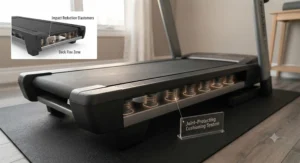
Assembly Difficulty: What First-Time Buyers Should Actually Expect
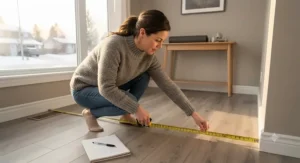
Nobody warns first-time buyers that treadmill assembly is often the first real test of whether they’ll keep using the thing. A treadmill that arrives in a dozen awkward pieces, with instructions that read like they were translated three times, can sour the whole experience before you’ve taken a single step.
Here’s the practical reality: budget folding models like the XTERRA TR200 and Merach Treadmill typically require attaching the console, handlebars, and folding mechanism — usually 45 minutes to an hour with two people, since the deck alone can be unwieldy for one person to manage safely. Mid-range machines like the Horizon Fitness T101 Connect and Sunny Health & Fitness Smart Wi-Fi Treadmill often ship with more components pre-assembled at the factory, trimming setup closer to 30 minutes. Premium units like the Sole F63 sometimes offer white-glove delivery for an added fee, which genuinely removes the assembly headache entirely if that’s worth paying for.
A few practical tips: clear a full workspace before opening the box (you’ll need more room than you think), keep the included tools rather than swapping in your own (bolt sizes are often proprietary), and don’t skip the step where you level the frame — an uneven treadmill wears belts unevenly over time, turning a minor annoyance into a costlier repair down the line.
Real-World Scenario: Which First Treadmill Fits Your Life
Profile 1: The apartment-dwelling beginner. Priya lives in a one-bedroom condo in Mississauga and wants to hit 8,000 steps a day without leaving home in February. Budget: under C$500. Best pick: the Merach Treadmill or UREVO 2-in-1, both of which fold flat or slide under furniture, matching her limited square footage without sacrificing daily usability.
Profile 2: The returning runner. Marcus ran cross-country in university a decade ago and wants to rebuild that habit gradually, starting with walking intervals before working back to jogging. Budget: C$900-C$1,300. Best pick: the Sole F63, since its 3.0 CHP motor and full-length deck won’t need replacing once his pace picks up — buying the bigger machine now avoids a second purchase in a year.
Profile 3: The self-motivation seeker. Aisha has tried and abandoned home workouts twice before, and knows structure matters more to her than raw specs. Budget: C$900-C$1,100. Best pick: the NordicTrack T Series 10, whose trainer-led automatic adjustments remove the “what do I do today” decision fatigue that’s derailed her past attempts.
Common Mistakes When Buying Your First Treadmill
Even careful shoppers stumble into a few predictable traps. First, buying based on top speed rather than motor durability — a treadmill that can hit 12 mph is meaningless if you’re walking at 5 mph most days; sustained horsepower at moderate speeds matters more than peak numbers. Second, ignoring deck length relative to height, which leads to a cramped, awkward stride that discourages regular use. Third, skipping the return policy entirely, then discovering the window closed before deciding the machine wasn’t a fit. Fourth, underestimating floor space, including the clearance needed behind the machine for safety, not just its folded footprint. Fifth, assuming all “smart” features are equally useful — some genuinely improve consistency (auto-incline, trainer-led pacing), while others (redundant app logins, upsold subscriptions) add cost without adding value.
Return Policy: The Detail First-Time Buyers Skip
Treadmills are one of the few products where the return policy deserves as much attention as the specs, simply because of their size and weight. A 100+ lb machine that doesn’t fit your space, or that turns out too loud for a shared-wall apartment, isn’t something you casually drop off at a return counter.
Before buying, confirm: the length of the return window (30 days is common, though some sellers extend this), whether return shipping costs are covered or deducted from your refund, and whether the item needs to be re-boxed in its original packaging — a detail that trips up buyers who discard the box immediately after unboxing. Amazon.ca’s own return policies vary by seller, especially for oversized fitness equipment, so it’s worth reading the specific listing’s return terms rather than assuming a blanket policy applies. This single check can save considerably more hassle than comparing another half-percent of motor horsepower between two similar models.
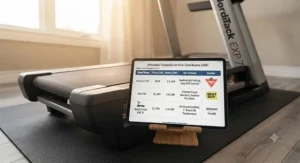
Long-Term Cost & Maintenance for First-Time Buyers
The sticker price is only part of what a treadmill actually costs over its lifespan. Budget models generally need belt lubrication every three to six months, which runs a modest amount for a bottle of silicone lubricant and takes fifteen minutes. Motors on properly maintained budget machines can last several years of regular walking use, though heavier daily jogging shortens that window on lower-CHP motors. Screen-equipped machines like the NordicTrack T Series 10 add a recurring subscription cost that, over two or three years, can approach or exceed the price difference between it and a non-subscription machine like the Horizon Fitness T101 Connect — worth factoring into any real cost comparison rather than looking at purchase price alone.
Compared to a typical Canadian gym membership, which often runs in the C$50+/month range, even a mid-priced first treadmill tends to pay for itself within a couple of years of consistent use — a calculation that only works, of course, if the machine actually gets used rather than becoming that aforementioned coat rack. This isn’t a fringe trend, either: home fitness equipment sales in Canada have surged well past pre-pandemic levels as more people treat a home setup as a permanent fixture rather than a temporary substitute for the gym.
Buyer’s Decision Framework
If you’re purely walking and space is tight, choose a compact folding model like the UREVO 2-in-1 or Merach Treadmill, because deck size and horsepower matter less than footprint and ease of storage. If you might jog occasionally but aren’t certain, choose the Horizon Fitness T101 Connect, because its longer deck and 2.5 CHP motor give you room to grow without overpaying for features you may not use. If self-motivation is your biggest obstacle, choose the NordicTrack T Series 10, because trainer-led automatic adjustments solve a consistency problem that better specs alone can’t fix. If you’re confident you’ll be running regularly within a year, choose the Sole F63, because buying the sturdier machine once beats replacing a lighter-duty one after outgrowing it.
Features That Actually Matter (And Those That Don’t)
Motor horsepower, deck length, and frame durability matter enormously — they determine whether the machine survives daily use and fits your stride. Weight capacity margin matters for safety and belt longevity. Assembly time and return policy matter because they determine whether you actually get the machine running and keep it if it’s wrong for you.
What matters less than marketing suggests: top speed above 10 mph, which most walkers and even many joggers never approach; touchscreen size beyond what’s needed to see workout stats clearly; and preset workout programs, which are easy to replicate manually once you understand basic interval structure. Reviewers consistently note that the features they actually use daily are speed/incline controls and a working fan — not the flashier extras featured prominently in product photography.
Safety and Certification: What Canadian Buyers Should Check
Before your first workout, confirm the treadmill carries visible certification marks — in Canada, that typically means CSA or ETL certification confirming the electrical components meet recognized safety standards, similar to the oversight the Canadian Standards Association provides across consumer electronics. Skipping this check isn’t just a technicality; uncertified electrical equipment carries real fire and shock risk, especially for a machine that runs continuously during use.
Beyond certification, practical safety habits matter just as much: always use the safety clip that stops the belt if you fall, keep the area behind the treadmill clear for at least a metre, and never let children operate the machine unsupervised. These aren’t glamorous tips, but they’re the difference between a minor stumble and a genuine injury on a moving belt.
What to Expect: Real-World Performance for Beginners
Specs on paper don’t always translate cleanly into lived experience. A 2.5 CHP motor “handles” a given speed on paper, but in practice, you’ll notice budget motors working audibly harder on inclines or at faster paces, even without an incline feature engaged, simply due to increased belt resistance. Deck cushioning differences are subtle at walking pace but become obvious once you start jogging — a firmer budget deck transmits more impact to your knees over a 30-minute session than a cushioned mid-range deck.
Console displays also perform differently in practice than their spec sheets suggest: basic LED screens are perfectly readable but show less at a glance, while touchscreens (as on the NordicTrack T Series 10) genuinely reduce the mental effort of tracking a workout, which matters more than it sounds for keeping a new habit going during those first uncertain weeks. Even the basic mechanics of a motorized treadmill — belt, deck, and drive motor working together — haven’t changed much in decades; most of what separates a good beginner machine from a frustrating one comes down to how well those simple parts are built, not how many features are layered on top.
Treadmill vs. Other Cardio Equipment for Beginners
Compared to stationary bikes, treadmills better replicate walking and running mechanics your body already knows, which lowers the learning curve for total beginners — you don’t have to figure out cadence or seat height the way you do on a bike. Compared to ellipticals, treadmills offer a more natural gait but put more impact through your joints, which matters if you have existing knee or hip concerns; an elliptical may be the gentler starting point in that case. Compared to simply walking outdoors, a treadmill removes weather as a barrier entirely — a meaningful factor in a country where several months of the year make outdoor walking genuinely unpleasant or unsafe underfoot. None of these are objectively “better”; the right choice depends on your joints, your goals, and honestly, which one you’ll actually use consistently through a Canadian winter.
Frequently Asked Questions
❓ What horsepower motor do I need for a first treadmill?
❓ How long does treadmill assembly usually take?
❓ What's a reasonable return window for a treadmill bought online?
❓ Are cheap treadmills under $600 CAD actually worth it for beginners?
❓ Do I need a treadmill with incline for my first machine?
Conclusion
Buying your first treadmill doesn’t need to be complicated, even though the sheer number of listings on amazon.ca can make it feel that way. The honest throughline across all seven picks here is that the “best” treadmill for first-time buyers isn’t the one with the most features — it’s the one sized correctly for your body, your space, and how you’ll realistically use it in six months, not just this week. Budget options like the XTERRA TR200 and Merach Treadmill prove that a modest motor and simple console can absolutely support a real walking habit. Mid-range picks like the Horizon Fitness T101 Connect and Sunny Health & Fitness Smart Wi-Fi Treadmill add just enough capability to grow with you. And if you’re confident about where your fitness is headed, the NordicTrack T Series 10 or Sole F63 are genuinely worth the stretch.
Whichever you land on, don’t skip the boring stuff — assembly time, return windows, certification marks. That’s the part that decides whether your first treadmill becomes a lasting habit or an expensive lesson.
✨ Don’t Miss These Exclusive Deals!
🔍 Take your home cardio routine to the next level with these carefully selected treadmills. Click on any highlighted product name to check current pricing and availability on amazon.ca. The right machine can help build a habit that actually sticks this year!
Recommended for You
- Best Beginner Treadmill 2026: 7 Top Picks for Canadians
- Flat Walking Treadmill for Beginners: 7 Picks for 2026 (Canada)
- Foldable Walking Treadmill for Small Spaces: 7 Picks for 2026
Disclaimer: This article contains affiliate links. As an Amazon Associate, I earn from qualifying purchases. If you purchase products through these links, we may earn a small commission at no additional cost to you.
✨ Found this helpful? Share it with your friends! 💬🤗
