In This Article
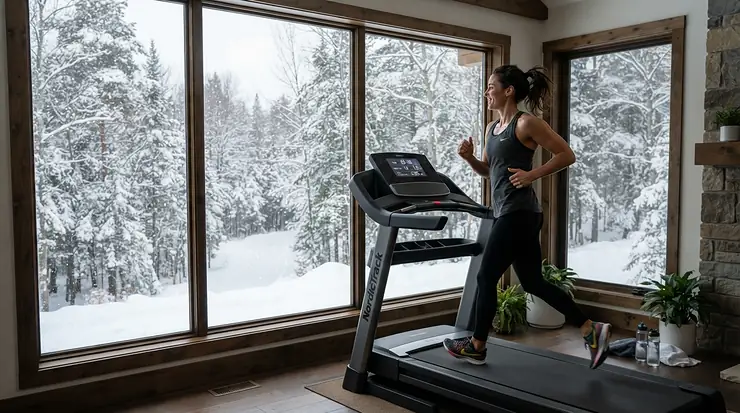
It’s February in Saskatoon. The wind chill sits near -30°C, the sidewalks are glazed like a doughnut, and your hill repeats are buried under a metre of snow. This is the moment an incline treadmill for runners earns its floor space.
A flat belt keeps your legs turning over. An incline treadmill for runners does something sneakier: it rebuilds the hills winter took from you.
Here’s what most spec sheets skip. Incline isn’t a gimmick. It changes the work your calves, glutes and hamstrings do, and it lets you raise effort without simply running faster. Even a tiny grade matters. A well-known 1996 study found that a 1% treadmill grade best matched the energy cost of outdoor running, because the belt can’t recreate wind resistance. That’s why a good hill training treadmill starts with the humble 1% before it climbs anywhere.
This guide cuts through the noise for Canadian buyers. You’ll get seven real machines, from budget to flagship. You’ll also get plain-English explanations of treadmill incline range, auto-incline motor quality and decline settings. There’s a breakdown of the best incline percentage for runners by workout type, plus incline training programs you can start this week. Prices are ranges in Canadian dollars at the time of research, so check current pricing before buying.
Everything here rests on published specs and aggregated review sentiment from established testers. I haven’t run on these machines myself, and I won’t pretend otherwise. What I can offer is honest analysis of what each number means for your stride, your knees and your budget.
Quick Comparison Table: The Best Incline Treadmill for Runners at a Glance
| Model | Incline / Decline | Motor | Belt (cm) | Price Range (CAD) | Best For |
|---|---|---|---|---|---|
| NordicTrack X24 | -6% to 40% | 4.25 CHP | 56 × 152 | C$5,500–C$7,000 | Trail runners, mountain training |
| Bowflex Treadmill 22 | -5% to 20% | 4.0 CHP class | 56 × 152 | C$3,500–C$4,800 | Big range in a folding frame |
| NordicTrack Commercial 1750 | -3% to 12% | 3.5–4.25 CHP (varies by year) | 56 × 152 | C$2,000–C$3,500 | Trainer-guided hills |
| Sole F85 | 15 levels, 6 decline levels | 4.0 HP | 56 × 152 | C$2,500–C$3,300 | Subscription-free value |
| Horizon 7.8 AT | 0–15% | 4.0 CHP | 56 × 152 | C$2,500–C$3,300 | Interval training |
| Sole F63 | 15 levels | 3.0 CHP | 51 × 152 | C$1,500–C$2,200 | Budget-conscious runners |
| Sunny Health OneClick-Fold Auto Incline | 15 auto levels | 2.5 HP | 51 × 135 | Under C$1,500 | Walkers, light runners |
Looking at the comparison above, the Sole F85 and Horizon 7.8 AT sit in the value sweet spot for road runners. Both give you 15% of climb, big belts and no mandatory subscription. If decline and steep grades are your priority, the NordicTrack X24 and Bowflex Treadmill 22 justify their higher price with a wider treadmill incline range. Budget buyers should note that the Sunny Health OneClick-Fold Auto Incline trades belt length and motor power for its low price.
💬 Just one click — help others make better buying decisions too!😊
Top 7 Incline Treadmill for Runners: Expert Analysis
One note on sources before we dive in. The review sentiment below summarises published testing outlets and owner commentary. It is not a count of amazon.ca star ratings, which I couldn’t verify. Where a spec varies by source, I say so.
1. NordicTrack X24 — widest range, 40% incline to -6% decline
The NordicTrack X24 is the treadmill equivalent of a mountain pass: absurdly steep when you want it, surprisingly sociable when you don’t.
Its treadmill incline range runs from -6% decline to 40% incline. It pairs that with a 4.25 CHP motor, a 56 × 152 cm (22 × 60 in) belt and a 24-inch pivoting touchscreen. At 40% you’re on a roughly 22° slope. That’s power-hiking territory, and it lights up glutes and calves at walking speeds that go easy on your joints. The -6% setting lets you rehearse descents, which most home machines can’t.
Based on the spec comparison, this is a specialist’s tool. Trail runners, ultra runners and mountain-objective hikers get the most from it. A road 10K runner who rarely climbs past 6% is paying for range they’ll seldom touch.
Published reviews praise the rock-steady monitor, big deck and lifetime motor warranty. Recurring complaints are the steep price, a step-up height above 33 cm (13 in), cushioning some testers found firm, and slippery handlebars. Auto-adjusting workouts lean on an iFIT subscription.
Pros:
- ✅ Widest range here: -6% to 40%
- ✅ 4.25 CHP motor with lifetime warranty
- ✅ Large, stable screen even at top speed
Cons:
- ❌ Premium price and very heavy machine
- ❌ High step-up height and firmish cushioning
Expect around C$5,500–C$7,000. Verdict: exceptional value only if steep climbing is central to your training; otherwise a cheaper machine does the job.
2. Bowflex Treadmill 22 — -5% to 20% range that still folds
Folding treadmills rarely climb to 20%. The Bowflex Treadmill 22 does, and it adds a -5% decline for good measure.
The specs worth translating: -5% to 20% grade, a motor testers rate at about 4.0 CHP, a 56 × 152 cm (22 × 60 in) belt and a 22-inch touchscreen running the JRNY app. One practical detail listings gloss over is deck height. It sits roughly 19 cm (7.5 in) off the floor at -5% and about 46 cm (18 in) at 20%. Measure your basement ceiling before checkout.
What most buyers overlook is how useful 20% is for runners who don’t want a 40% incline trainer. It’s steep enough for brutal short climbs, and the fold-up frame gives back floor space after the session.
Reviewers describe the motor and incline changes as notably quiet and the frame as very stable. One major testing outlet called it the best treadmill it evaluated, with the caveat that it’s expensive. The app is central to the experience, with a free first year and a membership afterward. Availability and warranty support for Bowflex products in Canada can change, so confirm both before ordering.
Pros:
- ✅ -5% to 20% range in a folding frame
- ✅ Quiet motor and incline transitions
- ✅ Very stable under hard running
Cons:
- ❌ Expensive and heavy at roughly 152 kg
- ❌ JRNY membership needed after year one
Likely C$3,500–C$4,800 when in stock. Verdict: the best middle ground for mixed climbing and decline work, provided you can confirm stock and support.
3. NordicTrack Commercial 1750 — iFIT-guided hills with -3% decline
If you want the treadmill to coach your hills for you, the NordicTrack Commercial 1750 is the gateway machine.
It spans -3% to 12% grade, reaches 20 km/h (12 mph), and uses a 56 × 152 cm (22 × 60 in) belt with adjustable RunFlex cushioning. A note on the motor: NordicTrack’s spec sheet lists 4.25 CHP, while some testers cite 3.5 to 3.6 CHP. That hints at changes between model years, so verify the exact listing. NordicTrack Canada lists a lifetime motor warranty and a 10-year frame warranty.
Why does the range matter? Twelve percent covers nearly every road-race hill workout, and -3% adds a gentle downhill for turnover practice. With an iFIT subscription, the machine adjusts speed, incline and decline to follow a trainer. That’s an auto-incline motor doing real coaching work.
Testers rated its customization 4 out of 5 and called it a workhorse. The common gripe is that the best features sit behind a subscription.
Pros:
- ✅ Decline to -3% at a mid-premium price
- ✅ iFIT workouts move the incline for you
- ✅ Cushioning you can soften or firm up
Cons:
- ❌ Full features require an iFIT subscription
- ❌ Motor rating varies by model year
Typically C$2,000–C$3,500. Verdict: the best-balanced guided option if you’d enjoy trainer-led hills.
4. Sole F85 — 15% incline plus six decline levels, no subscription
Subscription fatigue is real, which is why the Sole F85 deserves a look. It climbs and descends without a monthly fee.
It pairs 15 incline levels (up to 15%) with six decline levels, a 4.0 HP motor, a 56 × 152 cm (22 × 60 in) belt and a 15.6-inch touchscreen with the free Sole+ app. Sole lists capacity near 180 kg (400 lb), though one testing outlet cites 375 lb, so confirm for your model year. Frame and motor carry a lifetime warranty.
My read: the Sole F85 is the sensible hill training treadmill for runners who want decline settings without the iFIT ecosystem. Fifteen percent handles virtually every road-style hill repeat. The six decline steps let you ease into downhill work gradually.
Reviewers highlight stability, a quiet motor and a cushioned deck. One review noted an average near 4 out of 5 on Sole’s own site across 75 reviews at the time, which is brand-hosted feedback. The downsides are the heavy, large footprint and the 15% ceiling.
Pros:
- ✅ Incline and decline without a subscription
- ✅ 4.0 HP motor and full-size belt
- ✅ Large screen with a free app
Cons:
- ❌ Heavy at about 145 kg with a big footprint
- ❌ 15% cap limits steep-trail simulation
Roughly C$2,500–C$3,300. Verdict: strong all-round value for road runners.
5. Horizon 7.8 AT — QuickDial controls for interval training
Interval junkies, meet your machine. The Horizon 7.8 AT is built around changing speed and incline quickly, then getting out of your way.
Its QuickDial controls let you roll through speed and incline mid-stride. They’re backed by a 4.0 CHP motor with Rapid Sync, which Horizon says makes speed and incline changes about 33% faster. Grade runs 0–15% over a 56 × 152 cm (22 × 60 in) belt, with a 9.3-inch display, Bluetooth speakers and no required subscription.
Here’s what the spec sheet won’t say plainly. A fast auto-incline motor is what makes 60-second hill repeats feel like intervals instead of waiting games. If your treadmill needs 20 seconds to reach 8%, a third of your hard effort evaporates.
Reviewers praise the dial controls, responsive motor and durability, and one outlet scored it 4.47. Drawbacks: the display is basic, so touchscreen content needs your own phone or tablet, and the machine weighs about 150 kg.
Pros:
- ✅ QuickDial speed and incline control
- ✅ Highly responsive motor for intervals
- ✅ No subscription required
Cons:
- ❌ No decline settings
- ❌ Basic display; bring your own device
Around C$2,500–C$3,300. Verdict: the best interval-training value on this list.
6. Sole F63 — budget pick with 15 incline levels and a real motor
Most entry-level machines skimp on the motor. The Sole F63 doesn’t.
It offers a 3.0 CHP motor, 15 incline levels, a 51 × 152 cm (20 × 60 in) belt, a 147 kg (325 lb) capacity and a 6.5-inch LCD. There’s no touchscreen, but you get Bluetooth speakers, a USB port and 10 built-in programs. Frame and motor carry a lifetime warranty. Testers commonly suggest 3.0 CHP as the floor for runners, so this is the minimum viable engine, not a luxury one.
Analytically, the Sole F63 suits runners who want real hills on a tight budget and don’t need screens or decline. Reviewers say the deck feels firm but kind to joints, and the handle-mounted controls respond well. Owners also flag that it’s heavy and awkward to move, assembly goes easier with two people, and the rails sit low for steep climbing.
Pros:
- ✅ 15% incline at a budget price
- ✅ Handrail speed and incline buttons
- ✅ Lifetime frame and motor warranty
Cons:
- ❌ No touchscreen, basic LCD only
- ❌ Heavy and bulky to assemble and move
Roughly C$1,500–C$2,200. Verdict: the smartest budget pick for hill-focused runners.
7. Sunny Health OneClick-Fold Auto Incline — compact, lesser-known auto incline
Not every home has space for a 150 kg beast. The Sunny Health OneClick-Fold Auto Incline fits where bigger machines can’t.
It offers 15 motorized incline levels, a 2.5 HP brushless motor and a 51 × 135 cm (20 × 53 in) belt. That belt is about 17 cm shorter than the 152 cm standard on the others here. Tall runners with long strides should read that as a warning. Reviewers frame it as an auto incline option for walkers and light runners rather than a fast-running machine.
That honesty matters. This is a run-walk hill session tool for apartments and condos. It isn’t a marathon-block machine. I couldn’t verify a large pool of independent reviews, so treat it as less proven than the Sole and NordicTrack models.
Pros:
- ✅ Real motorized incline at a low price
- ✅ Compact folding design
- ✅ Gentle on tight budgets
Cons:
- ❌ Short belt limits long-stride runners
- ❌ Not suited to fast or heavy running
Likely under C$1,500. Verdict: good for walkers and light runners; skip it if you race.
Hill Training Treadmill Guide: Your First 30 Days
A hill training treadmill rewards patience and punishes ego. Here’s a practical ramp-up that listings never give you.
Setup (day one). Level the frame and measure ceiling height at maximum incline. Add your own height with arms swinging. Put a mat underneath, clip the safety key to your clothing, and follow your manual’s belt-lubrication and alignment schedule. Don’t improvise.
Week 1: Run easy at 1%, the grade the 1996 study matched to outdoor effort, and just learn the controls.
Week 2: Add four 90-second climbs at 3–4%, recovering at 1%.
Week 3: Build to six 2-minute climbs at 5–6%.
Week 4: Try one 20-minute progressive run, adding 1% every four minutes up to 6–8%.
The classic first-month mistakes are easy to dodge. Don’t grip the rails, because it distorts posture and switches off your core. Don’t overstride on climbs; shorten your steps and lean from the ankles. And don’t leap to 10% just because the screen allows it. Calf and Achilles tightness is normal early on, but sharp pain isn’t, so back off.
For upkeep, wipe the deck and belt edges weekly and check belt tracking monthly. That small routine keeps any incline treadmill for runners smoother and quieter for years.
Incline Training Programs: Real-World Scenarios for Canadian Runners
The best incline training programs match your goal, space and budget. Canada’s 24-Hour Movement Guidelines recommend at least 150 minutes of moderate-to-vigorous activity weekly, so these sessions also count toward your health baseline. Here are three profiles.
If you’re a Calgary 10K runner on a C$2,000 budget, the Sole F63 or a deal on the Horizon 7.8 AT fits. Weekly: two easy 35-minute runs at 1%, plus one hill session of eight 90-second climbs at 5–6%, jogging at 1% between. Total hill load stays low, which protects your Achilles.
If you’re a Vancouver Island trail runner, the NordicTrack X24 or Bowflex Treadmill 22 matches your terrain. Weekly: a 40-minute power hike at 10–15% and about 5 km/h, then a downhill session using short -3% to -5% blocks. You’ll rehearse the climbs and descents your race demands.
If you’re a time-crunched parent in Ottawa, a NordicTrack Commercial 1750 with guided workouts removes planning. Three 25-minute iFIT sessions weekly, with the machine handling grade changes, gets you to 75 minutes of structured effort. Add a brisk walk or two and you’re near the 150-minute guideline.
Across all three, progress incline before speed. It builds strength with less pounding, and it’s the safest way to build incline training programs that last past January.
Problem → Solution: Common Incline Treadmill Headaches
Problem 1: Screaming calves. Calves do much more work on grades. Cut the incline by 2–3%, shorten your stride and add climbs gradually. Many runners find two weeks of 1% to 3% prevents the worst soreness.
Problem 2: Death-gripping the rails. If you must hold on, the grade or speed is too high. Drop the incline until you can swing your arms freely. The Sole F63 has low rails, so keep its grade modest.
Problem 3: Incline lag during intervals. A sluggish motor wrecks hill repeats. That’s the case for the Horizon 7.8 AT and its Rapid Sync system, or for guided workouts on the NordicTrack Commercial 1750.
Problem 4: A low basement ceiling. Deck height rises quickly. The Bowflex Treadmill 22 climbs from about 19 cm to 46 cm off the floor across its range, so measure max incline height plus your full standing height.
Problem 5: Shin or knee soreness on descents. Limit decline blocks to 3–5 minutes at first, and read the decline settings section below. If pain persists, see a physiotherapist.
What Is an Incline Treadmill for Runners?
An incline treadmill for runners is a motorized treadmill whose deck tilts upward, and sometimes downward, to mimic hills. Grade is a percentage: 10% means a 10 cm rise per 100 cm of travel. Higher grades raise muscular and cardiovascular demand without extra speed, making them ideal for hill work and strength.
Most standard treadmills stop at 12–15% incline. “Incline trainers” push to 30–40% and are built for steep walking. For runners, the key variable isn’t the maximum number alone. It’s how smoothly and quickly the grade changes, and whether decline is available. A 15% incline treadmill for runners with a responsive motor often beats a sluggish 40% machine for road training.
Think of grade as a free gear. Raise it instead of speed, and you can train hard while keeping footstrikes gentler, which is handy when winter ice already has your hips on edge.
Best Incline Percentage for Runners: What the Numbers Say
There’s no single best incline percentage for runners, but there’s a smart default. Use 1% for easy and steady runs to approximate outdoor effort. Then match steeper grades to the job at hand. These ranges reflect common coaching guidance, not hard laws.
| Workout | Suggested Grade | What It Does | Best For |
|---|---|---|---|
| Easy or steady run | 1% | Offsets missing wind resistance | Everyday mileage |
| Tempo or threshold | 1–2% | Keeps effort honest at pace | Race-pace runners |
| Hill repeats | 4–8% | Builds strength and power | 5K to marathon training |
| Short power intervals | 8–12% | Peak leg drive, short bursts | Experienced runners |
| Power hike | 10–15%+ | Climbing endurance at low impact | Trail runners, hikers |
Looking at the table, the lesson is range discipline. The 1% rule was validated at speeds from roughly 2.9 to 5.0 m/s (about 5:42 to 3:20 min/km), so it’s not a magic number for sprints or very slow jogs. Most road runners rarely need more than 6–8% for quality hill work. That’s why a machine with a treadmill incline range up to 12–15% already serves them well.
Treadmill Incline Range: How Much Do You Actually Need?
Treadmill incline range sounds like a pure numbers game, but angles tell the story. A 12% grade is about 6.8°, 15% is roughly 8.5°, 20% is about 11.3°, and 40% is around 21.8°. Real road hills rarely top 8–10%, and most hill repeats happen well below that.
So how much treadmill incline range do you need? For road runners, 12% (NordicTrack Commercial 1750) or 15% (Sole F85, Horizon 7.8 AT, Sole F63) is plenty. For mixed-terrain runners who like surprise steepness, 20% on the Bowflex Treadmill 22 adds headroom. For trail and mountain athletes, the NordicTrack X24‘s 40% mimics steep scrambles that the others simply can’t.
A practical rule: buy the range you’ll use in a typical month, not the one you’ll use once. Extra incline costs real money, weight and ceiling height. Honestly, most buyers overestimate how steep they’ll go, so favour motor quality and belt size first, then range.
Auto-Incline Motor: What Separates Smooth From Sluggish
An auto-incline motor is the quiet mechanism that raises and lowers your deck, and it’s easy to overlook. Four things set good ones apart.
Speed of change. Horizon markets its Rapid Sync system as about 33% faster at changing speed and incline, which matters for interval work. Horizon 7.8 AT owners benefit most here.
Noise. Reviewers describe the Bowflex Treadmill 22 as quiet when incline changes. Testers of the Sole F63 noted an audible but unobtrusive hum.
Control access. Handrail buttons and dials let you change grade mid-stride without breaking form. Both the Sole F63 and Sole F85 offer handrail controls.
Automation. With iFIT or JRNY, the machine adjusts for you. That’s handy for guided hills, but both ecosystems involve subscriptions.
The auto-incline motor is a moving mechanical part, so warranty detail matters. Check whether the incline motor is covered, not just the main drive motor. A manual-incline machine saves money but breaks the flow of interval training. For incline training programs, automatic is worth the extra cost.
Decline Settings: Is Downhill Worth Paying For?
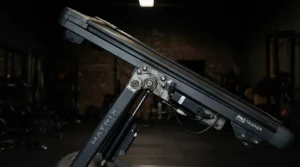
Most machines only climb. Decline settings reverse the slope so you can rehearse descents. That matters because downhill running loads your quadriceps eccentrically, meaning the muscle lengthens under force. That’s the type of contraction that triggers delayed soreness.
There’s an upside, though. Research on the repeated bout effect shows that after an initial eccentric “damage” bout, muscles resist soreness in later sessions, with protection lasting up to about 24 weeks. In plain terms, a little controlled downhill practice can make race-day descents hurt less.
Machines with decline: NordicTrack X24 (-6%), Bowflex Treadmill 22 (-5%), NordicTrack Commercial 1750 (-3%) and Sole F85 (six decline levels). Start with 5-minute blocks at -1% to -2%, once a week, and extend gradually. Skip decline if you’re nursing knee or shin trouble, and ask a physiotherapist if unsure.
Is it worth the premium? If you race hilly courses, trail events or marathons with long descents, yes. If you run flat 10Ks, decline settings are a nice-to-have, not a deal-breaker.
How to Choose an Incline Treadmill for Runners
To choose an incline treadmill for runners, match grade range, motor power, belt size and software to your training, then confirm the machine fits your home and budget. Work through these steps in order.
- Set your maximum grade. Road runners need 12–15%; trail runners may want 20% or more.
- Decide on decline. Pay for it only if you race hills or descents.
- Check the motor. Aim for 3.0 CHP minimum; go 3.5–4.0 CHP if you’re heavier or fast. Remember that CHP ratings are lab figures, so compare like with like.
- Choose belt size. A 51 × 152 cm (20 × 60 in) belt suits most; taller runners should pick 56 × 152 cm (22 × 60 in).
- Weigh subscriptions. iFIT and JRNY add coaching; the Sole F85 and Horizon 7.8 AT skip fees.
- Measure your space. Include ceiling height at max incline, doorways and stair turns, since machines weigh 145–180 kg.
- Compare warranties. Look for motor, frame and parts coverage, and ask about the incline motor specifically.
Incline Treadmill for Runners vs Flat Treadmill vs Outdoor Hills
| Option | Hill Access | Joint Impact | Cost | Best For |
|---|---|---|---|---|
| Incline treadmill for runners | Any grade, on demand | Cushioned deck | C$1,500–C$7,000 | Winter hill work, controlled intervals |
| Flat treadmill | None | Cushioned deck | Lower | Easy mileage only |
| Outdoor hills | Free, variable | Harder surfaces | Free | Race-specific terrain, summer |
Looking at the table, the incline machine wins on control. You pick the exact grade, duration and recovery, and Canadian winters can’t cancel the session. Outdoor hills still win on terrain realism and cost, and a flat treadmill gives up the hill benefit altogether.
A 2019 meta-analysis of 34 studies found oxygen cost between treadmill and outdoor running is broadly similar, though effort can feel higher at fast speeds on a treadmill. So use both when you can. Treat the incline treadmill for runners as your bad-weather hill gym, not a replacement for real terrain.
Long-Term Cost & Maintenance: What an Incline Treadmill Really Costs
| Tier | Example Models | Price Range (CAD) | Value Verdict | Best For |
|---|---|---|---|---|
| Budget | Sunny Health OneClick-Fold Auto Incline, Sole F63 | Under C$1,500–C$2,200 | Best entry cost | Beginners, tight budgets |
| Mid-range | Sole F85, Horizon 7.8 AT, NordicTrack Commercial 1750 | C$2,000–C$3,500 | Best balance | Most road runners |
| Premium | Bowflex Treadmill 22, NordicTrack X24 | C$3,500–C$7,000 | Pay for range | Trail and hill specialists |
The table shows that mid-range machines hit the best value zone, with full-size belts and strong motors. Premium models make sense only if you’ll use the extra grade or decline.
Think cost per use. A C$2,800 machine used four times weekly for five years is about 1,040 sessions, or roughly C$2.70 each before any subscription. Add recurring iFIT or JRNY fees, which vary, so check current Canadian pricing. Maintenance is modest: belt cleaning, lubrication per the manual and periodic tracking checks. Warranty length often matters more than sticker price.
Safety, Canadian Standards and Winter Considerations
Look for recognised safety certification marks such as CSA, cUL or ETL on any treadmill you buy in Canada. Many manufacturers recommend a dedicated household circuit, so read the manual before plugging in alongside a space heater or freezer.
Winter adds its own twist. An unheated garage in January may fall outside the manufacturer’s operating temperature range, which can stress belts, lubricants and screens. Keep the machine in conditioned space whenever possible.
Delivery matters too. At 145–180 kg, these machines can be a challenge on narrow basement stairs, so measure doorways and turns before ordering. Always clip the safety key, start at low incline and step off if something feels wrong. If you have heart, joint or balance concerns, talk to your doctor before starting incline training programs.
FAQ
❓ How much should I budget for an incline treadmill for runners in Canada?
❓ Is 15% incline enough, or should I buy a 40% incline trainer?
❓ Do incline treadmills need a subscription to work properly?
❓ What belt size should taller runners look for?
❓ Will an incline treadmill fit in a basement with a low ceiling?
Conclusion
Winter doesn’t have to cancel your hills. A well-chosen incline treadmill for runners keeps your legs strong, your climbs sharp and your motivation alive when the roads are glazed over. The right pick depends on how you train. Road runners get excellent value from the Sole F85 and Horizon 7.8 AT, guided-workout fans will enjoy the NordicTrack Commercial 1750, and trail specialists should look at the Bowflex Treadmill 22 or NordicTrack X24. On a tight budget, the Sole F63 is the smart hill option.
Whichever you choose, keep it simple. Default to 1% for steady runs, use 4–8% for hill work, and ease into decline settings. Prioritise a responsive auto-incline motor, a full-size belt and a warranty that covers the parts that move. Build slowly, and let your incline training programs do the heavy lifting.
Your next hill session starts at 1%. Everything else is just a gradual climb.
✨ Don’t Miss These Exclusive Deals!
🔍 Take your hill training to the next level with these carefully selected treadmills. Click on any highlighted item to check current pricing and availability. These machines will help you build stronger climbs your legs and your race-day self will thank you for!
Recommended for You
- Best Running Treadmill: 7 Standout Picks For Canada (2026)
- Treadmill For Post-Surgery Rehab: 7 Safest Picks In 2026
- Treadmill For Physical Therapy: 7 Safe, Smart Picks For 2026
Disclaimer: This article contains affiliate links. As an Amazon Associate, I earn from qualifying purchases. If you purchase products through these links, we may earn a small commission at no additional cost to you.
✨ Found this helpful? Share it with your friends! 💬🤗
