In This Article
Walk into any big-box store and you’ll meet treadmills built for an imaginary customer: 80 kg, light on his feet, committed to roughly one jog a month. That machine is fine for that person. For everyone else, it’s a rattle waiting to happen.
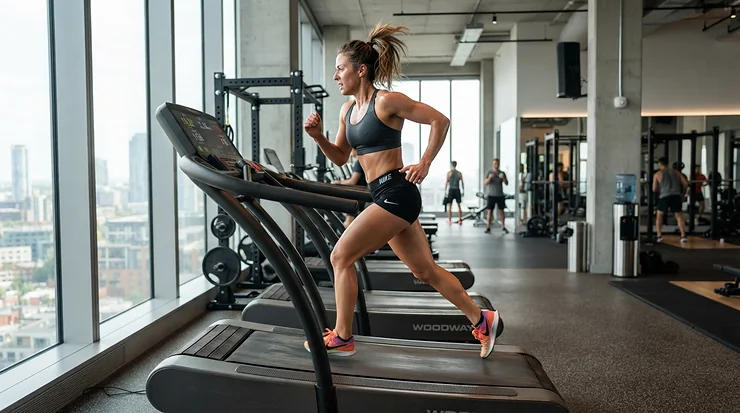
A heavy duty treadmill for larger runners starts from a different premise. Thicker steel. A motor that doesn’t gasp at the first incline. A deck wide enough for a real stride. These aren’t luxuries. They separate a machine that disappears into your routine from an expensive clothes rack by February.
The idea itself is ancient. The treadmill began as a muscle-powered machine for hauling water and grinding grain, and the home version only arrived in the late twentieth century. Today it’s still the biggest-selling piece of exercise equipment going. That means plenty of machines promise the moon and fold like a lawn chair.
So here’s the plan. I pulled spec sheets, Canadian retail listings and aggregated reviewer reports on seven machines, then sorted them by who they actually suit. To be clear, this is analysis, not a lab test. I haven’t run on any of these, and I’ll flag where the evidence is thin. Prices appear as CAD ranges only, and availability on amazon.ca can shift by seller. Please double-check every number on the live listing before you commit.
Ready? Start with the cheat sheet.
Quick Comparison: 7 Heavy Duty Treadmills at a Glance
| Treadmill | Weight Capacity | Motor | Deck | Price Range (CAD) | Best For |
|---|---|---|---|---|---|
| SOLE TT8 | 400 lb (181 kg) | 4.0 HP | 56 × 152 cm (22 × 60 in) | C$3,200–C$4,000 | Maximum frame stability |
| NordicTrack Commercial 1750 | 400 lb (181 kg) | 4.25 CHP | 56 × 152 cm (22 × 60 in) | C$2,500–C$3,400 | Guided running with decline |
| Bowflex Treadmill 10 | 400 lb (181 kg) | 4.0 HP (reported) | 56 × 152 cm (22 × 60 in) | C$2,500–C$2,900 | Folding plus decline |
| 3G Cardio Elite Runner X | 400 lb (181 kg) | 4.0 HP | 56 × 157 cm (22 × 62 in) | C$5,000–C$6,000 (estimate) | Tall, high-mileage runners |
| Horizon 7.8 AT | 375 lb (170 kg) | 3.5 CHP | 56 × 152 cm (22 × 60 in) | C$2,000–C$2,600 | Intervals on a mid-range budget |
| SOLE F85 | 375 lb (170 kg) | 4.0 HP | 56 × 152 cm (22 × 60 in) | C$2,900–C$3,400 (estimate) | Folding with a big screen |
| WELLFIT Auto Incline Treadmill | Varies by listing (400 lb+) | 4.0–4.5 HP | 140 × 51 cm (55 × 20 in) | Under C$2,000 | Budget starter |
Looking at the table, the SOLE TT8 and 3G Cardio Elite Runner X are the stability-first choices. They also ask the biggest cheques and the most floor space. The Bowflex Treadmill 10 and NordicTrack Commercial 1750 share the 400 lb rating with folding or space-friendlier designs, which makes them the sweet spot for most Canadian homes. The WELLFIT Auto Incline Treadmill is the cheapest way in, but its smaller belt and thinner evidence trail mean you should read its listing like a contract.
💬 Just one click — help others make better buying decisions too!😊
Top 7 Heavy Duty Treadmill for Larger Runners: Expert Analysis
Every pick below gets the same treatment: what the specs mean in practice, who the machine suits, what reviewers keep saying, and where it falls short. Review sentiment is aggregated from published reviewer reports, not invented quotes.
1. SOLE TT8 — the fixed-frame benchmark for stability
The SOLE TT8 doesn’t fold, and that’s precisely the pitch. No hinge means no flex point, and above 136 kg (300 lb) that’s most of the battle.
On paper you get a 4.0 HP motor, a 56 × 152 cm deck, a 400 lb (181 kg) weight capacity rating, and an incline range from -6% to 15%. The width gives a wider-striding runner some forgiving lateral margin. The decline lets you train descents without leaving the basement. SOLE also lists 3.0-inch rollers here versus 2.36 inches on its entry-level F80, which generally means less belt strain under heavy foot strikes.
Based on the spec comparison, this is the machine for someone with a permanent corner who plans to run four or more days a week for years. SOLE backs the frame and motor with a lifetime warranty, which is the company telling you how it feels about its welds.
Reviewers consistently describe the build as sturdy and the operation as quiet. Common complaints include a weak fan, limited Bluetooth support and hard-to-reach customer support.
Pros:
- ✅ Fixed steel frame with no folding hinge
- ✅ Wide deck and large rollers
- ✅ Lifetime frame and motor warranty
Cons:
- ❌ Takes permanent floor space
- ❌ Fan and Bluetooth feel underwhelming
Price: around C$3,200–C$4,000 at the time of research. It’s the priciest of the “normal” picks, but cost per year improves quickly if you really use it.
2. NordicTrack Commercial 1750 — decline training and a screen worth looking at
The NordicTrack Commercial 1750 is for the runner who wants hills, descents and guided classes without waiting for spring.
Its 4.25 CHP motor means continuous horsepower, so it’s rated for sustained work rather than a brief peak. The 56 × 152 cm deck, -3% to 12% incline range and 16-inch pivoting touchscreen round out the package. Current listings show a 400 lb (181 kg) rating. Older NordicTrack Commercial units carried a lower number, so read the label on the exact unit you’re buying.
Where it shines is guided training. iFIT can steer speed and incline remotely, which keeps heavier runners honest about pacing. The catch is that much of the value sits behind a subscription. Canadian listings cite a lifetime motor warranty and a 10-year frame warranty.
Reviewers tend to praise its sturdy feel, quiet running and polished content. Critics ask why you’d pay for a big screen and subscription if you only plan to walk.
Pros:
- ✅ Decline to -3% for realistic descents
- ✅ Strong 4.25 CHP continuous motor
- ✅ Long Canadian frame and motor warranty
Cons:
- ❌ Best features depend on iFIT subscription
- ❌ Folding hinge is a flex point
Price: around C$2,500–C$3,400. It’s good value if you’ll use the guided content, and an expensive screen if you won’t.
3. Bowflex Treadmill 10 — folds away without folding under pressure
The Bowflex Treadmill 10 is the folding machine that doesn’t act like one. It carries a 400 lb (181 kg) rating, a 56 × 152 cm deck, a -5% to 15% incline range and a top speed of 19 km/h (12 mph). Bowflex doesn’t publish a horsepower figure, though reviewers commonly cite 4.0 HP. Treat that as unconfirmed.
The machine weighs about 147 kg (323 lb), and that’s an advantage here. Mass damps vibration, so the steel frame feels planted rather than bouncy. Warranty headlines are 15 years on frame and motor. The SoftDrop gas-shock system lowers the deck gently when you unfold it. One caveat is that the folded unit still stands roughly 178 cm (70 in) tall, so check ceiling clearance. Retail specs call for your height plus about 53 cm (21 in).
Reviewers generally call it solid, comfortable and quiet. Their gripes are weight (it’s a two-person move) and an experience that leans on the JRNY app and a tablet.
Pros:
- ✅ Heavy steel frame in a folding design
- ✅ Decline to -5% and incline to 15%
- ✅ Long 15-year frame and motor warranty
Cons:
- ❌ Very heavy to reposition
- ❌ Motor specs not officially disclosed
Price: around C$2,500–C$2,900. For many Canadian condos and basements, it’s the most balanced pick on this list.
4. 3G Cardio Elite Runner X — longest deck, most commercial feel
The 3G Cardio Elite Runner X is the “buy once, cry once” option. Its 4.0 HP commercial motor drives a 56 × 157 cm (22 × 62 in) belt, one of the longest at home-treadmill scale. You also get a 15% incline, Ortho Flex deck suspension and a 400 lb (181 kg) weight capacity rating.
That extra 5 cm of belt length matters if you’re tall or overstride when you’re tired. The unit weighs about 166 kg (366 lb), so it isn’t going anywhere, including up your stairs. It uses Bluetooth FTMS, meaning it talks to third-party apps without a mandatory subscription. Roundups also cite a lifetime frame warranty.
Reviewers describe a stable, gym-like platform and often rank it first for high-mileage runners. The usual complaints are a weak fan, the weight and the price.
Pros:
- ✅ Longest deck on this list
- ✅ Commercial-grade motor and frame
- ✅ No subscription required
Cons:
- ❌ Premium price tier
- ❌ Heavy delivery and placement logistics
Price: roughly C$5,000–C$6,000, a converted estimate from U.S. pricing. Confirm on the live listing, since Canadian pricing varies by seller. It’s a premium buy that makes sense for high-mileage runners.
5. Horizon 7.8 AT — the fast-response value pick
The Horizon 7.8 AT is the interval specialist. A 3.5 CHP motor, 56 × 152 cm deck, 0–15% incline and 19 km/h top speed make it quick to change pace. It carries a 375 lb (170 kg) rating, so it’s best for runners up to about 147 kg (325 lb) once you respect the 50 lb headroom rule.
Its response is the headline. Speed and incline changes land quickly, which suits HIIT and hill repeats. It plays nicely with apps like Zwift and Peloton. Shipping weight is around 177 kg (391 lb), so expect a solid, not dainty, machine. There’s no decline option.
Canadian retailer reviews call it well built and easy to assemble. Reviewer roundups mention a lifetime frame and motor warranty, and one flags that the speed and incline dials are sensitive to accidental bumps.
Pros:
- ✅ Quick motor and incline response
- ✅ Works with popular running apps
- ✅ Lifetime frame and motor warranty reported
Cons:
- ❌ No decline setting
- ❌ Sensitive dials can be bumped
Price: around C$2,000–C$2,600. It’s strong value for mid-weight runners, and a stretch for the heaviest.
6. SOLE F85 — foldable with a big touchscreen and decline
The SOLE F85 gives you a 4.0 HP motor, a 56 × 152 cm deck and a -6% to 15% incline range in a folding frame. SOLE lists a 375 lb (170 kg) rating, though one roundup shows 350 lb, so verify the exact model.
It also brings a 15.6-inch touchscreen and built-in streaming apps with no mandatory subscription, per SOLE’s own materials. Here’s the honest bit. SOLE’s own comparison admits a folding frame isn’t as rock-solid as its fixed TT8 during intense runs. That’s useful candour, and it tells you where the F85 fits. It suits runners up to roughly 145 kg (320 lb) who need to reclaim floor space.
Reviewers mostly praise the value and screen. Folding-hinge flex and sheer size are the typical trade-offs.
Pros:
- ✅ Decline plus incline in a folding frame
- ✅ Large touchscreen with streaming built in
- ✅ Strong motor for the price tier
Cons:
- ❌ Folding hinge adds a flex point
- ❌ Lower rating than the TT8
Price: around C$2,900–C$3,400, an estimate converted from U.S. pricing. Fine value for moderately heavy runners who prize storage.
7. WELLFIT Auto Incline Treadmill — the budget stretch
The WELLFIT Auto Incline Treadmill is the cheapest way into this category, and the most uncertain. Roundups cite a 4.0–4.5 HP brushless motor and a 15% auto incline. The belt is a shorter, narrower 140 × 51 cm (55 × 20 in). Capacity claims range from 400 to 500 lb depending on the listing and reviewer.
That spread should make you pause. The WELLFIT Auto Incline Treadmill is the easiest machine here to buy wrongly, because several variants circulate under similar names. Match the model number, the stated weight capacity rating and the warranty to the exact listing. Roundups mention multi-layer shock absorption and a three-year warranty on some variants.
Aggregator roundups rate it well, but they’re affiliate-driven. I couldn’t find independent, long-term durability testing of the same quality as for the other six. Treat the capacity claim as unproven until you’ve read the fine print.
Pros:
- ✅ High advertised capacity at a low price
- ✅ Auto incline up to 15%
- ✅ Compact folding design
Cons:
- ❌ Shorter, narrower belt than premium picks
- ❌ Thin independent long-term data
Price: under C$2,000. Good for walking and light running, but treat it as a trial machine rather than a ten-year commitment.
Side-by-Side: Frame, Incline, Warranty and Reviewer Sentiment
| Treadmill | Frame Type | Incline / Decline | Warranty Headline | Reviewer Sentiment | Best For |
|---|---|---|---|---|---|
| SOLE TT8 | Fixed | 15% / -6% | Lifetime frame and motor | Solid, quiet; weak fan | Daily runners with space |
| NordicTrack Commercial 1750 | Folding | 12% / -3% | Lifetime motor, 10-year frame (Canada) | Sturdy; subscription debate | Guided-class fans |
| Bowflex Treadmill 10 | Folding | 15% / -5% | 15-year frame and motor | Sturdy; heavy to move | Condos and basements |
| 3G Cardio Elite Runner X | Fixed | 15% / none | Lifetime frame reported | Stable, gym-like | Tall, high-mileage runners |
| Horizon 7.8 AT | Folding | 15% / none | Lifetime frame and motor reported | Well built; sensitive dials | Intervals |
| SOLE F85 | Folding | 15% / -6% | Check current listing | Good value; folding trade-off | Space-conscious runners |
| WELLFIT Auto Incline Treadmill | Folding | 15% / none | About 3 years (varies) | Positive but thinly sourced | Budget starters |
The pattern is clear. Fixed frames (SOLE TT8, 3G Cardio Elite Runner X) win on rigidity, and folding frames trade a bit of that for storage. The Bowflex Treadmill 10 and NordicTrack Commercial 1750 are the folding models best at hiding the trade-off. Meanwhile, the WELLFIT Auto Incline Treadmill is the one where warranty and capacity details vary most, so verify them on the live listing.
✨ Don’t Miss These Top Picks!
🔍 Take your treadmill training to the next level with these carefully compared machines. Click any bolded product name to check current pricing and availability on amazon.ca. They’ll help you build running habits your joints, and your floor, can live with! 🏃♂️
Setup and Your First 30 Days: A Practical Guide
Opening the box is the easy part. The first month decides whether the machine becomes a habit or a monument.
Place it well. A 147 kg (323 lb) machine plus a runner is a serious load. Choose a ground-floor or basement slab if you can. Otherwise, place it across joists, use a proper rubber mat, and keep at least a couple of metres clear behind the belt.
Assemble with two people. Heavy units are awkward, and a dropped console is an expensive lesson. Level the feet before your first run. A treadmill that rocks slightly at 8 km/h will feel worse at 11.
Check the belt in week one. Confirm it tracks centred, and follow the manual’s lubrication schedule rather than guessing.
Ramp up gently. Government of Canada survey data show that roughly one in four adults gets under 75 minutes of moderate-to-vigorous activity a week. Start with walking and short run-walk blocks, and build toward the 150-minute weekly guideline.
Common first-month mistakes:
- Sprinting before the joints are conditioned
- Hanging on the handrails and changing your stride
- Skipping belt checks
- Ignoring unusual noises
Treat week four as a checkpoint. If the deck shakes, the belt hesitates or the motor smells warm, call support while you’re still covered.
Real-World Scenarios: Three Larger Runners, Three Matches
These are illustrative profiles, not case studies. They show how the logic plays out.
Scenario 1: The condo beginner, 140 kg (310 lb). Walk-run three days a week, small living space, budget around C$3,000. With a 50 lb headroom rule, you need roughly 360 lb or more. The Bowflex Treadmill 10 fits: 400 lb rating, folding, and a decline option as you improve. The NordicTrack Commercial 1750 is the alternative if guided classes motivate you.
Scenario 2: The basement interval runner, 127 kg (280 lb). Five sessions a week, hill repeats, plenty of space. The Horizon 7.8 AT has the quick response for intervals and enough headroom (95 lb). If you want the sturdiest platform and the budget stretches, the SOLE TT8 is the long-term play.
Scenario 3: The tall, high-mileage runner, 154 kg (340 lb), 193 cm (6’4″). Long stride, six days a week, dedicated garage space. A 400 lb rating gives only 60 lb headroom, so quality matters. The 3G Cardio Elite Runner X has the longest belt and commercial build. The SOLE TT8 is the strong second.
Notice what’s missing from each match: brand loyalty. The right machine follows your weight, stride, space and mileage.
Problem → Solution Guide: When Your Treadmill Fights Back
Problem 1: The deck shakes at speed. Check levelling first, then the floor. A bouncy joist floor makes any machine feel worse. A fixed-frame model like the SOLE TT8 reduces the machine’s own contribution, but the floor still matters.
Problem 2: The belt hesitates under heavy footfalls. This often signals belt tension or lubrication. Follow the manual before assuming the motor is the culprit. If the hesitation persists at a modest speed, contact support under warranty.
Problem 3: Knees or shins feel sore. Scale back volume and speed, and favour walking intervals. Cushioning varies by model, and the adjustable cushioning on the NordicTrack Commercial 1750 is useful for dialling comfort. Persistent pain deserves a conversation with a healthcare professional.
Problem 4: The motor smells hot or trips the breaker. Stop the session. Many manufacturers recommend a dedicated circuit for higher-horsepower models, so check your manual and, if in doubt, ask a licensed electrician.
Problem 5: It won’t fit through the door. Measure doorways, stairwells and corners before you order. A 177 kg (391 lb) shipping weight like the Horizon 7.8 AT needs a plan, not hope.
What Is a Heavy Duty Treadmill for Larger Runners?
A heavy duty treadmill for larger runners pairs a reinforced steel frame and a continuous-duty motor of roughly 3.0 HP or more with a wide, long deck and a weight capacity rating of 350 lb (159 kg) or higher. The goal is simple: absorb repeated running impact without flexing, stalling or wobbling.
Why does this matter? Heavier bodies place larger absolute loads on every component. A 2023 study in Sports Medicine – Open found that runners with excessive body weight appeared to adapt their stride to soften early vertical impact. The same group showed more side-to-side and twisting forces during stance. That detail is easy to overlook, because it argues for a wide deck and a rigid frame, not just a bigger number on the box.
In practice, a reinforced treadmill for heavier body weight differs from a standard unit in four ways: frame gauge, motor duty rating, deck and belt construction, and warranty. Standard treadmills typically top out around 300 lb, lightweight models near 220 lb, and heavy-duty models up to about 400 lb. Those are the lanes you’re shopping in.
Weight Capacity Rating: What the Number on the Box Really Tells You
The weight capacity rating is a starting line, not a finish line. It tells you the manufacturer’s stated maximum user weight, and manufacturers set those ratings themselves. Two machines stamped 400 lb can behave very differently.
Use headroom, not the limit. Several buying guides recommend a margin of 25–50 lb above the heaviest user for walking and 50 lb or more for running. A practical translation:
- 250 lb (113 kg) runner: shop 300 lb and up
- 300 lb (136 kg) runner: shop 350–400 lb
- 350 lb (159 kg) runner: shop 400 lb and up, with extra scrutiny of frame quality
Why the margin? Running puts commonly cited forces of two to three times body weight through the deck with every stride, thousands of times per session. One reviewer roundup estimates that a 250 lb runner at 7 mph generates roughly 625–750 lb per landing. A static rating can’t capture that.
Build beats label. One industry roundup argues that a 350 lb machine with heavy-gauge steel can outlast a 400 lb machine with thin aluminum. That’s a reasoned judgment, not a lab result, but it matches common sense. Check frame material, deck thickness, roller diameter and warranty alongside the headline number.
Frame Stability: The Spec Nobody Prints on the Box
Frame stability is the quality you feel on mile three and can’t find on a spec sheet. It comes from a handful of design choices:
- Frame type: fixed frames have no hinge to flex, while folding frames add one.
- Steel gauge and welds: thicker tubing resists twisting.
- Machine mass: heavier units tend to damp vibration. The 147 kg Bowflex Treadmill 10 and 166 kg 3G Cardio Elite Runner X use weight to your advantage.
- Roller diameter: bigger rollers reduce belt strain.
- Deck thickness: a key component of real weight bearing, per one treadmill-desk review.
- Wide base and rigid handrails: they keep the machine from rocking sideways.
A simple wobble test. When your machine arrives, set it to a moderate jog, then place a glass of water on a level surface of the console shelf (if it has one) and watch for ripples. It’s not scientific, but ripples at speed are a warning. Then check the floor, since a springy floor can mimic poor frame stability.
Folding machines can still be great. The SOLE F85 and Horizon 7.8 AT are solid examples. They simply carry slightly more risk at the heaviest end of their ratings.
How to Choose a Heavy Duty Treadmill for Larger Runners
The short answer: pick a machine rated at least 50 lb above your weight, with a reinforced frame, a continuous-duty motor and a deck at least 56 cm (22 in) wide. Then work through these steps.
- Start with the weight capacity rating. Add 50 lb to your weight and shop at or above that number.
- Check the motor type. Look for continuous horsepower (CHP) or a commercial-duty motor of 3.0+ HP, since peak horsepower can mislead.
- Measure the deck. Aim for 56 × 152 cm (22 × 60 in) or larger; taller runners should consider 157 cm (62 in).
- Judge frame stability. Prefer fixed frames for daily running, and treat folding frames as best for moderate use.
- Read the warranty. Frame and motor coverage reveals the maker’s confidence.
- Count the real costs. Subscriptions, delivery and installation add up.
- Verify the listing. Match model number, rating and seller on amazon.ca before you buy.
Quick decision framework: if you run daily and have space, choose a fixed frame. If space is tight, choose a folding model rated 50+ lb above your weight. If you love guided classes, choose a screen-led machine like the NordicTrack Commercial 1750. If you are on a tight budget, accept compromises and read the WELLFIT Auto Incline Treadmill listing carefully.
Reinforced Treadmill for Heavier Body Weight vs Standard Treadmill
A reinforced treadmill for heavier body weight isn’t just a standard treadmill with a bigger sticker. The differences show up in the parts you can’t see until they fail.
| Feature | Standard Treadmill | Reinforced Treadmill | Best For |
|---|---|---|---|
| Typical weight capacity rating | 220–300 lb | 350–400 lb+ | Heavier runners |
| Frame | Lighter gauge, often folding | Heavier steel, fixed or reinforced folding | Stability |
| Motor | 2.0–3.0 HP, peak-rated | 3.5–4.5 HP, continuous-duty | Sustained running |
| Deck | 50 × 140 cm (20 × 55 in) typical | 56 × 152 cm (22 × 60 in) or larger | Stride room |
| Warranty | 1–10 years, limited | Often lifetime on frame or motor | Long-term value |
| Price | Lower upfront | Higher upfront | Total cost over time |
Looking at the comparison, the real gap is durability. A standard machine may work for months, then develop belt hesitation, a motor that overheats and a frame that creaks. A reinforced treadmill for heavier body weight costs more upfront, but warranty length and build quality often make it cheaper per year of use. If you’re under the standard class’s capacity with generous margin and walk mostly, a standard model can still be fine. Above that, you’re paying either now or later.
Heavy Duty Treadmill for Plus Size Runners: Tailored Advice
Shopping for a heavy duty treadmill for plus size runners shouldn’t feel like confessing something. It’s an equipment-matching problem, nothing more. Here’s how to approach it kindly and practically.
Talk to a healthcare professional first. If you’re new to running, have joint concerns or a medical condition, get personalised advice. Canada’s physical activity guidelines call for at least 150 minutes of moderate-to-vigorous activity a week for adults, and they encourage building up gradually.
Start with walking. A run-walk approach is not a lesser version of running. It’s how many experienced runners begin.
Prioritise comfort features. For a heavy duty treadmill for plus size runners, look for cushioning, a wide deck, accessible emergency stop, sturdy handrails and a low step-up height. The Bowflex Treadmill 10 and NordicTrack Commercial 1750 offer good cushioning choices.
Respect the headroom rule. A heavy duty treadmill for plus size runners should leave 50 lb of margin so your motor and frame aren’t operating at their ceiling.
Wear supportive shoes and moisture-managing clothing. Chafing and sore feet end routines faster than motivation does.
Keep expectations realistic. A heavy duty treadmill for plus size runners removes equipment worries. It doesn’t replace pacing, recovery and patience.
Price Range, Value and Long-Term Cost of a Reinforced Treadmill
Sticker price is the smallest part of the story. Total cost of ownership includes delivery, assembly, subscriptions, electricity, belt lubrication and eventual deck or belt replacement.
| Tier | Price Range (CAD) | Examples | What You Get | Best For |
|---|---|---|---|---|
| Budget | Under C$2,000 | WELLFIT Auto Incline Treadmill | High advertised rating, smaller belt | Walkers, trial runners |
| Mid-range | C$2,000–C$3,400 | Horizon 7.8 AT, Bowflex Treadmill 10, NordicTrack Commercial 1750, SOLE F85 | Strong frames, folding, apps | Most larger runners |
| Premium | C$3,200–C$6,000 | SOLE TT8, 3G Cardio Elite Runner X | Fixed or commercial frames, long warranties | Daily, long-term runners |
The mid-range tier is where most buyers should look. Premium machines make sense if you run daily for years, while the budget tier makes sense only if you treat it as a lower-risk experiment.
Cost-per-use math (illustrative). Say you spend C$3,000 on a machine and use it four days a week for eight years. That’s about 1,664 sessions, or roughly C$1.80 each. Even a premium option looks sensible when it survives that long.
Hidden costs to budget for:
- Subscription services (iFIT, JRNY) if you want guided content
- Delivery and two-person assembly
- Belt lubricant and periodic maintenance
- A quality mat for floor protection
- Optional extended warranty
Safety, Certification and Canadian Home Considerations
Canadian homes bring their own quirks. A few practical checks save headaches.
Electrical. Most home treadmills run on standard 120 V household power. Higher-horsepower models may call for a dedicated circuit, so check the manual and ask a licensed electrician if you’re unsure. Look for a recognised certification mark (such as CSA, cUL or cETL) on the unit and power supply.
Floors. Heavy machines concentrate load on small footprints. Basements are usually best. Upstairs placement deserves a closer look at floor structure and vibration.
Delivery. Large treadmills often ship by freight or curbside delivery, meaning the driver may not carry the box inside. Arrange helpers, measure stairs and doorways, and read the delivery terms on the listing.
Winter and humidity. Unheated garages and damp basements are tough on electronics and belts. Check the manufacturer’s recommended operating conditions, and consider a heated space when you can.
Clearance. Folded and in-use dimensions matter. For example, the Bowflex Treadmill 10 specifies ceiling clearance of user height plus about 53 cm (21 in).
Personal safety. Use the safety key every session, keep children and pets away, and avoid sudden stops from high speed.
FAQ: Heavy Duty Treadmills for Larger Runners
❓ What is the best heavy duty treadmill for a 300 lb runner in Canada?
❓ Is a folding treadmill good enough for heavy runners?
❓ Will amazon.ca deliver a heavy duty treadmill to my door?
❓ How long does a reinforced treadmill for heavier body weight usually last?
❓ Do I need a dedicated circuit for a 4.0 HP treadmill?
Conclusion: Choose the Frame First, Then the Features
Here’s the whole article in one breath. The best heavy duty treadmill for larger runners is the one that leaves generous headroom on its weight capacity rating, sits on a frame that doesn’t flex, and fits the room you actually have. Screens, apps and incline ranges are nice. A wobbly frame will undo all of them.
If you have the space and run often, the SOLE TT8 and 3G Cardio Elite Runner X are the stability-first picks. If you want the best all-round balance, the Bowflex Treadmill 10 and NordicTrack Commercial 1750 are my starting shortlist. The Horizon 7.8 AT and SOLE F85 handle mid-weight runners and tight budgets well. The WELLFIT Auto Incline Treadmill is a cautious entry point, provided you verify every claim on its listing.
Whatever you choose, build up gradually, check in with a healthcare professional if you’re unsure, and let the machine earn its place in your routine. A treadmill that gets used is worth more than a perfect one that doesn’t.
✨ Ready to Find Your Machine?
🔍 Click any bolded product name above to check current pricing and availability on amazon.ca, and take the first step toward running that feels solid underfoot!
Recommended for You
- Treadmill For Interval Training: 7 Ultimate Picks For 2026
- Treadmill For Speed Training: 7 Ultimate Picks For Canadians (2026)
- Treadmill For Long-Distance Running: 7 Best Picks In Canada 2026
Disclaimer: This article contains affiliate links. As an Amazon Associate, I earn from qualifying purchases. If you purchase products through these links, we may earn a small commission at no additional cost to you.
✨ Found this helpful? Share it with your friends! 💬🤗
