In This Article
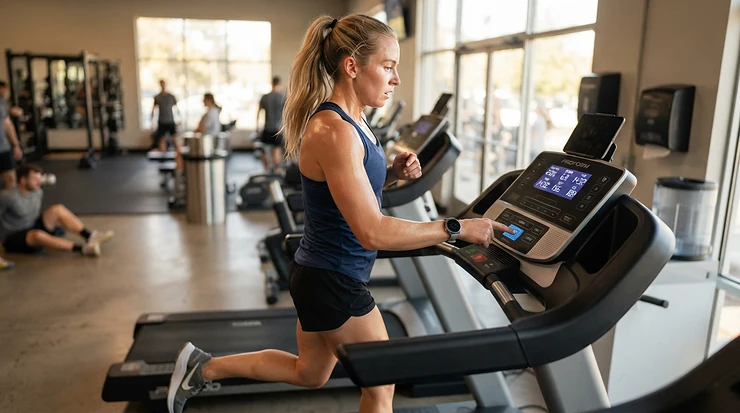
The first proper cold snap arrives, the sidewalk glazes over, and your sprint session suddenly looks like a bad idea with a worse ending. That’s the moment a treadmill for interval training stops feeling like a luxury and starts feeling like common sense. In 2026, the right treadmill for interval training gives you a heated, slip-free track that changes speed on command.
The appeal goes beyond weather. The Canadian 24-Hour Movement Guidelines recommend that adults aged 18 to 64 accumulate at least 150 minutes of moderate to vigorous aerobic activity per week. Intervals are one of the most time-efficient ways to pile up the vigorous minutes. Short bursts, short recoveries, done.
Here’s the catch. Not every treadmill can keep up with HIIT treadmill demands. Interval work asks a machine to jump from a walk to a sprint and back again, dozens of times, without lurching, lagging or overheating. A cheap motor that handles a steady jog can feel like a shopping cart on ice when you ask for treadmill quick speed adjustment.
So this guide skips the brochure talk. It compares seven real models on rapid speed response, preset interval programs, app compatibility and long-term value. It uses published specifications and the genuine themes in published reviews. You’ll also get workouts, a decision framework and Canadian context. Pricing is shown in ranges only, so check current prices on Amazon.ca before you buy.
Quick Comparison Table: Best Treadmill for Interval Training in 2026
| Model | Speed / Incline | Interval Standout | Price Range (CAD) | Best For |
|---|---|---|---|---|
| Horizon 7.8 AT | 0.5–12 mph (up to 19 km/h) / 0–15% | QuickDial rollers, Sprint 8 HIIT | C$2,000–C$3,000 | Overall HIIT balance |
| NordicTrack Commercial 2450 | Up to 14 mph (22 km/h) on current listings / −3% to 12% | SmartAdjust, ActivePulse | C$3,500–C$4,500 | Fast runners, guided training |
| BowFlex T9 | 0.5–12 mph / 0–15% | Rapid Sync + QuickDial | C$2,000–C$2,500 | App-flexible runners |
| SOLE F80 | 0.5–12 mph / 15 levels | Quick-dial rollers, no subscription | C$2,000–C$2,600 | Folding, no monthly fees |
| NordicTrack T Series | Around 10–12 mph / up to 10–12% (varies by year) | Smart-Response motor, iFIT | C$1,500–C$2,500 | Mid-budget guided HIIT |
| Horizon T101 | 0.5–10 mph (16 km/h) / 0–10% | One-touch speed/incline keys | C$700–C$1,400 | Beginners, tight budgets |
| AssaultRunner Pro | Self-powered / none | Instant, motor-free response | C$3,500–C$4,200 | Sprint purists |
Read the table as a map of trade-offs rather than a ranking. The Horizon 7.8 AT, BowFlex T9 and SOLE F80 cluster in the middle for a reason: they offer 12 mph (19 km/h) speed, 15% incline and dial controls at similar money. The NordicTrack Commercial 2450 pays extra for headroom and automation. The Horizon T101 is the budget gateway, and its 10 mph (16 km/h) cap suits intervals far better than it sounds, since 16 km/h is a hard sprint for most recreational runners. The AssaultRunner Pro sits alone because it removes the motor entirely, which is both its superpower and its price of admission.
💬 Just one click — help others make better buying decisions too!😊
Top 7 Treadmill for Interval Training Picks: Expert Analysis
1. Horizon 7.8 AT — the quick-dial interval workhorse
The headline feature here is control you can reach without breaking stride, and that matters more than any spec on the box. The Horizon 7.8 AT pairs a 4.0 CHP motor with a 22 × 60 in (56 × 152 cm) cushioned deck, 0.5–12 mph (up to 19 km/h) and 0–15% incline. For interval work, that 12 mph ceiling is roughly a 3:06 per kilometre pace, which is beyond what most home runners will hold for more than a few seconds.
The interval-friendly details are the point. Roller-style QuickDial controls sit under your hands, with one-touch and custom interval keys alongside, and an onboard Sprint 8 HIIT program is built in. A Canadian retailer listing claims the Rapid Sync system makes speed and incline changes 33% faster. Treat that as marketing, but reviewers do describe the response as quick.
Based on the spec comparison, this is the machine for runners who want real treadmill quick speed adjustment without a subscription. It transmits live metrics over Bluetooth FTMS to Peloton, Zwift and similar apps. Reviewers consistently praise the motor and the dials. A recurring caution is that the rollers are sensitive to accidental bumps, which is worth knowing before a sweaty, bleary-eyed sprint.
Pros:
- ✅ Quick-response motor and QuickDial controls
- ✅ Sprint 8 HIIT plus custom interval keys
- ✅ Lifetime frame and motor warranty
Cons:
- ❌ Rollers can be nudged by accident
- ❌ Heavy, large footprint when folded
Price range: C$2,000–C$3,000, so check current price. For serious HIIT treadmill use, it’s the best-rounded value in this lineup.

2. NordicTrack Commercial 2450 — top speed with automatic trainer control
The standout is headroom. Current listings show speeds up to 14 mph (22 km/h), a pace that roughly matches a 4:17-minute mile, plus incline from −3% to 12%. Earlier listings show 12 mph, so confirm the model year on the page. The NordicTrack Commercial 2450 targets runners whose sprints would flatten a lesser motor.
The 3.6 CHP motor is marketed as “Smart Response,” and a running coach who reviewed the machine after two years of ownership described pick-up as lag-free during intervals. The 24-inch touchscreen runs iFIT. Its SmartAdjust feature changes speed and incline to follow a trainer, and ActivePulse nudges intensity to hold a heart-rate zone. Both need an iFIT subscription and a compatible heart rate monitor, though manual mode works without one.
On paper, that means you can program a tough interval session and let the machine drive. Retailer reviews lean positive on the iFIT programming, with a few complaints about choppy map-based routes and at least one owner reporting reliability trouble. That mixed picture is normal for premium consoles.
Pros:
- ✅ Highest top speed in this lineup
- ✅ Decline training to −3%
- ✅ Automatic speed and incline via iFIT
Cons:
- ❌ Best features depend on a subscription
- ❌ Premium price, large screen you may not need
Price range: roughly C$3,500–C$4,500. Worth it only if you will use the speed or the guided automation.
3. BowFlex T9 — Rapid Sync with app freedom
Its edge is flexibility. The BowFlex T9 has a 22 × 60 in deck, 0–15% incline, 12 mph (19 km/h) top speed and, per one Canadian retailer’s spec table, a 3.5 CHP motor. Rapid Sync and QuickDial controls are designed for faster speed and incline changes, which is exactly what interval sessions reward.
Where it differs from the Horizon 7.8 AT is the app side. Bluetooth FTMS lets it feed live metrics to JRNY, Peloton App+ and Zwift from your own phone or tablet, and NFC syncs with Apple Watch and Galaxy Watch. New buyers have historically gotten a free JRNY trial, but a membership is needed for the full experience.
Reviewers describe the T9 as quiet and solid, and one detailed review compares it favourably with pricier machines. One reviewer did say the console controls can feel slow mid-interval, so the dials are your friend. A retailer buyer also reported a faulty bearing on delivery, which is a reminder to inspect on arrival.
Pros:
- ✅ Works with several workout tracking app options
- ✅ Quiet, sturdy feel reviewers like
- ✅ Folds with a soft-drop mechanism
Cons:
- ❌ Console buttons feel slow to some users
- ❌ JRNY full features need a membership
Price range: C$2,000–C$2,500. Good value when frequent promotions bring it down.
4. SOLE F80 — the no-subscription folding pick
The standout is ownership without a toll booth. The SOLE F80 uses a brushless 3.25 HP motor, a 20 × 60 in (51 × 152 cm) CushionFlex 2.0 deck, 0.5–12 mph (19 km/h) and 15 incline levels. SOLE+ app workouts are included free, and quick-dial rollers handle speed and incline.
A brushless motor matters for intervals because it’s quieter and, per SOLE’s own claims, more efficient and longer-lived. Take those as manufacturer figures. The 10.1-inch touchscreen supports screen mirroring, while WiFi and Bluetooth keep your vitals on screen. Capacity is listed at 350 lb (159 kg).
Honest analysis: the F80 is an excellent fit for runners who dislike recurring fees but want a screen and preset interval programs. Independent review volume for the 2026 version is still thin, so lean on the broader SOLE line, which reviewers describe as sturdy and easy to use. The deck is narrower than the 22-inch decks on rivals, so taller or wider-striding runners should check fit.
Pros:
- ✅ Free app and presets, no monthly fee
- ✅ Quick-dial rollers for speed and incline
- ✅ Folds for small-space homes
Cons:
- ❌ 20-inch deck is narrower than rivals
- ❌ Limited independent reviews so far
Price range: roughly C$2,000–C$2,600. Strong value for subscription-averse buyers.
5. NordicTrack T Series — mid-budget guided HIIT
This one’s hook is guided intelligence at a calmer price. The NordicTrack T Series has a Smart-Response motor and auto-incline, and it includes a short iFIT trial. Specs vary by model year: listings show top speeds from about 10 to 12 mph (16–19 km/h) and incline up to 10–12%, so verify before buying.
For interval work, the real value is iFIT automation. Trainers change speed and incline for you, so you can focus on effort instead of fiddling with buttons. Capacity is listed at 300 lb (136 kg), which is lower than premium rivals.
Reviewers frequently call it easy to use and customizable, and a HIIT-focused roundup ranks it as a benchmark for guided sessions. The common reservation is the subscription: SmartAdjust-style features need iFIT, and without it you’re pressing buttons like everyone else. It also lacks the lightning-fast dials of the Horizon models.
Pros:
- ✅ Smart-Response motor tuned for intervals
- ✅ iFIT automation reduces button-mashing
- ✅ Often cheaper than premium Commercial models
Cons:
- ❌ Guided features require a subscription
- ❌ Lower weight capacity than rivals
Price range: roughly C$1,500–C$2,500 depending on model year, so check current price.

6. Horizon T101 — the budget entry with one-touch keys
The hook is affordability with a few interval-friendly tricks. The Horizon T101 tops out at 10 mph (16 km/h) with 0–10% incline and a 55-inch (140 cm) deck, and it folds with a one-step hydraulic mechanism. One-touch keys and EasyDial rollers let you hop between speeds quickly.
A 2.5 CHP motor sets the boundary. Reviewers who tested it say it suits walkers and joggers better than heavy runners, which maps directly to interval use: moderate bursts work, all-out sprinting by large or fast runners will stress it. At 16 km/h, a 60-second hard effort is genuinely demanding for most beginners.
Bluetooth FTMS lets it feed Peloton and other apps, and five onboard programs cover basic variety. Reviews on Canadian retail pages are mostly happy, with a few quality complaints, which is typical at this price.
Pros:
- ✅ Lowest price in this lineup
- ✅ One-touch speed and incline keys
- ✅ Compact fold for small spaces
Cons:
- ❌ 2.5 CHP motor limits heavy running
- ❌ Shorter deck for tall runners
Price range: C$700–C$1,400, depending on promotions. Best entry-level choice if you’re new to intervals.
7. AssaultRunner Pro — instant response, no motor
This is the outlier, and the standout is physics. The AssaultRunner Pro is a curved, self-powered slat treadmill with a 62 × 17 in (157 × 43 cm) running surface. You are the motor, so speed changes happen as fast as your legs do. No lag, no ramp, no beeping.
Curved manual treadmills force you to drive the belt, which raises effort compared with a motorized deck, and sprint work suits them particularly well. The Pro lists a 350 lb (159 kg) capacity, a 7-year frame warranty in the U.S. and no motor to maintain. It also has no incline and no speed settings, so structure comes from you.
Reviewers consistently describe it as durable and a CrossFit favourite. The usual complaints: it’s extremely heavy, the curved shape takes getting used to, and the plastic shell can crack. It is also not a gentle recovery-jog machine.
Pros:
- ✅ Truly instant rapid speed response
- ✅ No motor, fewer maintenance headaches
- ✅ Built for sprints and conditioning
Cons:
- ❌ Extremely heavy, no folding
- ❌ Learning curve and no incline
Price range: roughly C$3,500–C$4,200. Brilliant for sprinters, wrong for everyone else.
Treadmill Interval Workout Programs You Can Run Tonight
A treadmill for interval training is only as good as the session you put on it. Try these three treadmill interval workout programs, written in metric with imperial in brackets. Always warm up, and treat all speeds as starting points to adjust to your fitness.
The beginner 60/90. Warm up for 5 minutes at 5–6 km/h (3–3.7 mph). Then alternate 60 seconds at about 9–10 km/h (5.6–6.2 mph) with 90 seconds of walking at 5 km/h (3.1 mph), eight times. Cool down for 5 minutes. Total time: roughly 30 minutes.
The classic 90/60. After a 10-minute warm-up, run 90 seconds hard at a pace you could hold for about 5 km, then recover for 60 seconds at an easy jog. Repeat ten times. One training-plan guide suggests the machine needs 5–10 seconds to reach a new speed, so start your dial turn a few seconds before the interval and begin timing once you’re there.
The incline ladder. Hold a steady 9–10 km/h and raise the incline by 2% every minute up to 10%, then drop back down. This builds power with less impact on your joints.
Three habits make these sessions better. First, change speed in steps instead of jumping from a walk to a sprint. Second, keep your recovery honest, because skipping rests turns intervals into a slow slog. Third, use the machine’s preset interval programs once you’ve learned how the intervals feel manually. The Horizon 7.8 AT‘s Sprint 8 is a decent starting template.
Real-World Scenarios: Matching a HIIT Treadmill to Your Life
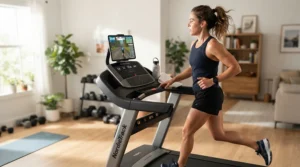
Specs mean little until they meet a real life. Here are three profiles with the reasoning behind each match.
The apartment runner (small space, mid budget). A condo dweller running three times a week needs a folding frame and no subscription. The SOLE F80 fits: it folds, includes free app workouts and has dial rollers for quick changes. If the budget is tighter, the Horizon T101 gets you intervals at a lower cost, with the caveat of that 16 km/h top speed.
The data-driven marathoner (training plan, smartwatch). A runner who already follows a structured plan wants precise pace control, high top speed and clean app syncing. The NordicTrack Commercial 2450 offers up to 14 mph on current listings and iFIT automation, while the BowFlex T9 is the cheaper route with FTMS and watch syncing.
The garage-gym athlete (sprints and conditioning). Someone doing Hyrox-style or CrossFit-style sessions benefits from a machine that never limits their acceleration. The AssaultRunner Pro answers that, provided there is floor space and the person is comfortable with a heavy, no-fold machine.
Problem and Solution: Fixing Common Interval Headaches
Problem: the belt lags behind your dial turn. Solution: anticipate. Start adjusting 5–10 seconds before the interval begins, a tip echoed by training guides. If lag is constant, a stronger motor like the Horizon 7.8 AT or a curved runner removes it.
Problem: your heart rate spikes unpredictably. Solution: use ActivePulse-style heart-rate control (NordicTrack Commercial 2450, NordicTrack T Series) or a Bluetooth chest strap with a fitness app to monitor zones.
Problem: sensitive dials get bumped. Solution: lock in a consistent hand position and make small turns. On the Horizon 7.8 AT, reviewers specifically flagged this sensitivity.
Problem: you run out of motivation. Solution: switch format. Use presets one week, a streaming class the next, and a simple stopwatch session after that.
Problem: the treadmill feels tough on knees. Solution: lean on incline intervals rather than speed, which one Canadian treadmill retailer notes can raise intensity at a more joint-friendly pace.
What Is a Treadmill for Interval Training?
A treadmill for interval training is a treadmill built to change speed and incline quickly and repeatedly, with a motor strong enough to handle rapid acceleration. It typically offers quick-adjust controls, preset interval programs, and often app or heart-rate integration to structure alternating hard efforts and recovery periods.
That definition matters because interval work is the opposite of steady jogging. Researchers describe the strategy as short, high-intensity bursts followed by slower recovery phases within one shortened workout. A Canadian overview in the Health & Fitness Journal of Canada describes high-intensity exercise as a realistic approach for the general population, not just elite athletes. It also stresses monitoring intensity and progression carefully, which is why controls and feedback matter on your machine.
How to Choose a Treadmill for Interval Training
- Check the motor, then the real-world horsepower claim. Look for roughly 3.0 CHP or more for regular HIIT. Smaller motors can do the job at moderate speeds, but they work harder on repeated surges.
- Prioritize quick-adjust controls. Rollers, jump keys and one-touch interval buttons beat tiny plus/minus buttons when you’re gasping.
- Confirm speed and incline range. 10 mph (16 km/h) works for most recreational runners. If you’re faster, aim for 12 mph (19 km/h) or more.
- Look at preset interval programs. Built-in HIIT programs are great for beginners. Custom interval keys are better for experienced runners.
- Decide how you want app support. Choose between a built-in subscription ecosystem and Bluetooth FTMS that works with your phone or tablet.
- Measure your space and your deck. A 20-inch deck feels tighter at sprint pace than a 22-inch one.
- Read the warranty. Frame and motor coverage tells you how confident the maker is.
Treadmill Quick Speed Adjustment and Rapid Speed Response: What Spec Sheets Skip
Marketing loves phrases like “rapid speed response,” but the term has no standard unit. There is no industry-agreed number for how fast a belt moves from 6 to 12 km/h. So how do you judge treadmill quick speed adjustment honestly?
Start with the controls. A roller under your thumb is faster to operate than a button you hold down. Then consider motor design: treadmill controllers continually compare actual belt speed with a target speed, so a stronger motor can close that gap faster. Patents on automatic speed control note that controllers typically limit acceleration depending on speed, partly for runner safety.
That safety limit is a feature, not a flaw. Even on the best machines, short bursts of 15–20 seconds can feel clumsy because the belt needs time to ramp up. Runners on a Zwift forum noted that curved manual treadmills respond instantly, while others pointed out that real-world outdoor sprint starts aren’t instantaneous either. The takeaway: expect a short ramp on motorized decks, and plan your intervals around it.
If rapid speed response is your top priority, the AssaultRunner Pro is the benchmark because there’s no motor delay at all. Among motorized options, the Horizon 7.8 AT, BowFlex T9 and NordicTrack Commercial 2450 are the ones whose makers or reviewers highlight quick response.
Preset Interval Programs vs a Workout Tracking App: Which Do You Need?
Preset interval programs live on the machine. A workout tracking app lives on your phone, your tablet or the treadmill’s screen. They solve different problems.
Presets give you structure with zero setup. The Horizon 7.8 AT includes Sprint 8, the Horizon T101 has five onboard programs, and the SOLE F80 adds presets plus the free SOLE+ app. A workout tracking app, meanwhile, logs your effort, syncs with your watch and gives you variety through classes.
| Model | Presets / On-Board Programs | App Ecosystem | Subscription Needed? |
|---|---|---|---|
| Horizon 7.8 AT | Sprint 8 HIIT, custom interval keys | Peloton, Zwift via FTMS | No (apps optional) |
| NordicTrack Commercial 2450 | iFIT programs, SmartAdjust | iFIT | Yes, for guided features |
| BowFlex T9 | Basic programs | JRNY, Kinomap, Peloton, Zwift | Membership for full JRNY |
| SOLE F80 | 20-plus-style programs | SOLE+ (free) | No |
| NordicTrack T Series | iFIT workouts | iFIT | Yes, after the trial |
| Horizon T101 | 5 onboard programs | Peloton and others via FTMS | No |
| AssaultRunner Pro | Interval programs on display | Bluetooth/ANT+ metrics | No |
The pattern is clear: subscription ecosystems add automation, free apps add flexibility, and presets keep things simple. Beginners often do well with presets alone, while data-focused runners should favour the BowFlex T9 or Horizon 7.8 AT for open app compatibility. If you want a trainer to drive the dials, the NordicTrack Commercial 2450 and NordicTrack T Series are built for it, as long as you accept the ongoing cost.
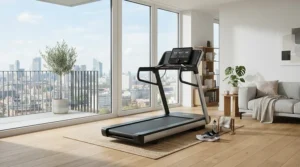
Treadmill for Interval Training vs Alternatives
| Option | Strengths | Weaknesses | Best For |
|---|---|---|---|
| Motorized treadmill (e.g., Horizon 7.8 AT) | Programmable speed and incline, joint-friendly cushioning | Short ramp between speeds | Structured HIIT |
| Curved manual treadmill (e.g., AssaultRunner Pro) | Instant response, no motor to maintain | Heavy, no incline, harsh learning curve | Sprinters |
| Outdoor running | Free, varied terrain | Weather, ice and darkness | Mild-season runs |
| Stationary bike | Low impact | Different muscle use | Cross-training |
Looking at the comparison, the motorized treadmill wins for repeatable, controllable sessions, especially in Canadian winters. The curved option wins on raw responsiveness but costs more effort and floor space. A bike is kinder to joints, yet it doesn’t train running mechanics, which matters if running is your sport.
Features That Actually Matter (and Those That Don’t)
Matter: quick-adjust controls, a motor with real headroom, a deck wide enough that you won’t feel cramped, and straightforward Bluetooth connectivity. Reliable warranty terms count too.
Matter less than you think: screen size. A 24-inch touchscreen on the NordicTrack Commercial 2450 is impressive, but you can run the same intervals on the Horizon T101 with a stopwatch. Streaming entertainment, built-in fans and cup holders also rank low for performance.
Mostly marketing: vague claims like “ultra-responsive.” Look for roller controls, jump keys and independent reviewer comments instead.
Watch out for: subscriptions disguised as features. Auto-adjust, trainer follow and heart-rate control on the NordicTrack models rely on iFIT. That’s fine if you’ll use it, but it changes the true cost.
Treadmill for Interval Training for Specific Audiences
Beginners: start with the Horizon T101 or SOLE F80, keep sprints short and recoveries generous. Research from Canadian universities has looked at how tolerable and enjoyable interval training is for inactive adults. As a UBC Okanagan project framed it, intervals can be an appealing alternative to continuous exercise.
Experienced runners: the NordicTrack Commercial 2450 or Horizon 7.8 AT give you the speed and incline headroom for race-pace work.
Athletes in conditioning sports: the AssaultRunner Pro matches the sprint-and-rest format of functional fitness.
Older adults or those with health conditions: emphasize incline walking intervals and consult a health professional first. The guidelines caution that some adults, including those who are pregnant or living with a medical condition, should seek advice.
Long-Term Cost and Maintenance
Sticker price is only the first line of the invoice. Factor in subscriptions, delivery, assembly and upkeep.
A motorized treadmill typically needs belt cleaning, lubrication as the manual specifies and occasional alignment checks. Keep the deck dust-free and the room temperature stable. A treadmill mat helps with noise and floor protection.
Subscription costs add up: if you pay for iFIT or JRNY for several years, that can rival a mid-priced treadmill. Free-ecosystem machines like the SOLE F80 and Horizon T101 lower that burden. Meanwhile, the AssaultRunner Pro has no motor to service, which reduces repair risk, though it’s a heavy machine to move.
Warranties are your best clue to durability. The Horizon 7.8 AT lists a lifetime frame and motor warranty, a reassuring sign for HIIT workloads. Always read the terms yourself, since coverage differs by retailer and region.
Safety and Canadian Guidelines for Treadmill Intervals
Intervals are demanding. Statistics Canada reported that roughly one in two Canadian adults met the 150-minute weekly target in recent survey data (see the Statistics Canada release). If you’re jumping from sedentary to sprinting, build up gradually.
Practical rules: warm up thoroughly, attach the safety key, keep your eyes forward, and step to the side rails before changing a setting if you feel unsteady. Use a heart rate monitor if you have cardiovascular risk factors, and talk to a health professional before starting vigorous exercise if you have a medical condition. Check for recognized electrical certification marks on the product page, and confirm the weight capacity before purchase.
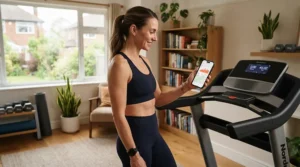
FAQ
❓ How long should a treadmill HIIT session last?
❓ Can I do intervals on a treadmill that tops out at 10 mph?
❓ Do I need a subscription for treadmill interval workout programs?
❓ Is a curved manual treadmill better for sprints?
❓ How do I connect a workout tracking app to my treadmill?
Conclusion
Choosing a treadmill for interval training comes down to three questions: how fast do you need to go, how quickly must the machine respond, and how much structure do you want handed to you? For most Canadian runners, the Horizon 7.8 AT is the safest all-round pick, with quick controls, a strong motor and a sprint-ready program. The NordicTrack Commercial 2450 is the premium choice for speed and automation, while the BowFlex T9 and SOLE F80 offer excellent mid-range balance. The NordicTrack T Series suits guided training, the Horizon T101 is a smart entry point, and the AssaultRunner Pro is the sprinter’s specialist tool.
Whichever you pick, the machine matters less than the habit. Start with a simple 60/90 session, listen to your body, and build from there. Check current prices on Amazon.ca, compare warranty terms, and confirm the model year before you buy.
Recommended for You
- Treadmill For Speed Training: 7 Ultimate Picks For Canadians (2026)
- Treadmill For Long-Distance Running: 7 Best Picks In Canada 2026
- Treadmill For Half Marathon Training: 7 Essential Picks (2026)
Disclaimer: This article contains affiliate links. As an Amazon Associate, I earn from qualifying purchases. If you purchase products through these links, we may earn a small commission at no additional cost to you.
✨ Found this helpful? Share it with your friends! 💬🤗
