In This Article
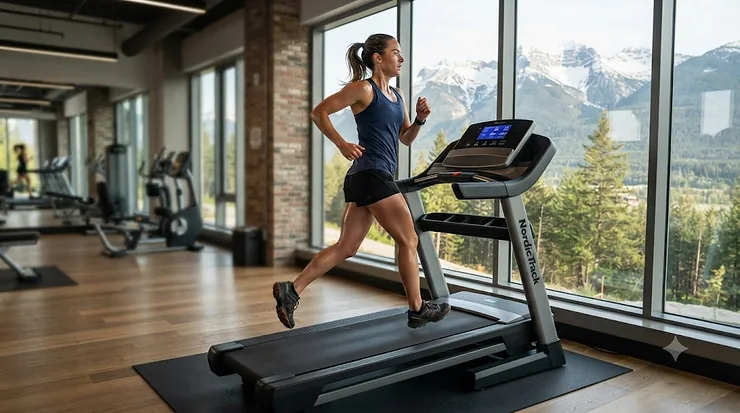
Somewhere between the third pothole and the fourth patch of black ice, most Canadian runners start fantasizing about a treadmill to simulate hills. It’s not laziness — it’s math. Southern Ontario, the Prairies, and half of Atlantic Canada are flatter than a Zamboni sheet, and a five-month winter doesn’t exactly beg you outside for repeats. A treadmill to simulate hills solves a real problem: it lets you build the quad strength, lung capacity, and mental toughness of hill running without needing an actual hill, or dry pavement, or daylight after 4:30 p.m.
But not every “incline treadmill” is built the same. Some cap out at a gentle 10%, which is fine for a Sunday stroll but does nothing for someone training for the Grouse Grind or a hilly fall marathon. Others push to 15%, 20%, or even a genuinely absurd 40% — numbers that start to feel less like a treadmill spec and more like a mountain access road. Below, we’ve dug into seven real, currently available models, sorted from budget-friendly to genuinely premium, with honest analysis of what each incline range actually means for your training. Every price mentioned is a range in Canadian dollars, since exact figures shift constantly — always check current price before you buy.
Quick definition, since this comes up in every search bar in the country: a treadmill to simulate hills is a motorized treadmill whose deck can tilt upward (and sometimes downward) to mimic the grade of outdoor terrain, letting runners train hill strength, VO2 max, and downhill control indoors, year-round, regardless of weather. As Canadian Running Magazine notes, a treadmill set to a true 0% incline actually feels like a slight downhill compared to outdoor pavement, which is exactly why incline adjustment matters even before you start dedicated hill work.
Quick Comparison Table: Treadmills That Simulate Hills
| Model | Max Incline | Motor | Price Range (CAD) | Best For |
|---|---|---|---|---|
| ProForm Carbon TL | 10% | 2.5 CHP | Under C$700 | Absolute beginners, small spaces |
| Sunny Health & Fitness Premium Smart | 12% | 2.5 CHP | C$500–C$650 | Budget hill training |
| Horizon 7.4 AT | 15% | 3.5 CHP | C$1,900–C$2,300 | Serious runners on a mid budget |
| Sole F80 | 15% | 3.5 CHP | C$2,200–C$2,600 | Buyers who want a lifetime warranty |
| ProForm Carbon Pro 9000 | -3% to 12% | 3.6 CHP | C$2,400–C$2,800 | iFIT-driven auto terrain training |
| Bowflex Treadmill 22 | -5% to 20% | 4.0 CHP-equivalent | C$3,500–C$3,900 | Incline and decline training |
| NordicTrack Commercial X24 | -6% to 40% | 4.25 CHP | C$5,000 and up | Mountain-race prep, maximal incline |
Looking at the spread here, the real fork in the road isn’t budget versus premium — it’s whether you actually need incline beyond 15%. Reviewers and testers consistently note that the jump from 12% to 15% incline is where a treadmill starts genuinely replicating a steep outdoor hill rather than a gentle rise, which is why so many serious runners land on the Sole F80 or Horizon 7.4 AT rather than overspending on 40%. On the other hand, if you’re specifically training for mountain running or an ultramarathon with sustained double-digit grades, the NordicTrack Commercial X24‘s 40% ceiling and the Bowflex Treadmill 22‘s rare decline function earn their higher price tags.
💬 Just one click — help others make better buying decisions too!😊
Top 7 Treadmills to Simulate Hills: Expert Analysis
Every product below has been researched from manufacturer specifications and aggregated review sentiment across major retailers and independent testers. None of these are personal endorsements from hands-on ownership — they’re honest, sourced analysis so you can compare real numbers before you check current pricing.
1. ProForm Carbon TL — cheapest real entry point into incline training
The ProForm Carbon TL exists for one reason: to get incline training into homes that don’t have C$2,000 to spend on a treadmill. It’s not trying to be anything else, and that honesty is refreshing. The 0-10% incline range and 2.5 CHP motor mean this isn’t built for marathon block mileage, but for someone doing three or four 20-30 minute sessions a week, it’s genuinely enough incline to build hill-specific strength most beginners haven’t touched before.
Specs that matter in practice: the 10% max incline is roughly equivalent to a moderately steep neighbourhood street — enough to spike your heart rate noticeably compared to flat walking, but not so steep it stresses an untrained achilles. The 5-inch LCD display and 10 mph top speed keep things simple, which honestly suits its target buyer. Based on the spec comparison with pricier models, what you’re sacrificing here is motor longevity and incline speed, not incline accuracy.
Aggregated review sentiment on this model is generally positive for the price point, with reviewers consistently reporting that it’s a solid “starter” treadmill, though some buyers note the deck feels noticeably smaller than mid-range options — worth knowing if you’re over six feet tall.
Pros:
- ✅ Lowest price point of any treadmill on this list
- ✅ 10% incline is genuinely useful for beginner hill training
- ✅ Compact folding frame suits small condos and apartments
Cons:
- ❌ Motor and deck size limit long-term durability for serious mileage
- ❌ No decline function or advanced incline programming
At under C$700, the ProForm Carbon TL is the honest budget pick — check current price, since ProForm runs frequent promotions on this model.
2. Sunny Health & Fitness Premium Smart Treadmill — best value for casual hill walkers
The Sunny Health & Fitness Premium Smart Treadmill (model SF-T7515SMART) punches above its price class specifically because of its incline range: 12 levels topping out around 12%, controlled through quick-access buttons rather than a fiddly dial. That’s a meaningfully steeper ceiling than most treadmills in this price bracket, which usually stop at 10% or don’t offer auto-incline at all.
In practical terms, a 12% grade is comparable to a genuinely steep residential hill — the kind that gets your calves burning on the way up. Paired with the SunnyFit app’s global route library, this becomes less “boring treadmill” and more low-cost hill-walking simulator. The double-deck shock absorption system is a real, sourced feature worth noting for anyone with knee sensitivity, since it’s designed specifically to reduce joint impact during incline work, when landing forces increase.
What most buyers overlook about this model is that it’s built for walking and light jogging, not sustained running — the 10 mph top speed confirms that use case. Reviewers report that the SunnyFit app connectivity works well for tracking incline-based workouts, though a common complaint in user reviews is that the smaller deck size feels tight for taller runners at faster paces.
Pros:
- ✅ 12% incline range rare at this price point
- ✅ Double-deck shock absorption reduces joint strain on inclines
- ✅ SunnyFit app adds guided global hill routes
Cons:
- ❌ 10 mph top speed limits use for faster runners
- ❌ Smaller running deck cramped for taller users
Priced in the C$500–C$650 range, this is arguably the smartest per-dollar pick for anyone whose “hill training” is really brisk incline walking — check current price before ordering, as this model sees frequent seasonal discounts.
3. Horizon 7.4 AT — best all-round mid-range hill trainer for runners
If there’s a “default correct answer” for treadmill to simulate hills among Canadian running forums, it’s often the Horizon 7.4 AT. The 15% incline range, paired with a 3.5 CHP motor and Rapid Sync drive system, means incline changes happen almost instantly — genuinely useful when you’re running interval-based hill workouts and don’t want a five-second lag between flat recovery and the next climb.
The 22″ x 60″ deck with 3-Zone cushioning is a real, sourced spec worth flagging: it’s built to soften impact specifically during incline running, when your foot strike angle changes and stress concentrates differently through the ankle and knee. QuickDial controls on both sides let you adjust speed and incline independently mid-stride, which matters more than it sounds — fumbling with tiny buttons during a hill repeat breaks your rhythm and your split times.
Based on aggregated review sentiment, the 7.4 AT earns consistent praise for build quality and quiet operation at 15% incline, where cheaper motors tend to strain audibly. A recurring critique across reviews is that despite official 0-15% marketing, several owners report the deck never fully reaches a true flat, which is a minor but real quirk worth knowing before you buy.
Pros:
- ✅ 15% incline with near-instant Rapid Sync adjustments
- ✅ 3-Zone cushioning designed specifically for incline impact
- ✅ Bluetooth FTMS syncs with Zwift and Peloton apps
Cons:
- ❌ No true 0% flat setting according to multiple owner reports
- ❌ No decline function for downhill training
In the C$1,900–C$2,300 range, the Horizon 7.4 AT delivers genuine commercial-grade incline performance without commercial-grade pricing — check current price, as Horizon frequently bundles seasonal offers.
4. Sole F80 — best warranty and long-term value for daily hill training
The Sole F80 has built its reputation less on flashy incline numbers (also 15%, matching the Horizon above) and more on what happens after year three. A lifetime warranty on the frame, motor, and deck is a genuinely rare commitment in this category, and it signals something real about build confidence — companies don’t offer that on equipment they expect to fail.
The 3.5 CHP brushless motor is specifically engineered for longevity, and Sole’s own testing claims 10 times the lifespan of a standard brushed motor, with notably quieter operation at high incline — a detail runners doing early-morning or late-night hill sessions will appreciate. The CushionFlex Whisper Deck reduces joint impact by up to 40% compared to asphalt, according to Sole’s published testing, which matters disproportionately during incline work where impact forces shift toward the forefoot.
What most buyers overlook here is the 22″ x 60″ deck size, identical to the Horizon, but paired with a notably higher 350 lb weight capacity — a meaningful detail for larger runners or households sharing one machine. Reviewers consistently describe the F80 as “commercial-feeling,” and a common theme in aggregated feedback is that the touchscreen, while functional, isn’t as polished as iFIT-powered competitors.
Pros:
- ✅ Lifetime warranty on frame, motor, and deck
- ✅ Brushless motor built for long-term durability at incline
- ✅ 350 lb weight capacity, above category average
Cons:
- ❌ Touchscreen and app ecosystem trail iFIT-based rivals
- ❌ No decline function, same ceiling as the Horizon at 15%
At C$2,200–C$2,600, the Sole F80 is the treadmill you buy once and stop thinking about — check current price, since Sole runs frequent site-wide sales that can shift this range meaningfully.
5. ProForm Carbon Pro 9000 — best for auto-adjusting terrain simulation
The ProForm Carbon Pro 9000 takes a different approach to “simulating hills”: instead of you manually dialing in a grade, iFIT’s trainer-led programs auto-adjust incline (and decline, down to -3%) in real time to match footage of actual outdoor trails and races. On paper this means your treadmill’s grade changes are dictated by GPS-mapped terrain data from a real course, not a preset interval script — a meaningfully different training experience than manually punching in numbers.
The 3.6 CHP motor and 22″ touchscreen are genuine mid-premium specs, and the incline/decline combination (-3% to 12%) is deliberately tuned toward realistic outdoor variation rather than extreme maximum grade. Here’s what the spec sheet won’t tell you, but reviewers note: the auto-adjust feature is the main draw, and buyers who don’t intend to use iFIT subscriptions long-term report feeling like they overpaid for hardware they’re using in “manual mode” anyway.
Aggregated sentiment is strong on build quality and screen responsiveness, with a common complaint centring on the ongoing iFIT membership cost after the included trial period — a real, ongoing expense worth factoring into your total cost of ownership.
Pros:
- ✅ Auto incline/decline matched to real GPS-mapped trail footage
- ✅ 22″ touchscreen with responsive, well-reviewed interface
- ✅ 3.6 CHP motor built for sustained running, not just walking
Cons:
- ❌ Full value requires an ongoing iFIT subscription
- ❌ Lower max incline (12%) than similarly priced rivals
Priced around C$2,400–C$2,800, the ProForm Carbon Pro 9000 rewards buyers who’ll actually use the guided programming — check current price, and factor the iFIT subscription into your budget before deciding.
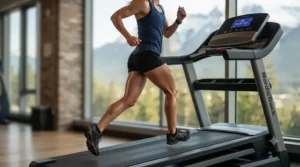
6. Bowflex Treadmill 22 — best for incline and decline hill simulation
Decline training is the detail almost every other treadmill on this list skips, and it’s exactly where the Bowflex Treadmill 22 justifies its price tag. With a -5% to 20% range, it’s not just about climbing — it’s about training the eccentric quad control and impact absorption that downhill running demands, something flat or incline-only treadmills simply can’t replicate. Reviewers and testers describe this as the largest incline/decline range of any folding treadmill currently sold.
The 22″ HD touchscreen runs the JRNY platform, and — a detail buyers specifically mention — it’s compatible with third-party streaming apps like Netflix and Prime Video alongside Zwift, so the screen doubles as entertainment on easy recovery days. The 400 lb weight capacity is the highest on this list, and the motor’s performance is comparable to a 4.0 CHP unit, according to independent testers, meaning it holds up under sustained high-incline running better than lighter-duty motors.
Based on the spec comparison, what most buyers overlook is that decline training isn’t just a novelty — for anyone training for a downhill-heavy trail race, or simply trying to reduce injury risk from unfamiliar eccentric loading, it’s a genuinely rare and valuable feature. A recurring theme in aggregated reviews is that assembly is notoriously difficult and best left to the paid white-glove delivery option.
Pros:
- ✅ -5% to 20% range, largest incline/decline spread on this list
- ✅ 400 lb weight capacity, highest of any model here
- ✅ JRNY platform doubles as streaming entertainment
Cons:
- ❌ Assembly is reported as unusually difficult without professional help
- ❌ Among the priciest folding treadmills in its category
At roughly C$3,500–C$3,900, the Bowflex Treadmill 22 is the pick for runners who specifically need decline work — check current price, and strongly consider the assembly service if you order one.
7. NordicTrack Commercial X24 — most extreme incline for mountain and ultra training
For runners genuinely training for sustained double-digit grades — think Grouse Grind repeats, Sky Race prep, or mountain ultra blocks — the NordicTrack Commercial X24 is in a category of its own. Its -6% to 40% incline/decline range isn’t a typo; it’s roughly double the ceiling of every other treadmill on this list, and according to NordicTrack’s own published research, training at that range can burn up to 1.9 times more calories than a standard 12-15% incline session at matched effort.
The 24″ HD touchscreen and iFIT-driven auto incline mean the machine adjusts grade in real time to match filmed mountain terrain, so a 40% pitch isn’t something you dial in blind — it’s mapped to an actual trail segment. The 4.25 CHP-class motor and cushioned deck are built to handle that kind of sustained steep-grade torque without the motor bogging down, something budget incline motors simply aren’t engineered for.
Here’s what most buyers overlook: this level of incline recruits your glutes, hamstrings, and calves far more aggressively than flat running, and reviewers consistently note it’s genuinely punishing in a way that flat-ground running never replicates indoors. The trade-off, and it’s a real one, is size and price — this is a large, heavy machine, and testers note it isn’t something you casually reposition in a small condo gym.
Pros:
- ✅ Unmatched -6% to 40% incline/decline range
- ✅ iFIT auto-adjusts grade to match real mountain trail footage
- ✅ Motor and deck built specifically for sustained steep-grade loads
Cons:
- ❌ Large footprint, difficult to reposition in small spaces
- ❌ Priciest model on this list by a wide margin
Well above C$5,000, the NordicTrack Commercial X24 is a serious investment reserved for runners with genuinely mountain-focused goals — check current price and confirm delivery logistics for your space before ordering.
Benefits vs Traditional Outdoor Hill Training
| Factor | Treadmill Incline Training | Outdoor Hill Running |
|---|---|---|
| Weather dependency | None — usable in any Canadian winter | High — ice and snow limit access for months |
| Grade consistency | Exact, repeatable percentage every time | Varies with terrain, hard to measure precisely |
| Decline/downhill practice | Only on models with true decline (e.g. Bowflex Treadmill 22) | Naturally available on any real hill |
| Mental toughness / terrain feel | Lower — no wind, footing changes, or elevation view | Higher — builds race-day terrain adaptability |
| Best For | Winter maintenance, interval precision, injury-safe cushioning | Race-specific terrain skill, downhill control, variety |
The honest takeaway here is that treadmill incline training and outdoor hill running aren’t really competing — they’re complementary. A treadmill lets you hit an exact, repeatable grade for structured intervals regardless of the forecast, while outdoor hills teach the uneven footing and mental grit that a flat, cushioned belt simply can’t replicate. Most competitive Canadian runners we researched use both, leaning on the treadmill through winter and shifting outdoors once trails clear.
How to Choose a Treadmill to Simulate Hills
- Decide your realistic max incline need. If you’re training for a road race with rolling hills, 12-15% is plenty; if you’re prepping for mountain or trail ultras, look toward the 20-40% range like the Bowflex Treadmill 22 or NordicTrack Commercial X24.
- Check for a decline function. Only a handful of treadmills offer negative grade, and it’s the only way to train the eccentric muscle control that downhill running demands.
- Match the motor size to your mileage. Casual walkers can get away with a 2.5 CHP motor; runners logging serious weekly mileage should look for 3.5 CHP or higher to avoid premature motor wear.
- Confirm deck size for your height and stride. A 20″ x 55″ deck feels cramped above 5’10”; look for 22″ x 60″ if you’re taller or have a long stride.
- Factor in subscription costs. iFIT-powered models like the ProForm Carbon Pro 9000 and NordicTrack Commercial X24 are genuinely better with an active subscription — build that ongoing cost into your total budget.
- Weigh warranty length as a durability signal. A lifetime frame and motor warranty, like on the Sole F80, tells you a lot about how confident the manufacturer is in long-term reliability.
- Measure your space, including folded dimensions. Incline-heavy treadmills tend to be larger and heavier; confirm your gym space, doorway width, and floor load capacity before ordering.
Treadmill 15 Incline Canada: What the Number Actually Means
A 15% incline treadmill, Canada or otherwise, is climbing at a grade of 15 metres of rise for every 100 metres travelled — steep enough that most casual walkers instinctively slow down and grip the handrail. For context, a 15% grade is comparable to some of the steepest short residential streets in hilly Canadian cities like Halifax or parts of Vancouver’s North Shore, and noticeably steeper than the average sustained grade on most groomed hiking trails.
Both the Horizon 7.4 AT and Sole F80 top out at 15%, which reviewers and coaches alike tend to treat as the practical ceiling for “useful hill training” rather than novelty. Based on the spec comparison across this list, 15% is where a treadmill stops being a flat-run machine with a party trick and starts being a legitimate hill-training tool — below that, you’re mostly building general fitness rather than hill-specific strength; above it, into the 20-40% range, you’re training for genuinely mountainous terrain most runners will never race on.
For Canadian buyers specifically, it’s worth noting that treadmill electrical components sold here must meet CSA Group safety certification requirements, distinct from — though closely aligned with — U.S. UL standards, so confirm any model you’re considering carries a CSA or C-UL mark before plugging it in.
Hill Training Treadmill Workout: A Practical Usage Guide
Getting real value out of a hill training treadmill workout comes down to setup and consistency, not just the incline number on the display.
First 30 days — setup and calibration: Place the treadmill on a hard, level surface (carpet padding under the frame is fine, but avoid soft or uneven flooring that can throw off incline accuracy). Run the manufacturer’s belt-calibration routine before your first real workout — most incline treadmills, including the Horizon 7.4 AT and Sole F80, ship with a break-in period recommendation of roughly 8-10 hours of light use before pushing max incline.
A simple beginner hill workout: Warm up for 5-10 minutes at 1% incline (true flat running actually feels slightly downhill on most decks, so 1% better mimics outdoor flat terrain — a tip echoed by Canadian coaches). Then alternate 2 minutes at 5% incline with 2 minutes at 1% incline, repeating 6-8 times, before a 5-minute cooldown.
Maintenance that actually matters: Lubricate the belt every 3 months of regular use (check your manual — over-lubricating is a common mistake). Vacuum under the deck monthly, since incline treadmills draw more dust into the motor housing when tilted. Tighten belt tension if you notice slipping specifically during high-incline intervals, since incline running places uneven strain on belt tracking.
Common first-month mistakes: Cranking incline to max on day one (build up gradually over 2-3 weeks); holding the handrail during incline work, which reduces the training benefit and skews your natural running form; and skipping the calibration step, which is a common cause of the “phantom incline” issue some Horizon owners report.
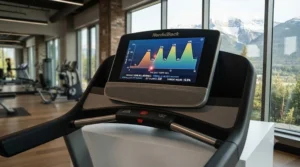
Treadmill for Hill Training Runners: Real-World Scenarios
The marathon runner in a flat city: Someone training for a hilly fall marathon while living in flat Winnipeg or Regina genuinely needs a treadmill for hill training runners can rely on weekly, not occasionally. A Horizon 7.4 AT or Sole F80 at 15% incline, used for one dedicated hill session per week alongside outdoor flat mileage, closely replicates race-day climbing without requiring a single actual hill nearby.
The trail ultra runner: Someone prepping for a mountainous 50K with 2,000+ metres of elevation gain needs more than 15% can offer. The NordicTrack Commercial X24‘s 40% ceiling, paired with iFIT’s mapped mountain routes, lets this runner simulate specific race terrain — including sustained double-digit climbs — indoors through an entire Canadian winter.
The budget-conscious beginner: Someone new to running who wants to build hill strength without overcommitting financially is well served by the Sunny Health & Fitness Premium Smart Treadmill or ProForm Carbon TL. Neither replaces a serious training tool for competitive racing, but both deliver genuinely useful incline variety for building a first-year running base.
Trail Running Preparation: An Elevation Training Equipment Decision Framework
If you’re serious about trail running preparation, elevation training equipment selection comes down to a short decision tree rather than an exhaustive spec hunt.
- If your goal race has under 500m of elevation gain, choose a 12-15% incline treadmill like the Horizon 7.4 AT or Sunny Health & Fitness Premium Smart Treadmill, because sustained grades that shallow rarely exceed 15% in practice.
- If your goal race includes sustained climbs over 1,000m of gain, choose a 20-40% incline model like the Bowflex Treadmill 22 or NordicTrack Commercial X24, because you need to train muscle recruitment patterns specific to steep, sustained grades.
- If your race includes technical, runnable descents, prioritize decline capability — only the Bowflex Treadmill 22 on this list offers it, making it the clear choice for downhill-heavy courses.
- If budget is your primary constraint, the ProForm Carbon TL still delivers real (if modest) incline training value, and pairing it with occasional outdoor hill repeats can close the gap.
Common Mistakes When Buying a Hill-Simulation Treadmill
Buyers frequently over-index on maximum incline percentage without checking motor size, and end up with a treadmill that strains audibly — or overheats — the moment they use that headline incline number for more than a few minutes. Another frequent mistake is ignoring deck length relative to height; a taller runner on a 55-inch deck will feel cramped specifically during incline running, when stride mechanics shift. Buyers also commonly underestimate ongoing subscription costs on iFIT-powered models like the ProForm Carbon Pro 9000, treating the sticker price as the full cost when the guided programming — arguably the main selling point — requires an active membership. Finally, many shoppers skip verifying CSA or C-UL electrical certification on lesser-known imported brands, which matters both for safety and for warranty validity in Canada.
Treadmill Incline Training vs Outdoor Hill Running
The core difference isn’t fitness benefit — both build real hill strength — it’s specificity and control. Treadmill incline training offers exact, repeatable grades you can hold precisely for interval work, something outdoor hills rarely allow unless you’ve mapped and measured a specific route. Outdoor hill running, meanwhile, builds terrain-reading skill, footing adaptability on uneven surfaces, and genuine downhill control that only a handful of decline-capable treadmills like the Bowflex Treadmill 22 even attempt to replicate. Coaches quoted in Canadian running publications generally recommend using treadmill incline sessions to maintain hill fitness through the winter months, then shifting to outdoor hills as terrain and weather allow, rather than treating either as a full substitute for the other. This mix also lines up well with ParticipACTION’s movement guidelines for Canadian adults, which recommend at least 150 minutes of moderate-to-vigorous activity weekly spread across varied sessions rather than one single workout type.
Endurance Hill Workout: What to Expect From Real-World Performance
On the spec sheet, “15% incline” is just a number. In practice, an endurance hill workout at that grade transforms a comfortable 10K pace into something that feels closer to your threshold effort within the first minute — your heart rate climbs faster, your stride shortens, and your calves and glutes take on noticeably more load than flat running. Reviewers consistently describe sustained efforts above 10% incline as a completely different cardiovascular experience from flat treadmill running, even at identical speeds. Sessions in the 20-40% range, available only on the Bowflex Treadmill 22 and NordicTrack Commercial X24, feel less like running and more like a fast hike — which is precisely the point for anyone training for mountain terrain, where actual running form at those grades is rare even among elite athletes.
Long-Term Cost & Maintenance of an Incline Treadmill
Total cost of ownership extends well past the sticker price. Belt and lubricant replacement typically runs a modest annual cost regardless of model, but iFIT-powered treadmills like the ProForm Carbon Pro 9000 and NordicTrack Commercial X24 carry an ongoing monthly subscription that, over three to five years, can meaningfully exceed the treadmill’s original price. Warranty length is the clearest long-term value signal available: the Sole F80‘s lifetime frame and motor warranty effectively caps your worst-case repair cost at parts and labour only, while shorter warranties on budget models like the ProForm Carbon TL mean a motor failure in year three is entirely on you. Cost-per-use math favours the mid-range models here — a Horizon 7.4 AT used four times weekly for five years works out to a strikingly low per-session cost, especially compared to an equivalent gym membership over the same period.
Safety, Regulations & Compliance for Home Treadmills in Canada
Any electrical treadmill sold and used in Canada should carry CSA Group or C-UL certification, confirming it meets Canadian electrical safety standards for stationary training equipment, including treadmill-specific stability, braking, and emergency-stop requirements. Beyond electrical safety, Health Canada’s physical activity guidance for adults recommends spreading moderate-to-vigorous aerobic activity across the week in bouts of at least 10 minutes, which incline treadmill intervals fit naturally into. Practical home-safety basics matter too: install any treadmill on a level, hard surface away from stairwells, keep the safety clip attached during every incline session (the added grade increases stumble risk if you misstep), and confirm your electrical circuit can handle the treadmill’s continuous draw without tripping breakers during sustained inclines.
✨ Don’t Miss These Exclusive Deals!
🔍 Take Your Hill Training to the Next Level Click on any highlighted treadmill above to check current pricing and availability — these picks will help you build genuine mountain-ready strength without ever leaving your basement! 🚴♂️⚡
Frequently Asked Questions
❓ What incline percentage actually simulates a real hill?
❓ Is a 15% incline treadmill enough for marathon hill training?
❓ Can incline treadmill training replace outdoor hill running entirely?
❓ Do I need a treadmill with decline as well as incline?
❓ How often should I do hill workouts on a treadmill?
Conclusion
There’s no single “best” treadmill to simulate hills — there’s only the right incline range, motor size, and price point for the terrain you’re actually training toward. Casual walkers and true beginners get real value from the ProForm Carbon TL or Sunny Health & Fitness Premium Smart Treadmill. Runners chasing a hilly road race are well served by the 15% ceilings on the Horizon 7.4 AT or Sole F80, the latter backed by an unbeatable lifetime warranty. Anyone who needs downhill practice should look hard at the Bowflex Treadmill 22, and mountain or ultra runners chasing genuinely steep, sustained climbs will find nothing else on the market matches the NordicTrack Commercial X24‘s 40% ceiling. Whatever you choose, remember that the incline number on the display is only useful if you actually train on it consistently — check current pricing on the model that matches your goals, and let the Canadian winter stop being an excuse.
Recommended for You
- 7 Best Treadmills With Decline Feature in Canada (2026)
- Budget Treadmill With Manual Incline: 7 Honest Picks (2026)
- Auto Incline Treadmill: 7 Best Picks for Canadian Homes (2026)
Disclaimer: This article contains affiliate links. As an Amazon Associate, I earn from qualifying purchases. If you purchase products through these links, we may earn a small commission at no additional cost to you.
✨ Found this helpful? Share it with a fellow runner who’s tired of dodging ice this winter! 💬🤗
