In This Article
Here’s a confession most fitness articles won’t make: a flat treadmill is kind of boring. Your legs adapt to it fast, your heart rate plateaus, and after a few weeks that “cardio machine” starts collecting laundry instead of miles. The best incline trainer solves that problem by tilting the whole equation — literally. Instead of just moving your feet faster, it changes the terrain under them, forcing your glutes, hamstrings, and calves to do work a flat belt never asks of them.
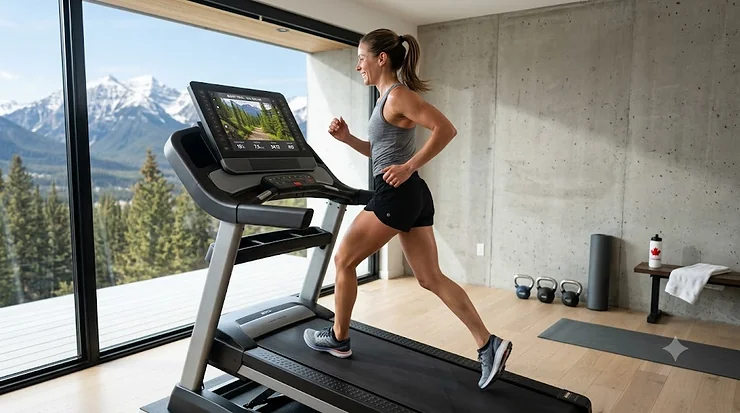
An incline trainer is a treadmill built specifically for steep, adjustable grades — often ranging from a gentle 3% all the way up to a knee-testing 40% — sometimes paired with a decline setting that mimics walking downhill. Unlike a standard treadmill where incline is a minor add-on, on a true incline trainer it’s the entire point.
If you’ve searched for a treadmill weight loss machine and kept landing on the same handful of NordicTrack listings, you’re not imagining things — NordicTrack basically invented this category with its Incline Trainer series. But it’s far from the only credible option in 2026, and depending on your budget, space, and goals, a different machine might actually serve you better. This guide breaks down seven real, currently available incline trainers, what their spec sheets actually mean for your training, and how to avoid the common buying traps that leave people with an expensive clothes rack. According to Canada’s national physical activity guidelines, adults should get at least 150 minutes of moderate-to-vigorous activity weekly — and incline walking is one of the most joint-friendly ways to rack up those minutes without ever stepping outside in a February wind chill.
Quick Comparison Table
Here’s the fast version for anyone who wants the headline numbers before diving into the full breakdown below.
| Model | Max Incline | Price Range (CAD) | Best For |
|---|---|---|---|
| NordicTrack Commercial X22i | 40% (-6% decline) | Around C$4,600-C$5,000 | Extreme hill/mountain training |
| NordicTrack Commercial 1750 | 12% (-3% decline) | C$3,300-C$3,600 | iFit fans wanting incline + decline |
| Sole F85 | 15% (-6% decline) | C$3,000-C$3,300 | No-subscription serious training |
| Horizon 7.8 AT | 15% | C$2,700-C$3,000 | Durability without a screen tax |
| ProForm Carbon Pro 9000 | 12% | C$2,200-C$2,700 | Budget-friendly iFit access |
| XTERRA TRX3500 | 12% | C$1,700-C$1,900 | Best value under C$2,000 |
| Sunny Health & Fitness SF-T7917 | 15 auto levels | Under C$600 | First-time buyers, tight budgets |
Looking at the spread above, the gap between the cheapest and priciest machine isn’t really about quality of construction — it’s about how much incline range and screen technology you’re paying for. The NordicTrack Commercial X22i exists in a category almost by itself, since nothing else here even approaches a 40% grade. Meanwhile, the Sunny Health & Fitness SF-T7917 proves you don’t need to spend C$3,000 to get real auto-incline functionality; you just accept a smaller belt and a shorter warranty in exchange.
💬 Just one click — help others make better buying decisions too!😊
What Is an Incline Trainer?
An incline trainer is a specialized treadmill engineered for a much wider incline range than a standard model — typically 12% to 40%, sometimes paired with a decline setting — so you can simulate real hill and mountain terrain indoors instead of relying on speed alone to raise your heart rate.
The distinction matters more than marketing copy suggests. A regular treadmill usually tops out around 10-12% incline as an afterthought bolted onto a flat-running machine. An incline trainer flips that priority: the incline mechanism is the star feature, engineered with a stronger motor and reinforced frame specifically to handle a body’s weight shifting dramatically uphill or downhill. That structural difference is why true incline trainers tend to cost more than flat treadmills with similar screen sizes — you’re paying for a beefier lift motor and frame geometry, not just a bigger display.
Top 7 Incline Trainers: Expert Analysis
Below is our breakdown of seven real, currently sold incline trainers spanning budget, mid-range, and premium categories, plus a couple of NordicTrack incline trainer alternatives for anyone who’d rather skip the subscription model entirely.
1. NordicTrack Commercial X22i — industry-leading 40% incline
The standout feature here is impossible to ignore: a -6% to 40% incline range that no mainstream competitor in this list gets close to matching. Expanding on that, the grade is steep enough that at its maximum setting you’re functionally power-hiking a mountain trail, not jogging — most testers report needing the side handles just to stay balanced at 40%.
Key specs with real-world meaning: the 4.0 CHP motor keeps torque consistent even at max grade, which matters because a weaker motor tends to bog down exactly when incline resistance is highest. The 22-inch touchscreen and Reflex cushioning system round out a package built around iFit’s trainer-led programming, where instructors remotely adjust your incline and speed to match on-screen terrain in real time.
Based on the spec comparison, this machine is for a narrow but genuine audience: mountain-race trainers, serious hikers prepping for elevation gain, and anyone rehabbing toward high-intensity work who wants a machine they’ll never outgrow. It’s overkill for someone who just wants a treadmill weight loss machine for daily walks — you’re paying for range most walkers will rarely use.
Reviewers consistently note the sheer size and weight of this unit as a real logistical hurdle; multiple owners recommend budgeting for professional delivery since the box alone weighs over 400 lbs. A common complaint in user reviews is that the 22-inch screen is functionally locked to iFit content, so cord-cutters hoping to stream elsewhere will be disappointed.
Pros:
- ✅ Unmatched 40% incline and -6% decline range
- ✅ Commercial-grade 4.0 CHP motor holds power at max grade
- ✅ Large, vivid touchscreen for trainer-led workouts
Cons:
- ❌ Requires an ongoing iFit subscription for full functionality
- ❌ Massive footprint and weight complicate setup and moving
Price and value verdict: expect to pay roughly C$4,600-C$5,000, making this the priciest pick here — justified only if extreme incline is genuinely part of your training plan.
2. NordicTrack Commercial 1750 — best balance of incline and decline
What immediately stands out is the -3% to 12% range that includes true decline, a feature most treadmills in this price bracket skip entirely. That decline setting means downhill-specific muscle loading (think quads and shins) that a flat or incline-only machine simply can’t replicate.
The 4.25 CHP motor is one of the strongest in the Commercial series, and the 16-inch pivoting touchscreen swivels for off-treadmill strength or yoga sessions guided through iFit — a nice bonus if your workout space doubles as a general home gym. RunFlex cushioning claims to cut joint impact by 15-33%, a spec that matters most to anyone managing knee sensitivity.
Here’s what to weigh: this model is the practical middle ground between the X22i’s extremity and cheaper machines’ limited range. What most buyers overlook is that decline training, even at a modest -3%, meaningfully changes muscle recruitment patterns compared to flat or incline-only walking, which is valuable if your goal is balanced lower-body conditioning rather than pure calorie burn.
Aggregated review sentiment is largely positive on build quality and motor quietness, though a recurring theme in user feedback is frustration that Bluetooth phone pairing on newer units requires an active iFit membership — something older models didn’t demand.
Pros:
- ✅ Rare true decline capability alongside 12% incline
- ✅ Strong 4.25 CHP motor built for daily heavy use
- ✅ Swiveling touchscreen useful for off-treadmill workouts
Cons:
- ❌ iFit subscription effectively required for full value
- ❌ Large 312-lb frame with a sizable permanent footprint
Price and value verdict: typically C$3,300-C$3,600, and given the incline-plus-decline combo, it’s a reasonable middle purchase for buyers who want more than a budget machine without X22i money.
3. Sole F85 — best subscription-free serious trainer
The standout feature is right there in the marketing, and it’s actually true: no monthly subscription is required to unlock the machine’s full functionality, unlike its iFit-dependent rivals. That alone can save upward of C$500-C$700 over three years compared to a subscription-locked competitor.
Specs with real-world meaning: the 4.0 CHP motor pairs with a 15% incline and -6% decline range, plenty for serious hill and downhill work without venturing into X22i territory. The 15.6-inch touchscreen supports Netflix, YouTube, and screen mirroring natively, so you’re not locked into one training ecosystem.
Honest take: this is the trainer for people who resent the idea of paying monthly for a machine they already own outright. Based on the spec comparison, the F85’s 375-lb weight capacity and 2.75-inch rollers also make it a stronger long-term bet for heavier users or households with multiple people sharing one machine daily.
Reviewers consistently note the CushionFlex deck as noticeably gentler on joints than competitors at this price, with several users specifically mentioning it as manageable during knee rehab. A common complaint is that the incline motor, while effective, produces a distinct mechanical shift sound during steep transitions that some find louder than expected.
Pros:
- ✅ Full functionality with zero required subscription cost
- ✅ Lifetime frame and motor warranty, unusually generous
- ✅ 375-lb capacity supports larger or multi-user households
Cons:
- ❌ 15% max incline falls well short of NordicTrack’s flagship
- ❌ Console button layout makes rapid interval changes fiddly
Price and value verdict: around C$3,000-C$3,300, positioning it as excellent value once you factor in the avoided subscription cost over time.
4. Horizon 7.8 AT — best no-screen durability pick
What stands out immediately is the absence of a built-in touchscreen entirely — a deliberate design choice that keeps the price down while funnelling budget into the mechanical components instead. Expanding on that trade-off, Horizon bet on QuickDial speed and incline controls instead of a display, letting you adjust both without breaking stride.
Key specs: a 4.0 CHP motor and 500-lb thrust incline motor combine with a 15% max grade (no decline) and an unusually wide 22-inch by 60-inch deck. The 2.4-inch tapered rollers are on the larger end for this price tier, which reviewers tie directly to smoother, quieter long-term operation.
Here’s what the spec sheet won’t tell you, but user reports suggest: because there’s no proprietary screen, the 7.8 AT pairs cleanly with Zwift, the Peloton app, or a simple tablet propped on the included holder — appealing to anyone who already has a preferred training app and doesn’t want to pay for a second one bundled into hardware.
Aggregated customer sentiment is strong on stability at higher speeds and incline; several reviewers specifically mention feeling secure even at higher body weights during steep inclines. A recurring concern flagged in independent reviews is that under certain heavy-load and high-incline combinations, some users have reported the belt behaving unpredictably — worth checking current safety notices before buying secondhand or off-lease units.
Pros:
- ✅ No mandatory subscription, works with any training app
- ✅ Extra-wide 22-inch by 60-inch deck for taller runners
- ✅ Lifetime warranty on frame and motor
Cons:
- ❌ No decline setting, unlike some direct competitors
- ❌ Basic 9.3-inch display lacks touchscreen convenience
Price and value verdict: typically C$2,700-C$3,000, a fair ask for the motor and deck size, especially if you’re not paying for a screen you won’t fully use.
5. ProForm Carbon Pro 9000 — best budget-friendly iFit access
The standout here is affordability paired with genuine smart-training features — a 16-inch HD touchscreen and full iFit compatibility at a price meaningfully below NordicTrack’s flagship incline trainers. Expanding on that, ProForm shares corporate ownership with NordicTrack, so the underlying iFit ecosystem and workout library are functionally identical.
Specs with real-world meaning: a 3.6 CHP motor drives a 0-12% incline range (no decline), reasonable for general fitness and moderate hill simulation but a clear step down from the Sole or Horizon models above. ProShox cushioning and a CoolAire fan round out the comfort features.
Based on the spec comparison, this is the pick for someone who wants the iFit training experience — automatic trainer-led incline adjustments, global scenic runs, live classes — without committing NordicTrack Commercial-series money. What most buyers overlook is that the 12% ceiling means this machine won’t satisfy anyone chasing serious hill-training gains long-term; it’s built for general cardio and moderate incline variety, not extreme grade work.
Reviewers consistently note that ordering directly from ProForm’s site tends to beat Amazon pricing, an unusual pattern worth checking before you buy. A common complaint in user reviews centers on inconsistent customer service response times when parts need replacing under warranty.
Pros:
- ✅ Full iFit compatibility at a genuinely accessible price
- ✅ 16-inch touchscreen with pivoting for off-treadmill workouts
- ✅ ProShox cushioning noticeably softens impact
Cons:
- ❌ 12% max incline, no decline capability
- ❌ Quality control complaints appear more often than premium rivals
Price and value verdict: roughly C$2,200-C$2,700, making it one of the more approachable entry points into smart, trainer-led incline workouts.
6. XTERRA TRX3500 — best value without a screen
What immediately stands out is the price-to-spec ratio: a 350-lb weight capacity, 60-inch by 20-inch deck, and 12% power incline for a price that undercuts nearly every screen-equipped competitor on this list. Expanding on that, XTERRA achieves this by skipping the touchscreen entirely in favour of a simple LCD console with 30 built-in programs.
Key specs: the 3.0 HP motor is modest compared to the commercial-grade units above, meaning it’s best suited to walking and light jogging rather than sustained high-speed running. Bluetooth FTMS connectivity lets it pair with Zwift or similar apps despite the basic display, which is a genuinely useful feature at this price tier.
Honest analytical take: this is a smart pick for anyone who wants real auto-incline functionality and a full-size deck without paying for a screen or subscription they’d rarely use. The spec comparison suggests it’s a poor fit for dedicated runners logging serious weekly mileage, since the motor and rollers simply aren’t built for that kind of sustained load.
Aggregated review sentiment is largely favourable on value, with multiple reviewers explicitly comparing it to machines costing several hundred dollars more. A consistent theme in feedback is that the included fan underperforms compared to the rest of the build, and some users note assembly took longer than expected due to unclear instructions.
Pros:
- ✅ Full-size 60-inch by 20-inch deck at a budget price
- ✅ Genuine 12-level power incline with handrail controls
- ✅ Lifetime frame and motor warranty
Cons:
- ❌ 3.0 HP motor limits it to walking and light jogging
- ❌ No touchscreen or streaming entertainment options
Price and value verdict: around C$1,700-C$1,900, arguably the strongest dollar-for-incline ratio in this entire lineup.
7. Sunny Health & Fitness SF-T7917 — best entry-level starter pick
The standout feature for a machine at this price is simply that auto-incline exists at all — 15 levels of automatic incline adjustment on a treadmill priced well under C$600. Expanding on that, most competitors in this budget tier still rely on manual incline pins you have to physically reposition, so automated adjustment here is a genuine step up.
Specs with real-world meaning: a compact 19-inch by 52-inch deck and roughly 2.0 peak HP motor keep speeds capped around 10 mph, and the 265-lb weight capacity reflects the lighter-duty construction throughout. Shock absorption in the deck helps offset the shorter warranty coverage typical of budget machines.
Based on the spec comparison, this is squarely a starter machine — appropriate for someone testing whether incline training fits their routine before committing thousands to a commercial-grade unit, or for a smaller space where a full-size deck isn’t practical. What the spec sheet won’t tell you is that the narrower belt can feel tight for taller users or anyone with a longer running stride, so it suits walkers and casual joggers far better than committed runners.
Reviewers consistently note the SunnyFit app as a pleasant surprise for a machine at this price point, offering guided programming without a paywall. A common theme in feedback is that the shorter parts warranty becomes a real consideration for anyone planning heavy daily use.
Pros:
- ✅ Genuine auto-incline at an entry-level price point
- ✅ Compact footprint suits smaller apartments or condos
- ✅ Free SunnyFit app access, no subscription required
Cons:
- ❌ Narrower deck and lower weight capacity than rivals
- ❌ Shorter warranty coverage reflects lighter-duty parts
Price and value verdict: typically under C$600, making it the clear starter pick for anyone unsure they’ll stick with incline training long-term.
Top 7 Incline Trainers: Specs, Price & Best For
| Model | Motor | Incline Range | Best For |
|---|---|---|---|
| NordicTrack Commercial X22i | 4.0 CHP | -6% to 40% | Extreme grade training |
| NordicTrack Commercial 1750 | 4.25 CHP | -3% to 12% | Incline plus decline variety |
| Sole F85 | 4.0 CHP | -6% to 15% | Subscription-free serious training |
| Horizon 7.8 AT | 4.0 CHP | 0-15% | No-screen durability |
| ProForm Carbon Pro 9000 | 3.6 CHP | 0-12% | Budget iFit access |
| XTERRA TRX3500 | 3.0 HP | 0-12% | Best value under C$2,000 |
| Sunny Health & Fitness SF-T7917 | ~2.0 peak HP | 0-15 auto levels | First-time budget buyers |
Comparing motors side by side makes one thing obvious: horsepower generally tracks with price, and that’s not a coincidence — lifting a person’s body weight up a 15-40% grade repeatedly is far more mechanically demanding than flat-belt running, which is why budget incline motors max out lower and slower. If you’re planning daily use above 15% incline, the Sole F85, Horizon 7.8 AT, or NordicTrack models are the only entries here built to sustain that stress long-term without premature wear.
Practical Usage Guide: Getting the Most From Your First 30 Days
Unboxing an incline trainer is only step one — how you use it in the first month determines whether it becomes a habit or a coat rack. Start by leveling the machine properly; even a slightly uneven floor exaggerates vibration once you’re inclining past 10%, so use the adjustable feet before your first workout, not after you notice wobble.
Resist the urge to jump straight to max incline. Most first-time users underestimate how much harder a 15% grade feels compared to flat walking at the same speed, so spend your first week or two at 3-6% incline to let your calves and Achilles tendons adapt gradually. A common mistake in the first 30 days is treating incline like speed — cranking both up simultaneously — which spikes injury risk far faster than raising either variable alone.
Lubricate the belt on schedule according to your manual, typically every 150-300 miles depending on the model; incline mechanisms put extra lateral stress on belts compared to flat treadmills, so skipping this step shortens lifespan noticeably. Finally, build a simple weekly rhythm: two to three incline-focused sessions paired with one flat recovery walk keeps your joints from feeling like every single workout is uphill.
Real-World Scenarios: Which Incline Trainer Fits Your Life
If you’re a 45-year-old suburban commuter with a bad knee and a doctor’s recommendation for low-impact cardio, the Sole F85 or Horizon 7.8 AT make more sense than the X22i — you want cushioning and moderate incline range, not extreme grades that stress joints you’re actively protecting.
If you’re a 24-year-old training for a mountain ultramarathon with unlimited garage space and a real budget, the NordicTrack Commercial X22i‘s 40% incline is the only machine here that genuinely replicates the terrain you’ll face on race day, and the iFit trainer-led programming can simulate specific known courses.
If you’re a first-apartment renter testing whether treadmill workouts will actually stick before investing serious money, the Sunny Health & Fitness SF-T7917 or XTERRA TRX3500 let you build the habit affordably, with room to upgrade later once you know incline training is a keeper rather than a New Year’s resolution that fizzles by February.
Problem → Solution: Common Incline Trainer Frustrations
Problem: Sharp calf or shin pain after early incline sessions. This is usually a sign you jumped grade too fast. Solution: dial back to under 8% incline for two full weeks and let tendons adapt before progressing, regardless of which model above you’re using.
Problem: The machine feels unstable at steep grades. Models like the Horizon 7.8 AT and Sole F85 address this with wider decks and heavier frames; if your current machine wobbles at incline, check floor leveling first, then consider whether a narrower budget deck like the Sunny Health & Fitness SF-T7917 has simply reached its structural limit for your body weight and pace.
Problem: Subscription fatigue from iFit-dependent machines. If you’re locked into a NordicTrack or ProForm unit and resent the monthly cost, most models retain a manual mode that skips the automatic trainer-led adjustments but still lets you control incline and speed yourself — you lose the guided experience but keep full core functionality.
Problem: Belt slipping or squeaking during incline transitions. This nearly always traces back to skipped lubrication maintenance, which every model here requires on a schedule tied to mileage, not calendar time.
How to Choose the Best Incline Trainer
- Define your actual incline needs first. If you’re not training for mountain terrain specifically, 12-15% covers the vast majority of fitness and weight-loss goals — save your money and skip the 40% machines.
- Measure your space before falling for a screen. Non-folding incline trainers like the X22i need roughly seven feet of permanent floor space; folding models like the Sole F85 or ProForm Carbon Pro 9000 reclaim that footprint when you’re done.
- Decide whether decline matters to you. Only the NordicTrack Commercial 1750 and Sole F85 in this lineup offer true decline, useful for balanced muscle loading but not essential for most weight-loss-focused buyers.
- Price in the subscription, not just the machine. An iFit-dependent unit at C$2,200 can cost more over three years than a subscription-free model priced C$700 higher upfront.
- Match motor power to your actual pace. Walkers and power-walkers can get by with 3.0 HP; anyone planning to jog or run regularly at incline should look toward the 3.6-4.25 CHP range.
- Check the weight capacity against your real body weight, not a rounded estimate. Motors and frames are engineered around that number, and running near the ceiling shortens component life.
- Read the warranty fine print on labor, not just frame coverage. A lifetime frame warranty means little if the labor callout to fix an incline motor costs hundreds out of pocket after year one.
Incline Trainer vs Treadmill: What’s the Real Difference
A standard treadmill and a dedicated incline trainer look similar at a glance, but the engineering underneath diverges sharply once you understand what each is optimized for. A flat-focused treadmill’s motor and frame are built primarily around sustaining speed — its incline function, usually capped around 10-12%, exists as a secondary feature rather than the core design goal.
An incline trainer flips that priority entirely. The lift mechanism, frame reinforcement, and often the motor’s torque curve are engineered specifically around holding steady performance while your body weight shifts dramatically up a steep grade. That’s why, based on the spec comparison across this guide, incline trainers generally cost more per comparable screen size than flat treadmills — you’re paying for structural engineering most buyers never see, not just marketing.
For weight-loss and general fitness goals, the difference matters less than you’d think; a treadmill with a genuine 12-15% incline like the ProForm Carbon Pro 9000 or XTERRA TRX3500 gets you most of the calorie-burn and muscle-engagement benefits. The gap becomes decisive only once you’re chasing grades above 15%, where a true incline trainer’s stronger motor and frame are the only things standing between you and premature mechanical wear — or a machine that simply can’t hit the number you need.
Calorie Burn on an Incline: What the Research Actually Says
The oft-repeated claim that incline walking burns “five times” the calories of flat walking traces back to research NordicTrack itself cites, including a widely referenced study published through the National Center for Biotechnology Information examining energy expenditure across incline gradients. The real-world takeaway is more nuanced than the marketing headline: calorie burn does increase substantially with grade, but the exact multiplier depends heavily on your walking speed, body weight, and the specific incline percentage.
What the research reliably supports is that raising incline is one of the most efficient ways to increase intensity without increasing joint-jarring speed — you get a harder cardiovascular workout at a walking pace instead of needing to run to hit the same heart rate zone. That’s the core appeal for anyone searching specifically for calorie burn incline training strategies: you’re trading speed-based intensity for grade-based intensity, which tends to be gentler on knees and ankles over the long term.
Practically, this means a 45-minute walk at 10-15% incline can rival the calorie expenditure of a much faster flat-belt jog, without the repetitive impact stress that comes with higher-speed running. For anyone managing joint concerns while still chasing real calorie deficits, this is precisely why incline trainers occupy their own category rather than functioning as a treadmill afterthought.
Incline Trainers for Weight Loss
If weight loss is your primary driver, the incline trainer for weight loss conversation really comes down to consistency, not maximum grade. A machine you’ll actually use five days a week at a moderate 8-12% incline outperforms one you dread because it’s intimidating or takes up too much space to set up quickly.
For this specific goal, the Sole F85 and Horizon 7.8 AT hit a practical sweet spot — both offer enough incline range (15%) to meaningfully raise intensity without requiring iFit subscription costs that can strain a budget already stretched by gym alternatives or meal planning. The ProForm Carbon Pro 9000 and XTERRA TRX3500 are equally reasonable choices if guided programming or price sensitivity matters more to your specific situation.
What most buyers overlook is that pairing incline walking with basic dietary awareness compounds results faster than either strategy alone. A treadmill weight loss machine, however capable, is one input into a broader equation involving nutrition, sleep, and consistency — the Canadian 24-Hour Movement Guidelines frame physical activity as one piece of a larger daily pattern that includes limiting sedentary time and prioritizing sleep quality, both of which influence weight outcomes as much as the workout itself.
High-Intensity Incline Workouts: Building Real HIIT Sessions
A high intensity incline workout doesn’t require sprinting — it requires alternating between demanding and recovery grades in structured intervals. A simple starting protocol: two minutes at a challenging 10-12% incline at a brisk walking pace, followed by ninety seconds at 2-3% incline for active recovery, repeated for six to eight rounds.
Models with quick-adjust handlebar controls, like the Horizon 7.8 AT and XTERRA TRX3500, genuinely shine here because you can shift incline mid-stride without breaking rhythm to fumble with console buttons. iFit-enabled machines like the NordicTrack Commercial 1750 take this further with automatic trainer-led interval programming that adjusts incline for you, which removes the guesswork for anyone new to structured interval training.
The physiological logic is straightforward: alternating incline intensity elevates heart rate into higher training zones without the joint-pounding impact of sprint intervals on a flat belt, making it a genuinely lower-injury-risk path to the same cardiovascular adaptations serious interval training is meant to produce.
Best NordicTrack Incline Trainer Alternative Options
For anyone specifically seeking a NordicTrack incline trainer alternative — usually driven by subscription fatigue or a preference for owning hardware outright — two models in this guide stand out clearly. The Sole F85 matches NordicTrack’s Commercial-tier build quality and incline range while requiring zero subscription for full functionality, making it the closest true one-to-one substitute.
The Horizon 7.8 AT takes a different approach entirely, skipping the smart-screen ecosystem altogether in favour of mechanical durability and app-agnostic Bluetooth connectivity — a better fit if you already pay for Zwift or Peloton’s app and don’t want a third overlapping subscription. Both alternatives sacrifice NordicTrack’s extreme 40% incline ceiling, but for the vast majority of buyers whose real training needs top out around 15%, that trade-off is a non-issue rather than a compromise.
Common Mistakes When Buying an Incline Trainer
The most frequent mistake is buying based on incline percentage alone without checking motor horsepower — a machine with a 15% incline ceiling and an underpowered 2.5 HP motor will strain and shorten its own lifespan far faster than a well-matched 4.0 CHP unit at the same grade. Motor and incline range need to scale together, not be evaluated separately.
A second common error is ignoring total cost of ownership. An iFit-dependent machine’s sticker price looks competitive until you add three years of C$39 monthly subscriptions — often pushing total spend well past a subscription-free alternative that cost more upfront. Buyers also frequently underestimate space requirements, measuring only the folded footprint and forgetting that non-folding incline trainers like the X22i demand permanent floor real estate regardless of screen size.
Finally, many first-time buyers skip checking weight capacity against their actual body weight plus any weighted vest or gear they plan to train with, which matters more on incline trainers than flat treadmills because grade adds real mechanical load the motor has to overcome continuously, not just at startup.
Long-Term Cost & Maintenance
Total cost of ownership on an incline trainer extends well beyond the purchase price. Belt lubrication, typically needed every 150-300 miles, costs little in materials but real time if neglected leads to belt replacement — often C$100-C$200 in parts alone. Incline motors, given the extra mechanical stress of lifting body weight repeatedly, tend to be the first major component to eventually need service on any model, regardless of brand.
Subscription-dependent machines like the NordicTrack and ProForm units carry the largest hidden long-term cost: at roughly C$39 monthly, an iFit membership adds close to C$1,400 over three years, which should factor directly into any price comparison against subscription-free alternatives like the Sole F85 or Horizon 7.8 AT. Warranty terms also vary meaningfully — lifetime frame and motor coverage is common across this lineup, but labor coverage often drops to just one year, meaning a service call in year two can carry real out-of-pocket cost even on a machine still technically under warranty.
FAQ
❓ What incline percentage actually burns the most calories for weight loss?
❓ Is an incline trainer better than a treadmill for weight loss?
❓ Do I need an iFit subscription to use a NordicTrack incline trainer?
❓ How steep should beginners start on an incline trainer?
❓ Can incline training replace running for cardio fitness?
Conclusion
Choosing the best incline trainer really comes down to being honest about how steep you’ll actually train, not how steep you could theoretically go. The NordicTrack Commercial X22i earns its price tag only if 40% grades are genuinely part of your plan; for nearly everyone else chasing weight loss, general fitness, or joint-friendly cardio, a 12-15% machine like the Sole F85, Horizon 7.8 AT, or ProForm Carbon Pro 9000 delivers the real-world benefits without the extra cost of range you’ll rarely touch.
Budget shoppers shouldn’t feel like they’re settling, either — the XTERRA TRX3500 and Sunny Health & Fitness SF-T7917 prove that genuine auto-incline functionality has become accessible well below the C$2,000 mark. Whichever machine fits your space, budget, and goals, the underlying physiology holds steady across every model here: incline is one of the most efficient, joint-conscious ways to increase workout intensity without needing to run faster or longer than your body is ready for.
✨ Don’t Miss These Exclusive Deals!
🔍 Take your incline training to the next level with these carefully selected machines. Click on any highlighted product above to check current pricing and availability on amazon.ca. These treadmills will help you build the joint-friendly, calorie-torching routine your future self will thank you for!
Recommended for You
- Budget Treadmill 2.5 HP: 7 Honest Picks for Canada (2026)
- 7 Best Treadmills for Heavy Runners in 2026: Built Tough
- 7 Best DC Motor Treadmill for Walking Picks in 2026
Disclaimer: This article contains affiliate links. As an Amazon Associate, I earn from qualifying purchases. If you purchase products through these links, we may earn a small commission at no additional cost to you.
✨ Found this helpful? Share it with your friends! 💬🤗
