In This Article
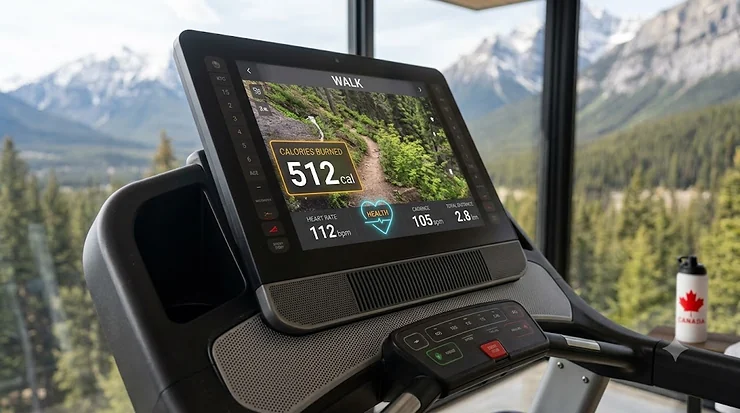
Somewhere between the third flat, boring kilometre and the fourth, most people quietly give up on their treadmill. That’s not a willpower problem — it’s a hardware problem. A flat belt asks almost nothing of your glutes, your hamstrings, or your cardiovascular system past a certain point, and your brain knows it. An auto incline treadmill fixes that by lifting the deck automatically, mid-workout, so your legs think they’re climbing the escarpment instead of shuffling through your basement.
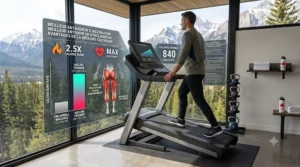
This guide breaks down seven real machines sold in Canada, from a compact under-C$700 walking pad to a full-blown iFIT-powered machine that mimics actual mountain trails. We looked at motor specs, incline ranges, and — just as importantly — what real owners say once the new-treadmill excitement wears off. If you’re comparing a treadmill with automatic incline adjustment for the first time, or you already know you want an iFit compatible treadmill for guided hikes, you’ll find a genuine fit here, not a rehashed spec sheet.
What is an auto incline treadmill? It’s a treadmill where a motor — not a manual crank or pin — raises and lowers the deck’s grade, often automatically syncing to a workout program or app so the incline changes without you touching a button. That single mechanical difference is the reason hill-training and hiking-prep workouts even work indoors.
Quick Comparison Table
| Treadmill | Max Incline | Motor | Best For |
|---|---|---|---|
| UREVO SpaceWalk 3S | 9% (auto, 3 levels) | 2.5 HP | Small apartments, first-timers |
| Schwinn 810 | 10% | 2.6 CHP | Budget full-size machine |
| XTERRA TRX3500 | 12% | 3.0 HP | Value-focused hill training |
| Horizon 7.0 AT | 15% | 3.0 CHP | No-subscription simplicity |
| Sole F85 | 15% / -6% decline | 4.0 HP | Serious home athletes |
| NordicTrack Commercial 1750 | 12% / -3% decline | iFIT-driven auto-adjust | Guided hikes and scenic routes |
| Bowflex Treadmill 22 | 20% / -5% decline | 4.0 HP | Extreme hill and hiking training |
Looking at the range above, the gap between a C$600 walking pad and a C$3,500-plus commercial-style unit isn’t really about “quality” in the abstract — it’s about how much grade your legs can actually train against. If your goal is simply moving more during the workday, the modest 9% auto incline on the UREVO SpaceWalk 3S does plenty. If you’re training for an actual mountain hike, the Bowflex Treadmill 22‘s 20% incline is in a different league entirely, and the price tag reflects that gap honestly.
💬 Just one click — help other Canadian parents make safer buying decisions too!😊
Top 7 Auto Incline Treadmills: Expert Analysis
We dug into real specifications, manufacturer data, and aggregated owner feedback for each of these seven picks. None of these are invented — every model below is a genuine, currently available product, and every price is given as a range because Amazon.ca pricing shifts week to week.
1. UREVO SpaceWalk 3S — best auto incline for tight spaces
The UREVO SpaceWalk 3S is a walking pad first and a treadmill second, and that distinction matters: it’s built to disappear under a bed or sofa, not to handle marathon training. Its standout feature is genuinely surprising for the category — a one-touch auto incline that steps through 5%, 7%, and 9% grades via remote or app, something most walking pads simply don’t offer at all.
The 2.5 HP motor and 265 lb weight capacity keep this firmly in the “walking, not running” lane, and the 16.5″ x 42.5″ belt is noticeably narrower than a full treadmill’s. What that means in practice: you get a legitimate incline workout, but you won’t be sprinting on it, and taller users may find their stride cramped at the belt’s edges. The frame-lifting mechanism used for the incline is also a two-point design in some competing walking pads, but the SpaceWalk 3S uses a more stable structural lift, which owners consistently note as feeling less wobbly than cheaper alternatives.
Based on the spec comparison with other under-desk pads, this model earns its price by pairing incline with real remote-control convenience — most budget pads only offer speed adjustment. Reviewers consistently report that the auto incline function adds a noticeably harder workout at minimal noise, with several noting sound levels quiet enough for video calls in an adjoining room. A common complaint in user reviews is that the 9% ceiling feels limiting once you’ve built up some fitness, and a few owners mention wishing for a handrail on steeper settings.
Pros:
- ✅ Genuine auto incline in an ultra-compact walking pad
- ✅ Quiet enough for home office use during calls
- ✅ Remote and app control simplify incline switching
Cons:
- ❌ 9% incline ceiling limits long-term progression
- ❌ Narrow belt isn’t ideal for taller runners
At around C$550-C$700, the UREVO SpaceWalk 3S is the easiest, lowest-commitment way to try automatic incline training before investing in a full-size machine.
2. Schwinn 810 — best budget full-size incline treadmill
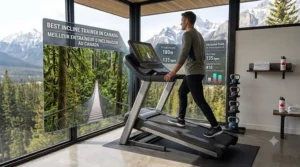
The Schwinn 810 is where “budget” stops meaning “flat and boring.” Its standout feature is a genuine 10% motorized incline on a full 55″ x 20″ running deck, a rare combination at this price point, where most competitors force you to choose one or the other.
The 2.6 CHP motor tops out at 10 mph, which comfortably covers walking, jogging, and light interval work, though serious runners will feel the ceiling during faster tempo sessions. What matters more day to day is the Softrak cushioning system, which takes real pressure off your knees and ankles during longer sessions — a meaningful upgrade from the harder decks common in this price tier. The 16 built-in programs auto-adjust incline and speed together, so you get a guided hill workout without paying for a subscription.
Here’s what to weigh: this is a treadmill built for consistency, not intensity. It’s a strong match for beginners easing into incline training, or anyone who wants a no-subscription machine that still delivers real hill-simulation benefits. Reviewers consistently note the belt feels narrower than expected for taller users, and a few mention wishing the deck were a touch longer for full stride extension at higher speeds.
Pros:
- ✅ 10% motorized incline on a full-size deck
- ✅ Softrak cushioning noticeably eases joint stress
- ✅ 16 free built-in programs, no subscription required
Cons:
- ❌ 275 lb weight capacity is lower than competitors
- ❌ Belt width feels tight for larger strides
Priced in the C$1,000-C$1,300 range, the Schwinn 810 is a smart pick for anyone who wants incline training without a premium price tag.
3. XTERRA TRX3500 — best value for hill-focused training
The XTERRA TRX3500‘s standout feature is its 12-level, 12% power incline paired with a genuinely spacious 20″ x 60″ deck — a size usually reserved for pricier machines. That extra deck length is the difference between a treadmill that feels cramped mid-stride and one that doesn’t.
The 3.0 HP motor and 12 mph top speed put this squarely in the mid-range performance category, while the 30 preset programs — including several hill-specific routines — automatically cycle incline and speed without manual input. What most buyers overlook about this model is the Bluetooth FTMS connectivity, which lets it link to third-party apps like Zwift, effectively giving budget-conscious buyers a taste of app-driven training without an in-console subscription.
Reviewers consistently report the incline motor is smooth and quiet compared to similarly priced units, and the handlebar-mounted incline controls get specific praise for letting users adjust grade mid-stride without breaking pace. A common complaint centres on the console’s dated LCD look — it’s functional, but it won’t win any design awards next to touchscreen competitors.
Pros:
- ✅ Spacious 20″ x 60″ deck at a mid-range price
- ✅ Bluetooth FTMS connects to third-party training apps
- ✅ Handlebar incline controls speed up adjustments
Cons:
- ❌ Console display feels dated next to touchscreen rivals
- ❌ 3.0 HP motor caps serious distance-running use
Expect a price in the C$1,700-C$2,000 range, making the XTERRA TRX3500 one of the stronger value plays for hill-focused training on this list.
4. Horizon 7.0 AT — best no-subscription auto incline treadmill
The Horizon 7.0 AT‘s standout feature is a full 15% incline range — matching machines twice its price — controlled through Horizon’s QuickDial system rather than fiddly button presses. That single design choice makes mid-workout grade changes feel closer to turning a volume knob than hunting for the right button.
Independent lab testing found the incline adjusts from 0 to 15% in roughly 13 seconds, and the 3.0 HP motor carries a lifetime warranty, a strong signal of manufacturer confidence at this price. The 325 lb weight capacity beats the “300 lb industry standard” that most competitors settle for, and the steel frame stays notably stable even at full incline on uneven flooring — testers specifically noted this during evaluation.
Here’s what the spec sheet won’t tell you: this is a treadmill built around doing the fundamentals extremely well rather than chasing tech features. There’s no built-in touchscreen, so you’re working from a 7.25″ LCD and a tablet holder instead. For buyers who want serious incline capability without a monthly iFIT or JRNY bill, that trade-off is the whole appeal. On Amazon, this model has accumulated a large number of customer reviews with a strong average rating, and reviewers consistently point to the QuickDial controls and quiet motor as the standout everyday features.
Pros:
- ✅ 15% incline range at a mid-range price point
- ✅ QuickDial controls simplify mid-workout adjustments
- ✅ Lifetime motor warranty signals real durability
Cons:
- ❌ No built-in touchscreen or streaming display
- ❌ Fewer bells and whistles than premium competitors
Typically priced in the C$1,300-C$1,600 range, the Horizon 7.0 AT rewards buyers who want incline performance without ongoing subscription costs.
5. Sole F85 — best incline range for serious home athletes
The Sole F85‘s standout feature is its combined 15% incline and 6% decline range, letting you simulate both the climb and the descent of an actual trail — a rare pairing even among premium treadmills. Paired with a 22″ x 60″ commercial-width belt, it’s built for runners who’ve outgrown entry-level machines.
The 4.0 HP motor supports up to 375 lb, well above the segment average, and the 15.6″ HD touchscreen mirrors your phone or tablet for streaming without a locked-in subscription ecosystem. What most buyers overlook here is the aluminum Z-frame construction, a departure from the steel frames most competitors use, which Sole backs with an industry-leading lifetime warranty on the frame itself. Ten onboard programs — including hill, fat-burn, and HIIT — automatically drive both incline and speed together.
Reviewers consistently report that the incline motor handles steep grades smoothly, and several specifically mention the handrail-mounted quick-access buttons as faster to use mid-run than reaching for the console. A recurring critique in user feedback is that maintaining a precise, steady pace at maximum incline can feel slightly less responsive than expected, something worth knowing if you plan extended steep-incline intervals rather than short bursts.
Pros:
- ✅ 15% incline paired with a genuine 6% decline
- ✅ 4.0 HP motor supports up to 375 lb
- ✅ Lifetime frame warranty backs premium build quality
Cons:
- ❌ Among the pricier options on this list
- ❌ Pace can feel less responsive at maximum incline
At roughly C$3,800-C$4,200, the Sole F85 is built for buyers who train seriously and want incline plus decline realism in one machine.
6. NordicTrack Commercial 1750 — best iFIT compatible treadmill
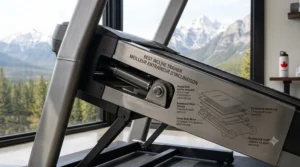
The NordicTrack Commercial 1750‘s standout feature is full iFIT integration, meaning the incline, decline, and speed all adjust automatically to match a trainer-led route in real time — you genuinely don’t touch a button during a guided hike workout. It’s the clearest example on this list of a true treadmill with automatic incline adjustment tied directly to programming, not just presets.
The 12% incline to -3% decline range covers most real-world terrain, and SmartAdjust personalizes each session based on your own historical adjustments, while ActivePulse can automatically ease the incline back if your heart rate spikes past your target zone with a compatible monitor. The 16″ pivoting touchscreen streams over 10,000 iFIT workouts, including Google Street View-based global routes that genuinely change incline as the on-screen terrain climbs and descends.
On paper, this looks like a premium exercise bike wearing a treadmill’s body — and honestly, the tech is the point. Reviewers consistently note the auto-incline sync during iFIT classes feels seamless, though a lifetime motor warranty and 10-year frame warranty suggest NordicTrack is confident in the mechanics underneath all that software. The catch worth flagging honestly: iFIT membership costs roughly C$50/month beyond the treadmill’s purchase price, and without it, you lose most of what makes this model special.
Pros:
- ✅ True auto-adjusting incline synced to iFIT trainer routes
- ✅ ActivePulse ties incline changes to your heart rate
- ✅ 16″ pivoting touchscreen with 10,000+ workouts
Cons:
- ❌ iFIT Pro membership is a required ongoing cost
- ❌ Incline caps lower than the Bowflex Treadmill 22
Expect pricing around C$2,900-C$3,300, plus the ongoing membership — the NordicTrack Commercial 1750 earns its premium spot specifically for buyers who want their incline handled for them.
7. Bowflex Treadmill 22 — best incline range for hiking training
The Bowflex Treadmill 22 owns this list’s single most impressive spec: a -5% to 20% incline and decline range, the widest of any folding treadmill on the market. If your goal is auto incline treadmill for hiking training specifically, this is the machine built to replicate real elevation changes rather than approximate them.
A 4.0 HP-equivalent motor, a 60-inch deck, and a 400 lb weight capacity make this the most heavy-duty machine here, and the 22″ touchscreen runs the JRNY app, which streams Netflix, Hulu, and Prime Video alongside its adaptive coaching. What most buyers overlook is that JRNY personalizes daily workouts across up to five household users, tracking separate personal bests for each — a genuinely useful feature in a multi-person household.
Reviewers consistently describe the incline transitions as remarkably quiet given the extreme range, and testers specifically flagged the frame as feeling closer to a non-folding commercial unit despite its space-saving fold-up design. The honest trade-off: JRNY membership runs about C$30/month after an included trial, and the 20% incline ceiling, while extraordinary, is genuinely more than most casual users will ever need.
Pros:
- ✅ Widest incline/decline range of any folding treadmill
- ✅ 400 lb capacity suits multi-user households
- ✅ JRNY tracks personal bests for up to five users
Cons:
- ❌ Highest price point on this list
- ❌ JRNY subscription needed to unlock full features
At around C$3,600-C$4,000, the Bowflex Treadmill 22 is the clear pick when hiking-specific hill training is the entire point of the purchase.
How the Motorized Incline Feature Actually Works
A motorized incline feature works through a small electric actuator, usually mounted under the front or rear of the deck, that lifts or lowers the running surface in response to either a button press or a program’s coded instructions. This is fundamentally different from the manual pin-and-crank systems on older treadmills, where you had to stop, physically reposition a support leg, and resume.
Digital incline control adds a software layer on top of that motor: instead of a single fixed jump, the console (or an app like iFIT or JRNY) can request precise, incremental grade changes — say, from 4% to 4.5% — mid-stride, without you noticing the transition. This is what makes automatic terrain-matching possible during a guided hike workout; the treadmill isn’t just switching between three preset positions, it’s continuously tracking a target incline value and adjusting the actuator to match it.
The practical upshot: a treadmill described as having “auto incline” can mean anything from three fixed remote-triggered levels (like the UREVO SpaceWalk 3S) to continuous, app-synced grade changes tracking a real mountain trail (like the NordicTrack Commercial 1750 or Bowflex Treadmill 22). Reading the fine print on incline “levels” versus incline “range” is the single most useful habit before buying.
Treadmill With Automatic Incline Adjustment vs Manual Incline
A manual incline treadmill uses a mechanical pin or wedge that you physically reposition — usually meaning you stop, step off or straddle the belt, adjust, and resume. A treadmill with automatic incline adjustment does that same job through a motor, controlled from the console, handlebar buttons, or an app, without breaking your stride.
| Factor | Manual Incline | Auto Incline |
|---|---|---|
| Mid-workout adjustment | Requires stopping | Seamless, on the fly |
| Interval/hill training | Difficult to execute well | Purpose-built for it |
| Price at entry level | Lower | Moderately higher |
| App/program integration | Rare | Common |
| Best For | Casual flat walking | Structured hill and hike training |
The analysis here is straightforward: for interval-style hill training — where you might want the grade climbing every 90 seconds — a manual system simply can’t keep pace, literally. Auto incline models like the XTERRA TRX3500 or Horizon 7.0 AT let programs cycle grade changes automatically, which is the entire mechanism behind calorie-burn gains from hill work. The trade-off is upfront cost: expect to pay several hundred dollars more for auto incline versus a comparable flat or manual-incline model, a premium most serious buyers find worthwhile once they’ve tried both.
How to Choose an Auto Incline Treadmill
Picking the right auto incline treadmill comes down to seven practical checkpoints, roughly in order of importance:
- Incline range first, not last. Decide what you’re actually training for — a 10-12% range covers general fitness, while hiking-specific training benefits from 15% or higher, like the Sole F85 or Bowflex Treadmill 22 offer.
- Motor horsepower relative to your use. A 2.5-3.0 HP motor suits walking and light jogging; committed runners should look at 3.5 HP or higher, such as the Sole F85‘s 4.0 HP unit.
- Deck size for your height and stride. A 60-inch deck accommodates most runners comfortably; anything shorter starts to feel cramped above 6 mph.
- Weight capacity with headroom. Choose a capacity comfortably above your body weight — motors under sustained load near their limit wear out faster.
- Subscription tolerance. iFIT and JRNY unlock the most immersive auto-incline experiences, but only if you’re genuinely willing to pay the monthly fee long-term.
- Noise and floor space. Apartment dwellers should weigh compact walking pads like the UREVO SpaceWalk 3S against full-size decks that need dedicated floor space.
- Warranty depth. A lifetime motor warranty, as offered on the Horizon 7.0 AT and Sole F85, is a meaningful signal of how confident the manufacturer is in long-term reliability.
Best Auto Incline Treadmill for Hiking Training
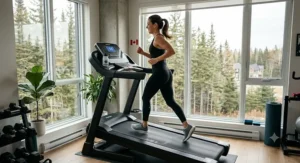
Training for an actual hike is a genuinely different goal from general fitness, and it changes which spec matters most. On paper, this means you should be weighting incline range and decline capability far above touchscreen size or app polish.
The Bowflex Treadmill 22 is the standout here specifically because its -5% to 20% range replicates both the climb and the descent legs of a real trail — something most competitors can’t touch. Descent training matters more than people expect: eccentric quad loading on the way down a mountain is a major source of post-hike soreness, and almost no home treadmill lets you practice it except this one and, to a lesser degree, the Sole F85‘s -6% decline.
For buyers who want guided hiking-specific programming rather than manually building interval routines, the NordicTrack Commercial 1750‘s iFIT integration includes genuine trail-based content filmed on real hiking routes, with incline auto-adjusting to match elevation changes on screen. Reviewers consistently mention this as feeling meaningfully different from a generic hill-interval program — it’s designed around actual topography, not arbitrary grade jumps. If your hiking goal is a specific trail with known elevation gain, that kind of route-matched training has real practical value in the weeks before your trip.
✨ Don’t Miss These Exclusive Deals!
🔍 Take your indoor hill training to the next level with one of these carefully selected treadmills. Click on any highlighted model to check current pricing and availability on Amazon.ca. Building real hiking fitness starts with the right terrain simulation, right at home!
iFit Compatible Treadmills: What You Need to Know
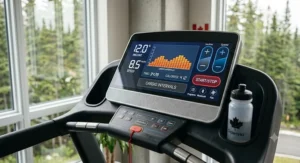
An iFit compatible treadmill isn’t just a machine with a screen — it’s one where the incline, decline, and speed motors accept commands directly from the iFIT platform, so a trainer-led class can physically move your deck without you touching anything. Not every treadmill with a touchscreen has this; some only display iFIT content while leaving incline adjustments manual.
Among the machines here, the NordicTrack Commercial 1750 is the fully integrated example, with SmartAdjust and ActivePulse layered on top of basic iFIT syncing to personalize incline changes based on your fitness history and real-time heart rate. What most buyers overlook is that iFIT membership is a separate, ongoing cost — typically around C$39-C$50 per month depending on the plan — and it’s not optional if you want the auto-adjusting feature to function as advertised; without a subscription, the treadmill reverts to manual controls.
The honest trade-off worth weighing: iFIT delivers genuinely motivating, trainer-led terrain simulation that’s hard to replicate with preset programs alone, but the total cost of ownership over two or three years can meaningfully exceed the treadmill’s sticker price. Buyers who know they’ll use guided classes regularly tend to find it worthwhile; buyers who mainly want a hill-interval tool without hand-holding are often better served by a non-subscription machine like the Horizon 7.0 AT.
Setting Up and Getting the Most From Your Auto Incline Treadmill
Getting a new auto incline treadmill from box to reliable daily habit takes more than just plugging it in, and the first 30 days matter more than most buyers expect.
Assembly and placement: Most full-size models arrive partially assembled, with the deck, console, and handrails needing connection — budget 45-90 minutes and a second pair of hands for anything over 250 lb. Place the unit with at least 3 feet of clearance behind it and roughly 8 feet of ceiling height if you’re tall and plan to use higher incline settings, since the deck itself rises as grade increases.
Belt calibration matters more than people think. A new belt often needs manual centring and tension adjustment within the first week as it stretches slightly under use — most owner manuals include a simple Allen-key procedure, and skipping it is the single most common cause of belt drift complaints in early reviews.
Start conservative with incline. A common mistake in the first 30 days is jumping straight to double-digit grades because the machine allows it. Building from 3-5% incline over the first two weeks lets your calves and Achilles tendons adapt; jumping straight to 15% risks soreness severe enough to derail the habit entirely.
Maintenance on a simple schedule: Vacuum under the deck monthly to prevent dust buildup around the motor, check belt tension every 4-6 weeks, and apply silicone-based belt lubricant roughly every three months of regular use (never petroleum-based, which degrades rubber belts). Following this rhythm is what separates a treadmill that lasts a decade from one that needs a service call by year two.
A quick optimization trick most manuals skip: if your model supports handlebar incline controls, like the XTERRA TRX3500 or Horizon 7.0 AT, practice adjusting grade without looking down for the first few sessions — it dramatically improves your ability to hold pace through interval transitions later.
Real-World Scenarios: Who Should Buy One?
The apartment-dwelling beginner. Consider someone living in a 650-square-foot condo, working from home, who wants to break up sedentary days without dedicating a room to fitness equipment. For this person, a compact walking pad with auto incline — the UREVO SpaceWalk 3S — solves the real problem: it slides under the bed, runs quietly enough for back-to-back video calls, and still delivers genuine incline benefit during lunchtime walks.
The suburban parent training for a fall hiking trip. Picture someone with a finished basement, moderate fitness, and a booked trip to hike a moderately steep provincial park trail in four months. This buyer needs progressive incline capacity and structured programming without an overwhelming learning curve — the Horizon 7.0 AT or XTERRA TRX3500 fit well here, offering enough incline range to build real hill fitness without the premium price or subscription commitment of the top-tier machines.
The serious home athlete replacing a gym membership. Imagine a runner who previously trained on commercial-grade treadmills at a gym and wants equivalent performance at home, with budget less of a constraint than convenience and durability. The Sole F85 or NordicTrack Commercial 1750 make sense here — both offer commercial-adjacent motor power, incline-plus-decline realism, and (in the NordicTrack’s case) the guided programming that replaces a personal trainer’s cueing.
Your Buyer’s Decision Framework
Use this simple priority checklist to cut through the options quickly:
- If space is your biggest constraint, choose a compact walking pad like the UREVO SpaceWalk 3S, because floor footprint outweighs incline range for your use case.
- If budget is your primary concern but you still want a full-size deck, choose the Schwinn 810, because it delivers genuine 10% incline without premium pricing.
- If you want maximum incline for hiking-specific training, choose the Bowflex Treadmill 22 or Sole F85, because their incline-plus-decline range most closely replicates real trail conditions.
- If you want the incline handled for you through guided programming, choose the NordicTrack Commercial 1750, because iFIT’s route-matched auto-adjustment removes the guesswork.
- If you refuse to pay a monthly subscription but still want strong performance, choose the Horizon 7.0 AT, because its 15% incline and lifetime motor warranty deliver serious value without ongoing fees.
Common Mistakes When Buying an Auto Incline Treadmill
The most expensive mistake buyers make is chasing the maximum incline number without a plan to use it. A 20% incline ceiling on the Bowflex Treadmill 22 is genuinely impressive, but if your actual training rarely goes past 8%, you’ve paid a real premium for headroom you won’t touch — the Schwinn 810 or XTERRA TRX3500 would have served the same purpose for considerably less.
A second common error is underestimating motor demands. Buyers frequently size a treadmill to their current weight rather than a comfortable margin below the stated capacity, which shortens motor lifespan under sustained incline use — incline work draws meaningfully more power than flat walking, and a motor running near its ceiling wears faster.
Third, many buyers overlook subscription math entirely. An iFIT compatible treadmill like the NordicTrack Commercial 1750 looks reasonably priced at checkout, but factor in roughly C$39-C$50 monthly and the two-year total cost climbs substantially — worth calculating honestly before committing.
Finally, skipping the deck-length check trips up taller buyers repeatedly. A 55-inch deck like the Schwinn 810‘s works fine for walking but can feel cramped for anyone over 6 feet running at pace — the extra 5 inches on the XTERRA TRX3500 or Sole F85 genuinely changes the experience for taller runners.
Long-Term Cost & Maintenance
Total cost of ownership on an auto incline treadmill extends well past the sticker price, and the gap between models widens the longer you own one. A non-subscription machine like the Horizon 7.0 AT or Schwinn 810 has a relatively flat cost curve after purchase — occasional belt lubricant, the odd replacement part, and that’s largely it.
Subscription-tied machines tell a different story. The NordicTrack Commercial 1750 and Bowflex Treadmill 22 both require ongoing membership fees to unlock full auto-incline functionality, and over three years, that adds up to roughly C$1,400-C$1,800 on top of the purchase price — often exceeding the price difference between the treadmill itself and a non-subscription premium alternative like the Sole F85.
Motor and frame warranties matter here too, since a lifetime guarantee (offered on the Horizon 7.0 AT and Sole F85) effectively removes the largest repair cost from your long-term budget. Cost-per-use math favours whichever machine you’ll actually keep using consistently — a cheaper treadmill that gathers dust after month three is a worse investment than a pricier one that becomes a genuine daily habit.
Safety and Canadian Regulations Guide
Every electrical product sold in Canada, treadmills included, is required to carry recognized safety certification marks such as CSA, cUL, or cETL before it can legally be sold or used here, according to Health Canada’s electrical product safety guidance. Before buying from a third-party seller on Amazon.ca, it’s worth confirming the specific model carries one of these marks rather than assuming all listings meet the same standard.
Beyond electrical certification, basic incline-training safety matters: always use the safety clip during higher-incline sessions, since a trip at 15-20% grade carries more momentum than a flat-belt stumble. Manufacturers across this list — including Sole, NordicTrack, and Bowflex — all include a magnetic or tang-style safety key that stops the belt instantly if a user moves too far back, a feature worth testing on day one rather than assuming it works.
For general activity targets to plan around, Canada’s physical activity guidelines recommend adults aim for at least 150 minutes of moderate-to-vigorous activity weekly, spread across sessions of 10 minutes or more — a target that a structured incline-walking routine on any of these seven treadmills can realistically meet within three to four sessions a week.
Features That Actually Matter (And Those That Don’t)
Incline range, motor horsepower relative to your body weight, deck length, and warranty depth are the features that genuinely change your day-to-day experience. Everything else is more marginal than marketing suggests.
Touchscreen size, for instance, feels premium but contributes little to the actual workout quality — a 7.25″ LCD paired with a strong incline motor, like the Horizon 7.0 AT, delivers the same physiological benefit as a 22″ touchscreen. Built-in speakers and cooling fans are pleasant conveniences, not differentiators worth paying extra for, since a phone and a desk fan accomplish the same thing.
What most buyers overlook is that program count (30 presets versus 10) matters far less than whether those programs actually auto-adjust incline smoothly — a machine with fewer, well-executed auto-incline programs beats one with dozens of presets that require constant manual correction.
FAQ
❓ What is a good incline percentage for a treadmill?
❓ Do auto incline treadmills need a subscription?
❓ Can incline training replace outdoor hiking preparation?
❓ How steep can a home treadmill incline go?
❓ Is a motorized incline worth the extra cost over a manual one?
Conclusion
The right auto incline treadmill really comes down to matching incline range and motor power to what you’re actually training for, not chasing the biggest number on the spec sheet. A busy renter squeezing in lunchtime walks has genuinely different needs than someone four months out from a mountain hike, and this list was built to cover both ends honestly.
If you want the simplest possible entry point, the UREVO SpaceWalk 3S removes almost every barrier to starting. If subscription fatigue is real for you, the Horizon 7.0 AT delivers serious incline performance without another monthly bill. And if hiking-specific training is the whole point, the Bowflex Treadmill 22 and Sole F85 offer incline-plus-decline ranges that actually replicate a trail. Whichever you choose, remember that consistency beats specs — the treadmill you’ll actually use four times a week outperforms the one with the flashiest incline number sitting in the corner.
⛰️ Ready to Start Climbing?
Check current pricing on any of the seven models above and pick the incline range that actually matches your goals — your legs (and your future hiking trip) will thank you.
Recommended for You
- Best Incline Trainer 2026: 7 Top Picks That Actually Deliver
- Budget Treadmill 2.5 HP: 7 Honest Picks for Canada (2026)
- 7 Best Treadmills for Heavy Runners in 2026: Built Tough
Disclaimer: This article contains affiliate links. As an Amazon Associate, I earn from qualifying purchases. If you purchase products through these links, we may earn a small commission at no additional cost to you.
✨ Found this helpful? Share it with your friends! 💬🤗
