In This Article
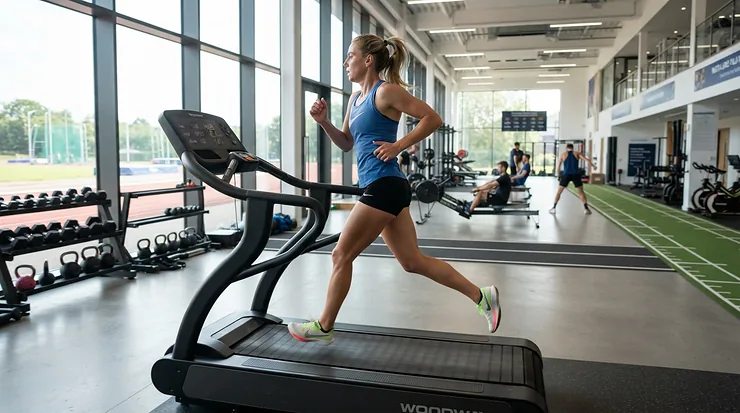
It’s –27 °C with the wind chill. The sidewalk is a hockey rink nobody asked for. Your running shoes sit by the door, radiating quiet disappointment. This is the moment the best running treadmill earns its floor space.
Most treadmill advice treats these machines like televisions: bigger screen, better product. Runners know better. A treadmill lives or dies on three unglamorous things. They are the motor continuous horsepower, the running deck size and the cushioning system. Add whether the machine survives your third winter of 5 a.m. intervals. The rest is décor.
So this guide does the unglamorous work. I compared manufacturer specifications, Canadian retailer listings and published independent reviews. That narrowed the field to seven machines, from budget starters around C$700 to premium rigs well north of C$5,000. One honesty note: I haven’t run on any of these myself. You’ll get spec analysis and aggregated reviewer sentiment, never invented test stories, and where the data is thin I’ll say so.
Maybe you want a treadmill for regular running three mornings a week. Maybe you want a durable running treadmill that can absorb a marathon build. Either way, you’ll leave with a shortlist, a buying framework and a few traps to dodge. Prices are ranges in Canadian dollars, so check current price before buying.
What Is the Best Running Treadmill?
The best running treadmill is a motorized machine that keeps pace with your stride and training load. It has roughly 3.0 CHP or more of motor power, a belt near 56 × 152 cm (22″ × 60″), a forgiving cushioning system and a frame built to last. Everything else is a bonus. The idea is old, too: the treadmill’s long history began with human-powered treadwheels used to grind grain, long before anyone thought about cardio.
Quick Comparison: The Best Running Treadmill Options at a Glance
Here’s the whole field on one screen before we dig into each machine.
| Treadmill | Best For | Price Range (CAD) | Standout Trait |
|---|---|---|---|
| Horizon T101 | Beginners, walk-jog routines | C$600–C$900 | Compact hydraulic fold |
| Sole F63 | Budget-minded regular runners | C$1,900–C$2,600 | 152 cm belt, no subscription |
| BowFlex T9 | Interval fans, all-round value | Around C$2,200 | Fast speed and incline response |
| Sole F80 | High-mileage, heavier users | C$2,500–C$3,500 (verify) | Firm deck, long warranty |
| NordicTrack Commercial 2450 | Guided-run lovers | C$2,700–C$3,500 | 4.25 CHP plus decline |
| NordicTrack X24 | Hill and trail trainers | C$4,000–C$5,500 | –6% to 40% incline |
| Matrix T75 | Heavy-use households | C$6,000+ | AC motor, 25 mm deck |
Read the table sideways and a pattern appears. Motor power and belt length climb together, but the big price jumps come from screens and incline range, not running quality. For most people, the C$2,000-to-C$3,500 middle is where the best running treadmill decision gets made. That middle holds the BowFlex T9, the Sole F80 and the NordicTrack Commercial 2450. The Horizon T101 is the honest budget entry, and the Matrix T75 is a long-term investment.
💬 Just one click — help others make better buying decisions too!😊
Top 7 Best Running Treadmills in Canada: Expert Analysis
Specs below come from manufacturers or independent reviewers. Review sentiment is aggregated from public sources and never invented. Where I couldn’t verify something, I say so.
1. Horizon T101 — compact budget starter for easy jogs
The Horizon T101 earns its slot by being the machine you’ll actually unfold on a dark Tuesday. Setup is quick, the controls are simple, and the hydraulic-assist fold tucks it away.
It pairs a 2.5 CHP motor with a 51 × 140 cm (20″ × 55″) belt, 0–10% incline and speeds of 0.8–16 km/h (0.5–10 mph). That 140 cm belt is about 12 cm shorter than the 152 cm most runners want, so taller runners may feel their stride get cramped. The 2.5 CHP motor suits walking and easy jogging, but hard intervals will tax it first.
Based on the spec comparison, this is a treadmill for regular running at modest volume. Think three easy 5 km sessions, not marathon blocks. Independent reviewers praise the easy assembly and beginner-friendly controls while flagging the motor and belt length as limits. Canadian retailer reviews are mixed: some owners report quiet, trouble-free use, others cite reliability problems. An earlier Horizon T101-05 version was also recalled in Canada in 2022, so read the safety section before buying second-hand.
Pros:
- ✅ Quick assembly and simple EasyDial controls
- ✅ Hydraulic-assist folding saves floor space
- ✅ Lowest entry cost in this guide
Cons:
- ❌ 140 cm belt feels short for tall runners
- ❌ 2.5 CHP motor limits frequent hard running
Expect around C$600–C$900. That’s good value for walkers and light joggers, but a stretch for dedicated runners.
2. Sole F63 — a real-length belt without a subscription
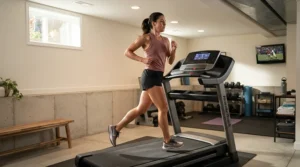
The Sole F63 is the budget-minded runner’s loophole. You get a full 152 cm belt and a cushioned deck without signing up for a monthly streaming plan.
A 3.0 HP motor drives a 51 × 152 cm (20″ × 60″) belt, with 15 incline levels and Sole’s Cushion Flex Whisper Deck. Belt length matters more than width here, because it gives an average adult room to stride without brushing the console. The 3.0 HP rating sits at the entry point for steady 5–10 km runs, though heavier or faster users may want more headroom. Sole says this cushioning system reduces impact by up to 40% versus asphalt. That’s a manufacturer-reported figure, so treat it as a claim, not gospel.
What the spec sheet won’t tell you, but reviewers note, is that the F63 favours build and simplicity over spectacle. Independent reviewers describe it as a well-built, easy-to-use entry model, and the SOLE+ app costs nothing. Brand-site testimonials are curated, so I weighed them lightly.
Pros:
- ✅ Full 152 cm belt at an accessible price
- ✅ Cushion Flex deck for softer landings
- ✅ Lifetime frame and motor warranty, per Sole
Cons:
- ❌ 51 cm width suits narrow strides best
- ❌ Basic LED console with no touchscreen
At roughly C$1,900–C$2,600, Canadian listings run well above US prices. It’s still decent value if you want a straightforward treadmill for regular running.
3. BowFlex T9 — fast-reacting controls for interval days
Interval fans, this one’s for you. The BowFlex T9 changes speed and incline quickly, so “sprint 30 seconds, recover 90″ becomes something the machine can actually keep up with.
Specs: a 3.5 CHP motor, a 56 × 152 cm (22″ × 60”) belt, 0–15% incline and up to 19 km/h (12 mph). The wider belt gives you margin when you’re tired and drifting. The FlexZone XL deck is 18 mm thick with three-zone cushioning, softer where your foot lands and firmer toward push-off. The frame folds for storage, and the console pairs with Apple Watch and apps such as JRNY, Zwift and Peloton.
Based on the spec comparison, this is a smart middle-class pick for runners mixing easy mileage with hills and speed work. Treadmill Review Guru says it feels like it should cost more, citing sturdy build and quiet running. Retailer reviews were thin, with only a couple turning up. One owner reported gentler impact on their knees than on an older machine. That’s a small sample, so hold it loosely.
Pros:
- ✅ Wide 56 cm belt with a full 152 cm length
- ✅ Quick speed and incline response for intervals
- ✅ Lifetime motor and frame warranty
Cons:
- ❌ Guided content leans on a JRNY membership after the trial
- ❌ Heavy, at roughly 128 kg (282 lb)
Around C$2,200 makes it strong value for a mid-range pick.
4. Sole F80 — the high-mileage workhorse with no subscription
Some treadmills are built to impress guests. The Sole F80 is built to log miles and shrug. Published reviews describe it as a machine people keep for years, which is what you want from a durable running treadmill.
Specs: a 3.5 CHP motor, a 56 × 152 cm (22″ × 60″) belt, 15 incline levels, up to 19 km/h (12 mph) and a 159 kg (350 lb) capacity. It also has a Cushion Flex Whisper Deck, and current versions add a 10.1″ touchscreen with streaming apps. That capacity and the wide belt make it a favourite for heavier or taller runners who feel boxed in elsewhere. Per US listings, Sole covers frame, motor and deck for life, with shorter coverage on electronics, so confirm Canadian terms with your dealer.
The honest trade-off is feel. The deck is firm, closer to pavement than trampoline. Reviewers praise stability at speed, while some flag the firmness as harder on sore knees. If you’re coming off a soft deck, expect an adjustment period.
Pros:
- ✅ 3.5 CHP motor with a wide, long belt
- ✅ Lifetime frame, motor and deck coverage (US terms)
- ✅ No subscription needed for core use
Cons:
- ❌ Firm deck may not suit sore joints
- ❌ Heavy to fold and move, around 124 kg (274 lb)
Canadian pricing varied between dealers at the time of research, so plan on roughly C$2,500–C$3,500 and check current price. It’s best for high-mileage runners.
5. NordicTrack Commercial 2450 — big-motor guided runs with decline
If you hate running alone in a basement, the NordicTrack Commercial 2450 is your coach in a box. iFIT trainers lead sessions while the treadmill adjusts speed and incline for you.
The spec sheet reads like a gym’s: a 4.25 CHP motor, a 56 × 152 cm (22″ × 60″) belt, –3% to 12% incline, a top speed near 22 km/h (14 mph) and a 24″ pivoting touchscreen. RunFlex cushioning, SpaceSaver folding and a 181 kg (400 lb) capacity round it out. Decline is the underrated feature, because it lets you practise downhill running, which road races demand and most treadmills ignore. The 22 km/h ceiling only matters to sprinters, so the real value is motor headroom. The motor carries a lifetime warranty, with 10 years on the frame and two on the deck.
Reviewer sentiment splits. Treadmill Review Guru ranks it among its favourites for running. Canadian Tire reviewers include enthusiastic owners alongside others reporting reliability and software-update frustrations. Most of the smarts also require a paid iFIT membership, so the total cost climbs.
Pros:
- ✅ 4.25 CHP motor with plenty of headroom
- ✅ Decline training for downhill practice
- ✅ Folds away, with lifetime motor coverage
Cons:
- ❌ Best features need a paid iFIT membership
- ❌ Mixed owner reports on software and reliability
Expect roughly C$2,700–C$3,500 depending on promotions. It’s excellent for runners who want coaching.
6. NordicTrack X24 — mountain-grade hills in your basement
The NordicTrack X24 is what happens when a treadmill develops mountain ambitions. Its –6% to 40% range can turn a rec room into a ridge line.
Specs: a 4.25 CHP motor, a 56 × 152 cm (22″ × 60″) belt, speeds up to 20 km/h (12 mph), SpringFlex cushioning, a 24″ pivoting touchscreen and a 181 kg (400 lb) capacity. In practice, nobody runs at 40%; that’s power-hiking territory. Most runners live between 1% and 8%, and the real appeal is steep decline and hill repeats for trail or mountain racing. If that’s not your goal, you’re paying for incline you’ll never touch.
It doesn’t fold. It weighs about 202 kg (445 lb) boxed, and the step-up is over 33 cm (13″), so measure your stairwell. Garage Gym Reviews praises the stable console at speed and the speakers but criticizes slippery handlebars and says the cushioning could be better. NordicTrack describes the deck as impact-absorbing, so judge by trial if you can.
Pros:
- ✅ –6% to 40% range for hills and descents
- ✅ 4.25 CHP motor with lifetime warranty
- ✅ Rock-steady console even at speed
Cons:
- ❌ Non-folding, heavy and a tall step-up
- ❌ Pricey for runners who don’t need steep grades
Around C$4,000–C$5,500, it’s worth it only if hills are your thing.
7. Matrix T75 — gym-grade AC motor and a 25 mm deck
Few home treadmills are built like the Matrix T75. The philosophy is simple: skip the cleverness, over-engineer the hardware and warrant it for life.
It uses a 3.0 HP continuous-duty AC drive, a motor type more typical of commercial machines. Matrix itself notes that horsepower ratings reflect motor robustness in testing, not operating output. Elsewhere you get a 56 × 152 cm (22″ × 60″) belt, 0–15% incline and 0.8–20 km/h (0.5–12.5 mph). The 25.4 mm (1″) Ultimate Deck, 2-ply belt, 17.8 cm (7″) step-on height and 181 kg (400 lb) capacity round it out. Warranty is lifetime on frame, motor and cushioning, plus seven years on parts and two on labour. AC drives tend to run cool, quiet and low-maintenance, which makes this a durable running treadmill for a household that treats gear roughly.
Reviewers highlight the gym-style motor and the capable XUR console with its 22″ touchscreen. Verified Canadian owner feedback at this price is thin, so the durability case rests on specs and warranty rather than a big review pool.
Pros:
- ✅ Commercial-style AC motor and 25.4 mm deck
- ✅ Lifetime frame, motor and cushioning warranty
- ✅ Low 17.8 cm step-on height
Cons:
- ❌ Premium price, well beyond most budgets
- ❌ Non-folding and heavy at about 138 kg (304 lb)
At the time of research, expect comfortably above C$6,000. It’s best for multi-runner households that want a “buy once” machine.
Side-by-Side Specs: Motor, Deck and Cushioning System
Brands describe their hardware differently, so here are the numbers lined up. Pay attention to running deck size and the cushioning system, because those two decide how the machine feels at kilometre eight.
| Treadmill | Motor | Belt (cm / in) | Incline | Cushioning System | Best For |
|---|---|---|---|---|---|
| Horizon T101 | 2.5 CHP | 51 × 140 (20″ × 55″) | 0–10% | Three-zone variable response | Walk-jog starters |
| Sole F63 | 3.0 HP | 51 × 152 (20″ × 60″) | 15 levels | Cushion Flex Whisper Deck | Budget regular runners |
| BowFlex T9 | 3.5 CHP | 56 × 152 (22″ × 60″) | 0–15% | FlexZone XL, three-zone | Interval training |
| Sole F80 | 3.5 CHP | 56 × 152 (22″ × 60″) | 15 levels | Cushion Flex (firm feel) | High-mileage users |
| NordicTrack Commercial 2450 | 4.25 CHP | 56 × 152 (22″ × 60″) | –3% to 12% | RunFlex | Guided runs |
| NordicTrack X24 | 4.25 CHP | 56 × 152 (22″ × 60″) | –6% to 40% | SpringFlex | Hill training |
| Matrix T75 | 3.0 HP (AC) | 56 × 152 (22″ × 60″) | 0–15% | Ultimate Deck, 25.4 mm | Heavy household use |
Only the entry models compromise on belt length, which is why the Horizon T101 and Sole F63 sit at the budget end. The Matrix T75‘s lower motor number looks odd, but AC drive ratings aren’t directly comparable with DC CHP figures. Treat that column as a rough guide and lean on warranty terms and reviewer feedback for the real story.
Setup, Break-In and Maintenance Guide for Your Running Treadmill
Buying the machine is the easy part. Keeping it happy is where “durable” gets decided.
Delivery and setup. Most of these weigh 100–200 kg, so recruit a second adult and measure doorways first. Let a machine delivered in subzero weather warm to room temperature before powering up, as condensation and electronics don’t mix. Level the frame with a spirit level, and ask yourself whether the spot has headroom for full incline.
First 30 days.
- Center the belt according to the manual. A belt drifting to one side usually needs a small adjustment, not a service call.
- Run a few easy sessions before any hard intervals.
- Keep the safety key clipped on, every time.
Ongoing care. Wipe the deck and rails regularly, vacuum around the motor area every few months, and follow the manual for belt lubrication. Intervals vary by brand, and some decks are marked low-maintenance. Manufacturers generally advise against unheated garages, which is a real consideration across much of Canada.
Common mistakes. The classics are skipping lubrication, using a cheap extension cord and parking the machine against a wall that blocks airflow. A good mat protects floors and cuts vibration.
Real-World Scenarios: Matching Runners to the Best Running Treadmill
These profiles are hypothetical, built to show the reasoning, not real customers.
Scenario 1: the winter-only runner. She’s in Winnipeg, with a budget around C$800. She runs three easy 5 km sessions weekly from November to March. The Horizon T101 fits, since the short belt and light motor rarely become limits at easy paces. She should check the recall notes below if buying used.
Scenario 2: the half-marathon builder. He’s 190 cm tall, in Halifax, logging 40 km weekly with a budget near C$2,500. Running deck size is his priority, which points to the 56 × 152 cm belts on the BowFlex T9 or Sole F80. If he likes interval variety, the T9 edges ahead. If he wants a firmer road-like feel, the F80 wins.
Scenario 3: the mountain-race trainee. She’s in Calgary, targeting a hilly trail event. Decline and steep grades justify the NordicTrack X24, or the NordicTrack Commercial 2450 if the budget needs to stay lower.
If you’d rather run with the machine doing the thinking, the 2450 and X24 pair neatly with coaching.
✨ Ready to shortlist your pace partner?
🔍 Click any highlighted product name to check current pricing and availability on Amazon.ca, then compare against your belt-length and warranty priorities. Your future winter self will thank you!
How to Choose the Best Running Treadmill (Step by Step)
Picking the best running treadmill comes down to six questions, asked in this order:
- Start with weekly volume. Canada’s 24-Hour Movement Guidelines recommend at least 150 minutes of moderate-to-vigorous activity weekly for adults aged 18–64. If running covers most of that, buy a machine sturdier than a walking treadmill.
- Match running deck size to your stride. Aim for 152 cm (60″) of length. Taller or faster runners should treat that as a floor, and a 56 cm (22″) width adds a margin for error.
- Check motor continuous horsepower. Roughly 3.0 CHP is the entry point for regular running. Go higher if you’re heavy, fast or sharing the machine.
- Judge the cushioning system by feel. Some runners prefer soft landings, others want a firm, road-like deck. Test in a store if you can.
- Price the whole package. Add delivery, a mat, any subscription and an extended warranty to the sticker.
- Measure your space. Unfolded lengths run roughly 196–205 cm, and incline lifts the front, so check ceiling height and stairwell turns.
Best Motor Power for Running Treadmill Shoppers: Motor Continuous Horsepower Explained
Motor continuous horsepower is a lab rating of sustained motor output. Makers themselves say it doesn’t equal what the motor delivers in ordinary household use, so NordicTrack’s fine print and Matrix’s spec notes both caution against taking the number literally. Use it as a rough comparison tool, not a guarantee.
So what’s the best motor power for running treadmill buyers? A practical rule of thumb:
- Under 3.0 CHP: fine for walking and light jogging, such as the Horizon T101 at 2.5 CHP.
- Around 3.0–3.5 CHP: the working range for most single runners. NordicTrack’s own marathon guidance cites 3.0 CHP as a floor.
- 4.0 CHP and above: headroom for heavier users, frequent speed work or shared households, like the 4.25 CHP in the NordicTrack X24.
The best motor power for running treadmill use also depends on body weight and pace, so more demanding users should size up. Don’t ignore the warranty, either. A lifetime motor guarantee tells you more about build confidence than any horsepower figure.
Running Deck Size and Cushioning System: What Your Stride Really Needs
Running deck size is where cheap treadmills cut corners. A belt around 152 cm long gives most adults room to stride, and a 56 cm width helps when fatigue makes you drift. That’s why the shorter 140 cm belt on the Horizon T101 is a compromise.
The cushioning system is the other half. Sole’s Cushion Flex deck feels firm and road-like, per reviewers. The NordicTrack Commercial 2450 leans softer, and the BowFlex T9 uses three-zone cushioning designed to soften landings and firm up push-off. Manufacturer claims, such as Sole’s up-to-40% impact reduction versus asphalt, are self-reported. Take them as design intent, not independent proof.
Here’s the trade-off nobody mentions. Soft decks feel kinder but can feel spongy at speed. Firm decks feel stable but pass more impact to your legs. If you have joint concerns, talk to a clinician and try machines in person before committing.
Features That Actually Matter (And Those That Don’t)
Matters: belt length, motor continuous horsepower, a sturdy frame, warranty terms, step-up height and a console that doesn’t wobble at speed. A decent safety key and clear stop controls belong here too.
Matters sometimes: incline and decline. A modest range covers most road-race preparation, and steep grades only pay off for hill or trail goals. Subscriptions fall in this category as well, because guided content motivates some runners and irritates others.
Mostly doesn’t:
- Giant touchscreens (nice, not necessary)
- A 22 km/h top speed (few runners need it)
- 40% incline for non-hill-racers
- Built-in fans, in my view an afterthought
Strip the marketing and you’re left with a long belt, a capable motor, comfortable landings and a warranty that makes you sleep better.
Durable Running Treadmill: Long-Term Cost and Maintenance
A durable running treadmill isn’t about the biggest number on the spec sheet. Look for these signals:
- Warranty depth: lifetime frame and motor coverage, then check how long the deck, belt and electronics are covered, since those wear first.
- Thicker decks: the Matrix T75 uses a 25.4 mm deck, versus 18 mm on the BowFlex T9.
- Hardware quality: larger rollers and welded frames usually hint at heavier-duty design.
Then run the total-cost maths. Say a machine around C$2,200 gets used three times weekly for five years, about 780 runs. That’s roughly C$3 per run before electricity, mats and subscriptions. A hypothetical C$50 monthly gym membership over the same period costs about C$3,000. Add a subscription like iFIT and the equation shifts, so price the ecosystem, not just the hardware.
Repair costs matter too. One reviewer on a US retailer page described a console replacement quote close to the cost of a whole new budget machine. Ask about parts availability and service coverage before buying, especially at the low end.
Treadmill for Regular Running vs Outdoor Running and Gym Memberships
A treadmill for regular running solves a Canadian problem: weather. Ice, darkness and –30 °C windchill don’t negotiate. But it isn’t the only option.
| Option | Best For | Cost Profile | Biggest Drawback |
|---|---|---|---|
| Home treadmill for regular running | Consistency, pace control, winter | Upfront C$700–C$6,000+, then low | Space, belt wear, boredom |
| Outdoor running | Terrain variety, fresh air | Shoes and winter gear | Ice, darkness, traffic |
| Gym treadmill | Trying machines, no upfront cost | Monthly fee | Commute and peak-hour waits |
The table shows why home machines win on consistency: no commute, no weather excuses, precise pacing. They lose on upfront cost and floor space. A smart hybrid for many Canadians is running outdoors in good weather and keeping a treadmill for regular running on the dark, icy days.
Safety, Recalls and Canadian Compliance Guide
Treadmills are powerful machines, so a little diligence pays off.
Check recalls. In 2022, Health Canada announced a joint recall of the Horizon T101-05 folding treadmills because units could unexpectedly change speed. Canadian sales totalled 6,986 units, with six reported injuries in Canada. The notice says affected owners should contact the manufacturer for a software fix. The Canada Consumer Product Safety Act also prohibits selling recalled products, so check serial numbers before buying any used machine.
Look for certification. Check the rating plate for a recognized certification mark, such as CSA or cUL. If you can’t find one, ask the seller.
Mind the electrical side. Most home treadmills run on a standard 120 V household outlet, but commercial-style machines may recommend a dedicated circuit. Read the manual and avoid thin extension cords.
Everyday safety. Clip the safety key to your clothing, keep children and pets away from moving belts, and don’t stand on a belt while starting.
FAQ
❓ How much should I spend on the best running treadmill in Canada?
❓ Is 3.0 CHP enough for a treadmill for regular running?
❓ What running deck size do I need if I'm tall?
❓ Do I need an iFIT subscription to run on a NordicTrack?
❓ How long does a durable running treadmill actually last?
Conclusion
So which is the best running treadmill? The honest answer is the one that fits your stride, your budget and your floor plan. Here’s how the field shakes out:
- Budget entry: the Horizon T101 for walkers and light joggers, with its short belt and 2.5 CHP motor in mind.
- Value runners: the Sole F63 if you want a full-length belt without subscriptions.
- Sweet spot: the BowFlex T9 for intervals, or the Sole F80 for high-mileage durability.
- Guided training: the NordicTrack Commercial 2450 for motor headroom and decline.
- Hill specialists: the NordicTrack X24 if steep terrain is the goal.
- Buy-once investment: the Matrix T75 for households that want a gym-grade machine.
Remember that motor continuous horsepower, running deck size and the cushioning system matter more than screen size, and warranty depth separates a durable running treadmill from a short-lived one. Check recalls, price the full package and measure your doorways.
Recommended for You
- Treadmill For Post-Surgery Rehab: 7 Safest Picks In 2026
- Treadmill For Physical Therapy: 7 Safe, Smart Picks For 2026
- Gentle Exercise Treadmill For Beginners: 7 Best Picks (2026)
Disclaimer: This article contains affiliate links. As an Amazon Associate, I earn from qualifying purchases. If you purchase products through these links, we may earn a small commission at no additional cost to you.
✨ Found this helpful? Share it with your friends! 💬🤗
