In This Article
Let’s be honest about why you’re here: winter in most of this country turns outdoor running into a seasonal activity, and “I’ll just go for a walk later” quietly becomes “I’ll just go for a walk in April.” A good electric treadmill solves that problem without requiring you to love the gym, brave icy sidewalks, or rearrange your entire schedule around daylight hours. But “good” is doing a lot of heavy lifting in that sentence, because the treadmill aisle — physical or digital — is a genuinely confusing place. Motors are measured in three different ways, belt sizes get quietly shrunk to cut costs, and every box promises a “smart” experience that sometimes just means a cup holder with a QR code on it.
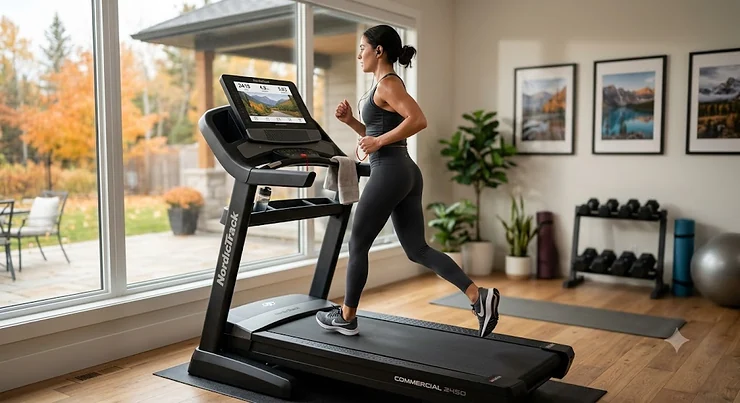
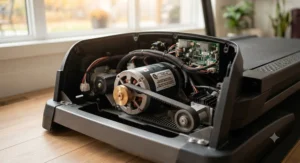
So, what is an electric treadmill? In short, it’s a motorized cardio machine with a moving belt driven by an electric motor, letting you walk, jog, or run indoors at a controlled speed and incline, unlike a manual treadmill that relies on your own stride to move the belt. That distinction matters more than it sounds, because motor quality is the single biggest factor separating a treadmill that lasts a decade from one that’s squeaking and stalling by month eight.
This guide breaks down seven real, currently available treadmills spanning budget, mid-range, and premium price points, plus practical answers for anyone specifically hunting for an electric treadmill for home use, an affordable electric treadmill Canada shoppers can actually justify, models with real incline capability, or something that fits a genuinely small space. We’ll also get into belt sizing, folding mechanisms, long-term running costs, and the regulatory basics that actually matter once the box is unpacked and the treadmill is plugged in. According to the Government of Canada’s physical activity guidance for adults, regular movement plays an important role in health, well-being, and quality of life — a treadmill is simply one reliable way to make that happen on your own schedule, in your own home, regardless of what’s happening outside your window.
Quick Comparison Table
| Treadmill | Motor | Top Speed | Incline | Best For |
|---|---|---|---|---|
| NordicTrack Commercial 1750 | 4.25 CHP | 19 km/h (12 mph) | -3% to 12% | Serious home training with app-based coaching |
| Sole F80 | 4.0 CHP | 19 km/h (12 mph) | 0-15% | Daily runners who want cushioning and durability |
| Horizon 7.0 AT | 2.5 CHP | 19 km/h (12 mph) | 0-15% | Runners who don’t want a subscription |
| XTERRA TRX3500 | 3.0 CHP | 19 km/h (12 mph) | 0-12% | Budget-conscious walkers and joggers |
| Sunny Health & Fitness SF-T7515 | 1.0 CHP | 12.8 km/h (8 mph) | 0-12% | First-time buyers on a tight budget |
| Echelon Stride 6 | 2.5 CHP | 17.7 km/h (11 mph) | 0-15% | Fold-flat storage in tight rooms |
| WalkingPad C2 | Brushless, compact | 6 km/h (3.7 mph) | None | Under-desk walking in apartments |
Looking at this lineup, the split isn’t really “cheap versus expensive” so much as “how much room do you have, and are you walking or training for a race.” The NordicTrack and Sole models justify their higher price with continuous horsepower ratings that hold up under sustained running, not just short bursts, while the WalkingPad and Echelon exist specifically to solve a floor-space problem rather than a performance one. If your priority is raw running capability over storage convenience, the middle three — Horizon, XTERRA, and Sunny — offer the best balance of an honest motor and a price that doesn’t sting.
💬 Just one click — help others make better buying decisions too!😊
💬 Found a match already? Compare current prices before they change — every good deal has a shelf life.
Top 7 Electric Treadmills: Expert Analysis
1. NordicTrack Commercial 1750 — best iFit-powered training experience
The standout here is the swiveling 41-cm (16-inch) HD touchscreen, which turns a solo cardio session into something closer to a coached class, rain or shine. Under the hood is a 4.25 CHP motor driving a deck with incline up to 12% and decline down to -3%, a combination that’s genuinely rare below the four-figure-USD range and lets you simulate downhill running for quad-strengthening work most competitors simply can’t offer. Reviewers testing the 2026 model note the screen is flatter and more tablet-like than previous generations, and the machine’s ActivePulse feature can automatically adjust speed and incline to keep your heart rate in a target zone — useful if you tend to either coast or overdo it without external pacing.
Based on the spec sheet, this is the pick for someone who’s motivated by structure: a beginner who wants a coach telling them what to do, or an intermediate runner who’s bored of staring at a wall. What the spec sheet won’t tell you is that most of that value is locked behind a monthly subscription; without it, you’re looking at a very expensive treadmill running in bare-bones manual mode. Aggregated reviewer sentiment consistently flags the touchscreen and incline range as the highlights, while a common complaint is reliance on a strong Wi-Fi connection for the streaming classes to run smoothly.
Pros:
- ✅ 12% incline and -3% decline for real hill and downhill training
- ✅ Large HD touchscreen swivels for off-treadmill workouts
- ✅ Heart-rate-responsive ActivePulse pacing technology
Cons:
- ❌ Full feature set requires an ongoing paid subscription
- ❌ Bulky footprint even when folded, unsuited to small rooms
Typically listed in the C$2,700–C$3,100 range on Amazon.ca, prices shift with promotions, so check current pricing before deciding. For anyone who wants the treadmill to actively coach them rather than just spin a belt, this is worth the premium.
2. Sole F80 — best cushioning and long-haul durability
The Cushion Flex Whisper Deck is the feature that keeps coming up in owner reports, and for good reason — it’s rated to reduce joint impact meaningfully compared to a rigid deck, which matters enormously if you’re logging daily kilometres rather than occasional walks. A 4.0 CHP motor and incline up to 15% give this machine legitimate range for hill repeats and tempo runs, not just casual strolling. One long-term owner testing the 2024-generation F80 into 2026 reports it’s still rock solid after roughly two years of consistent use, which lines up with the brand’s reputation for building decks that outlast their warranty periods rather than just meeting them.
Here’s what to weigh: the F80 carries a 159-kg (350 lb) weight capacity, generous for a household with multiple users of different sizes, and its lifetime frame and motor warranty is a genuine confidence signal rather than marketing fluff. On the downside, assembly is reportedly a two-person job given the unit’s weight, and the motor’s speed adjustments respond slightly slower than some rivals — a minor annoyance during interval training where you’re changing pace every 30 seconds. Reviewers consistently note the deck cushioning as the standout, with occasional mentions of the console feeling dated compared to touchscreen competitors.
Pros:
- ✅ Cushion Flex deck significantly reduces joint impact
- ✅ 159 kg (350 lb) weight capacity suits multi-user households
- ✅ Lifetime frame and motor warranty backs long-term durability
Cons:
- ❌ Assembly is difficult to manage solo due to unit weight
- ❌ Console lacks the touchscreen tech of pricier rivals
Expect a price in the C$3,200–C$3,600 range at the time of research, positioning it just under the NordicTrack while arguably outlasting it structurally — a genuine consideration for anyone running five or six days a week.
3. Horizon 7.0 AT — best subscription-free running machine
What most buyers overlook about the 7.0 AT is that a 2.5 CHP continuous-horsepower motor reaching 19 km/h (12 mph) — about 3 km/h faster than many comparable machines — is a genuinely serious spec for its price bracket, without a single monthly fee attached. The 152-cm (60-inch) running surface is 12 cm longer than typical budget decks, meaning taller runners with a longer stride won’t feel cramped or nervous about clipping the front rail mid-stride. Independent testing rated its durability highly, with one tester noting no shaking during runs, which was impressive for a machine in this price tier.
Based on the spec comparison against subscription-dependent rivals, this is the treadmill for someone who wants to run their own workouts, use their own music or podcasts, and never think about a recurring bill again. It does trade away the touchscreen coaching experience, and the 159-kg (350 lb) capacity — while solid — is 11 kg shy of what the F80 offers. Reviewer sentiment frequently praises the deck’s stability during hard efforts, with the console’s simplicity being viewed as either refreshing or underwhelming depending on how much tech the buyer actually wanted.
Pros:
- ✅ 12 mph top speed with no subscription required
- ✅ Extra-long 60-inch deck suits taller runners’ stride
- ✅ Rated highly for stability during high-effort running
Cons:
- ❌ No touchscreen or app-based coaching built in
- ❌ Slightly lower weight capacity than the Sole F80
Around the C$1,900–C$2,200 mark at most Canadian retailers, this sits as the value pick for anyone who runs regularly and resents paying twice — once for the machine, once for the software.
4. XTERRA TRX3500 — best value for serious walkers and joggers
The standout advantage is Bluetooth FTMS connectivity, letting the machine pair with third-party apps like Zwift without locking you into a proprietary ecosystem or subscription — a rare bit of openness in this category. A 3.0 HP motor drives a 152 x 51-cm (60 x 20-inch) deck with incline up to 12%, and the XTRA Soft cushioning does noticeable work absorbing impact, especially at walking and light-jogging paces. One long-term reviewer’s takeaway was blunt: the weight limit on the XTERRA TRX3500 treadmill is 350 pounds, which is 50 pounds over the industry standard for a home treadmill, making it a strong pick for taller or heavier users who feel underserved by lighter-duty budget machines.
On paper this means you’re getting a near-commercial-size deck and genuinely useful incline range for a price that undercuts most “smart” touchscreen treadmills by a wide margin. The trade-off, based on aggregated owner feedback, is that the motor’s continuous horsepower is modest compared to its peak rating, so this isn’t the machine for daily marathon-pace training — it’s built for walking, hill-walking, and moderate jogging, and it’s honest about that ceiling. A handful of owners have also reported squeaking or component wear appearing within the first year of heavier use.
Pros:
- ✅ 60 x 20-inch deck is larger than most machines at this price
- ✅ Bluetooth FTMS works with Zwift and other third-party apps
- ✅ 159 kg (350 lb) capacity, well above the industry norm
Cons:
- ❌ Continuous horsepower is modest for daily hard-running use
- ❌ Some owners report squeaking or wear within the first year
Prices typically fall in the C$1,700–C$1,900 range, making the TRX3500 one of the strongest arguments in this whole roundup for an affordable electric treadmill Canada shoppers won’t feel embarrassed about five years from now.
5. Sunny Health & Fitness SF-T7515 — best budget folding treadmill
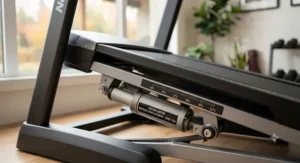
The soft-drop hydraulic folding mechanism is the feature that sells this machine to apartment dwellers — give it a light tap with your foot and the deck lowers itself smoothly, no wrestling with a heavy hinge required. A 1.0 HP motor caps speed at 12.8 km/h (8 mph), clearly positioning this as a walking-and-light-jogging machine rather than a running one, but its 12-level motorized incline (up to 12%) is a genuinely unusual feature to find at this price. Reviewers with roughly six months of ownership describe it as feeling like a “big treadmill” in terms of use, but a “small treadmill” in terms of storage and space savings once folded.
Here’s what to weigh: at 123 lbs and with a smaller-than-standard 126 x 42-cm (49.5 x 16.5-inch) belt, this is genuinely built for smaller users and lighter workouts, with a 109-kg (240 lb) weight capacity that’s noticeably lower than every other machine on this list. Aggregated reviews are mixed on long-term durability — some owners report a slight cracking sound at low speeds, and the compact belt can feel tight for taller users at higher paces. Still, for the price, the Bluetooth connectivity and true motorized incline are hard to beat.
Pros:
- ✅ Soft-drop hydraulic fold works one-footed, no lifting required
- ✅ Motorized 12-level incline, unusual at this price point
- ✅ Compact folded footprint suits small apartments
Cons:
- ❌ Lower 240 lb weight capacity limits who it suits
- ❌ Belt is narrower than the industry-standard size
Sitting around C$650–C$750 at the time of research, this is the entry point for anyone who wants an incline-capable folding machine without spending four figures.
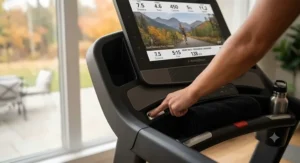
6. Echelon Stride 6 — best fold-flat treadmill for small rooms
The genuinely clever feature is a folding frame that lays the deck flat rather than upright, so it can slide under a bed or behind a couch instead of standing in a corner like an accusatory piece of furniture. At 156 lbs, it’s light enough for one person to reposition, and the running deck earned strong marks in independent lab testing for shock absorption thanks to its SpringFlex suspension system. Testers comparing it against much larger machines called the overall design compliant, powerful, and incredibly convenient, appreciating how comfortable and quiet it is during use.
Reviewers consistently note the 136-kg (300 lb) weight capacity as generous within the small-footprint category, though it’s worth keeping in mind if you’re a heavier user or plan on incorporating weighted-vest training. Based on the spec comparison, the honest trade-off here is the app: Echelon’s ecosystem, like NordicTrack’s, functions best — arguably requires — a paid membership to unlock its full workout library, so factor that ongoing cost into your real-world budget rather than just the sticker price.
Pros:
- ✅ Fold-flat design stores under a bed or couch, not upright
- ✅ SpringFlex deck rated highly for shock absorption
- ✅ Lightweight frame is easy for one person to move
Cons:
- ❌ Full app library requires an ongoing paid subscription
- ❌ 300 lb capacity is lower than full-size running decks
Commonly listed in the C$1,300–C$1,600 range, though cross-border pricing on Echelon products fluctuates more than most, so confirm the current Amazon.ca listing before you commit.
7. WalkingPad C2 — best under-desk walking pad for tiny apartments
The signature feature is a genuine 180-degree fold: unlike treadmills that only lift a bar while the base stays the same length, the C2 folds in half, shrinking to roughly 81 cm (32 inches) long — small enough to disappear into a closet or under most sofas. Its slim 13.5-cm (5.3-inch) folded profile and roughly 25-kg (55 lb) weight make it the lightest, most apartment-friendly option in this entire lineup, with a brushless motor keeping noise low enough for video calls at walking pace. One long-term reviewer summed up the appeal as being able to comfortably take meetings while walking at a steady pace without anyone noticing on the other end of the call.
What most buyers overlook is that this is a walking-only machine, capped around 6 km/h (3.7 mph) — there’s no incline, and running or fast jogging simply isn’t the design intent. Aggregated review sentiment is genuinely split: many owners love the compact folding design for small apartments, while a meaningful share report belt-centring issues or increased noise developing after several months of use. If your goal is hitting a daily step count while working rather than training for anything, that trade-off is a reasonable one; if you want a real cardio workout, it isn’t.
Pros:
- ✅ True 180-degree fold for genuinely tiny storage footprint
- ✅ Quiet brushless motor suits video calls and shared spaces
- ✅ Lightest machine in this roundup at roughly 55 lb
Cons:
- ❌ Walking only — no incline and no running capability
- ❌ Mixed long-term reliability reports on belt centring
Typically priced in the C$550–C$700 range, this is less a treadmill in the traditional sense and more a step-count solution for people who’ve decided a full-size deck simply isn’t happening in their space.
Practical Usage Guide: Setting Up and Maintaining Your Electric Treadmill
Getting a treadmill out of the box is the easy part; keeping it running well for years is where most people quietly drop the ball. Start with placement: leave at least 60 cm of clearance on each side and roughly 1 metre behind the machine, both for safety and because cramped airflow around the motor housing accelerates wear. Plug directly into a wall outlet rather than a power bar or extension cord — motorized treadmills draw enough current that shared circuits can trip breakers mid-workout, which is a genuinely unpleasant surprise at 10 km/h.
In the first 30 days, the most common mistake is skipping belt lubrication because the machine “feels fine.” Most manufacturers recommend lubricating the deck every 150-300 km of use (check your manual, as this varies by model), and doing it too late is how belts start squeaking, gripping unevenly, or straining the motor. The second common mistake is over-tightening the belt after noticing minor slippage — a slightly loose, well-lubricated belt outperforms an over-tensioned one, which just adds friction and shortens motor life. Finally, vacuum underneath and around the deck monthly; dust and pet hair pulled into the motor housing is a leading cause of premature failures reported across owner forums, regardless of brand.
Real-World Scenarios: Which Electric Treadmill Fits Your Life
If you’re a shift worker doing 20-minute walks at odd hours to protect your knees and your sleep schedule, something like the Sunny SF-T7515 or the WalkingPad C2 makes more sense than a machine built for marathon training — you’re optimizing for quiet operation and a small footprint, not top speed. If you’re training for a spring 10K and need consistent, weather-proof mileage through a Canadian winter, the Horizon 7.0 AT or XTERRA TRX3500 offer the durability and speed range to support real training blocks without the subscription tax.
If you’re sharing a home gym with a partner of a different fitness level — say, one of you runs and one of you walks — the Sole F80’s high weight capacity and wide incline range flexes well for both use cases without compromising either. And if you’re in a one-bedroom condo where the treadmill has to functionally disappear between uses, the Echelon Stride 6’s fold-flat design or the WalkingPad’s under-desk setup solve a floor-space problem that no amount of motor power can fix.
How to Choose the Best Electric Treadmill for Home Use
- Start with continuous horsepower, not peak horsepower. A motor rated 3.0 CHP will outlast one boasting “4.0 HP peak” under daily use, since peak numbers reflect brief bursts rather than sustained performance.
- Match belt size to your actual stride, not the average. Taller runners need a 152-cm (60-inch) deck minimum; shorter walkers can comfortably use a smaller belt without feeling cramped.
- Decide upfront whether you’ll pay for a subscription. iFit and Echelon memberships add C$20-C$40 monthly — factor that into the real cost before comparing sticker prices.
- Weigh incline range against your goals. If hill training or calorie-burn efficiency matters to you, a 12-15% incline range is worth prioritizing over a slightly faster top speed.
- Measure your space before your motivation, not after. A treadmill that can’t comfortably fold and store tends to become expensive laundry storage within a few months.
- Check the weight capacity against every household member, not just yourself. A machine rated close to a user’s actual weight tends to wear out faster and feel less stable.
- Confirm the warranty covers the motor and frame separately. Lifetime motor warranties are common; lifetime frame warranties are the better indicator of long-term build quality.
Affordable Electric Treadmill Canada Shoppers Actually Trust
“Affordable” and “cheap” aren’t the same thing, and nowhere is that clearer than in the sub-C$1,000 treadmill category. Reviewers consistently note that motor quality is the first casualty when prices drop — smaller motors, thinner belts, and lower weight capacities all show up quickly in real-world durability reports. What most buyers overlook is that an affordable electric treadmill Canada buyers can rely on for years doesn’t need to be flashy; it needs an honest, adequately rated motor and a belt that isn’t undersized for its stated purpose.
Among the machines here, the XTERRA TRX3500 and Sunny SF-T7515 both represent genuine value rather than corner-cutting — each is transparent about its limitations (moderate CHP, narrower belt) rather than hiding them behind marketing. Based on the spec comparison, the smarter budget strategy is choosing a smaller, well-built machine suited to walking and moderate jogging over a larger machine with a motor that’s quietly overmatched for the workouts you actually intend to do.
Electric Treadmill with Incline: Why It’s Worth the Extra Cost
Incline training does more than simulate hills — it shifts effort toward the glutes and calves, increases calorie burn at the same speed, and reduces the joint impact associated with high-speed flat running. An electric treadmill with incline capable of at least 10-12% opens up genuinely different training styles: steady incline walks for lower-impact cardio, or incline intervals that build strength alongside endurance. The NordicTrack Commercial 1750’s -3% decline is a rarer feature still, specifically useful for runners rehabbing or strengthening the muscles used in downhill running, which flat-deck training simply can’t replicate.
Here’s what the spec sheet won’t tell you: automatic incline (adjustable via a button or app, as on the NordicTrack, Sole, and Sunny models) is worth paying for if you’ll actually use it mid-workout; manual incline, where you physically prop up the deck before starting, tends to go unused after the novelty wears off. If incline training genuinely matters to your goals, prioritize a model with power incline over one that merely lists a high maximum percentage you’ll rarely bother adjusting.
Best Cardio Machine for Small Space: Where Treadmills Fit In
When people search for the best cardio machine for small space, they’re often comparing treadmills against ellipticals, exercise bikes, or rowers — and treadmills frequently lose that comparison on footprint alone, since even folded, most standard decks need a metre-plus of length. That said, folding treadmills built specifically for this problem, like the Echelon Stride 6 and WalkingPad C2, close that gap considerably by folding flat or in half rather than just lifting a bar.
The honest trade-off, based on aggregated reviews across this category, is that space-optimized treadmills sacrifice speed range, incline, or both to achieve that footprint — the WalkingPad tops out around 6 km/h with no incline at all, while a full-size elliptical in the same square footage might offer more resistance variety. If walking, not running, meets your fitness goals, a compact treadmill wins on convenience and simplicity; if you want genuine training intensity in a tight space, it’s worth cross-shopping a folding elliptical before committing.
Treadmill Belt Size: What Actually Fits Your Stride
Treadmill belt size is usually listed as width x length in centimetres or inches, and it’s one of the most commonly overlooked specs on a product page. A belt around 51 x 152 cm (20 x 60 inches) — like those on the Sole F80, Horizon 7.0 AT, and XTERRA TRX3500 — is considered a comfortable standard for most adult runners, while budget or compact machines often shrink to something closer to 42 x 126 cm (16.5 x 49.5 inches), as seen on the Sunny SF-T7515.
A narrower belt isn’t automatically a dealbreaker for walking or light jogging, but it becomes a real safety consideration at higher speeds, where a shorter stride length forces your foot placement closer to the edges. Taller users or anyone planning to run rather than walk should treat a full 60-inch-length belt as close to non-negotiable; shorter users prioritizing storage and budget can comfortably go smaller without meaningfully compromising their workout.
Folding Treadmill Canada: Space-Saving Buyer’s Guide
If your living situation means the treadmill has to vanish between workouts, choose a folding mechanism based on how it folds, not just whether it does. A folding treadmill Canada renters and condo owners will actually use long-term typically falls into one of three categories: standard fold-up (bar-style, like the Sunny SF-T7515, where length stays similar but height changes), fold-flat (like the Echelon Stride 6, storable under furniture), or true double-fold (like the WalkingPad C2, which shrinks in both directions).
If you have a decent-sized closet or corner, standard fold-up machines offer the best performance-to-storage ratio. If you’re truly space-starved — a studio apartment, a shared room — the double-fold or fold-flat designs are worth the trade-off in speed and incline range they typically require. Either way, check the folded dimensions against your actual doorway and storage space before ordering; several centimetres can be the difference between “fits under the bed” and “permanently blocking the hallway.”
Common Mistakes When Buying an Electric Treadmill
A frequent misstep is buying based on top speed alone, when most home users rarely exceed 10-11 km/h — a slightly slower machine with a better motor, wider belt, and stronger warranty will serve most people better than one chasing a headline speed number. Another common mistake is ignoring subscription costs until after purchase; a NordicTrack or Echelon that looks reasonably priced upfront can add several hundred dollars a year in membership fees that weren’t part of the original budget.
Buyers also frequently underestimate assembly requirements, assuming a folding treadmill means a folding box — in reality, most full-size machines still arrive partially disassembled and benefit from a second set of hands. Finally, skipping the weight-capacity check relative to every household member, not just the primary user, is a common oversight that shows up later as premature motor strain or a wobbly deck.
Long-Term Cost & Maintenance
The purchase price is only part of the real cost of ownership. Belt lubricant, occasional replacement parts, and any subscription fees add up over a treadmill’s lifespan, and electricity is a smaller factor than most people assume — a typical home treadmill motor draws somewhere in the 600-700 watt range during active use, which lines up with Natural Resources Canada’s guidance on appliance energy costs, noting that the cost of running a product over its lifetime deserves as much attention as its sticker price — and in this case, that ongoing cost is a modest monthly addition rather than a significant one.
Where costs genuinely diverge is maintenance and longevity. A machine like the Sole F80 or NordicTrack Commercial 1750, backed by a lifetime frame and motor warranty, effectively caps your worst-case repair costs to consumable parts (belts, rollers) rather than motor replacement. Budget machines without that same warranty depth can end up costing more per year of use if a motor fails at year three rather than year eight — worth factoring in even when the sticker price looks appealing.
Safety, Certification & Regulations in Canada
Before plugging in any treadmill, confirm it carries a recognized Canadian certification mark. Health Canada is direct on this point: electrical products sold and used in Canada must meet Canadian national safety standards and be certified by an accredited certification body, with marks such as CSA, cUL, or cETL indicating that a product has been assessed and conforms to the required standard. Reputable brands sold through Amazon.ca — including every machine covered in this guide — carry these certifications, but it’s worth a quick label check on arrival rather than assuming. For more on what these marks actually verify, the CSA Group’s overview of product certification explains the testing process behind the label.
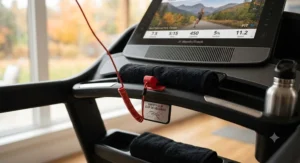
Beyond certification, basic placement and usage precautions matter more than most owners realize: keep cords unbundled and away from foot traffic, ensure the safety clip is attached during every session (especially with kids or pets in the home), and never leave a treadmill running unattended. These aren’t manufacturer overcautions — they reflect the same general electrical safety principles Health Canada applies to any plug-in household appliance, and they’re worth treating with the same seriousness you’d give a space heater or a power tool.
Frequently Asked Questions
❓ What is a good motor size for a home electric treadmill?
❓ Do folding treadmills wear out faster than non-folding ones?
❓ How much does it cost to run a treadmill in Canada?
❓ What incline percentage is worth paying extra for?
❓ Is a smaller treadmill belt safe for running?
Conclusion
There isn’t a single best electric treadmill for every Canadian household — there’s a best one for your space, your budget, and what you’re actually training for. If money and floor space aren’t limiting factors, the NordicTrack Commercial 1750 or Sole F80 offer genuine long-term training depth. If you want serious running capability without an ongoing subscription bill, the Horizon 7.0 AT and XTERRA TRX3500 remain honest, dependable choices. And if your reality is a small apartment where storage matters more than top speed, the Sunny SF-T7515, Echelon Stride 6, or WalkingPad C2 each solve that constraint in a slightly different way.
What all seven have in common is that they were chosen for real, verifiable specs and aggregated owner experience — not marketing copy. Whichever one matches your situation, the biggest factor in getting your money’s worth won’t be the machine itself; it’ll be whether you actually step on it three or four times a week. Pick the one that removes your specific excuse, and the rest tends to follow.
✨ Ready to stop waiting for spring to start moving? Check today’s price on your top pick and get your first walk in this week. 🏃♀️
Recommended for You
- Treadmill For Walking Vs Running: 7 Real Picks for 2026
- 7 Best Treadmill Brands in 2026: Which Ones Are Worth It?
- Treadmill With Incline Under 1000: 7 Real Picks Worth Buying in 2026
Disclaimer: This article contains affiliate links. As an Amazon Associate, I earn from qualifying purchases. If you purchase products through these links, we may earn a small commission at no additional cost to you.
✨ Found this helpful? Share it with a friend who’s been putting off their New Year’s resolution since March! 💬🤗
