In This Article
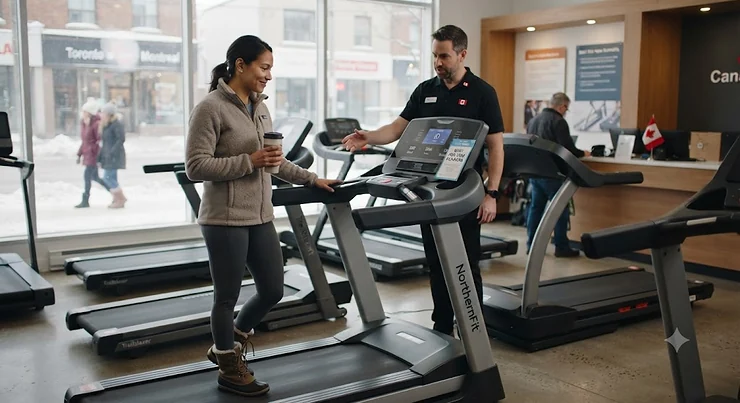
Lacing up for your first run ever is intimidating enough without also trying to guess which machine will actually help you stick with it. A treadmill for new runners isn’t just a smaller, cheaper version of what serious marathoners use — it’s a completely different set of priorities. You need forgiving cushioning that won’t punish your shins on day one, a belt long enough that you’re not clipping the console with every stride, and a console simple enough that you’re focused on your breathing instead of a settings menu. At the time of research, Canadian shoppers on Amazon.ca have more starter-friendly options than ever, from sub-C$600 folding decks to app-connected machines that coach you through your first 5K.
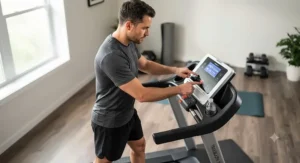
This guide walks through seven real machines currently sold in Canada, all chosen specifically for beginners rather than gym rats chasing a five-minute mile. We looked at shock absorption, running surface size, motor durability, and how each machine supports a structured program like Couch to 5K — the kind of practical detail that actually determines whether you run three times a week or quit after two. According to Canada’s 24-Hour Movement Guidelines, adults should accumulate at least 150 minutes of moderate-to-vigorous activity weekly, and a reliable treadmill for new runners removes the two biggest excuses — bad weather and inconvenient timing — that keep Canadians from hitting that number.
Prices below are ranges in Canadian dollars because Amazon pricing shifts constantly; always check the current listing before buying. If you’ve been putting off buying a treadmill for new runners because the options feel overwhelming, this comparison is built to narrow that down fast. Let’s get into it.
Quick Comparison Table
| Treadmill | Best For | Cushioning Type | Price Range (CAD) |
|---|---|---|---|
| XTERRA TR150 | Most affordable way to start running | XTRASOFT cushioned deck | C$500–C$650 |
| Sunny Health & Fitness SF-T4400 | Quietest motor for apartments | Under-deck shock absorbers | C$650–C$800 |
| NordicTrack T 6.5 Si | Best guided Couch to 5K coaching | FlexSelect (on/off) cushioning | C$1,700–C$1,950 |
| Horizon 7.0 AT | Best shock absorption for new joints | Three-Zone Variable Response | C$1,300–C$1,550 |
| Sole F63 | Longest belt for taller beginners | Cushion Flex Whisper Deck | C$1,550–C$1,750 |
| Bowflex Treadmill 10 | Best for staying entertained mid-run | ComfortTech deck cushioning | C$2,600–C$2,900 |
| NordicTrack Commercial 1750 | Best heart-rate-adaptive training | Runners Flex with ActivePulse | C$3,200–C$3,600 |
Looking at this spread, there’s a real jump in capability once you cross into the C$1,300 range — that’s where three-zone or whisper-deck cushioning systems show up, and for a new runner those systems are doing real work protecting your knees and ankles. Budget picks like the XTERRA TR150 and Sunny Health & Fitness SF-T4400 are genuinely fine for walk-run intervals and early Couch to 5K weeks, but if running three-plus times a week is the actual goal, the mid-range machines earn their price gap in durability and comfort. The premium tier — Bowflex Treadmill 10 and NordicTrack Commercial 1750 — is less about running better and more about whether guided coaching and streaming keep you motivated long-term.
💬 Just one click — help yourself compare current prices before they change again!😊
Top 7 Treadmills for New Runners: Expert Analysis
We picked these seven specifically because each one works as a genuine treadmill for new runners — not because they top a “fastest treadmill” list. Each one balances a beginner-friendly running belt length, real shock absorption, and (where available) a heart rate monitor that keeps early training honest rather than accidentally too intense.
1. XTERRA TR150 — most affordable way to start running
The standout here is simply the price: this is the cheapest realistic entry point into treadmill running most Canadians will find on Amazon.ca. The 2.25 HP motor and 127 cm × 41 cm (50″ × 16″) belt are modest, but the XTRASOFT cushioned deck genuinely softens landings compared to the bare steel-and-rubber decks common at this price. Top speed caps at 16 km/h (10 mph), with three manually adjusted incline positions rather than powered incline — fine for walk-jog intervals, less fine if you want to program a hill workout mid-run.
Based on the spec comparison, this machine suits someone testing whether they’ll actually use a treadmill before investing more, or a smaller-framed runner under about 5’9″ who won’t feel cramped on the shorter belt. Reviewers consistently note the folding mechanism lacks hydraulic assist, so lowering the deck takes a bit of muscle, and the 113 kg (250 lb) weight capacity sits below the roughly 136 kg (300 lb) industry standard for this category.
Aggregated review sentiment across retailer and independent review sites is largely positive on value for money, with the most common complaint being belt length for taller users attempting a longer running stride.
Pros:
- ✅ Lowest price point of any machine on this list
- ✅ XTRASOFT deck noticeably softer than typical budget decks
- ✅ Compact folded footprint suits small apartments
Cons:
- ❌ Belt too short for tall runners to open up their stride
- ❌ Manual incline only, no powered incline adjustment
At around C$500–C$650, the XTERRA TR150 is a reasonable value verdict for anyone who genuinely isn’t sure yet whether treadmill running will stick — just don’t expect it to grow with you past the first few months of consistent training.
2. Sunny Health & Fitness SF-T4400 — quietest motor for apartments
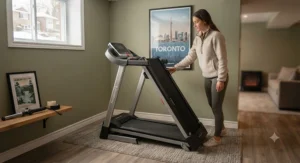
What stands out about the SF-T4400 is how little noise its 2.2 peak HP motor makes at walking and light jogging speeds, which matters more than most beginners expect if you’re training before work or after your neighbours are asleep. The 124 cm × 39 cm (49″ × 15.5″) deck is similarly compact to the TR150, and the under-deck shock absorption system takes noticeable edge off heel strikes during walk-run intervals, even if Sole or Horizon’s systems outperform it at higher speeds.
Here’s what to weigh: max speed tops out at 14.5 km/h (9 mph) and incline maxes at a gentle 4.3%, so this machine is built around brisk walking and light jogging rather than sustained 5K-pace running. That’s actually appropriate for the earliest weeks of a beginner program, where walk-run intervals dominate anyway.
A common theme in aggregated user reviews is praise for the compact folded footprint (6.38 sq ft) and quiet operation, with the most frequent criticism being that the 100 kg (220 lb) weight capacity and 9 mph top speed feel limiting once a runner progresses past the first couple of months.
Pros:
- ✅ Exceptionally quiet motor for shared walls or condos
- ✅ Nine built-in beginner-oriented workout programs
- ✅ Small footprint folds down to under 6.4 sq ft
Cons:
- ❌ Lower 100 kg weight capacity than most rivals here
- ❌ 9 mph top speed limits room to grow into faster running
At roughly C$650–C$800, the value verdict is strong specifically for apartment dwellers starting with walking and interval jogging, though runners planning to progress quickly may outgrow it within a year.
3. NordicTrack T 6.5 Si — best guided Couch to 5K coaching
The headline feature is the built-in 10-inch HD touchscreen paired with a full year of iFit membership, which turns this into the closest thing on this list to having a coach standing next to the console. The 51 cm × 140 cm (20″ × 55″) belt sits mid-pack in length, and the FlexSelect cushioning system lets you toggle impact absorption on for joint-friendly runs or off when you want a firmer, more road-like feel — a genuinely useful feature most budget decks simply don’t offer.
Based on the spec comparison, this is arguably the single best machine here for someone specifically following a structured beginner plan: iFit’s library includes trainer-led interval and endurance sessions where instructors adjust your speed and incline in real time, which removes the guesswork that trips up a lot of first-time treadmill runners. The 2.6 HP motor and 136 kg (300 lb) capacity are adequate rather than exceptional, and NordicTrack itself markets this as suited to light-to-moderate cardio rather than serious speed work.
Reviewers consistently flag the touchscreen and included membership as the standout value driver, while the most common complaint involves the ongoing iFit subscription cost after the first free year — worth budgeting for before you buy.
Pros:
- ✅ Trainer-led iFit programs map well onto Couch to 5K style plans
- ✅ FlexSelect lets you toggle cushioning on or off
- ✅ 10-inch HD touchscreen built directly into the console
Cons:
- ❌ iFit membership required after year one for full functionality
- ❌ Compact deck may feel tight for runners over roughly 6 feet
At about C$1,700–C$1,950, the value verdict favours anyone who wants structure and accountability baked into the machine rather than figuring out a beginner plan alone.
4. Horizon 7.0 AT — best shock absorption for new joints
The Three-Zone Variable Response Cushioning system is the reason this machine earns its spot: it’s genuinely engineered with softer absorption under the front landing zone, a firmer push-off zone at the rear, and moderate cushioning through the middle, which mimics how your foot actually loads through a stride. Paired with a 51 cm × 152 cm (20″ × 60″) belt — a meaningful step up from the budget options above — and a 3.0 HP motor, this is a treadmill built with running, not just walking, in mind.
What most buyers overlook about this model is that the 15% max incline and 19 km/h (12 mph) top speed give a new runner years of headroom to progress without needing to upgrade equipment, which matters given how much a treadmill purchase costs upfront. The trade-off is a Bluetooth heart rate connection that only works with certain compatible apps rather than being universally plug-and-play, so it’s worth checking compatibility with whatever chest strap or watch you already own.
Aggregated reviewer sentiment consistently highlights the cushioning as noticeably gentler on knees and shins than similarly priced competitors, particularly from people managing joint sensitivity or returning to running after time off.
Pros:
- ✅ Three-zone cushioning specifically engineered for running gait
- ✅ Full 60-inch belt accommodates taller runners comfortably
- ✅ 15% incline range supports years of progressive training
Cons:
- ❌ Heart rate connectivity limited to certain compatible apps
- ❌ No built-in touchscreen; relies on a bracket for your own tablet
The value verdict at roughly C$1,300–C$1,550 is strong: for a new runner with any joint concerns at all, this is arguably the best shock absorption relative to price on this entire list.
5. Sole F63 — longest belt for taller beginners
Sole’s Cushion Flex Whisper Deck is the headline feature, with the manufacturer citing roughly a 40% reduction in impact compared to running on pavement — a meaningful claim given how many new runners deal with shin splints in month one. The 51 cm × 152 cm (20″ × 60″) belt matches the Horizon above in length, which specifically benefits taller beginners who need room to extend their stride without feeling boxed in by the console.
Here’s what to weigh: the 3.0 HP motor and 147 kg (325 lb) weight capacity put this solidly in the mid-range tier for durability, and the 0–15% incline gives plenty of room to add walking-incline workouts as a lower-impact alternative to running on tired days. Reviewers note some frame wobble at maximum speed, which is a fair trade-off consideration if you plan on regularly training near the 19 km/h top end — something most true beginners won’t be doing for a while anyway.
A recurring theme in aggregated customer feedback is genuine surprise at the build quality for the price, with reviewers specifically calling this a strong beginner value pick precisely because it skips flashy touchscreen tech in favour of a comfortable, durable deck.
Pros:
- ✅ Cushion Flex Whisper Deck cited at roughly 40% less impact than pavement
- ✅ Full 60-inch belt suits taller runners’ natural stride
- ✅ Foldable design cuts footprint by roughly 35% when stored
Cons:
- ❌ Some wobble reported at maximum speed during testing
- ❌ No native touchscreen or decline training capability
At around C$1,550–C$1,750, the value verdict favours taller beginners and anyone prioritizing deck comfort over app-based coaching features.
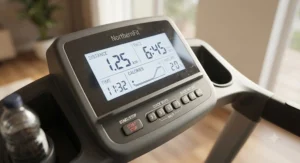
6. Bowflex Treadmill 10 — best for staying entertained mid-run
The standout advantage is entertainment: this machine includes access to Netflix and Prime Video streaming alongside the JRNY app’s adaptive, trainer-led studio classes, which directly targets the single biggest reason beginners quit — boredom. The 56 cm × 152 cm (22″ × 60″) belt is the widest on this list, and ComfortTech deck cushioning is designed specifically to reduce joint strain, though Bowflex hasn’t publicly confirmed the exact motor horsepower, which is a transparency gap worth noting.
Based on the spec comparison, the -5% to 15% incline range stands out because decline training is rare at this price point and genuinely useful for building running-specific leg strength beyond flat-belt jogging. JRNY’s adaptive workouts adjust difficulty based on an initial fitness assessment, which is a thoughtful touch for someone who has no idea what pace or incline to start at.
Aggregated reviews commonly praise the entertainment integration and included Bluetooth heart rate armband, while the recurring concern is the ongoing JRNY subscription cost ($19.99/month or roughly $149/year) once the two-month free trial ends.
Pros:
- ✅ Netflix and Prime Video streaming built directly into the console
- ✅ JRNY app adapts difficulty to your actual fitness level
- ✅ Rare decline capability alongside a strong 15% incline
Cons:
- ❌ Manufacturer hasn’t disclosed exact motor horsepower
- ❌ JRNY subscription required for full adaptive coaching after trial
The value verdict at roughly C$2,600–C$2,900 makes sense for a new runner who knows they need entertainment and accountability to stay consistent, rather than someone who just wants a simple, quiet deck.
7. NordicTrack Commercial 1750 — best heart-rate-adaptive training
ActivePulse technology is the defining feature of this machine: it reads your heart rate through the handlebar grips or a connected Bluetooth monitor and automatically adjusts speed and incline to keep you in your target zone, which takes the guesswork entirely out of pacing for a beginner who doesn’t yet know what “moderate effort” feels like. The 4.25 CHP motor is the strongest on this list, and the 56 cm × 152 cm (22″ × 60″) Runners Flex cushioned deck can be toggled on or off depending on how much impact absorption you want.
What most buyers overlook about a machine like this is that the -3% to 12% incline/decline range and 181 kg (400 lb) weight capacity mean it’s genuinely built to last through years of increasingly serious training, not just a beginner’s first few months. iFit’s extensive class library, including studio and outdoor-filmed routes via Google Maps integration, pairs naturally with structured programs like Couch to 5K once you’re ready to progress beyond the app’s beginner tier.
Reviewer sentiment consistently ranks this among the better-built home treadmills in its category, with the most common caveat being that the premium price and iFit subscription commitment are hard to justify unless you’re confident you’ll use the advanced features.
Pros:
- ✅ ActivePulse automatically paces workouts to your heart rate
- ✅ Strongest motor and highest weight capacity on this list
- ✅ Rare decline training alongside a 12% incline range
Cons:
- ❌ Highest price point of any machine reviewed here
- ❌ Full functionality depends on an ongoing iFit subscription
At roughly C$3,200–C$3,600, the value verdict only makes sense for a new runner who is confident they’ll stay consistent and wants a machine that scales with them for years rather than months.
Top 7 Treadmills at a Glance: Full Spec Comparison
| Treadmill | Motor | Belt Size | Incline | Weight Capacity | Price Range (CAD) |
|---|---|---|---|---|---|
| XTERRA TR150 | 2.25 HP | 127 cm × 41 cm | 3 manual levels | 113 kg (250 lb) | C$500–C$650 |
| Sunny Health & Fitness SF-T4400 | 2.2 peak HP | 124 cm × 39 cm | 0–4.3% | 100 kg (220 lb) | C$650–C$800 |
| NordicTrack T 6.5 Si | 2.6 HP | 140 cm × 51 cm | 0–10% | 136 kg (300 lb) | C$1,700–C$1,950 |
| Horizon 7.0 AT | 3.0 HP | 152 cm × 51 cm | 0–15% | 147 kg (325 lb) | C$1,300–C$1,550 |
| Sole F63 | 3.0 HP | 152 cm × 51 cm | 0–15% | 147 kg (325 lb) | C$1,550–C$1,750 |
| Bowflex Treadmill 10 | Undisclosed (rumoured 4.0 HP) | 152 cm × 56 cm | -5% to 15% | 181 kg (400 lb) | C$2,600–C$2,900 |
| NordicTrack Commercial 1750 | 4.25 CHP | 152 cm × 56 cm | -3% to 12% | 181 kg (400 lb) | C$3,200–C$3,600 |
Side by side, the motor and weight-capacity jump between the sub-C$800 tier and everything above C$1,300 is the real story: the Bowflex Treadmill 10 and NordicTrack Commercial 1750 carry nearly double the weight capacity of the XTERRA TR150 or Sunny Health & Fitness SF-T4400, which translates directly into a sturdier feel at speed and a longer service life. Incline range tells a similar story — only the two premium picks offer decline training, which matters for building running-specific strength but isn’t essential for a true beginner’s first few months. For most people starting out, the Horizon 7.0 AT and Sole F63 sit in the sweet spot of a full 152 cm belt and genuine cushioning engineering without premium-tier pricing.
Practical Usage Guide: Your First 30 Days on a New Treadmill
Getting a treadmill for new runners into your home is the easy part; using it correctly in the first month is what actually determines whether it becomes a lasting habit or a very expensive clothes rack. Start with the manual, seriously — every machine above has a slightly different starting sequence, safety clip placement, and belt lubrication schedule, and skipping that step is the single most common reason belts wear unevenly within the first year.
For your first week, resist the urge to run. Walk at a comfortable pace for 10–15 minutes to let your body learn the fixed rhythm of a moving belt, which feels different from outdoor ground contact even for people who already run outside. From week two onward, most beginner programs (including Couch to 5K style plans) introduce short jogging intervals of 60–90 seconds inside longer walking blocks — exactly the pattern the budget and mid-range machines above are built to handle well.
Maintenance-wise, vacuum under the deck monthly to prevent dust buildup around the motor, and apply silicone belt lubricant every three months or as your manual specifies — most warranty claims on cheaper decks trace back to skipped lubrication rather than manufacturing defects. Finally, place any treadmill on a proper mat; it protects flooring, reduces vibration noise for neighbours below, and keeps the machine level, which matters for belt tracking and long-term motor health.
Real-World Scenarios: Which Treadmill Fits Your Running Goals
If you’re a condo dweller in Toronto training for your first 5K with thin walls and a noise-conscious downstairs neighbour, the Sunny Health & Fitness SF-T4400 or XTERRA TR150 make the most sense — both prioritize quiet operation and a small folded footprint over speed you won’t use in month one anyway.
If you’re a parent in the suburbs squeezing in 30 minutes before the kids wake up and need something that keeps you accountable without a coach standing over your shoulder, the NordicTrack T 6.5 Si is worth the jump in price specifically because iFit’s guided sessions replace the structure a running group would normally provide.
If you’re recovering from a knee injury or simply know your joints have never loved impact sports, prioritize the Horizon 7.0 AT or Sole F63 — both were built around genuine shock-absorption engineering rather than treating cushioning as a marketing afterthought. And if budget genuinely isn’t the constraint and you want a machine that will still challenge you three years from now, the NordicTrack Commercial 1750 and its ActivePulse heart-rate pacing offer the most room to grow.
✨ Not sure which fits your situation? Scroll back to the comparison table above and match your priority — quiet, guided, cushioned, or long-term — to your pick.
How to Choose a Treadmill for New Runners
Picking the best treadmill to start running on comes down to a handful of decisions that matter far more than a spec sheet’s headline numbers:
- Prioritize cushioning over top speed. A true beginner rarely needs a 12 mph top speed in month one, but poor shock absorption can cause shin splints that sideline you entirely.
- Check the running belt length against your height. As a rough rule, anyone over roughly 5’8″ should look for a belt at least 55–60 inches (140–152 cm) long to avoid a cramped stride.
- Confirm the incline range supports variety. Even a modest 10–15% incline lets you substitute a brisk incline walk for a run on days your joints need a break.
- Look for a heart rate monitor, even a basic one. Grip sensors aren’t lab-accurate, but they’re enough to keep a beginner from consistently overtraining in the first few weeks.
- Weigh app-based coaching against your own motivation style. If you know you need structure, iFit or JRNY subscriptions are worth the added monthly cost; if you’re self-directed, a simpler console saves money.
- Verify the weight capacity with margin to spare. Manufacturers rate machines at their absolute limit — buying with 20–30 kg of headroom above your body weight extends the motor and deck’s lifespan.
- Confirm CSA certification on the electrical components. Any treadmill sold legitimately in Canada should carry CSA or equivalent certification, which matters for insurance and basic electrical safety in a home gym.
Treadmill Cushioning and Shock Absorption Explained
Getting treadmill cushioning for new runners right is arguably the single most misunderstood spec decision you’ll make, and it’s genuinely worth 200 words of your attention before you buy. Every running stride sends roughly 2–3 times your body weight through your joints on impact, and a treadmill’s cushioning system exists specifically to reduce how much of that force transfers straight up through your shins and knees.
Good treadmill cushioning for new runners doesn’t need to be complicated, but it does need to be intentional rather than an afterthought. The systems above the roughly C$1,300 mark — Horizon’s Three-Zone Variable Response and Sole’s Cushion Flex Whisper Deck — use engineered elastomer or spring elements placed strategically under the deck rather than relying on a single uniform pad. That’s a meaningful practical difference: Horizon’s design specifically softens the front landing zone while keeping the rear push-off zone firmer, matching how your foot actually loads through a natural gait cycle. Budget decks like the XTERRA and Sunny models still cushion better than bare pavement, but they use a simpler, uniform foam layer that doesn’t differentiate by zone.
What most buyers overlook is that adjustable cushioning — like NordicTrack’s FlexSelect, found on the T 6.5 Si — lets you dial impact absorption up for recovery runs and down for a firmer, faster-feeling session, which is a genuinely useful middle ground most single-setting decks can’t offer.
Running Belt Length: Why Size Matters for New Runners
Running belt length gets far less attention than motor horsepower, but it’s arguably more important for a beginner’s actual comfort and safety. A belt that’s too short forces you to shorten your natural stride to avoid clipping the front console or stepping off the back rail — and that unnatural gait compensation is a documented contributor to overuse injuries in new runners.
Among the machines reviewed here, belt lengths range from a compact 127 cm (50″) on the XTERRA TR150 up to 152 cm (60″) on the Horizon 7.0 AT, Sole F63, Bowflex Treadmill 10, and NordicTrack Commercial 1750. As a practical guideline, runners under roughly 5’6″ are usually comfortable on a 127–140 cm belt, while anyone taller — or with a naturally longer stride even at average height — should prioritize the 152 cm options to avoid feeling cramped once jogging intervals lengthen.
Width matters too, if less dramatically: most beginner-appropriate decks run 40–56 cm (16″–22″) wide, and wider decks reduce the mental effort of staying centred, which matters when you’re still building confidence on a moving belt. When you’re comparing listings on Amazon.ca, checking running belt length before checking motor horsepower will save you from buying a machine you’ll outgrow within a season.
Heart Rate Monitors: Training Smarter as a Beginner
A heart rate monitor isn’t a luxury feature on a treadmill for new runners — it’s arguably the most practical tool for making sure early training actually builds fitness instead of just building fatigue. Reviewers consistently note that the biggest mistake first-time treadmill runners make is running too hard, too often, which stalls progress and increases injury risk.
Most machines on this list include basic contact grip sensors built into the handlebars, which read your pulse when you hold them — not lab-accurate, but useful enough to spot-check effort level during a session. The NordicTrack Commercial 1750 goes further with ActivePulse technology, actively adjusting your speed and incline in real time to keep your heart rate inside a target zone, which is genuinely useful for a beginner who hasn’t yet developed an intuitive sense of pacing. According to the Heart and Stroke Foundation of Canada, building activity gradually and monitoring effort helps establish a sustainable habit rather than one that burns out within weeks.
If your chosen treadmill only offers grip sensors, a separate Bluetooth chest strap paired with a fitness app is a worthwhile roughly C$50–C$100 add-on for more consistent, hands-free readings during longer runs.
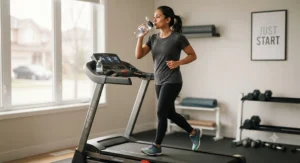
Making Couch to 5K Work on a Treadmill
A treadmill for couch to 5k training solves the two hardest logistics problems of that program: precise pacing and reliable interval timing. Outdoors, judging a “brisk walk” versus a “light jog” pace is guesswork; on a treadmill, you set 5.5 km/h for walking intervals and 8–9 km/h for jogging intervals and the belt enforces it exactly, every single session.
The NordicTrack T 6.5 Si is particularly well suited to this because iFit’s trainer-led sessions include structured interval workouts that mirror the walk-jog progression most Couch to 5K plans follow, with an instructor cueing pace and incline changes so you’re not fumbling with buttons mid-interval. If you’re using a printed or app-based plan on a simpler machine like the XTERRA TR150 or Sunny Health & Fitness SF-T4400 instead, set your intervals before you start and use the console’s built-in timer rather than trying to watch a phone screen while running.
If you’re shopping specifically for a treadmill for couch to 5k use, prioritize a simple, reliable interval timer over flashy extras — the program only needs accurate timing and a comfortable belt to work. One genuinely underused trick: set a 1–2% incline for every session, even on a simpler console. It approximates outdoor wind resistance and ground variation, which means the fitness you build indoors transfers more directly once you eventually take the program outside. Canadian Running Magazine notes that structured walk-run progressions like Couch to 5K remain one of the most reliable ways for true beginners to build toward their first 5K without early injury or burnout.
Common Mistakes New Runners Make on a Treadmill
Even the best treadmill to start running won’t save you from a handful of predictable beginner mistakes. First, holding the front or side handrails while running distorts your natural gait and posture, and reviewers across independent test sites consistently flag it as a habit that’s hard to break once established — try to only use rails for balance checks, not constant support.
Second, starting every session at too high an incline or speed relative to your actual fitness is the fastest route to shin splints; the “how to choose” criteria above exist precisely to help you buy a machine with enough range that you’re not maxing it out in week one. Third, skipping a proper warm-up — even just 3–5 minutes of walking before any jogging interval — is a common and easily avoidable cause of early-session injury.
Finally, many beginners ignore belt maintenance entirely, and a poorly lubricated or misaligned belt doesn’t just wear out faster — it creates subtle friction that changes your natural cadence without you noticing. A five-minute monthly check, per your specific model’s manual, avoids the problem entirely. It’s also worth periodically checking Canada’s consumer product recall database for your specific model — treadmill recalls do happen, and registering your machine with the manufacturer ensures you’re notified directly if a safety issue ever comes up.
Treadmill vs Outdoor Running for New Runners
| Factor | Treadmill | Outdoor Running | Best For |
|---|---|---|---|
| Joint impact | Cushioned deck reduces impact | Pavement offers no cushioning | Treadmill, for new/recovering joints |
| Weather reliability | Unaffected by rain, ice, or heat | Canadian winters limit consistency | Treadmill, for year-round habit-building |
| Pacing control | Belt enforces exact pace/incline | Pace drifts based on feel and terrain | Treadmill, for structured programs |
| Cost over time | Upfront cost, no ongoing gear needs | Free, but requires proper footwear/gear | Outdoor, for lower long-term cost |
| Mental engagement | Can feel monotonous without media | Scenery and variability boost motivation | Outdoor, for motivation |
The honest analysis here is that neither option is objectively better for a true beginner — they solve different problems. A treadmill for new runners removes weather and pacing as obstacles, which matters enormously for consistency during a Canadian winter, but outdoor running builds genuine terrain adaptation and typically feels less monotonous over a long training block. Many successful beginners actually use both: treadmill sessions on bad-weather days or for precise interval work, outdoor runs on clear days once basic fitness and confidence are established.
🏃 Ready to build a consistent habit regardless of the weather outside? Check today’s price on your top pick above before the listing changes.
Long-Term Cost and Maintenance
The sticker price on any of these seven machines is only part of the real cost of ownership. Budget decks like the XTERRA TR150 and Sunny Health & Fitness SF-T4400 typically need belt replacement or motor servicing sooner — often within 3–5 years of regular use — because lighter-duty motors and simpler cushioning systems wear faster under consistent running (versus occasional walking) loads.
Mid-range and premium machines with steel-flywheel motors and multi-zone cushioning, like the Horizon 7.0 AT, Sole F63, and NordicTrack Commercial 1750, are generally built for 7–10+ years of regular use, which meaningfully changes the cost-per-use math even though the upfront price is two to five times higher. Subscription-dependent machines add a recurring line item worth budgeting honestly: iFit and JRNY both run in the range of C$180–C$250 annually after included trial periods, and losing that subscription can noticeably reduce a machine’s usefulness if you’ve come to rely on guided coaching.
Basic upkeep — belt lubrication every 3 months, monthly dust removal, and periodic belt alignment checks — costs under C$30 a year in supplies and is genuinely the difference between a treadmill lasting a decade or needing a costly motor replacement within three years.
| Tier | Typical Price Range (CAD) | Expected Lifespan | Subscription Needed | Value Verdict |
|---|---|---|---|---|
| Budget | C$500–C$800 | 3–5 years | No | Best for testing the habit before investing more |
| Mid-range | C$1,300–C$1,950 | 7–10 years | Optional (iFit on select models) | Best long-term value for genuine runners |
| Premium | C$2,600–C$3,600 | 8–10+ years | Often required for full features | Best for buyers who want coaching built in |
Framed this way, the mid-range tier is arguably where the real value lives for most new runners: you get engineered cushioning and a durable motor without committing to an ongoing subscription fee, while still leaving room to add app-based coaching later if you decide you want it.
Frequently Asked Questions
❓ What is the best treadmill for new runners in Canada?
❓ How long should a treadmill running belt be for a beginner?
❓ Do I need a treadmill with a built-in heart rate monitor?
❓ Is a treadmill or outdoor running better for a true beginner?
❓ How much does a good beginner treadmill cost in Canada?
Conclusion
Choosing a treadmill for new runners really comes down to matching the machine to the runner you actually are today, not the one you hope to become in a year. If budget and apartment noise are your main constraints, the XTERRA TR150 or Sunny Health & Fitness SF-T4400 get you moving without overcommitting financially. If joint comfort and long-term durability matter most, the Horizon 7.0 AT and Sole F63 offer genuinely engineered shock absorption at a fair mid-range price. And if structured coaching or heart-rate-adaptive pacing will keep you consistent, the NordicTrack T 6.5 Si, Bowflex Treadmill 10, and NordicTrack Commercial 1750 each offer a different flavour of guided support worth the higher investment.
Whichever you choose, remember that the “best” treadmill to start running on is ultimately the one that fits your space, your budget, and your motivation style closely enough that you’ll actually use it three times a week, not just in January. Combined with a sensible program like Couch to 5K and basic attention to belt length, cushioning, and heart rate, any of these seven machines can genuinely take you from your first cautious walk to your first completed 5K.
Recommended for You
- 7 Best Treadmills for Small Apartments in Canada (2026)
- 7 Best Simple Treadmills for Home in 2026 (Easy; Reliable)
- Folding Treadmill vs Manual Treadmill for Beginners—7 Real Picks 2026
Disclaimer: This article contains affiliate links. As an Amazon Associate, I earn from qualifying purchases. If you purchase products through these links, we may earn a small commission at no additional cost to you.
✨ Found this helpful? Share it with your friends! 💬🤗
