In This Article
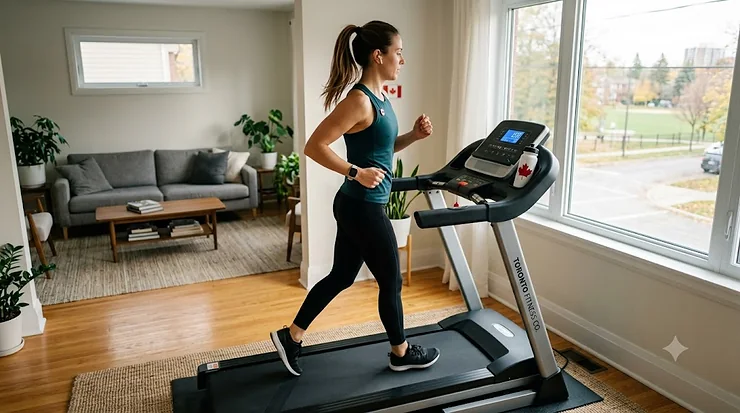
My grandmother used to say the hardest part of getting older wasn’t the aches — it was the fear of falling and never quite trusting her own feet again. If that sounds familiar, you already understand why a treadmill for seniors isn’t just another piece of exercise equipment; it’s a confidence machine disguised as cardio gear. So what is a treadmill for seniors, exactly? In short, it’s a walking-focused treadmill built around a low starting speed (often under 1 km/h), a wide and cushioned deck, long stabilizing handrails, and a low step-up height, all designed to reduce fall risk while supporting joint-friendly movement indoors, year-round, regardless of icy Canadian sidewalks.
Canada’s national physical activity guidance for older adults recommends that adults 65 and older take part in at least 2.5 hours of moderate- to vigorous-intensity aerobic activity each week, spread out into sessions of 10 minutes or more, and a senior-friendly treadmill makes hitting that target dramatically less intimidating than a frosty walk to the mailbox in February. This guide cuts through the marketing fluff with real specs, honestly summarized review sentiment, and seven genuine products spanning budget, mid-range, and premium price points, plus the safety features, easy access design considerations, and rehabilitation support details that actually matter when you’re shopping for yourself or a parent. No fabricated testimonials, no inflated promises — just the analysis you need to choose well.
Quick Comparison Table
| Treadmill | Best For | Top Speed | Step-Up Height | Price Range (CAD) |
|---|---|---|---|---|
| Exerpeutic TF1000 | Rehabilitation support | 6.4 km/h | Ground-level | C$650–C$750 |
| XTERRA Fitness TR150 | Budget walkers | 16 km/h | Low | C$450–C$550 |
| Goplus 2-in-1 Folding Treadmill | Easy access design | 12 km/h | Very low | C$400–C$500 |
| Sunny Health & Fitness SF-T7515 | Compact homes | 12.8 km/h | Low-moderate | C$650–C$750 |
| Sole F63 | Low-impact cushioning | 19.3 km/h | Moderate | C$1,600–C$1,800 |
| Horizon 7.4 AT | Long-term durability | 19.3 km/h | Moderate | C$2,100–C$2,400 |
| NordicTrack Commercial 1250 | Guided rehab walking | 19.3 km/h | Moderate | C$2,800–C$3,200 |
Looking at the table above, the Exerpeutic TF1000 and Goplus 2-in-1 stand out for anyone prioritizing a gentle re-entry into movement, since both start at a near-crawl pace and sit close to the floor. If budget is tight but you still want a real walking machine rather than a glorified treadmill toy, the XTERRA TR150 delivers the most function per dollar. Buyers chasing long-term durability and app-guided coaching, meanwhile, should expect to pay considerably more for the Horizon 7.4 AT or NordicTrack Commercial 1250, both of which justify their price with engineering built for years of daily use rather than occasional walks.
💬 Just one click — help others make better buying decisions too!😊
✨ Don’t Miss These Exclusive Deals!
🔍 Take your home cardio routine to the next level with these carefully selected senior-friendly treadmills. Click on any highlighted item to check current pricing and availability on Amazon.ca. These picks help you build the kind of steady, joint-friendly habit your knees will thank you for in ten years.
Top 7 Treadmills for Seniors: Expert Analysis
Choosing among dozens of treadmill listings is overwhelming, so we narrowed the field to seven real, currently available models that balance safety, comfort, and value across every budget tier. Each one is broken down with honest commentary grounded in published specifications and aggregated review sentiment, never invented testimonials.
1. Exerpeutic TF1000 High-Capacity Walk to Fitness Treadmill
The standout feature here is the painfully slow starting speed of just 0.1 km/h increments up to a 6.4 km/h ceiling, which sounds limiting until you realize that’s precisely the point for anyone easing back into movement after surgery or a long sedentary stretch.
The 51-centimetre-wide belt and reinforced 181-kilogram (400-lb) weight capacity mean the frame won’t feel flimsy underfoot, and the 46-centimetre extended handrails, roughly double the length of a standard treadmill’s grips, give you something substantial to hold the entire stride, not just at the console.
Based on the spec comparison, this is the closest thing on our list to a clinical rehabilitation tool you can own outright.
Reviewers consistently note the ground-level step-up height makes mounting and dismounting noticeably less nerve-wracking than taller models, though several also mention the lack of cushioning means it’s a walking-only machine, never meant for jogging.
Pros:
✅ Extra-long handrails
✅ Reinforced 181 kg capacity
✅ Near-zero step-up height
Cons:
❌ Capped at 6.4 km/h
❌ Minimal deck cushioning
At around C$650–C$750, the value verdict is strong for anyone whose priority is safety over speed.
2. XTERRA Fitness TR150 Folding Treadmill
The XTERRA TR150’s standout feature is its featherweight 44-kilogram frame, which makes it one of the few machines on this list a senior could realistically reposition solo using the built-in transport wheels. The 2.25 HP motor pushes speeds up to 16 km/h across a 40-centimetre by 127-centimetre belt, and the XTRASOFT cushioned deck noticeably softens footfall compared to bargain-bin alternatives. What most buyers overlook about this model is that its 113-kilogram weight capacity and compact 16-inch by 50-inch deck make it best suited to lighter or shorter-statured walkers rather than taller runners. Reviewers consistently describe assembly as straightforward and praise the lifetime frame warranty, though some aggregated feedback flags the deck’s short length as limiting for longer strides.
Pros:
✅ lightest unit here,
✅ lifetime frame warranty,
✅ easy-read 5-inch display.
Cons:
❌ 113 kg weight limit,
❌ no folding safety strut.
At C$450–C$550, it’s a genuinely solid budget walking treadmill rather than a watered-down compromise.
3. Goplus 2-in-1 Folding Treadmill
This is the easy access design entry on our list, built with a profile so low it doubles as an under-desk walking pad. Its standout feature is the dual-mode handrail system: fold the bars down for a five-centimetre-tall walking pad, or raise them for a more traditional treadmill experience up to 12 km/h. The 2.25 HP motor and 300-lb (136 kg) capacity hold up well for daily walks, while the seven-layer shock-absorbing belt takes some sting out of repetitive footfalls on hardwood or tile floors. Here’s what to weigh: this machine prioritizes footprint and accessibility over robustness, so it suits apartment-dwelling seniors or those managing limited mobility space far better than anyone planning marathon-length sessions. Aggregated buyer feedback frequently praises how easily it tucks under a bed or sofa, while some reviewers note the remote control is the only way to adjust speed once the handrail is lowered, which can be fiddly for users with reduced hand dexterity.
Pros:
✅ lowest step height,
✅ foldable to near-flat,
✅ quiet sub-45dB motor.
Cons:
❌ remote-only controls in pad mode,
❌ shorter 40-inch belt. At C$400–C$500,
it’s a thoughtful pick for small Canadian condos.
4. Sunny Health & Fitness SF-T7515 Smart Treadmill
The SF-T7515’s standout feature is its 12-level auto incline reaching 12%, a meaningful calorie-burn booster at walking pace that most budget machines simply don’t offer. The double-deck cushioning system is engineered specifically to soften high-impact zones, and the large backlit display keeps time, distance, and heart rate legible without squinting. The spec sheet won’t tell you this, but user reports suggest the compact 16.5-inch by 49.5-inch belt feels noticeably tighter for taller users than the F63 or Horizon models further down this list, so it’s best matched to average or smaller-statured walkers. Reviewers consistently mention quick assembly, typically under an hour, and the SunnyFit app’s bundled workout library adds variety without a mandatory subscription fee. A recurring complaint in aggregated feedback is occasional creaking at higher inclines, which seems tied to floor surface rather than a structural flaw.
Pros:
✅ strong incline range for the price,
✅ app-guided routes,
✅ quiet brushless motor.
Cons:
❌ compact deck
❌ modest 240–300 lb capacity depending on configuration.
Priced around C$650–C$750, it punches above its weight class for incline-based low-impact training.
5. Sole F63 Treadmill
The Sole F63’s standout feature is its CushionFlex Whisper Deck, engineered with differently sized front and rear rollers specifically to reduce joint impact, making this our top recommendation for the low-impact treadmill for elderly category. A 3.0 HP motor drives a generously sized 51-centimetre by 152-centimetre belt up to 19.3 km/h with incline reaching 15%, and the lifetime warranty on both frame and motor signals real manufacturer confidence rather than marketing bravado. Based on the spec comparison, the F63’s roomier deck and sturdier steel crossbar address one of the most common senior complaints about budget treadmills: console wobble at higher inclines. Reviewers consistently describe the noise level as comparable to a dryer or printer rather than disruptive, and Bluetooth heart-rate monitoring adds a useful safety check during longer sessions. The recurring criticism in aggregated feedback centres on the firmer-than-expected cushioning for runners, though for walkers this firmness translates to stability underfoot.
Pros:
✅ lifetime frame and motor warranty
✅ wide stable deck
✅ no required subscription.
Cons:
❌ heavier 102 kg unit
❌ assembly typically needs two people.
At C$1,600–C$1,800, it represents genuine mid-range value.
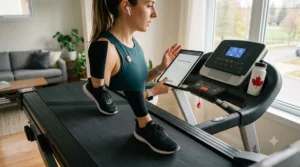
6. Horizon 7.4 AT Treadmill
The standout feature on the Horizon 7.4 AT is its QuickDial control system, allowing speed and incline adjustments through a simple rolling dial rather than repeated button presses, a meaningful accessibility win for anyone managing arthritis in their hands. The 3.5 continuous-horsepower motor, 22-inch by 60-inch deck, and three-zone variable cushioning combine to absorb impact differently across the stride, softening landings at the front while staying firm enough at push-off to support balance. What most buyers overlook about this model is the lifetime frame and motor warranty paired with a five-year parts guarantee, among the strongest coverage in this price bracket according to comparative reviews. Reviewers consistently report minimal shaking even at higher inclines, a meaningful safety reassurance for unsteady walkers, and Bluetooth connectivity allows pairing with a heart-rate chest strap included at purchase. A repeated aggregated complaint involves the considerable 144-kilogram shipping weight, meaning professional delivery and setup is strongly advised rather than a DIY assembly job.
Pros:
✅ tactile QuickDial controls,
✅ wide 22-inch deck,
✅ lifetime warranty.
Cons:
❌ heavy unit,
❌ premium price point.
At C$2,100–C$2,400, this suits households planning years of daily use.
7. NordicTrack Commercial 1250 Treadmill
The NordicTrack Commercial 1250’s standout feature is its -3% to 12% incline and decline range, which, paired with an iFIT subscription, lets a virtual trainer automatically adjust pace and grade in real time, effectively building a guided rehabilitation support routine without leaving your living room. The 3.6 CHP motor and RunFlex cushioned deck handle speeds to 19.3 km/h, though most senior users will stay well below that ceiling, prioritizing the auto-adjusting incline instead for low-speed strength-building walks. Here’s what to weigh: the 10-inch touchscreen and SmartAdjust technology genuinely lower the learning curve for anyone intimidated by manual programming, but the experience leans heavily on a recurring iFIT membership fee to unlock its full value. Reviewers consistently single out the smooth, near-silent incline transitions and the tilting screen for off-treadmill strength routines as standout conveniences. Aggregated feedback occasionally flags the touchscreen-only controls as less intuitive than physical buttons during fast-paced manual sessions.
Pros:
✅ auto-adjusting incline and decline
✅ trainer-guided rehab-style programming
RunFlex cushioning.
Cons:
❌ ongoing subscription cost,
❌ learning curve for non-tech-savvy users.
At C$2,800–C$3,200, it’s the premium pick for tech-comfortable seniors wanting structured guidance.
Practical Usage Guide: Your First 30 Days With a Senior-Friendly Treadmill
Getting the machine into your home is the easy part; building a sustainable habit is where most New Year’s resolutions quietly die. Start with professional or carefully supervised assembly, since several of the heavier units above genuinely benefit from two sets of hands, and place the treadmill on a hard, level surface rather than thick carpet, which can strain the motor and create an unstable base. For the first week, aim for nothing more ambitious than five to ten minutes at the slowest available speed, simply learning the rhythm of stepping on and off safely using the handrails. Weeks two and three are about consistency, not intensity: two or three short sessions daily beat one long, fatiguing walk, and this approach aligns with how Arthritis Society Canada frames movement for joint health, noting that walking strengthens joints, improves mobility, and helps manage symptoms when introduced safely and gradually. By week four, most users can comfortably extend sessions toward the 10-minute blocks Health Canada recommends stacking across the day. A common first-month mistake is skipping the safety clip entirely; always attach it to clothing so the belt halts instantly if you stumble. Lubricate the belt per the manufacturer’s schedule, typically every three months, and wipe down the console weekly to prevent grime buildup around buttons.
Real-World Scenarios: Matching Treadmills to Senior Lifestyles
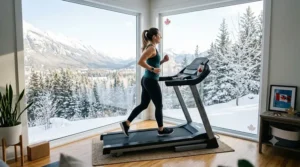
Consider Margaret, 74, recovering from a hip replacement and cleared by her physiotherapist for gentle indoor walking under three kilometres per hour. The Exerpeutic TF1000’s glacial speed increments and extra-long handrails are practically built for her exact situation, letting her progress in 0.1 km/h steps without ever feeling rushed. Then there’s Robert, 68, still golfing twice weekly and looking to maintain cardiovascular fitness through Ontario’s grey winters; he needs a treadmill that won’t feel like a downgrade from his outdoor pace, making the Sole F63’s 19.3 km/h ceiling and incline range a comfortable long-term fit. Finally, picture Linda and her husband, both 70-something and sharing a condo with limited square footage; the Goplus 2-in-1’s fold-flat, under-bed storage solves their space constraint without forcing either of them to abandon daily steps. Budget, environment, and current mobility level should always outweigh brand reputation when narrowing your shortlist — the “best” treadmill is simply the one matched honestly to where you’re starting from today.
Problem → Solution: Fixing Common Senior Treadmill Frustrations
Problem: Fear of losing balance mid-stride. Solution: prioritize models with handrails extending well past the console, like the Exerpeutic TF1000’s 46-centimetre grips, and always start sessions holding on until confidence builds.
Problem: Joint pain flares up after walking. Solution: choose cushioned decks like the Sole F63’s CushionFlex system, and keep sessions under 20 minutes initially, building duration gradually rather than intensity.
Problem: The console is confusing. Solution: look for large, high-contrast displays such as the Sunny SF-T7515’s backlit screen, or QuickDial-style controls like the Horizon 7.4 AT, which reduce the number of buttons you need to track.
Problem: No space for a full-size machine. Solution: a fold-flat unit like the Goplus 2-in-1 solves storage constraints without sacrificing a genuine walking surface.
Problem: Motivation fades after the first few weeks. Solution: app-guided programming on the NordicTrack Commercial 1250 or the SunnyFit ecosystem injects variety and structure that a blank console simply can’t.
How to Choose a Treadmill for Seniors: A 7-Step Framework
- Confirm the starting speed. Look for increments under 1 km/h; anything that jumps straight to 3 km/h can feel jarring for unsteady walkers.
- Measure the step-up height. A lower deck reduces the physical effort and balance risk of simply getting on.
- Check handrail length and placement. Rails that extend well beyond the console support a full natural stride, not just the first few steps.
- Verify weight capacity with margin. Choose a rating comfortably above your actual body weight for structural confidence and stability.
- Prioritize cushioning over top speed. Few seniors need a 19 km/h ceiling, but nearly everyone benefits from impact-absorbing deck technology.
- Review the display’s legibility. Large, high-contrast numbers matter more than flashy graphics if your eyesight has changed with age.
- Factor in delivery and assembly support. Heavier premium units genuinely warrant paid white-glove delivery rather than a DIY unboxing.
Senior-Friendly Treadmill Features That Actually Matter (And the Hype That Doesn’t)
Marketing copy loves to tout touchscreen size and app libraries, but for most seniors the features that genuinely change day-to-day safety are far less glamorous. A low step-up height, for instance, matters enormously more than top speed, since the highest-risk moment on any treadmill is the transition on and off the belt, not the walk itself. Extended handrails with grip texture beat sleek minimalist designs every time arthritis or reduced hand strength enters the picture. A loud emergency stop button positioned within easy reach trumps a beautiful interface that buries the same function three menus deep. On the flip side, features like maximum incline above 12% or top speeds beyond 16 km/h rarely get used by walking-focused seniors and mostly inflate the price tag without adding real-world value. Bluetooth speaker quality, similarly, is a nice-to-have rather than a genuine safety or accessibility consideration worth paying a premium for. Console height is another underrated detail: a display mounted too high forces an unnatural neck tilt during a walk, gradually straining posture over a long session, while one mounted too low encourages a hunched stance that undermines the very balance benefits the exercise is meant to provide. Reviewers across several of the models above mention that a tablet holder, while convenient for streaming a show, becomes far less useful than promised once you realize most walking-pace sessions don’t really demand visual entertainment the way a 45-minute run might. If you’re choosing between two otherwise similar machines, let deck width and handrail design break the tie before screen size or app ecosystem ever enters the conversation.
What to Expect: Real-World Performance for Seniors
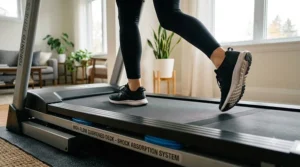
On paper, motor horsepower and incline percentages look impressive, but everyday performance comes down to noise level, vibration, and how forgiving the belt feels underfoot during a 20-minute session. Expect machines in the 2.0–2.25 HP range, like the XTERRA TR150 or Goplus 2-in-1, to handle gentle walking without strain but to feel noticeably less stable if pushed toward their speed ceiling. Mid-range and premium units with 3.0 HP or higher, such as the Sole F63 or Horizon 7.4 AT, deliver a steadier, less wobbly experience even during incline transitions, which matters considerably more for balance-conscious users than raw top speed ever will. Noise hovers around 48 to 65 decibels across most of these machines during active use, roughly comparable to a dishwasher or printer, so placement away from bedrooms or shared walls is worth considering in condo settings.
Low-Impact Treadmill for Elderly vs Outdoor Walking
| Factor | Treadmill Walking | Outdoor Walking |
|---|---|---|
| Surface consistency | Always flat, predictable | Variable, uneven, weather-dependent |
| Fall risk in winter | None (indoor) | Elevated on ice and snow |
| Joint cushioning | Engineered shock absorption | Hard pavement, no cushioning |
| Year-round access | Unlimited | Seasonal and weather-limited |
| Social interaction | Limited unless paired with a call or show | Higher, especially with walking groups |
Indoor treadmill walking clearly wins on consistency and fall-risk reduction, particularly relevant given that the Public Health Agency of Canada’s surveillance work on falls among older adults found falls remain the leading cause of injury-related hospitalizations and injury deaths among Canadians aged 65 or older. That said, outdoor walking offers irreplaceable social and environmental variety that a treadmill alone can’t replicate, so the healthiest approach for most seniors combines both, leaning on the treadmill during icy months or low-energy days and saving outdoor routes for clear, dry conditions.
Treadmill With Handrails: Comparing Safety Features Across Price Points
| Model | Handrail Length | Emergency Stop | Step-Up Height |
|---|---|---|---|
| Exerpeutic TF1000 | Extra-long (46 cm) | Safety clip cord | Ground-level |
| XTERRA TR150 | Standard | Safety clip cord | Low |
| Goplus 2-in-1 | Adjustable, foldable | Remote-based stop | Very low |
| Sunny SF-T7515 | Standard with pulse sensors | Console button | Low-moderate |
| Sole F63 | Standard with pulse sensors | Safety clip cord | Moderate |
| Horizon 7.4 AT | Standard | Safety clip cord | Moderate |
| NordicTrack 1250 | Short, console-adjacent | Touchscreen stop | Moderate |
The takeaway here is that handrail length doesn’t scale neatly with price; the budget-friendly Exerpeutic TF1000 actually outperforms several pricier machines on this specific safety metric. Reviewers and physiotherapy guidance alike tend to favour traditional pull-cord safety clips over touchscreen-based stop buttons, since the former works reflexively even if a user is too disoriented to tap a screen accurately. If handrail support is your top priority, weigh that factor independently from overall price tier rather than assuming premium automatically means safer.
Long-Term Cost & Maintenance: The Real 5-Year Cost of a Senior Treadmill
The sticker price is only part of the equation. Budget models like the XTERRA TR150 or Goplus 2-in-1 carry lower upfront costs but may need belt replacement or motor servicing sooner under daily heavy use, given their lighter-duty components. Mid-range options like the Sole F63 offset a higher purchase price with a lifetime frame and motor warranty, meaningfully reducing five-year ownership cost if the machine sees regular use. Premium units bring an additional recurring expense most buyers underestimate: iFIT or SunnyFit subscriptions typically run C$30 to C$50 monthly, which over five years can exceed the treadmill’s original purchase price. Routine maintenance, belt lubrication every three months, periodic bolt checks, and console cleaning, costs little beyond occasional lubricant purchases but meaningfully extends any model’s working life regardless of price tier. It’s also worth factoring in delivery and assembly costs upfront rather than as an afterthought; several retailers charge C$150 to C$350 for white-glove setup, a fee that’s arguably non-negotiable for the heavier Horizon and NordicTrack units given their size and weight. Electricity costs are negligible by comparison, typically amounting to only a few dollars annually for moderate daily use, so the real long-term cost conversation almost always comes down to warranty coverage, subscription fees, and how well the frame tolerates years of repeated impact rather than the machine’s power draw.
Safety, Regulations & Rehabilitation Support for Canadian Seniors
Treadmill safety for older Canadians sits at the intersection of equipment design and broader public health guidance. Canada’s national falls research underscores the stakes: the direct cost of injurious falls among older adults reached an estimated $5.6 billion in 2018, more than twice the cost associated with falls among younger adults. A senior-friendly treadmill, used correctly, becomes one practical tool within a broader fall-prevention strategy rather than a replacement for professional guidance. For anyone recovering from surgery, a cardiac event, or a mobility-limiting condition, peer-reviewed clinical research published in the Canadian Medical Association Journal notes that age, frailty, or existing functional impairments should not be viewed as an absolute contraindication to physical activity, but rather a key reason to prescribe exercise carefully, ideally under guidance from a physiotherapist or physician familiar with your specific recovery plan. When shopping on Amazon.ca, look for CSA-marked electrical components on any treadmill, a baseline indicator of electrical safety compliance for the Canadian market, and always confirm with a healthcare provider before beginning a new walking program, particularly if rehabilitation support following surgery or injury is the primary goal.
FAQ
❓ What speed should a treadmill for seniors start at?
❓ Are folding treadmills safe for elderly users?
❓ How long should a senior walk on a treadmill daily?
❓ Do treadmills help with arthritis or joint pain?
❓ What weight capacity should I look for?
Conclusion
Choosing a treadmill for seniors ultimately comes down to matching real mobility needs against genuine specifications, not flashy marketing claims. The Exerpeutic TF1000 earns its place for anyone prioritizing rehabilitation support and an ultra-gentle starting pace, while the Sole F63 and Horizon 7.4 AT serve walkers wanting durable, low-impact cushioning built to last years rather than months. Budget shoppers shouldn’t feel shortchanged either; the XTERRA TR150 and Goplus 2-in-1 prove that thoughtful, easy access design doesn’t require a premium price tag, and the Sunny SF-T7515 and NordicTrack Commercial 1250 round out the middle and top tiers for incline-focused training and guided coaching respectively. Before clicking buy, revisit the seven-step framework above, measure the space where the treadmill will actually live, and, if rehabilitation or a recent diagnosis is part of the picture, loop in your physiotherapist or physician so the equipment supports rather than complicates your recovery plan. Whatever you choose, remember that the safest treadmill is the one you’ll actually use consistently, supported by realistic goals, proper handrail technique, and, where relevant, guidance from a healthcare professional familiar with your specific situation. Canadian winters aren’t getting any gentler, but with the right machine in your living room, neither does your routine have to pause until spring.
Recommended for You
- Best Treadmill for Home Use in Canada 2026: 7 Top Picks Reviewed
- Best Treadmill for Beginners in Canada 2026: 7 Top Picks Reviewed
- Best Treadmill Under 1000 CAD: Top 7 Picks for Canadians (2026)
Disclaimer: This article contains affiliate links. As an Amazon Associate, I earn from qualifying purchases. If you purchase products through these links, we may earn a small commission at no additional cost to you.
✨ Found this helpful? Share it with your friends! 💬🤗
